In the summer of 1944, Army doctors in England finished counting the wounded men pulled from bombers returning from Germany. Their numbers pointed to the ball turret as the safest seat on the Flying Fortress—a glass sphere hanging beneath the belly, so small that a parachute wouldn’t fit, where a soldier crouched curled like a child while occupied Europe passed beneath his knees. The doctors weren’t lying. The number was real. But it was also wrong. And the reason it was wrong lay at the bottom of the North Sea, in farm fields across Germany, among wreckage that would never be counted.
For most of the war, 10 men climbed aboard each B-17: the pilot, co-pilot, navigator, bombardier, engineer, radio operator, ball turret gunner, tail gunner, and two waist gunners standing at open windows in air colder than any winter they had ever known. 10 seats, 10 different ways to die. Tonight we’re ranking every one of them from safest to deadliest. And at each seat, we’ll meet a real man who sat there on the worst day of his life. One fell more than 4 miles without a parachute and survived. One flew for two hours with one hand on the controls and the other holding his comrade beside him. And the seat that tops this list is the one almost no one guesses. I’m glad you’re here today. Which state are you watching from?
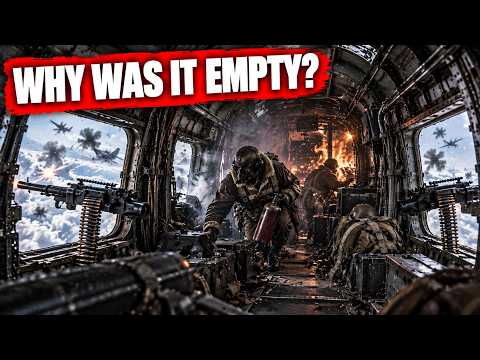
Before we sit in any seat, step inside the aircraft. From the outside, the B-17 looked like its name, a flying fortress. Four Wright Cyclone engines, a wingspan over 100 feet, and guns protruding from the nose, top, belly, sides, and tail. Newsreels back home showed it rising from English fog like a battleship with wings. Inside, it was completely different. The fuselage was aluminum, and in many places no thicker than a few stacked sheets of paper. You could push a screwdriver through it. A shell fragment would pierce it without slowing.
The fuselage was a long, narrow tube filled with oxygen lines, ammo boxes, cables, and control wires. An adult man could stand upright in only a few places. Most of the time he had to stoop, crawl, or twist sideways. The cockpit wasn’t pressurized. At 25,000 feet over Germany, the air was so thin that a man couldn’t stay conscious for long. Every man aboard wore a rubber oxygen mask strapped to his face for hours on end. His breath froze inside it. Ice crystals formed at the valve, and the men had to press the mask every few minutes to break the ice so they wouldn’t suffocate without realizing it.
And it was cold. Not like a January morning in Ohio. Air temperatures at that altitude reached 40 to 60 degrees below zero. Any heat the aircraft provided barely reached the men in the back. Gunners wore electrically heated suits wired to the plane’s power, and when a wire broke or a plug disconnected, the cold began killing them within minutes. Bare skin touching bare metal stuck instantly. Frostbite devoured fingers, ears, and noses.
Into this metal tube climbed 10 young men. Most were barely out of their teens. Some were in their late twenties and were nicknamed “the old men of the crew.” Each had a job, a seat, and a small part of the aircraft he was responsible for. And each had a different chance of coming home. For decades, people have argued about which seat was the worst. Some say the ball turret. Others say the nose. Others say the tail. There’s a famous set of numbers we’ll get to because it’s one of the most misunderstood pieces of data in the entire air war. But first, the ranking from safest to deadliest.
Number ten, the co-pilot. He sat in the right seat of the cockpit at the front of the aircraft behind the nose compartment. Armor plating was installed behind and below him. In front of him was the entire nose structure, the instrument panel, and two large radial engines on his side of the wing. Anything coming from the front had to pass through a lot of aircraft before reaching him. His job was grueling and unglamorous. He watched engine gauges, managed fuel, controlled the throttles, and shared flying duties with the pilot. And the flying was brutal. Bombers flew in tight formations so their guns could protect each other. That meant holding a four-engine heavy bomber a few dozen feet from the next aircraft by hand for hours. One slip, and two bombers and 20 men were gone. Pilots and co-pilots swapped roles every half hour or so because their arms and shoulders became completely exhausted. Men climbed out after missions with their hands still shaking.
When the aircraft had to be abandoned, the co-pilot exited before the pilot. In a dying bomber, getting out early was more important than any steel armor. So by most measures, he had the safest seat on the plane. On July 26, 1943, a 28-year-old Texan named John Morgan learned what “safest” really meant. Morgan was a flight officer with the 92nd Bomb Group, serving as co-pilot on a B-17 called Ruthie 2. He was a determined man—before America entered the war, he had crossed into Canada and joined the Royal Canadian Air Force just so he could fly. Eventually, he found his way to the Eighth Air Force.
That morning, the target was Hanover. Over the coast of the North Sea, fighters came from the front. A burst of fire shattered the cockpit. The pilot, Lieutenant Robert Campbell, was hit in the head. He slumped forward onto the controls, and the aircraft began to fall out of formation. Morgan grabbed his own controls and leveled the bomber. Then Campbell came back to life. Not to consciousness, not really. The head injury left him delirious and violent, with no idea where he was. He began tearing at the controls with his claws. Morgan wrestled with the yoke. Campbell was a big man, and he was thrashing with everything he had left. Morgan couldn’t leave his seat. He couldn’t call for help because the intercom was dead. Behind him, the top turret gunner had fallen from his turret, badly wounded. No one else on the aircraft knew what was happening in the cockpit.
So Morgan made a decision. The formation was heading for the target. If his bomber left alone over Germany, fighters would finish it. He stayed in formation. For nearly two hours, John Morgan flew a heavy bomber in tight formation with one hand. With his other hand and elbow, he restrained the dying man beside him. He flew to Hanover. He flew over the target. He turned with the formation and flew back toward the sea. Only then did the navigator, Keith Koski, climb into the cockpit and see what Morgan had been doing the whole time. Koski later said simply that Morgan was flying the plane with one hand and holding back the half-dead pilot with the other. Ruthie 2 returned to England. Campbell died after they landed. Every other man aboard survived. Months later, Morgan received the Medal of Honor. Remember, this was the safest seat on the aircraft. “Safest” is a comparative description. It is not a promise.
Number nine, the radio operator. Walk back from the cockpit, squeeze through the narrow passage past the bomb bay with the bombs hanging at your sides, and you reach a small compartment just behind the wing. This was the radio room. It held a desk, a chair, a wall of radio equipment, and in most aircraft throughout the war, a single gun pointing up through a hatch in the roof. Structurally, the radio operator was surrounded by more fuselage than anyone else aboard. He had no large glass panels around him. He sat near the wing, the strongest part of the airframe. Most fighter attacks came from the front or swept along the sides, and the radio room sat between those danger zones.
His work was quiet and endless. He monitored radio frequencies, kept logs, sent and received position reports, and handled signals. On many crews he also served as the first aid man because his compartment had a small patch of floor and a natural place to drag the wounded. Morphine came in small syrettes, and at high altitude they froze solid. Men warmed them under their clothing or in their mouths before they could be used. But that compartment had its own hazards. The bomb bay was directly in front of him, separated by a thin bulkhead. Below and behind his seat was the ball turret mount, and the single gun in his roof was so useless against fighters that later aircraft removed it entirely.
On December 20, 1943, the radio operator aboard a B-17 called Jersey Bounce Junior was a 20-year-old sergeant from upstate New York named Forrest Vosler. Jersey Bounce Junior flew with the 303rd Bomb Group out of Molesworth. That day’s target was Bremen. Over the city, flak was thick and accurate, and fighters were everywhere. Jersey Bounce Junior was hit, lost engine power, and fell out of formation. A lone bomber meant a bomber in real trouble. A shell burst in the rear of the aircraft. Vosler was hit in the legs and thighs. He kept firing from his gun. Then another shell exploded near him, and fragments tore into his face and eyes. His vision filled with blood and darkness. He didn’t stop.
The pilot came over the intercom. The aircraft wouldn’t make it back to England. They would have to ditch in the North Sea. Vosler knew what that meant. Without a distress call, no one would know where they went into the water. And men didn’t last long in the North Sea in December. The radio was damaged. Vosler could barely see, so he worked by touch. Between consciousness and unconsciousness, he felt his way through the wires and equipment piece by piece until the radio came alive again. Then he sent the distress call, over and over, so rescue crews would know where to search. According to crew accounts, at some point he offered to be thrown overboard to lighten the aircraft so the others would have a better chance. They refused.
What happened when Jersey Bounce Junior hit the water belongs to another seat on this list. We’ll come back to it later. For now, remember that 20-year-old in the safest compartment on the aircraft, blind and bleeding, rebuilding a radio with his fingertips.
Number eight, the pilot. He sat less than two feet from the co-pilot behind the same nose and the same armor plating. So why is he ranked lower? The first reason came from the enemy. In late 1942, German fighter pilots realized that the front of the B-17 was its weak point. Early models had only light guns in the nose. A head-on attack gave the German pilot a clean shot straight into the cockpit while exposing him to very little return fire. Kill the two men flying the aircraft, and the whole bomber falls. Head-on attacks became standard Luftwaffe tactics, and the pilot’s seat was targeted directly.
The second reason was written into operating procedure. When a B-17 was going down, the pilot’s job was to keep it level while everyone else got out. He rang the bailout bell. He held the wings flat for as long as possible because an aircraft spinning on its axis pinned men against the walls and floor and made reaching the exit hatches impossible. He listened to their voices over the intercom as they counted down their exits. Every second he kept the bomber steady was a second someone else used to reach the door. He was the last one out, if he had any time at all.
On February 20, 1944, the first day of what the Army Air Forces called Big Week, a 23-year-old lieutenant from Alabama named William Lawley flew a B-17 called Cabin in the Sky with the 305th Bomb Group. The target was a Messerschmitt factory at Leipzig. Over the target, the bombs hung in their racks and wouldn’t release. And on the way out, enemy fighters tore the bomber apart. A shell exploded inside the cockpit. The co-pilot was killed instantly. His body fell forward onto the controls and the aircraft dropped into a steep dive. Lawley was hit in the face. Blood poured into his eyes. He shoved the dead man off the controls and pulled the bomber out of the dive.
One engine was burning. Eight of his men were wounded, and the aircraft was still carrying its full bomb load. Lawley gave the order to bail out. Then he learned that two of his men were too badly hurt to jump. He could have left. No one would have blamed him. He chose to stay with them and told the others they were still free to jump. He refused first aid. He flew the crippled bomber west toward the coast with bombs that hadn’t dropped still hanging behind him because the racks had frozen. Enemy fighters attacked again. Another engine caught fire. On the long way home, after hours of wrestling the aircraft with blood running down his face, Lawley collapsed from shock and blood loss. His gunner was still aboard. He shook Lawley back to consciousness, and the pilot took the controls again.
They crossed the English coast. One engine ran dry and had to be shut down. Another blew up in flames. Lawley found a small fighter field at Redhill in south London and belly-landed Cabin in the Sky while it was burning. Every wounded man who couldn’t jump survived. William Lawley received the Medal of Honor. He sat in the seat the enemy aimed at. In the seat the rules said he must be the last to leave. And he came home. Not every man who sat in that seat did the same. And not every man in the seats behind him was as lucky as his crew.
Because now we move deeper into the aircraft, to the man who stood with his head inside a glass dome. And to the day John Morgan’s aircraft looked completely different from a few feet behind the cockpit.
Number seven, the flight engineer. Directly behind the pilots, standing on a small platform, was the man who knew the aircraft better than anyone aboard. His head and shoulders rose into a clear plastic dome atop the fuselage, where he manned .50-caliber guns in a powered turret. From there, he had the best view of the sky of any gunner on the plane. He could see the formation, fighters lining up in front, and flak bursting in black clouds along the way.
But gunnery was only half his job. He was the crew’s mechanic in the air. He watched engine gauges with the co-pilot. He transferred fuel between tanks when one ran low. He cranked down the landing gear by hand when the electrical system failed. He fixed jammed guns anywhere on the aircraft. And when a bomb hung in its shackles, he was the man who crawled out into the narrow catwalk of the open bomb bay, with nothing below him but more than 4 miles of air, to free it. He often did it without his parachute because there wasn’t room to wear it and pass through the catwalk.
Top turret gunners were credited with more enemy aircraft destroyed than gunners in any other position. That was partly skill. But mostly it was engineering. Fighters came from the front, and he was the man facing them. Which is exactly why the dome was a target. He stood upright inside it, his upper body wrapped in curved plastic directly in the path of every head-on attack aimed at the cockpit below.
Why isn’t he ranked lower? Because when the bailout bell rang, he could drop out of the turret in seconds, and the forward escape hatch was only a few steps away. Now let’s return to July 26, 1943. Ruthie 2 over Germany. We already know what John Morgan was doing in the cockpit. Here’s what was happening a few feet behind him.
The top turret gunner and flight engineer aboard Ruthie 2 was Sergeant Tyre Weaver. When German fighters hosed the cockpit with fire, the same burst tore through his turret. A shell ripped his arm off near the shoulder. Weaver fell from the turret to the floor behind the pilots, bleeding heavily. The navigator, Keith Koski, came forward from the nose and found him. Koski tried to stop the bleeding but couldn’t. The damage was too massive and too close to the body. He couldn’t apply a tourniquet. Koski did the math that men in these aircraft had to do on their worst days.
The bomber was headed for the target and then home, hours away. Weaver wouldn’t live that long. But if he left the aircraft now, over Germany, the Germans would find him. German doctors could treat him. He’d be a prisoner, but he might be a living prisoner. So Koski made sure Weaver had oxygen. He strapped a parachute onto him. He took Weaver’s remaining hand and closed his fingers around the ripcord handle. He walked him to the forward escape hatch. Then he pushed him out.
Stop and picture it. The hatch open beneath them. The roar of four engines and the scream of freezing wind filling the compartment. A wounded man in a heavy flight suit, dazed from shock, his blood already freezing on the floor. And a navigator in his twenties, with no medical training beyond a few lectures, deciding in seconds that the kindest thing he could do for his friend was to send him into the empty sky over enemy territory. Think about that for a moment. A young navigator at altitude over enemy land deliberately pushing his crewmate out of the aircraft with one arm because it was his only chance.
The plan worked. Tyre Weaver’s chute opened. He was captured, treated, and spent the rest of the war as a prisoner. He survived and came home. That’s what Ruthie 2 looked like from two different seats. In one, the co-pilot fights to hold the aircraft together. In the other, the engineer loses his arm and is pushed into the sky to save his life. Same aircraft, same minute, same attack. This is the first thing the ranking can’t show you. These seats were not isolated from each other. When something hit the bomber, everyone felt it.
Number six, the navigator. Move forward and down from the cockpit and you enter the nose compartment. On the left side sits the navigator before a small table with a drift meter, maps, a compass, a watch, and a pencil. In later models, he also had a machine gun mounted in a side window. His war was fought with calculations, dead reckoning, wind drift, ground speed, and the precise timing of turns onto the next leg. In a lead crew, he didn’t navigate for one aircraft. He navigated for an entire formation. Every bomber behind him flew where he told them. One mistake up front could put dozens of aircraft and hundreds of men over the wrong city or into a flak belt the planners had worked hard to avoid.
All that work required the use of fingers. You can’t use a slide rule or plot a course while wearing thick heated gloves. So navigators took their gloves off at altitudes where bare skin could freeze in a minute or two. Frostbite of the hands was one of the most common cold injuries in the Eighth Air Force, and in the early months of the bombing campaign, cold was disabling men at a rate comparable to enemy fire.
The nose was a dangerous place. Its walls were thin, its windows were clear plastic, and it was the first part of the aircraft to enter flak. Wound studies by Army medical teams found that forward compartments took a heavy share of fragments because the front of anything flying into a cloud of shrapnel catches more of it. What raises the navigator above the bombardier is simply a matter of location. The forward escape hatch was right behind him. Of the 10 men aboard, he had one of the shortest paths to the outside.
But sometimes a man chooses not to use it. On February 20, 1944, the first day of Big Week when William Lawley was fighting his way home, a B-17 called Ten Horsepower from the 351st Bomb Group was hit by fighters over Germany. A shell exploded inside the cockpit. The co-pilot, Flight Officer Ronald Bartley, was killed. The pilot, Lieutenant Clarence Nelson, was badly wounded and unconscious. No one left in the cockpit was trained to fly the aircraft.
The navigator was a 25-year-old second lieutenant from Aurora, Illinois, named Walter Truemper. The flight engineer was a 25-year-old sergeant named Archibald Mathies, born in Scotland and raised in the coal country of western Pennsylvania. Neither was a pilot. They climbed into the cockpit together. Between the controls and the dead and wounded men in the seats, they took turns flying a four-engine bomber with damaged engines across enemy territory, across the North Sea, and to their base at Polebrook in England.
Over the base, the crew was ordered to bail out. Most did. They landed safely in the English countryside. Truemper and Mathies were told to jump too. They had parachutes. The escape hatch was right there. But Lieutenant Nelson was still alive. He couldn’t jump. If they left, he would die alone inside the aircraft. So they stayed.
Imagine the cockpit of Ten Horsepower in those final minutes. A cockpit torn by cannon fire with freezing air rushing in. Blood on the controls, a dead co-pilot, a wounded pilot who couldn’t speak, and two young men in the seats who had watched pilots land this aircraft many times but had never done it themselves. Below them, the gray winter fields of England, so close, so ordinary, and so impossible to reach safely.
A pilot in another B-17 flew alongside and tried to talk them down by radio. They made one approach and couldn’t get the bomber lined up. They made a second and failed again. On the third attempt, Ten Horsepower struck the ground in a field and broke apart. Truemper and Mathies were killed. Nelson was pulled from the wreckage alive but died later that day. Both men received the Medal of Honor; a navigator and a flight engineer who had never trained to land an aircraft, but stayed anyway. The navigator had one of the shortest paths to open air. But Walter Truemper chose not to take it.
Number five, the ball turret gunner. Now we reach the seat everyone thinks they know. Beneath the belly of a B-17, just behind the wing, hung a sphere of steel and glass about the size of a large truck tire. Inside, the gunner folded his body into a ball. His back rested against the rear of the turret. His knees were drawn up to his chest. His feet rested in stirrups. On either side of his head ran a .50-caliber machine gun. Between his feet was a circular window, and through it he looked straight down at the ground from more than 4 miles up.
He usually climbed in after takeoff because the turret was too close to the ground to be occupied on the runway. He couldn’t wear a parachute in there. There wasn’t room. His parachute stayed inside the fuselage, and if the turret was hit, he had to rotate it until the hatch lined up with the opening, then climb up into the aircraft, retrieve his parachute, put it on, and only then head for the door. If the power failed and the manual crank was damaged, the hatch might never line up. A man could be trapped inside a ball fixed to the bottom of a falling aircraft. It is the most claustrophobic image of the entire air war.
So people are surprised to learn that the ball turret ranks only fifth. And here’s where that famous number comes from. In the summer of 1944, medical officers of the Eighth Air Force conducted a careful study of battle casualties. When they counted crew killed and wounded by position, the ball turret had the lowest injury rate of any position on the aircraft. The finding has been repeated in books, documentaries, and online articles ever since. They say the ball turret was the safest seat. The study itself was serious and well done. But it is being used to answer a question it was never designed to answer.
First, the study counted men who came home aboard bombers that made it back to England. The doctors could examine those men. But they could not examine the men who went down with their aircraft over Germany or in the sea. In the Eighth Air Force, most of the men who died were never available to be counted. They were on the bombers that didn’t return. Second, the study counted crews of two different bombers, the B-17 and the B-24. Not every bomber in that number carried a man in a ball turret at all. Third, it covered one summer, a few months in a war the Eighth Air Force fought for nearly three years, and during a period when American fighter protection was far stronger than it had been in 1943.
When historians later went back and reviewed more complete records, including the men who never came back, the ball turret did not emerge as the safest seat. It landed somewhere near the middle. Not the worst, not the best, just another dangerous place to sit. What no table can measure is what it felt like. On January 3, 1943, the ball turret gunner aboard a B-17 called Snap Crackle Pop, flying with the 303rd Bomb Group, was a 23-year-old sergeant from New Jersey named Alan Magee. The target was the U-boat pens and torpedo stores at Saint-Nazaire on the French coast. The flak over Saint-Nazaire was among the heaviest the young bomber crews had yet seen.
Snap Crackle Pop was hit. Magee’s turret was damaged, and he climbed out of it into the fuselage. He found his parachute. It was damaged and unusable. The bomber was hit again. Fire spread, and then Alan Magee left the aircraft, falling without a parachute from over 20,000 feet above occupied France. There is no record of what went through his mind in those first seconds. The air at that altitude was thin enough to cause unconsciousness, and the cold was savage. Somewhere during the fall, he blacked out. Below him, the port, the docks, and the rooftops of the French port city rushed up at more than 100 miles per hour.
He came down on the railway station at Saint-Nazaire. He crashed through the glass roof. The glass and steel structure broke his fall just enough. German soldiers found him alive, tangled in the wreckage. His injuries were horrific. A broken leg, a shattered ankle, more than twenty shrapnel and glass wounds. His right arm was nearly torn from his body. A German doctor operated on him and saved his arm. Magee spent the rest of the war as a prisoner. He lived another 60 years after his fall and never stopped expressing gratitude to the German doctor who saved him. He is the man from the beginning of this video. More than 4 miles, no parachute, and alive.
The ball turret was not the safest seat on the aircraft. It was not the deadliest. And on a January afternoon over France, that turret produced the most improbable survival of the entire air war.
Number four, the bombardier. Move to the very front of the aircraft, where the nose compartment of clear Plexiglas holds the man seated at the furthest point forward. Ahead of him was only a curved sheet of plastic and the sky. He operated the Norden bombsight, one of the most closely guarded secrets in the American arsenal. For a few minutes on every mission, he was effectively the man flying the aircraft. During the bomb run, the sight was linked to the autopilot. The aircraft flew where the bombardier aimed it. And it had to fly straight. No evasive turns, no altitude changes, no dodging. The bomb run was about holding a stable platform at a steady speed, and it was flown through the most heavily defended airspace on the entire route.
The crew could see the flak ahead of them, black bursts getting closer and closer, and no one could do anything about it. Men who flew these missions said the bomb run was the longest minutes of their lives. Everything around the bombardier’s seat was exposed. Head-on fighter attacks reached him first. Flak fragments tore through the Plexiglas. Starting with the late F and G models, he also controlled a chin turret mounted directly below him, which helped protect the aircraft from head-on attacks but offered him no protection at all.
On March 18, 1943, the lead bombardier of the 359th Bomb Squadron was a 21-year-old first lieutenant from San Angelo, Texas, named Jack Mathis. The target was the U-boat yards at Vegesack, near Bremen. Mathis was the lead bombardier, which meant the other bombers in his group would drop when they saw his bombs fall. If he missed, they all missed. As the bomb run began, a shell burst just outside the nose. Fragments shredded the Plexiglas. Mathis’s right arm was torn off above the elbow. He took a deep gash in his side and abdomen. The explosion threw him backward across the nose compartment. He was dying. He knew it.
He crawled back to the bombsight. He pulled himself into position with the arm that still worked. He made his final corrections, and he released the bombs at exactly the right moment so that every bomber behind him could hit the target. Then Jack Mathis collapsed over the bombsight and died. He was awarded the Medal of Honor. His older brother Mark was also a bombardier. Two brothers from Texas, both sitting in the most exposed glass seat in the aircraft. The bombardier had no escape hatch beside him. He had no armor shielding him from the front. And for those few minutes on every bombing mission, he was not allowed to maneuver.
Number three, the tail gunner. Now go all the way to the rear, past the radio room, the ball turret, the waist windows, the tail wheel well, to the end of the aircraft. To get there, a man had to crawl on his hands and knees. When he arrived, he knelt on a padded seat behind two .50-caliber guns in a space so small he couldn’t stand or turn around. He had some armor plate around him, and he was a small target, but he was the most isolated man on the aircraft. He couldn’t see any member of his crew. His only link to the other nine men was the intercom, and if it failed, he sat alone in the tail of a metal tube, not knowing whether the aircraft was about to explode, catch fire, or spin.
He was the crew’s eyes in the rear. He called out fighters attacking from behind. He reported damage no one else could see, and he watched, mission after mission, the other bombers in the formation behind him burn and fall, counting parachutes, and often finding fewer than there should have been. The men who occupied that seat carried those images for the rest of their lives.
Imagine that long ride home in that seat. Hours on your knees, staring back at the sky you’ve already crossed. The engines just a distant hum ahead of you. Your breath rasping inside your mask. Your fingers numb on the grips. You can’t see the pilot. You can’t see the man beside you, because there is no man beside you. You hear only voices in your headphones, and when the voices go quiet, you’re alone with the wind and the vibration and your own imagination.
The cold in the tail was among the worst on the aircraft, and getting out of it meant crawling forward through the narrowest part of the fuselage against every force the aircraft was pushing with. In a bomber spinning on its axis, the tail swung through the widest arc of all.
And now back to Jersey Bounce Junior, December 20, 1943, the North Sea. The tail gunner of Jersey Bounce Junior was Sergeant George Buske. When cannon shells tore through the rear of the aircraft over Bremen, Buske was badly wounded. By the time the bomber reached the sea, he was barely conscious. Remember Forrest Vosler, the radio operator, hit in the legs and nearly blind, who rebuilt the radio by touch to send the distress call? That call was why anyone came looking for them.
The pilot ditched Jersey Bounce Junior in the gray, freezing water of the North Sea. The bomber stayed afloat for a short time. The crew scrambled out onto the wings. They pulled George Buske from the fuselage and laid him on the wing while the others worked to ready the life raft. The wing was slick and tilted. Buske, unconscious, began to slide toward the edge of the wing toward the water. Vosler saw him sliding. With one arm, Vosler grabbed Buske around the waist. With the other hand, he grabbed an antenna wire trailing from the fuselage and held on. Wounded, nearly blind, straddling the wing of a sinking bomber, holding the full weight of an injured man so he wouldn’t slide into the sea. He held on with everything he had until the others could move Buske to the raft.
Help arrived. The crew was pulled from the water, and George Buske lived. Forrest Vosler lost his right eye and later received the Medal of Honor. Two positions on this list. The radio operator in one of the safest compartments on the aircraft, and the tail gunner in one of the deadliest. On that December day, the man in the safe seat was the one who saved the man in the dangerous seat from drowning.
So far, we’ve ranked eight positions. Co-pilot, radio operator, pilot, engineer, navigator, ball turret gunner, bombardier, and tail gunner. Two positions remain, and they are not in the nose, not in a turret, not in the cockpit. They are in the middle of the aircraft at two open windows where the men didn’t sit at all. They stood.
Number two, the right waist gunner. In the middle of the fuselage, behind the radio room and the ball turret, the B-17 widened slightly. On each side of the aircraft, a large window was cut into the fuselage. At each window stood a gunner with a .50-caliber gun on a flexible mount. He stood. For the entire mission, for hours, he stood. In early B-17 models, those windows were simply open holes. The waist gunner faced a slipstream over 150 miles per hour, at 40 or 50 below zero, with nothing between him and the sky. The wind tore at his face and clothing. Frost formed on his mask, his goggles, and his eyebrows.
Later models closed the windows with Plexiglas and spaced them apart so the two waist gunners no longer stood back to back, colliding with each other whenever a fighter passed and both swung their guns at once. What surrounded him was the thinnest structure on the aircraft. Flak fragments punched through the aluminum walls the way a stone punches through newspaper. The only armor he had was what he wore. This is one reason the flak vest was developed. In March 1943, Colonel Malcolm Grow, chief surgeon of the Eighth Air Force, sent the first batch of body armor suits into combat for testing. His studies showed that most injuries came from slow-moving fragments that armor could stop. Within a year, thousands of suits were in service.
Under his feet, the floor was covered with spent brass cartridge cases that rolled and slid with every movement of the aircraft. He was swinging a heavy gun in freezing air while trying to keep his balance on that moving brass carpet. When he was away from the oxygen outlet, he breathed from a small portable bottle that held only a few minutes of air. Oxygen starvation at that altitude doesn’t cause pain. There’s no warning. A man simply becomes confused, then drowsy, then still. Crews sometimes found gunners collapsed at their positions with no wounds on them at all.
What separates the right waist gunner from the left is one thing: the door. The main crew door was in the rear of the aircraft on the right side, just behind his position. When the bell rang, he was standing right next to the exit.
Number one, the left waist gunner. Same job, same gun, same open window, same cold, same brass, same thin wall. Only on the other side of the aircraft. Why is the waist ranked as the deadliest place on the aircraft? Because every risk stacked up at once. It had the largest openings and the least armor. Its men stood at full height, exposing their whole bodies instead of sitting behind something. And the sides of the aircraft were where attacking fighters passed again and again as they swept the formation. The records don’t clearly separate the left waist gunner from the right. Anyone who tells you the numbers prove one side was worse is overstating it.
What separates them is aircraft design. To reach that single door on the right, the left waist gunner had to cross the fuselage, get past the base of the ball turret, and maneuver around the other waist gunner trying to get out the same door at the same moment inside an aircraft that was burning, spinning, or both. Everything that made the waist dangerous also made it hard to leave.
On May 1, 1943, the waist of a B-17 from the 306th Bomb Group became one of the most famous places in Eighth Air Force history. The ball turret gunner was a 31-year-old sergeant from Michigan named Maynard Smith. The men called him “Snuffy,” after a comic-strip country character. He was older than most of his crew and wasn’t particularly liked. It was his first combat mission. The target was Saint-Nazaire again. And on the way home, the formation made a navigational error and flew over the heavily fortified coast of Brittany near Brest, thinking they were over England. German guns and fighters were waiting.
Smith’s aircraft was badly hit. Fire broke out in the radio room and in the tail. Smoke filled the fuselage. In the middle of the aircraft, the radio operator and the two waist gunners decided the bomber was finished. They jumped. They did not come home on that aircraft. The waist positions, the deadliest seats in the bomber, were now empty while the aircraft was still in the fight.
Smith climbed out of his ball turret into a burning fuselage. Imagine what he saw. Thick smoke pouring through the middle of the aircraft, flames eating the walls of the radio room, two waist windows open with no one in them, wind howling through, empty spaces where three of his crewmates had been a minute before, the roar of the engines, the crackle of fire, and the popping of ammunition starting to explode from the heat.
He could have jumped too. Instead, he went to work. He grabbed a fire extinguisher and attacked the flames in the radio room. When fighters came near, he ran to the empty waist windows and fired the guns himself. Then he went back to fighting the fire. Ammunition was exploding from the intense heat. He threw burning debris and hot ammo boxes out of the aircraft through the openings in its side.
The tail gunner, Roy Gibson, crawled forward, badly wounded in the back. Smith judged that one of his lungs had been punctured. He gave Gibson morphine and laid him on his side so he could breathe. Then he went back to the fire, and to the guns, and to Gibson. For nearly an hour and a half, one man fought fire, fighters, and injuries alone in the heart of a bomber its crew had already given up for lost. When the fire extinguishers ran out, he kept fighting the flames with whatever he had, with his hands, with his clothes, with anything. The bomber crossed the Channel and landed at the first airfield it reached in England. When the tail wheel touched the ground, the burning fuselage split apart, but the aircraft was on the ground and the men inside it were alive.
Snuffy Smith received the Medal of Honor, the first enlisted man in the war to earn it. The waist seat, the deadliest on the aircraft, was empty that day. The man who saved the bomber came out of the ball turret and fought from the waist anyway.
By the summer of 1944, the Eighth Air Force made a decision about the waist. American escort fighters now controlled the skies, and every pound of weight mattered. Group by group, B-17 crews shrank from ten men to nine. One of the waist gunners was removed. Command looked at what the second man added and what he cost, and accepted fewer guns.
So that’s the ranking. Ten seats from the armored co-pilot’s chair to the open window in the waist. Now, here’s the part the ranking can’t explain. When you study the complete records of entire bomb groups and the whole war, including the men who never came back, the differences between these positions turn out to be much smaller than the legends suggest. The gap between the safest seat and the deadliest is real, but it is narrow, and the seat that looked safest at one stage of the war could look like the worst at the next.
What determined whether a man came home was, most often, not the seat he sat in. It was the aircraft he happened to be assigned to. It was the month he flew. It was the target, the weather, the escort, the flak, and whether the airframe held together long enough for anyone to reach an exit. When a Flying Fortress comes apart in the sky, it does not consult a chart.
The men themselves seem to have understood this. When surviving veterans told their stories, they rarely credited their seats. They talked about a skilled pilot, a lucky aircraft, and a day when the flak was a little low, or the fighters went for another formation. A friend who reached the exit in time, and a friend who didn’t.
Recall the men we met tonight. John Morgan in the safest seat, flying for two hours with one hand. He survived that day, but in March 1944 his aircraft was shot down over Berlin and he spent the rest of the war as a prisoner. Forrest Vosler in one of the safest compartments, losing an eye and saving a wounded comrade from falling into the sea. William Lawley in the seat the enemy aimed at, bringing his wounded men home. He lived to be 78. Tyre Weaver losing an arm in the top turret and being pushed out over Germany to survive. Walter Truemper and Archibald Mathies, a navigator and an engineer, dying together in the cockpit because they refused to leave a wounded comrade behind. Alan Magee in the ball turret, falling more than 4 miles and living another 60 years. Jack Mathis in the nose, dying over the bombsight after he hit his target. George Buske in the tail, saved from the North Sea by a nearly blind radio operator. And Snuffy Smith coming out of the ball turret into an empty waist, to fight a fire with his bare hands.
Ten men, facing every kind of luck, good and bad. By the end of the war, the Eighth Air Force lost about 26,000 killed. That is more dead than the entire United States Marine Corps suffered in World War II. They were spread across all ten of these seats in numbers far more equal than anyone who flew in them would have expected. The doctors in 1944 were right about what they counted. They simply couldn’t count the men who never came back.
Maybe there’s an old photograph in your family of a young man in a sheepskin jacket, standing in front of a bomber with nine other young men. Maybe no one ever asked him which seat he sat in. Now you know what that seat was like. So tell us: which of these ten men would you want beside you on your worst day?
Report this article
Select a reason for reporting:






