For over thirty years, the world’s most determined Nazi hunters chased a ghost. Israeli intelligence, Simon Wiesenthal, West German prosecutors—they all had the resources, the motive, and the moral weight of history behind them. Yet Josef Mengele, the physician who presided over the ramp at Auschwitz-Birkenau, grew old and died free in South America. The assumption was always that something enormous protected him: a shadow network of former SS, a foreign spy agency, some grand machinery of escape. That assumption is wrong.
The truth is smaller, more mundane, and infinitely more damning. It was a family. It was a farm machinery company in a quiet Bavarian town. It was ordinary money moving quietly across an ocean, handled the way a business handles any other recurring expense. The man who kept him hidden died wealthy and was never charged with anything. This is the story of how a war criminal’s escape was run like a line on a balance sheet—and why it worked.
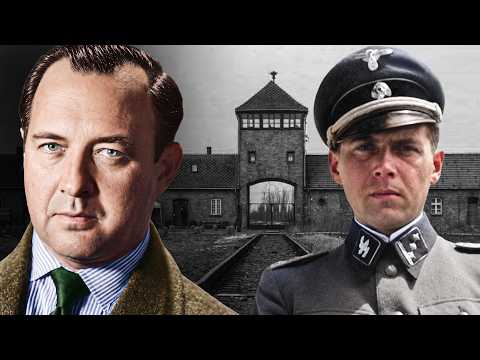
Josef Mengele’s crimes are well documented. From May 1943 to January 1945, he stood on the railway ramp at Auschwitz, deciding with a gesture who would live and who would die. Survivors remembered him doing it calmly, sometimes whistling. He was obsessed with twins, using children as material for grotesque experiments. Children went into his barracks and did not come out. The method was industrial, repeated thousands of times. Historians still debate the exact death toll, but the method is beyond dispute: a man who applied medical training to mass murder and treated the killing of children as a professional opportunity.
So how did a man this wanted stay free for 34 years? The answer starts in Günzburg, Bavaria, where the Mengele name mattered. The family owned Karl Mengele & Söhne, a farm machinery company founded in 1907 that had grown into one of Germany’s largest thresher manufacturers, employing roughly 2,000 people by 1959. This was serious generational wealth, and it belonged to Josef’s father and his two younger brothers, Karl Jr. and Alois. That wealth is the whole story, because escape is expensive.
In 1949, Josef Mengele left Germany through the so-called rat line, traveling on a Red Cross passport under a false name, Helmut Gregor. Forged identity, passage across the Atlantic, a place to land, money to live on—all of it cost, and the family had it to spend. This is where the image of the hunted fugitive sleeping rough falls apart. Mengele was a well-funded émigré with a family fortune behind him, arriving in a country where he could live openly. The escape wasn’t a desperate scramble; it was financed and managed by his own blood.
By 1956, Mengele felt safe enough in Argentina to stop hiding his identity. He walked into the West German Embassy in Buenos Aires and obtained a legalized copy of his own birth certificate in his real name. He then had his Argentine identity papers judicially amended, dropping the alias and going back to being Josef Mengele on the record. The world’s most wanted Nazi doctor asked for his own birth certificate and got it. He made his real name legal in his country of residence. This was not a man cowering in shadows; this was a man who had concluded, correctly, that the system meant to catch him was not paying attention.
If the family was going to keep him supported across an ocean, they needed a way to do it without being seen. Enter Hans Sedlmeier. Sedlmeier was an executive at the Mengele firm and Josef’s lifelong friend, and he became the connective tissue of the entire operation, carrying letters and money between Günzburg and South America. This is the most damning structural fact in the whole story: contact with the most hunted man on Earth was not run as a frantic, improvised secret. It was run as a standing function of a legitimate business. A trusted senior employee making arrangements, moving funds, passing correspondence over years, the way he might handle any other recurring responsibility. The horror here isn’t drama. It’s the paperwork. A war criminal’s continued freedom was administered like a line item.
For decades, the family told a simple story: they were loving relatives kept in the dark. Alois in particular later suggested that he only belatedly understood that the crimes were real. It is a sympathetic frame, and it is worth taking seriously long enough to see why it collapses. Because the way that not knowing was maintained is the tell. According to Der Spiegel’s reporting from 1985, around 1960, Alois sent Sedlmeier all the way to Paraguay to put a blunt question to Josef in plain Bavarian dialect: had Bebo, the family’s nickname for Josef, actually done something wrong? That detail comes from a single source, so treat it as reported rather than established. But think about what it would mean if it is true. You do not dispatch a courier across an ocean to ask whether your brother is a mass murderer unless you have worked very hard not to already know the answer. The question itself is the confession. It is the sound of a family choosing deliberately not to hear.
And the tie between the fugitive and the family was never simple one-directional charity. It ran both ways. In 1958 in Uruguay, Josef Mengele married Martha, the widow of his own brother, Karl Jr., who had died. Back in Günzburg, this was read for what it plainly was: a move that secured Josef’s stake in the family business, keeping the wealth and the man bound together even from another continent. Family capital, in turn, helped seed his ventures in South America. The following year, he obtained Paraguayan citizenship. He was never merely a pitiable dependent being carried by kinder relatives. He was a shareholder in his own concealment. Money flowed south to keep him safe, and his claim on the family fortune flowed with it. This was not a rescue. It was an arrangement, and both sides understood the terms.
At this point, there are two tempting ways to explain all of this, and both of them are wrong. The first is the conspiracy version: the secret agencies, the vast SS escape apparatus, the shadow cabal that supposedly kept every fugitive Nazi safe. The second is the sympathetic version: wouldn’t you help your own brother? Isn’t family loyalty something we all understand? Name both and reject both. The United States Justice Department eventually conducted its own exhaustive investigation into how Mengele evaded capture, and its conclusion was blunt: the primary reason he stayed free was ordinary family money, not the intervention of intelligence services. There was no grand cabal. There was a rich family and a courier and a bank balance. And as for the loyalty defense, this is where it has to be said plainly. Family loyalty here meant choosing one man’s comfort over any reckoning at all for the children he had murdered. It meant that a mother separated from her daughter on the ramp got nothing. And Josef Mengele got a wife, a citizenship, and a quiet retirement. The truth is smaller than the myth and it is worse. It wasn’t a spy movie. It was a choice made over and over by people who could have chosen otherwise.
So what happened to the people who made that choice? This is the part the manhunt was supposed to end with, and it doesn’t. Alois Mengele, the brother who ran the escape, who took over the family firm after their father died in 1959, died himself in 1974—wealthy, established, and never charged with anything. He lived a full life on the proceeds of a business that had bankrolled a fugitive war criminal, and the law never touched him for it.
Hans Sedlmeier, the courier, did eventually face an obstruction inquiry once his role became known. But by the time investigators got there, the statute of limitations had hollowed the case out. The man who had run contact with Mengele for decades faced no meaningful consequence for having done it. The channel that kept a killer safe for a generation simply ran out the clock.
And then there is the capstone, the fact that reframes everything before it. In 1986, the Bavarian state used public money to bail the family firm out of insolvency. By then, the company was being run by Josef’s nephews, Karl-Heinz and Dieter. A new generation, yes, but the same firm, the same fortune, the same enterprise that had once quietly financed the flight of the Angel of Death. It was rescued with taxpayer funds.
The final proof of how well the machine worked is how long it kept working after everyone assumed the trail had gone cold. Josef Mengele’s son, Rolf, visited his father in Brazil in 1977. Two years later, in 1979, Mengele drowned while swimming near the coastal town of Bertioga and was buried under a borrowed alias, Wolfgang Gerhard. And the family said nothing. For years, the most wanted man of the postwar era lay in a marked grave under a false name, and the people who knew simply held the secret. Rolf kept it. The world went on hunting a dead man.
The break, when it finally came, came from exactly where you were told to watch. In 1985, investigators seized Hans Sedlmeier’s correspondence—the courier’s own letters—and those letters led them to the grave. It was exhumed that year, and in 1992, the remains were confirmed by DNA. The secret channel that had protected Mengele in life was the same thread that unraveled the story after his death.
Which leaves the one question no exhumation can answer. Somewhere in this story is a line between loving your brother and enabling a murderer, between family loyalty and full complicity. And the Mengeles spent thirty years standing on the wrong side of it while telling themselves they didn’t know where it was. A wealthy man died free for hiding him. A courier walked away on a technicality. A firm that funded a fugitive was rescued with public money. And the mother separated from her daughter on a ramp in 1944 never got so much as an apology from any of them.
Where family loyalty ends and complicity begins is not really a mystery. It’s a question this family answered with every letter Sedlmeier carried. And the answer is the most unsettling part of all—because it was never hidden in a vault or a spy’s dead drop. It was written down, filed away, and balanced against the books, year after year, by people who told themselves they were simply minding the family business.
So when we ask why the hunters failed, the answer isn’t a riddle. It’s a ledger. The Mossad and Wiesenthal were chasing a man; the Mengeles were managing an asset. One side had ideology and urgency. The other had patience and a profit-and-loss statement. And in a contest like that, the ledger usually wins.
That’s the part that still stings. Not that Mengele escaped—many Nazis did—but that his escape was so ordinary. No dramatic midnight flights, no shadowy cabals. Just a family firm, a loyal courier, and a bank balance that never asked questions. The horror wasn’t in the shadows. It was in the daylight, filed under ‘miscellaneous expenses.’
And when the truth finally surfaced, the reckoning was as small as the crime was vast. Alois died rich. Sedlmeier died free. The firm got bailed out. The mother on the ramp got nothing. Justice, it turns out, is not a ledger. It doesn’t balance.
So here’s the question that lingers: if ordinary money and family silence can shield a mass murderer for decades, what else are we not seeing—and who, right now, is balancing the books?
Report this article
Select a reason for reporting:






