The smoke hung thick in the cramped conference room aboard the carrier Shōkaku, stinging the eyes of the five Japanese admirals who sat in stunned silence. Outside, the gentle waves of Truk Lagoon lapped against the hull, a stark contrast to the storm raging within. For ten agonizing minutes, no one spoke. The maps and reports spread across the table told a story none dared to voice: Japan was losing the war.
Finally, Rear Admiral Tamon Yamaguchi broke the silence, his voice firm but laced with resignation. “Gentlemen, the numbers do not lie. We have lost the war.” The words fell like a hammer, shattering the last vestiges of denial. Eight months earlier, the attack on Pearl Harbor had been hailed as a masterstroke, a devastating blow that would cripple American naval power. Now, on August 6, 1942, the truth was undeniable: that very attack had planted the seeds of Japan’s defeat.
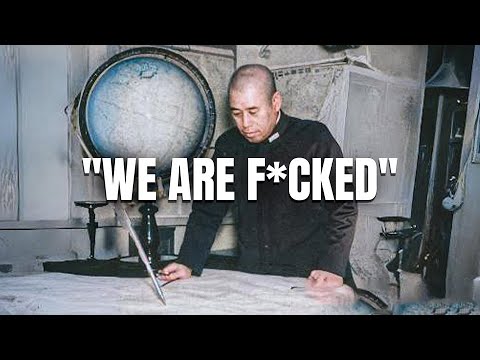
The admirals stared at the intelligence reports, each figure a damning indictment. American shipyards were churning out carriers at an astonishing rate, while Japan’s industrial capacity struggled to keep pace. Pilot losses were mounting, and the relentless American submarine campaign was strangling Japan’s supply lines. Every initial victory had cost precious resources that could never be replenished. The room felt like a tomb, the air heavy with the weight of impending doom.
To understand how they had reached this point, one had to go back to December 7, 1941—the day Japan believed it had achieved military perfection. The attack on Pearl Harbor had been a spectacle of precision, sinking battleships and destroying aircraft. But the victory was hollow. The American aircraft carriers—Enterprise, Lexington, and Saratoga—were at sea, untouched. Fuel depots, submarine bases, and repair yards remained intact. Every overlooked detail made the success temporary and, paradoxically, dangerous.
Admiral Isoroku Yamamoto had famously warned, “We have merely awakened a sleeping giant, now filled with terrible resolve.” Whether he said it or not, Japanese intelligence had predicted that their advantage would last only six to eight months—the time it would take for American production to surpass Japan’s. By August 1942, that window had slammed shut.
The Battle of Midway in early June had been the turning point. Japan lost four of its most valuable aircraft carriers—Akagi, Kaga, Sōryū, and Hiryū—along with hundreds of irreplaceable veteran pilots. These were not just ships; they were mobile fortresses essential to Pacific dominance. In a single day, decades of strategic investment had been wiped out.
Captain Mitsuo Fuchida, the leader of the Pearl Harbor attack, presented a chilling analysis. Japan had begun the war with roughly 3,500 highly trained pilots, the best in the world. By August 1942, about 40% of those veterans were dead. The survivors were exhausted, flying multiple missions daily with insufficient rest. Meanwhile, Japan’s training programs produced only about 100 new pilots per month, each with barely 200 flight hours—far below the 800 hours of the veterans. American losses, by contrast, could be replaced with industrial ease.
Fuchida concluded that at the current rate of attrition, by mid-1943, Japan’s carrier aviation would lose its entire experienced combat force. “Every veteran pilot lost is practically irreplaceable,” he warned. The admirals listened in grim silence, the implications sinking in.
The submarine war painted an equally bleak picture. Japanese submarines, despite advanced designs, were used primarily to support the fleet rather than to destroy enemy commerce. American submarines, however, were beginning to strangle Japan’s maritime routes. Oil from the Dutch East Indies, rubber from Malaysia, rice from Indochina—all had to cross seas now infested with enemy subs. In January 1942, only 15 merchant ships were sunk. By August, that number had risen to 40 per month. Japan could build perhaps 200,000 tons of merchant shipping per year while losing 300,000 tons. The trend was unsustainable.
As the admirals examined the reports, the reality of the front lines asserted itself. The islands conquered in the Pacific were not just strategic territories; they were logistical traps. Each isolated garrison had to be supplied by sea, but the growing threat of American submarines made every voyage perilous. Tankers sunk along critical routes meant that air sorties had to be canceled, leaving carriers unable to maintain a constant presence. Medical staff warned of rising mortality from tropical diseases, further draining human resources. Every operational decision became an extreme risk calculation.
The meeting ended without resolutions, only a shared awareness of a grim reality. As the admirals left the room, they knew they were trapped in a war they could not win. But the story of how Japan reached this point—and the fateful decisions that led to Pearl Harbor—was only beginning to unfold.
Yet even as the meeting dissolved, one question lingered in the smoke-filled air, unspoken but understood by every man present: how had the intelligence so badly misjudged the American will to fight? The answer, the admirals realized, lay not in Tokyo’s filing cabinets but in the factories of Detroit, the shipyards of Norfolk, and the living rooms of a nation they had never truly understood.
Admiral Chuichi Nagumo, who had commanded the Pearl Harbor strike force, offered his assessment with the weariness of a man reliving his worst decisions. “We believed that a devastating blow would break their spirit,” he said quietly. “Instead, it forged it into steel.” The premise had been simple: shock the Americans into negotiation before their industrial might could be mobilized. But the premise had failed on every level.
The military priorities themselves had been mistaken. Japan had targeted battleships—the symbols of naval power in an older era—while leaving the true instruments of Pacific dominance untouched. The aircraft carriers, the submarines, the fuel depots: all had survived. “We sank the past,” Fuchida muttered, “and left the future to sail away.”
Worse still, the attack had unified a fractured nation. American isolationism, which had kept Roosevelt’s hands tied for years, evaporated overnight. War bonds sold by the millions. Women flooded into factories. The very outrage Japan had hoped to avoid became the engine of its destruction. The delayed delivery of the declaration of war—a bureaucratic blunder—had branded the attack as treachery, giving the United States a moral clarity it had lacked before.
But the most painful revelation came from Captain Fuchida himself, who had led the first wave over Pearl Harbor. He reminded the room of a detail that had haunted him for months: the American fuel depots, vast reservoirs holding millions of gallons of oil, had stood untouched. “I begged for a second strike,” he said, his voice tight. “I knew those tanks were worth more than any battleship. But Admiral Nagumo feared the American carriers might return.”
Nagumo did not flinch. “And if I had sent my planes back and the carriers had ambushed them, we would have lost everything in a single morning.” The two men stared at each other across the table, the old argument rekindled. Neither was wrong. That was the tragedy of it—the decisions that had seemed prudent in the moment had compounded into catastrophe.
The Doolittle Raid in April had only deepened the wound. Sixteen B-25 bombers launched from the Hornet had struck Tokyo itself. The material damage was negligible, but the psychological shock was seismic. The illusion of an invulnerable homeland had shattered. Worse, the raid had forced the Navy to accelerate its plans for Midway—an operation that would end in disaster.
Yamaguchi leaned forward, his fingers tracing the scattered reports. “Midway was our last chance to force a decisive battle on our terms,” he said. “Instead, we dispersed our forces, relied on complex plans that collapsed under contact with the enemy, and walked straight into a trap.” American codebreakers had cracked Japan’s naval ciphers, knowing exactly where and when the attack would come. The vulnerability in intelligence had turned every move into a gamble.
The hypothetical alternatives surfaced briefly, like ghosts at the table. What if Japan had avoided attacking America altogether, limiting itself to the colonial possessions of Southeast Asia? Perhaps American entry into the war could have been delayed by years. What if the attack on Pearl Harbor had been followed by a full invasion, or at least a relentless campaign against the fuel depots and repair yards? Perhaps the Pacific Fleet would have been crippled for a generation.
But these were fantasies, and every man in the room knew it. The problem was never tactical execution. It was strategic disparity. American industry, population, and resources outweighed Japan’s in a way that no amount of courage or planning could offset. In any prolonged war, those factors would be decisive—and Japan had just ensured the war would be prolonged.
As the admirals rose to leave, one final matter demanded attention: Guadalcanal. American Marines had landed there in early August, seizing an airfield that threatened the entire Japanese perimeter. The fight to retake it would become a grinding war of attrition, a microcosm of everything going wrong. Reinforcements would be improvised, supplies would be insufficient, and the mathematics of wear would favor the enemy.
Yamaguchi paused at the door, looking back at the maps one last time. “We are fighting against the very map we created,” he said softly. “Every island we took is now a hostage we must feed.” No one answered. There was nothing left to say.
Outside the conference room, the tropical sun beat down on the flight deck of the Shōkaku, where mechanics worked in silence, their movements heavy with unspoken dread. They had heard the rumors, of course—the lost carriers, the dead pilots, the convoys that never arrived. But rumors were one thing; the faces of their admirals were another. “They look like men who have already attended their own funerals,” a young ensign whispered to his chief. The chief did not reply. He simply tightened a bolt and stared out at the lagoon, where the water shimmered with a beauty that felt obscene.
In the weeks that followed, the war did not pause for reflection. Guadalcanal devoured men and ships with a hunger that seemed insatiable. The Japanese Navy, once the pride of the empire, was reduced to running desperate supply missions—the infamous “Tokyo Express”—under cover of darkness, only to lose destroyers to American cruisers and aircraft. Each night brought another sinking, another list of dead, another report that could not be answered.
By late August, the admirals at Truk had stopped speaking of victory. They spoke instead of “acceptable losses” and “delaying actions,” phrases that fooled no one. The garrison on Guadalcanal was starving, its soldiers reduced to eating roots and grass while American bombers pounded their positions daily. “We are not fighting a war anymore,” one staff officer wrote in his diary. “We are managing a defeat.”
The truth, buried beneath layers of protocol and pride, was finally surfacing: Japan had never understood its enemy. It had seen America as soft, divided, and unwilling to sacrifice. Instead, it had found a nation of astonishing resolve, one that built ships faster than Japan could sink them and trained pilots faster than Japan could shoot them down. The sleeping giant had not merely awakened—it had risen with a fury that would not be satisfied until the Japanese Empire lay in ashes.
On the deck of the Shōkaku, the ensign watched the sun sink into the Pacific, painting the horizon in shades of blood and gold. He thought of his family in Hiroshima, of the quiet streets and the cherry blossoms. He wondered if he would ever see them again. He wondered if anyone would.
What do you think was the single most decisive mistake Japan made in the Pacific War—and could it ever have been avoided?
Report this article
Select a reason for reporting:






