He was Hitler’s most trusted spy on the Eastern Front, a man whose files held the secrets of the Soviet war machine. But as the Third Reich crumbled, Reinhard Gehlen didn’t burn those files—he buried them. And then he made a deal that would shock the world.
In the final days of World War II, as Russian tanks rolled toward Berlin, Gehlen, a general in the Wehrmacht, ordered his staff to evacuate crates of intelligence documents to Bavaria. He knew the Americans would soon occupy that zone. He also knew that his knowledge of the Soviet Union was his only ticket to survival—and perhaps, to power.
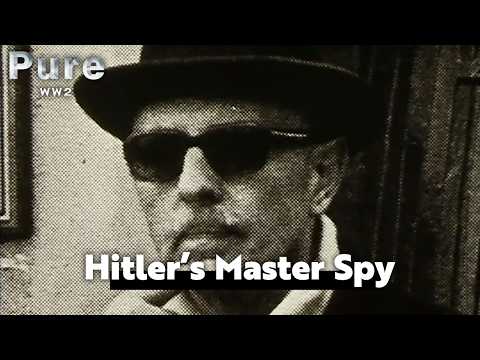
Gehlen’s journey from Hitler’s favored intelligence chief to the CIA’s most valuable asset is a story of ambition, betrayal, and the birth of the Cold War. It begins in 1933, when a young, serious officer entered the Berlin War Academy and told a friend, “The German army will come back, and I shall be a general.”
He was true to his word. By 1942, Gehlen was in charge of Foreign Armies East, the Nazi intelligence unit responsible for the Soviet Union. He built a vast network of agents, interrogated prisoners, and meticulously filed every scrap of information. His warnings about Soviet strength at Stalingrad and Kursk went unheeded by Hitler, who once dismissed his reports as “completely idiotic.” But Gehlen never stopped preparing for the day when his files would matter more than his loyalty.
As the war ended, Gehlen didn’t wait for capture. He sought out the Americans, carrying a proposal: give me freedom and funding, and I will give you the Soviet Union. The Americans, already eyeing their former ally with suspicion, listened. “He had an awful lot of beautiful cards in his hands,” one intelligence officer recalled. “And they’re the cards that we wanted.”
Flown to Washington in August 1945, Gehlen was treated not as a prisoner but as a guest. Housed in a comfortable villa with a butler and orderlies, he began his metamorphosis from wanted enemy to courted ally. The Cold War was dawning, and the West needed every advantage it could get.
But Gehlen’s bargain came with conditions: he would run his own organization, free from German oversight, and he could employ whomever he chose—including former Nazis and SS men under aliases. The Americans, desperate for intelligence on the Soviets, agreed. By 1947, his network had grown to over a thousand agents, funded by millions of dollars and headquartered in a fortified compound near Munich.
Gehlen’s spies infiltrated Eastern Europe, tapping phones, recruiting refugees, and even penetrating the Kremlin. He warned of Soviet jet fighters and East German rearmament. He became known as the spymaster of the Western world, a man whose reports shaped Western policy. But his methods and his past would soon catch up with him.
As the 1950s progressed, scandals erupted. A telephone tunnel in Berlin was betrayed, and a top aide was exposed as a Soviet mole. Gehlen’s reputation suffered, but his influence remained. Then came the Spiegel affair, a political firestorm that nearly brought down the West German government—and Gehlen with it.
But the final blow came from an unlikely source: a French spy named Maurice Picard. When Picard was exposed as working for Gehlen, the West German government demanded his retirement. Gehlen, the man who had survived Hitler and the CIA, was finally forced out.
Yet even in retirement, death followed him. In October 1968, several of his top deputies died in mysterious circumstances, officially suicides. Some whispered they were executions, silencing those who knew too much.
Today, Reinhard Gehlen lives in seclusion on the shores of Lake Starnberg, the same lake where mad King Ludwig of Bavaria drowned himself a century before. Like Ludwig, Gehlen saw himself as a savior of sorts. But the files that once bought his freedom now gather dust, and the Cold War he helped shape has faded into history.
This is the story of a man who served two masters and betrayed one—and whose legacy still haunts the world of intelligence.
The quiet of Lake Starnberg was a strange reward for a man who had spent three decades listening to the whispers of empires. Gehlen’s house sat back from the water, screened by trees, its windows dark and its gate rarely opened. Neighbors knew only that an elderly gentleman with thick glasses lived there, tended by his wife, and that visitors came and went without ceremony.
But the visitors were not ordinary. Former aides arrived with envelopes. Journalists came seeking interviews and left with little. And occasionally, men from Langley would make the pilgrimage, not to ask for intelligence, but to pay respects to the architect of their Soviet desk. “He was a crusader against communism,” one of his old associates said. “There’s no doubt about that.”
In his study, Gehlen kept his memoirs in progress—a careful, self-serving account of a life lived in the shadows. He portrayed himself as a patriot who had served Germany by serving the West, a soldier who had never truly belonged to Hitler. The files, he insisted, had saved Europe from surprise. The men he had employed, whatever their pasts, had been professionals.
Critics saw something else. To them, Gehlen was the man who had smuggled the Nazi intelligence apparatus into the heart of the new German state, who had filled his ranks with war criminals and called it pragmatism. The scandals of the 1960s—the moles, the betrayals, the bodies in the bloody October—were not accidents but the inevitable rot of an organization built on secrets and shielded from accountability.
Yet the Americans who had first embraced him never fully turned away. In the corridors of the CIA, Gehlen remained a legend, the man who had delivered the Soviet order of battle when no one else could. His methods were studied. His files were mined for years after his retirement. And when he died in 1979, the obituaries were careful, respectful, and incomplete.
What they left out was the cost. The agents betrayed by Felfe, the prisoners executed in the East, the operatives whose names were never spoken aloud. Gehlen had built a machine that ran on fear and loyalty, and when it broke, it broke silently, in courtrooms and cells far from the lake.
His wife, Herta, remained by his side until the end. She had lived through the war, the flight, the American years, and the long twilight of Pullach. She knew the man behind the dark glasses better than anyone—and she never wrote a word about him.
The lake outside their window was calm most days, a mirror for the Bavarian hills. Mad King Ludwig had drowned there, and the poets had made him a romantic. Gehlen would not be romanticized so easily. He had outlived his enemies, outmaneuvered his rivals, and outlasted the war that had made him. But the files that had once promised him power now sat in government archives, their secrets long since faded into the ordinary history of a divided continent.
He had wanted to be a general, and he had become one. He had wanted to matter, and he had. But the world he left behind was not the one he had fought for—and the men who followed him would never again enjoy such freedom, such funding, or such unquestioning trust.
The Cold War had its spies, and Reinhard Gehlen was among the coldest. But even the coldest wars end, and when they do, the spymasters are left with nothing but their memories and the quiet lapping of water against the shore.
But the quiet did not last. In the late 1970s, as Gehlen’s health began to fail, a new generation of journalists and historians started digging into the files he had left behind. The questions they asked were uncomfortable ones: How many of his agents had been Nazi war criminals? How much of his intelligence had been fabricated to keep the Americans paying? And why had so many of his operations ended in disaster?
Gehlen refused to answer. He gave no interviews, wrote no rebuttals. His memoirs, published in 1971, had been a bestseller in Germany, but scholars dismissed them as self-serving and incomplete. “He was a man who never told the whole truth,” one former colleague admitted. “Not to the Americans, not to his own government, and certainly not to his readers.”
Yet the Americans never abandoned him entirely. Even in retirement, Gehlen received visits from old CIA contacts, men who had worked with him in the early days and who still believed in the myth he had created. They brought no files, asked no questions. They came, one suspects, to reassure themselves that the bargain they had struck in 1945 had been worth it.
What they found was an old man in a dark suit, his eyes still sharp behind thick glasses, his voice still low and deliberate. He spoke of the Soviets as if they were still there, as if the Cold War had never ended. He warned of their ambitions, their patience, their willingness to wait decades for victory. “He never stopped being a soldier,” his wife Herta said quietly. “Even at the end, he was watching the East.”
But the East was no longer watching back. By the time Gehlen died in June 1979, the Soviet Union was bogged down in Afghanistan, its economy stagnant, its leadership aging. The iron curtain he had spent his life studying was beginning to rust. Within a decade, it would collapse entirely.
Gehlen did not live to see it. He died in his bed at Lake Starnberg, surrounded by his files and his memories, a man who had outlived his era but never escaped it. His funeral was small and private. The CIA sent a wreath. The West German government sent a representative. The press sent reporters, who stood outside the church and whispered about the secrets he had taken to his grave.
Some of those secrets were never revealed. The names of agents still living in the East. The operations that had gone wrong. The deals made in the shadows with men whose pasts were better left unexamined. Gehlen had built his organization on a simple principle: loyalty to the mission, whatever the cost. And when he died, that principle died with him.
But the mission itself did not die. The Bundesnachrichtendienst, the West German intelligence service he had founded, continued to operate from Pullach. His methods—the meticulous filing, the recruitment of refugees, the careful cultivation of sources—became standard practice. His successors, men he had trained and promoted, carried on his work long after he was gone.
And in the archives, the files remained. Thousands of pages of intelligence, much of it outdated, some of it still classified. Historians would spend years sifting through them, trying to separate fact from fiction, truth from self-interest. They would find moments of brilliance and moments of incompetence. They would find evidence of courage and evidence of cruelty. And they would find, again and again, the shadow of the man who had created it all.
Reinhard Gehlen had wanted to be a general, and he had become one. He had wanted to matter, and he had. But the world he left behind was not the one he had fought for. The Cold War he had helped shape had ended not with a bang but with a whimper, and the spies who had fought it were left to fade into history, their secrets buried with them.
The archives, however, refused to stay silent. In the decades after his death, declassified documents revealed the full extent of Gehlen’s bargain: the Nazis he had harbored, the agents he had sacrificed, the warnings he had ignored. “He was a man who served two masters and betrayed one,” one historian wrote, “and whose legacy still haunts the world of intelligence.”
His grave at Lake Starnberg is modest, unmarked by any monument. Tourists pass it without knowing. But the questions remain: Was Gehlen a patriot or an opportunist? A savior or a war criminal? Or simply a soldier who never stopped fighting a war that ended long before he did?
The answer, like the man himself, remains buried in the files.
What do you think—was Reinhard Gehlen a necessary evil of the Cold War, or a moral failure the West chose to ignore?
Report this article
Select a reason for reporting:






