History remembers their elegant gowns and poised portraits, but behind the canvas of the early White House hid a colder reality. From physical collapse to the quiet erasure of their true selves, these women paid heavily to maintain an illusion. What did it cost to paint the perfect first lady?
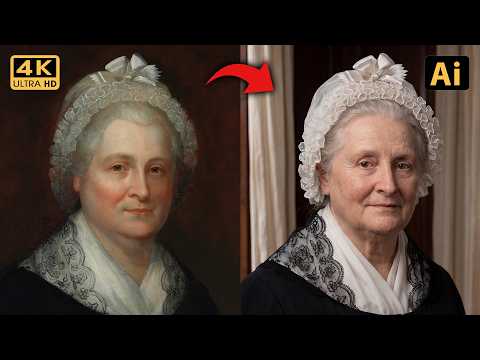
Before cameras captured the truth, the first ladies of America were forced to become monuments, their humanity sacrificed at the altar of public image. Martha Washington burned almost every letter her husband ever sent her, knowing history would never allow them to be merely human. She called her time in the capital a state prisoner’s existence. The first perfect portrait was painted with ashes.
Abigail Adams weaponized her pen, advising John on revolution and war, but the intellect carried a heavy psychological weight. She hid deep exhaustion while he built a nation. History remembers a founding mother, sharp and resolute, but her letters survive as historical monuments, breathing her last at 73, taking the silent anxiety of an era to her grave.
Rachel Jackson bought a white silk gown for her husband’s inauguration. She was buried in it instead. During the 1828 campaign, partisan newspapers branded her an adulteress, weaponizing a decades-old paperwork error. The relentless public shaming broke her health. Just days before leaving for the White House, she collapsed at their Tennessee plantation. She died at 61, far from the capital. Andrew Jackson secured the highest office in the nation, yet he walked into the executive mansion a grieving widower. The mob crowned a president, but they killed his wife.
British troops were marching to burn Washington in August 1814. Dolly Madison refused to flee. While politicians evacuated the executive mansion, she stayed behind. She ordered servants to break a life-size portrait of George Washington from its frame, loading the rolled canvas onto a waiting wagon just before soldiers set the building ablaze. It was an act of courage yet built on irony. She risked her own life to rescue a painted facade while the real capital burned to ash. Breathing her last at 81, she became a national hero for saving an illusion.
The Washington elite called her a snob. As the wife of the fifth president, Elizabeth Monroe replaced Dolly Madison’s warm gatherings with cold European formality. She closed the White House doors, refusing to return visits or host the endless social calls expected of her. The public saw an aloof queen modeling Paris fashion. They didn’t see the seizures. Severe epilepsy, kept hidden from the press, routinely left her collapsing in private rooms. Her regal distance wasn’t arrogance. It was a desperate shield. She spent her final years heavily medicated, dying in deep seclusion at 62. The capital judged a haughty aristocrat, never realizing they were staring at a prisoner of her own failing body.
She wasn’t the president’s wife. She was his oldest daughter. As the acting first lady for the third president, Martha Jefferson Randolph served as a living political shield. While Thomas Jefferson championed liberty and expanded his estate, she quietly managed his reality. She hosted formal dinners in the capital and kept Monticello running, carefully hiding her own ruined marriage and mounting poverty. She raised 11 children and endured an alcoholic husband, absorbing every burden to preserve the public image of an American founder. His grand legacy became immortal. Breathing her last at 64, she had already been forced to sell the very estate she sacrificed her life to protect.
London-born Louisa Adams was an essential political asset. As the wife of the sixth president, she was the only foreign first lady of her era. She filled the executive mansion with harp music and weekly tea parties to secure her husband’s election. The Washington elite saw a flawless hostess holding the capital together. They didn’t see the physical toll. Behind the closed doors of her private chambers, she battled deep depression and the trauma of multiple miscarriages. Her public smile was an exhausting performance. Breathing her last at 77, she left behind a legacy of social grace. The perfect portrait hid a woman too tired to drop the mask.
Letitia Tyler was a ghost long before she died. As the wife of the 10th president, she became the executive mansion’s first absent portrait. A severe stroke had paralyzed her before her husband even took the oath. Confined to the second-floor living quarters, she spent her days in a wheelchair. She sat upstairs in silence listening to the muffled music of state dinners below, watching her daughter-in-law play the flawless hostess in her place. The facade of the perfect first lady was now split between a ruined body and a healthy stand-in. Breathing her last at 51, she died a stranger to the public she supposedly served.
The White House finally had a library, but its creator was too exhausted to read. Abigail Fillmore filled the executive mansion with books. As the wife of the 13th president, she found Washington’s endless social obligations physically agonizing. A former school teacher, she sought refuge in literature, securing congressional funding to build the first permanent presidential library. While politicians debated downstairs, she spent her days surrounded by leather-bound volumes nursing a chronically failing body. Her intellect transformed the nation’s highest home, yet the capital’s damp climate quietly destroyed her lungs. She caught pneumonia attending a successor’s inauguration. Breathing her last at 55, she left behind a sanctuary. The facade hid a woman desperate for silence.
The commander-in-chief rarely made a decision without consulting the parlor first. As the wife of the 11th president, Sarah Polk operated quietly in the shadows. She bypassed formal balls to review legislation. She screened every political appointment before her husband saw the paperwork. Lawmakers quickly realized that to reach the Oval Office, they had to pass through her. She was a tireless operative hiding behind a polite smile. The shadow presidency worked, but it consumed her youth. James died 3 months after leaving office. Breathing her last at 87, she spent nearly half a century wrapped in mourning black. The invisible hand of the capital faded in isolation.
Jane Pierce never wanted the White House. As the wife of the 14th president, she entered the executive mansion carrying an unbearable loss. She had already buried two young boys when a sudden train derailment killed her final son just weeks before the inauguration. While her husband governed the rapidly dividing country, she secluded herself upstairs. Staff sometimes saw her sitting in the center of the presidential parlor, quietly clinging to her dead boy’s Bible. The illusion of a flawless first lady shattered under the weight of genuine tragedy. Breathing her last at 57, she left a capital that had demanded a graceful hostess but only received a mourning mother.
Emily Donelson was a masterpiece left unfinished. As the acting first lady for the seventh president, she dazzled Washington at just 21. She navigated the vicious petticoat scandal, hosting flawless dinners while rumors tore the cabinet apart. But the radiant hostess was quietly coughing up blood. Tuberculosis moved faster than the painters trying to capture her youth. Sent away to Tennessee, she withered in isolation. When her lungs finally gave out at 29, she left behind a fractured administration. Her life ended before the painted canvas could even dry.
Priscilla Tyler treated the executive mansion like a theater. As the acting first lady for the 10th president, she was uniquely prepared for the deception. A former stage actress, she stepped into the vacant role left by a paralyzed mother-in-law. While Washington tore John Tyler’s administration apart, she hosted lavish dinners, projecting an illusion of warmth and stability. Every smile was rehearsed. Every handshake was a calculated performance masking the political chaos burning around them. She played the gracious hostess until the curtain finally fell on his term. Breathing her last at 73, she left behind a legacy built on acting. She didn’t live in the White House, she merely starred in it.
The celebrated Southern Belle became a northern prisoner of state. As the daughter-in-law of the eighth president, Angelica Van Buren transformed the executive mansion into a European court. She was only 22. She introduced strict dinner rituals and received guests while seated on a raised platform, wrapped in Parisian silk and ostrich feathers. The public saw an aristocratic hostess bringing high society to Washington. They never saw the homesickness. Behind the velvet ropes, she felt deeply isolated, a South Carolina girl suffocating in a cold political theater. She played the gilded part until her father-in-law lost re-election. Breathing her last at 59, she left an illusion. The velvet facade hid a golden cage.
As the wife of the 16th president, Mary Todd Lincoln used silk to mask a grieving heart. She had already buried two sons. To project an unbroken image, she spent heavily on Parisian gowns and lavish White House receptions. Then came a Friday night at Ford’s Theater. Sitting beside her husband, her carefully constructed world ended with a single gunshot. Abraham slumped forward. The perfect portrait was instantly painted in blood. The sudden violence broke her mind. Committed to an asylum by her only living child, she spent her final years in isolation. Breathing her last at 63, she left behind a ruined illusion. The stage took everything.
She danced through the White House wrapped in velvet and controversy. Julia Gardner Tyler became first lady at just 24, secretly eloping with the 10th president. She immediately replaced her paralyzed predecessor’s silence with a calculated European glamour. To secure John Tyler’s legacy and the annexation of Texas, she hosted endless political balls, personally lobbying hostile lawmakers while acting the part of an American queen. Her regal performance succeeded. But her devotion to her husband’s southern politics ultimately defined her. Siding openly with the Confederacy during the Civil War, she lost much of her fortune. Breathing her last at 69, the glamour faded. The complicity remained.
The Gilded Age demanded a golden first lady. As the wife of the 18th president, Julia Grant understood the assignment. While her husband’s administration sank under corruption scandals, she focused on the chandelier light. She hosted 29 course dinners and poured imported champagne to distract Washington from their vanishing personal wealth. The executive mansion became a glittering theater of excess. She spent thousands on silk gowns to project imperial stability. The distraction worked, but the gold was only paint deep. Ulysses lost everything to Wall Street swindlers just years later. Breathing her last at 76, she spent her final decades surviving on a dead man’s book sales. The lavish facade hid an empty vault.
The Prince of Wales thought she was the perfect hostess. As the niece of the 15th president, Harriet Lane assumed the role of first lady for her bachelor uncle. She filled the executive mansion with vibrant social energy, carefully curating seating arrangements to diffuse the growing tension between northern and southern politicians. The public adored their young, stylish democratic queen. They rarely saw the cost of her devotion. To protect James Buchanan’s administration, she sacrificed her own independence and delayed marriage until she was nearly 40. Breathing her last at 73, she left behind a renowned pediatric clinic. The flawless host spent her final decades mourning her own lost children.
They called her Lemonade Lucy. As the wife of the 19th president, Lucy Webb Hayes weaponized morality. She banned all alcohol from the executive mansion, replacing wine with fruit juice at state dinners to project an image of pure protestant virtue. The temperance movement adored her. The Washington elite mocked her behind their crystal glasses. Her strict rules alienated foreign diplomats and stifled political networking, but she remained immovable. She used temperance as a political shield, securing a flawless public reputation while her husband barely survived a contested election. Breathing her last at 58, her moral victory was absolute. The lemonade flowed. The warmth did not.
A perfect facade finally demanded a life. As the wife of the 23rd president, Caroline Harrison gave her last breath to the White House. She poured her fading energy into modernizing its halls and preserving its history, securing funding and organizing the first presidential china collection. All the while, tuberculosis ravaged her lungs. She ignored the coughing fits, working to cement her husband’s legacy and build a permanent monument.
She didn’t live to see the end of his term. Breathing her last at 60, she gave everything to the institution. The painted portrait remained flawless, paid for with her life.
From Martha’s ashes to Caroline’s final breath, the perfect first lady was never a woman. She was a canvas stretched over a pulse, a smile painted by a nation that demanded monuments but could not bear mothers. What do you think history owes these women now?
Report this article
Select a reason for reporting:






