The morning of April 18, 1943, began with a whisper of static and a code that should have been unbreakable. Admiral Isoroku Yamamoto, the mastermind behind Pearl Harbor, was 435 miles from the nearest American base, cruising at 8,000 feet in a Mitsubishi G4M bomber. He had less than 60 seconds to live, and he had no idea that American fighters were already closing from behind at 350 mph.
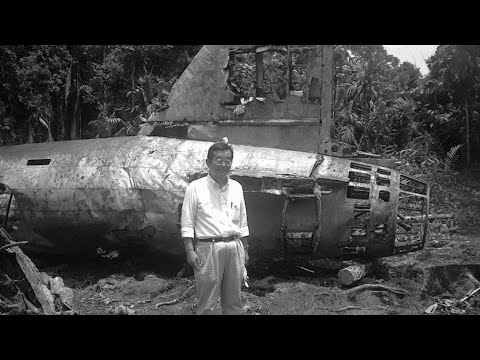
What happened in the skies over Bougainville that morning would become one of the most audacious precision strikes in military history—a mission so improbable that Japanese intelligence refused to believe it for weeks. When wreckage investigators finally reached the crash site and measured the distances involved, they confronted an impossible truth.
The Americans had built a fighter that could hunt across distances no interceptor had ever achieved, flown by pilots who could navigate across 400 miles of open ocean without landmarks, radios, or error—and arrive exactly on time, to the minute.
The weapon that made this impossible mission possible was one of the most unconventional fighters ever designed: the Lockheed P-38 Lightning. With its twin-boom configuration, tricycle landing gear, and counter-rotating propellers, it looked like nothing else in the sky. Japanese pilots reportedly called it Futago No Akuma—the Fork-Tailed Devil—though no verified wartime source confirms this nickname. Regardless of its origins, the name stuck, and for good reason.
But on that April morning, what mattered wasn’t its unusual appearance or its fearsome reputation. What mattered was a capability no other American fighter possessed: the range to fly deep into enemy territory and return home.
The story begins not with the mission, but with a message. On April 13, 1943, American cryptanalysts at Station Hypo in Pearl Harbor intercepted and decoded a Japanese naval transmission detailing Admiral Yamamoto’s inspection tour of forward bases in the Solomon Islands. The message was extraordinarily specific: departure time from Rabaul, arrival time at Balalae airfield near Bougainville, aircraft types, escort composition—every detail the Americans needed to plan an intercept.
The decoded intelligence reached Admiral Chester Nimitz, commander-in-chief of the Pacific Fleet, within hours. The decision to authorize what would become Operation Vengeance required presidential approval. Eliminating enemy commanders raised complex questions about military ethics and potential retaliation. But Yamamoto wasn’t just any commander. He was the strategic genius behind Pearl Harbor, Midway, and Japan’s entire naval war plan. His tactical brilliance and symbolic importance to Japanese morale made him an invaluable target.
President Franklin Roosevelt’s authorization came swiftly: Get Yamamoto.
The mission fell to the Army Air Force’s 339th Fighter Squadron, the Flying Knights, stationed at Henderson Field on Guadalcanal. But executing the intercept presented problems that seemed insurmountable. Balalae airfield lay 435 miles northwest of Guadalcanal across open ocean with no navigation landmarks. Japanese-held islands dotted the route, bristling with coastal observers who would report any American formation. The intercept window was brutally narrow: Yamamoto’s bomber would be vulnerable for perhaps 10 minutes during its approach to Balalae.
Most critically, no American fighter based at Guadalcanal had the range to reach Bougainville and return. The Grumman F4F Wildcat had a combat radius of roughly 175 miles. The newer F4U Corsair could manage about 400 miles, but only if pilots never deviated from the most fuel-efficient cruise settings, never climbed to combat altitude, and never engaged in energy-consuming combat maneuvering.
Only one aircraft in the American inventory could make the journey: the Lockheed P-38 Lightning.
The P-38’s twin Allison V-1710 engines, each producing 1,475 horsepower, gave it exceptional range. With standard internal fuel of 410 gallons plus two 165-gallon drop tanks, the Lightning could theoretically fly 1,150 miles. But theory and combat reality were different things. The mission required flying at low altitude to avoid Japanese radar, navigating with absolute precision across featureless ocean, climbing to attack altitude on arrival, engaging superior numbers of enemy fighters, and returning home with enough fuel reserve to avoid ditching in shark-infested waters.
Major John Mitchell, commanding the 339th Fighter Squadron, was assigned to plan and lead the mission. Mitchell, a taciturn combat veteran with nine confirmed victories, approached the problem with methodical precision. Every calculation had to be perfect. Any error in navigation, fuel planning, or timing would result in either missing the intercept entirely or running out of fuel over the ocean.
Mitchell’s navigation solution was brilliant in its simplicity, but brutal in its demands. He plotted a dog-leg course that took the formation west toward the Russell Islands, then northwest on a compass heading of 305 degrees. By staying low, between 10 and 50 feet above the waves, the P-38s would remain below Japanese radar coverage. The route avoided known observation posts and kept the formation over open water.
But flying compass headings over open ocean with no visual reference points required navigation skills that bordered on art. Wind drift could push aircraft miles off course. Compass errors of even a few degrees would compound over 435 miles. Mitchell calculated that to arrive at the intercept point within 5 miles—close enough to visually acquire the target—his navigation error could not exceed one degree over the entire two-hour flight.
The fuel calculations were equally unforgiving. At optimal cruise settings—2,000 revolutions per minute, 32 inches of manifold pressure—the P-38s would burn roughly 70 gallons per hour per engine, or 140 gallons total. The outbound leg would consume approximately 280 gallons. Climbing to attack altitude and combat would burn another 100 gallons. The return flight would require another 280 gallons: total 660 gallons, leaving roughly 115 gallons reserve.
Mitchell planned for the formation to maintain strict radio silence, cruise at 185 mph indicated airspeed, and avoid any unnecessary maneuvering. Every climb, every turn, every burst of throttle consumed fuel they couldn’t spare.
On the evening of April 17, Mitchell briefed the mission to 18 selected pilots. The target’s identity sent shock waves through the briefing room. Captain Thomas Lanphier, one of the assigned shooter pilots, later recalled, “The room went absolutely silent when we learned who we were hunting. This wasn’t just another intercept. This was a chance to eliminate the man who planned Pearl Harbor.”
The mission profile was straightforward in concept, nightmarish in execution. Twelve P-38s would form the high cover element, providing protection against Japanese interceptors. Four P-38s would form the killer flight, designated to engage Yamamoto’s bombers directly. Mitchell would navigate and control the formation. Lanphier and Lieutenant Rex Barber would make the actual intercept.
At 7:13 on the morning of April 18, the P-38 formation roared down Henderson Field’s steel matting runway and climbed into clear morning air. Each Lightning carried full internal fuel, two 165-gallon drop tanks, four .50-caliber machine guns with 500 rounds each, and one 20mm cannon with 150 rounds. Total takeoff weight exceeded 18,000 pounds—the heaviest the P-38s had ever flown operationally.
The formation descended to wave-top altitude and turned northwest. Below them, the Pacific stretched empty and blue to the horizon. No landmarks, no navigation aids—just Mitchell’s compass and a stopwatch, racing against fuel consumption and a rendezvous that had to be perfect to the minute.
The P-38’s configuration made long-range navigation possible. The twin-boom design placed engines and propellers far from the fuselage, dramatically reducing cockpit noise and vibration compared to single-engine fighters. Pilots could fly for hours without the physical fatigue that plagued Corsair and Wildcat pilots. The tricycle landing gear provided excellent forward visibility during taxi and takeoff. The counter-rotating propellers eliminated torque effects that made other fighters difficult to handle.
But it was the Allison engines that made the Lightning a long-range weapon. Unlike air-cooled radials that ran hot and required careful cylinder-head temperature management, the liquid-cooled Allisons could maintain consistent temperatures indefinitely. The turbo-superchargers, fed by exhaust gases, maintained manifold pressure at altitude without the parasitic power losses of mechanical superchargers. This efficiency translated directly into range.
The formation maintained strict radio silence as they crossed the 200-mile mark. Mitchell checked his navigation constantly, comparing compass heading against drift indicators, verifying airspeed and fuel consumption against his flight plan. At 185 mph indicated, the Lightning formation was making roughly 220 mph over the water, accounting for wind.
At 08:33, one hour and 20 minutes into the flight, the southern coast of Bougainville appeared ahead—exactly where Mitchell’s calculations predicted. The navigation error over 435 miles was less than 2 miles. The formation had arrived precisely on schedule, precisely on target. Fuel consumption tracked Mitchell’s meticulous predictions with legendary precision.
Then someone spotted the enemy formation.
At 09:34, within one minute of the predicted intercept time, Mitchell’s wingman called out two formations of aircraft approaching from the north. Yamamoto’s transport, precisely on schedule, exactly where American intelligence had predicted, flying straight toward them at 8,000 feet.
Admiral Yamamoto’s transport consisted of two Mitsubishi G4M bombers and six Mitsubishi A6M Zero fighters. The bombers—designated “Betty” by Allied intelligence—were fast medium bombers pressed into transport duty. Yamamoto rode in the lead bomber, piloted by Chief Warrant Officer Takeo Kotani. His chief of staff, Vice Admiral Matome Ugaki, occupied the second bomber.
The Zero escorts were among Japan’s best fighters, flown by experienced pilots from the 204th Air Group. Fast, maneuverable, deadly in dogfights, the Zero had dominated Pacific skies for 18 months. The Japanese pilots, unaware that American fighters had penetrated this deep into their defensive perimeter, maintained a relaxed escort formation.
Mitchell’s formation jettisoned drop tanks and split immediately. The 12-plane cover group climbed to engage the Zero fighters. The four-plane killer flight—Lanphier, Barber, and their wingmen—went after the bombers.
What happened in the next 90 seconds remains one of the most debated engagements in aviation history. Multiple pilots claimed credit. Gun camera evidence was incomplete. Japanese accounts contradicted American reports. But the outcome was unambiguous: Admiral Yamamoto’s bomber was destroyed. The admiral was eliminated instantly. The mission succeeded beyond all expectation.
Lieutenant Rex Barber’s combat report, filed hours after landing, described approaching the trailing bomber from behind and below. At approximately 200 yards, Barber opened fire with all guns. The combined firepower—four .50-caliber machine guns and one 20mm cannon—poured into the bomber’s right engine and fuselage. The G4M, nicknamed “Hamaki” (cigar) by Japanese crews for its tendency to ignite when damaged, erupted in flames.
Captain Thomas Lanphier, simultaneously engaging the lead bomber carrying Yamamoto, reported intercepting from the side as the pilot attempted evasive maneuvers. Lanphier’s guns raked the bomber from engine to tail. The left engine exploded. The bomber’s wing separated, and the aircraft entered an uncontrolled descent into the jungle below.
Above them, the cover flight engaged six Zero fighters in a swirling dogfight. The P-38’s superior speed and firepower offset the Zero’s maneuverability advantage. Lieutenant Besby Holmes destroyed one. The remaining Japanese fighters, surprised by the sudden appearance of American aircraft 400 miles from the nearest Allied base, broke off to protect the surviving bomber carrying Vice Admiral Ugaki.
The entire engagement lasted less than three minutes from initial contact to disengagement. Mitchell, monitoring fuel states, ordered the formation to break off and head for home. The return flight, racing against fuel exhaustion, tested every pilot’s discipline. Lieutenant Raymond Hine ran his tanks dry on the return journey. His aircraft went down at sea and was never found—a grim reminder of how narrow the fuel margins truly were.
The remaining 17 P-38s landed at Henderson Field with fuel tanks showing near empty. Total mission time: 3 hours and 10 minutes. Distance flown: 870 miles. Mitchell’s navigation and fuel planning had proven flawless under the most demanding conditions imaginable.
The immediate aftermath was confusion. American pilots knew they had engaged bombers and escort fighters. They knew both bombers had been destroyed or damaged, but Yamamoto’s identity wasn’t confirmed until Japanese radio intercepts, monitored over the following days, revealed unprecedented morning broadcasts from Tokyo. The Japanese Navy’s official announcement came on May 21, more than a month after the attack: Admiral Isoroku Yamamoto had perished in combat over Bougainville while directing operations.
The announcement shocked Japan. Yamamoto was the nation’s most celebrated naval commander, a strategic genius whose reputation approached mythical status. Japanese reaction to the intercept revealed the psychological impact. Initial reports blamed the loss on bad luck—an unfortunate encounter with routine American patrol aircraft. But as details emerged, Japanese intelligence officers confronted disturbing implications. American fighters had appeared 435 miles from their base at exactly the predicted time, at exactly the predicted location. This suggested either extraordinary luck or something far more troubling: the Americans had broken Japanese naval codes and could read operational traffic.
Investigation teams reaching the crash site near Buin found Yamamoto’s body still strapped in his seat, thrown clear when the bomber disintegrated on impact. Medical examination revealed he had been hit instantly. The debate over whether Lanphier’s or Barber’s guns delivered the fatal rounds would continue for decades, with both pilots’ claims supported by different evidence and eyewitness accounts.
The wreckage told a devastating story. The bomber had absorbed concentrated fire from multiple heavy machine guns. The right engine showed catastrophic battle damage. The fuselage was riddled with punctures consistent with .50-caliber armor-piercing incendiary ammunition. Most significantly, investigators measuring distances from the crash site to known Allied bases confronted an impossible calculation: Henderson Field lay 435 miles away. No Allied fighter had demonstrated such range in previous operations.
Japanese intelligence files captured after the war revealed their analysis of the Yamamoto intercept. Initial assessments dismissed the possibility of a planned assassination, instead attributing the encounter to unfortunate coincidence. But as wreckage analysis progressed, as distances were calculated and intercept geometry examined, Japanese analysts reached an inescapable conclusion: the Americans had developed fighter aircraft capable of operating at ranges previously considered impossible.
The P-38 Lightning that made Operation Vengeance possible represented revolutionary thinking in fighter design. When Lockheed began development in 1937, conventional wisdom held that fighters should be small, light, and agile. The Lightning was large, heavy, and fast. The twin-boom configuration emerged from practical engineering requirements rather than aesthetic choice. Lockheed’s design team, led by Hall Hibbard and Clarence “Kelly” Johnson, needed to mount a heavy armament package without the structural complications of firing through a propeller arc. Placing guns in the nose solved the synchronization problem but required locating the engines in wing-mounted nacelles.
This unconventional layout provided unexpected advantages. The central nacelle housed the pilot, instruments, and all armament—four .50-caliber machine guns and one 20mm cannon—creating a concentrated fire package with no convergence issues. All guns pointed exactly where the pilot aimed. The effective range extended to 600 yards, far beyond the convergence-limited range of wing-mounted guns.
The twin Allison V-1710 engines, each displacing 1,710 cubic inches, produced combined power exceeding any single-engine fighter. But more importantly, having two engines provided redundancy. P-38 pilots routinely returned to base on a single engine after battle damage—an option unavailable to single-engine pilots who faced ditching or bailout.
The turbo-supercharger system gave the Lightning exceptional high-altitude performance. While other fighters suffered power loss above 20,000 feet, the P-38 maintained full-rated power to nearly 30,000 feet. This altitude advantage proved decisive in the Pacific, where Japanese bombers operated at 25,000 feet or higher to avoid anti-aircraft fire.
But it was range that made the Lightning irreplaceable in the Pacific theater. The vast distances separating island bases meant that most targets lay beyond the reach of single-engine fighters. The P-38, with its efficient cruise performance and large fuel capacity, could escort bombers deep into enemy territory or conduct long-range intercepts impossible for other aircraft.
The mission to eliminate Admiral Yamamoto demonstrated these capabilities spectacularly. No other American fighter could have made the journey. The F4F Wildcat’s maximum range was roughly 700 miles—insufficient even with drop tanks. The F4U Corsair could theoretically reach Bougainville but would arrive with fuel reserves so marginal that any combat maneuvering or navigation error meant ditching at sea. Only the P-38 provided both the range to reach the target and sufficient fuel margin to conduct combat operations on arrival.
The Lightning’s combat record in the Pacific ultimately validated its design philosophy. P-38 units in the Pacific theater destroyed more Japanese aircraft than any other fighter type—over 1,800 confirmed victories. The top two American aces, Major Richard Bong with 40 victories and Major Thomas McGuire with 38, both flew P-38s exclusively.
Japanese pilots’ respect for the Lightning bordered on fear. Unlike the Zero, which relied on maneuverability and lightweight at the cost of armor and self-sealing fuel tanks, the P-38 was a heavily armed, well-protected weapons platform. Japanese pilots discovered that head-on attacks—effective against lightly built American fighters like the P-39—were suicidal against the Lightning’s concentrated nose armament. Saburo Sakai, Japan’s highest-scoring surviving ace with 64 victories, encountered P-38s over Guadalcanal and later wrote, “The fork-tailed fighter was fast, heavily armed, and could absorb punishment that would destroy our fighters. Attacking from behind was dangerous—their firepower was devastating. Attacking from ahead was fatal—you flew directly into eight heavy weapons firing simultaneously. The Lightning was the most dangerous fighter we faced.”
The strategic implications of Operation Vengeance extended far beyond eliminating a single commander. Japanese naval leadership never fully recovered from Yamamoto’s loss. His replacement, Admiral Mineichi Koga, lacked Yamamoto’s strategic vision and aggressive instinct. Japanese naval operations became increasingly defensive and reactive. More significantly, the successful intercept demonstrated that American intelligence could penetrate Japanese communications security at the highest levels. Japanese code changes following the Yamamoto incident came too late—American cryptanalysts at Station Hypo had already compromised the updated codes. This intelligence advantage would prove decisive in subsequent campaigns from the Philippines to Iwo Jima.
The psychological impact on Japanese morale was equally devastating. If the architect of Pearl Harbor, protected by escort fighters 400 miles inside Japanese-controlled territory, could be eliminated with surgical precision, no Japanese commander was safe. The message was clear: American reach extended anywhere, American intelligence penetrated everywhere, and American fighters could hunt across distances that defied belief.
For American forces, Operation Vengeance provided a tremendous morale boost during a period when ultimate victory remained distant. The successful strike proved that American aviation technology, American planning, and American pilot skill could execute missions of extraordinary complexity and danger.
The Lightning pilots who flew Operation Vengeance became instant legends. Major John Mitchell, whose navigation brought the formation to the intercept point within minutes of the planned time after 435 miles over open ocean, received the Navy Cross—an unusual decoration for an Army officer, but one that reflected the mission’s strategic importance to naval operations. Captain Thomas Lanphier and Lieutenant Rex Barber, the two pilots who engaged Yamamoto’s bomber directly, both received the Navy Cross. The ongoing controversy over who actually delivered the fatal rounds never diminished either pilot’s achievement. Both engaged targets under combat conditions after navigating across 400 miles of ocean. Both demonstrated exceptional combat skill against a numerically superior enemy, and both returned safely despite marginal fuel reserves.
The technical achievement of Operation Vengeance—precision navigation over 435 miles of featureless ocean using only compass and stopwatch, arrival within one minute of planned time, successful engagement against superior numbers, and safe return despite marginal fuel reserves—represented aviation excellence that contemporary European operations rarely matched.
The P-38 Lightning that made the mission possible continued serving throughout the Pacific War with distinction. By war’s end, Lightning squadrons had flown thousands of long-range missions across the vast Pacific theater, escorting bombers to targets deep in enemy territory, conducting reconnaissance flights over heavily defended areas, and hunting Japanese shipping across thousands of miles of ocean. The aircraft’s unusual configuration, initially viewed with skepticism by pilots trained on conventional fighters, proved ideally suited to Pacific conditions. The spacious cockpit reduced pilot fatigue during missions lasting six or seven hours. The twin engines provided redundancy that saved countless pilots who limped home on a single engine after battle damage. The concentrated nose armament delivered firepower that Japanese aircraft—built light to maximize maneuverability—could not withstand.
But beyond technical specifications and combat statistics, the Lightning represented American industrial and technological capability. While Japanese factories struggled to produce enough Zero fighters to replace combat losses, American production lines delivered P-38s by the thousands. While Japanese pilots flew aircraft with minimal armor, no self-sealing fuel tanks, and limited firepower, American pilots climbed into heavily armed, well-protected aircraft that gave them every advantage technology could provide.
The contrast between American and Japanese fighter design philosophy reflected broader strategic realities. Japanese designers, facing limited industrial capacity and raw material shortages, built fighters optimized for maximum performance from minimum resources. Every pound of weight was ruthlessly eliminated. Armor was removed, fuel tanks left unprotected, and structural margins minimized—all to maximize speed and maneuverability. American designers faced no such constraints. Abundant aluminum, unlimited engine production, and vast manufacturing capacity meant American fighters could be built heavy and strong. Armor protection, self-sealing fuel tanks, redundant systems, and heavy armament came standard. The P-38, weighing 12,000 pounds loaded compared to the Zero’s 6,000 pounds, exemplified this philosophy: build the best fighter possible without compromise, then produce it in overwhelming numbers.
This industrial advantage decided the Pacific War as surely as any battle. By 1944, American factories were producing aircraft faster than Japanese forces could eliminate them. Pilot training similarly reflected overwhelming American advantages. By mid-war, American fighter pilots arrived in combat with 400 hours flight time. Japanese pilots, facing desperate fuel shortages, entered combat with less than 100 hours. The result was inevitable. American pilots flying superior aircraft, supported by unlimited fuel and ammunition, backed by industrial capacity that replaced losses within days, systematically destroyed Japanese air power. By 1945, Japanese fighters rarely opposed American formations—not because Japanese pilots lacked courage, but because so few remained alive.
The Yamamoto intercept, executed on April 18, 1943, foreshadowed this eventual outcome. The mission demonstrated that American technology, American planning, and American pilot skill could execute operations that Japanese forces could not counter or even comprehend. The Lightning pilots who flew 435 miles across open ocean, arriving precisely on time to eliminate Japan’s most capable naval commander, proved what American aviation would accomplish over the next two years: victory through technological superiority, industrial capacity, and operational excellence.
Today, preserved P-38 Lightnings sit in museums across America. Their twin booms and distinctive profile instantly recognizable. These aircraft represent more than technological achievement. They represent the capability of American industry to design, produce, and deploy weapons that won the war. They represent the skill of American pilots who flew these complex aircraft into combat under conditions that tested both human and machine limits. They represent missions like Operation Vengeance—operations so audacious, so precisely executed that the enemy refused to believe them possible.
Japanese pilots who searched the jungle near Buin on April 18, 1943, found wreckage scattered across a hillside and the body of their nation’s most celebrated admiral. As they measured distances, calculated intercept geometry, and examined the concentrated pattern of battle damage, they confronted a reality that shattered their assumptions. American fighters had hunted across 400 miles of ocean and struck with precision that bordered on supernatural.
The Fork-Tailed Devil—whether the Japanese truly called it that during the war or the name emerged later—had spoken, and Admiral Yamamoto had become its most famous target. Eliminated by pilots he never saw, flying aircraft he didn’t know existed, guided by intelligence he never suspected was compromised.
The mission succeeded because Lockheed engineers had built a fighter with unmatched range. Because American cryptanalysts had broken Japanese codes. Because Major John Mitchell could navigate 435 miles over open ocean within a minute of planned time. And because American pilots could execute a mission of extraordinary complexity without error. That combination—technological excellence, intelligence superiority, operational planning, and pilot skill—defined American air power in the Pacific. And on April 18, 1943, above the jungles of Bougainville, it delivered a message that echoed across the Pacific: Nowhere was safe, no one was untouchable, and American fighters could hunt anywhere their enemies tried to hide.
The Lightning that made it possible flew home with nearly empty tanks, having covered 870 miles in 3 hours and 10 minutes. Behind it lay one of the most successful precision strikes in military history. Ahead lay two more years of war and thousands more missions. But Operation Vengeance remained unique—the day American fighters flew farther than anyone believed possible and eliminated the man who planned Pearl Harbor.
Japanese intelligence officers examining wreckage in the jungle and measuring impossible distances finally understood what American industry had achieved. The fork-tailed fighter wasn’t just another aircraft. It was a weapon that could reach across the vast Pacific, strike with surgical precision, and vanish before defenses could respond. It was, in every way that mattered, the weapon Japan could neither build nor counter.
And Admiral Yamamoto—whose brilliance had given Japan early victories, who had warned his superiors that America’s industrial might would ultimately prove decisive—became proof of his own prophecy. Eliminated by a fighter his nation could never match, flown by pilots his forces could never train in sufficient numbers, guided by intelligence his codes could not protect against. 435 miles. Precision navigation across open ocean. Perfect timing. Overwhelming firepower. Safe return. Operation Vengeance demonstrated everything the P-38 Lightning was designed to achieve and everything American air power would become: unstoppable, inescapable, and absolutely decisive.
What do you think was the most critical factor in the success of Operation Vengeance—the P-38’s range, the broken codes, or Mitchell’s navigation? Share your thoughts in the comments below.
Report this article
Select a reason for reporting:






