On February 16, 2002, five Australian soldiers were riding in a long-range patrol vehicle in southern Afghanistan when it struck a landmine, killing Sergeant Andrew Russell, aged 33. Russell had passed the Australian Special Forces selection years earlier, but no amount of training could reveal what was buried beneath the dirt. So, what was life actually like as an Australian commando sniper in Afghanistan? And what was the one danger that all those skills couldn’t counter?
From the outside, the sniper seems like the safest soldier on the battlefield. He is selected from the best. He receives grueling training. He hides in the dirt, far from the enemy, and works hard to ensure no one ever sees him. If you had to choose a man who is protected, you would choose him. But look at the cost of war. Across all Australian forces in Afghanistan, 41 soldiers were killed. 34 of them died from hostile actions. Another 261 were wounded. These numbers include every Australian in uniform, not just snipers, and are drawn from public casualty lists. Yet they tell us something. Caution, skill, and concealment did not guarantee every man’s safety.
In the early months of the war, according to one account, Australian SAS soldiers watched enemy fighters from above the snowline and from caves, then directed American and Canadian forces to them. Imagine that. Ice and wind, and the enemy at a distance. That is the image most of us have of this job. Now imagine a dirt road in southern Afghanistan, five men in a vehicle, and a mine that no one saw. Both images are real. The story lies in the space between them.
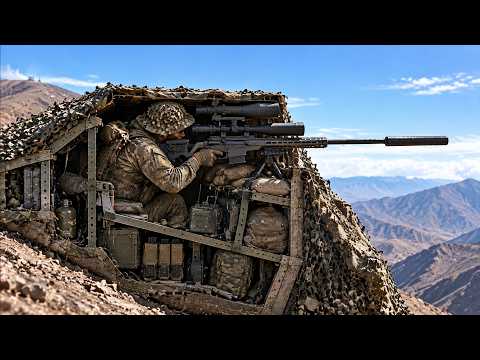
So here is the plan. We will rank the dangers he faced in the order he encountered them, from the day he first applied to the day things reached their peak. Ten dangers, counting down from 10 to 1, with the last being the danger this role faced when it first went to war. Each danger will have its own number. We will cover the base or training behind it, what the records show, and a link to the next danger.
First, who was this man? In Australia, the special forces soldiers who went to Afghanistan mostly came from three units. One was the Special Air Service Regiment, known as SAS. The other two were the 1st and 2nd Commando Regiments. The army built a school in Singleton, New South Wales, to select men for the three units. It opened on December 1, 1998. That school is now called the Australian Defence Force School of Special Operations. The 2nd Commando Regiment got its name on June 19, 2009, when it changed from the 4th Battalion of the Royal Australian Regiment. The SAS had already gone to Afghanistan by then. Its first squadron deployed in October 2001 and was replaced in April 2002. How few were chosen? Not everyone passes the test, and that is the point. The selection process is said to be designed to find out what a tired and hungry man will do next.
Number 10, the selection process. The course does not care how strong a man looks on day one. It cares about who is still standing and thinking clearly when he has nothing left. Number 10 is also where the legend begins. The idea that the right man with the right training can guarantee safety. Some men have told this story themselves. One is Rob Maylor. He was in the Royal Marines before joining the Australian SAS and wrote a book called Special Forces Sniper. According to the book’s description, he served two tours in Afghanistan in 2007 and 2008. The book says men he knew were killed and wounded, and that he himself was wounded. His book is the closest we get in this story to a real sniper’s voice.
Number 9, the craft and the load. A sniper is not just a man who can shoot accurately. He must estimate the range to the target. He must feel the wind on his face and know its effect on the bullet in flight. He must crawl into a hide, stay there for hours, and keep his mind sharp while his legs go numb. Then there is what he carries. A rifle, a scope, water, food, a radio, and bandages. Every item on that list had to be carried on his back over rough ground and in the dark. Weight is the sniper’s silent enemy. Every extra water bottle and every spare round is a promise to his legs that they will pay the price later.
Keep one thing in mind as the numbers go down. The last danger on this list is the one the entire role was designed for. It waits at the end, on the day the role first went to war, and it will test everything we have said here about concealment, skill, and preparation.
Now, he was selected. Now, he was trained. Now, he packed his kit and locked it down and made sure of his rifle. Only one thing left to do: reach the target. And here is where the ground, the heat, and the thirst take over. And here, too, the vehicle we mentioned at the start of our story reappears. The sniper reaches his hide the same way any soldier reaches his patrol, over the same ground. And that ground holds dangers no sniper course can teach.
Number 8, the way in. A sniper may be the best shot in the army, but he is useless if he cannot reach his position. So the first danger after training is the journey itself. In 2002, the SAS rode in a long-range patrol vehicle. Its name makes the plan clear: go a long way, far from any help. Imagine that. Barren ground, a low sun, and an engine that sounds loud in a silent land. Rob Maylor’s book describes walking sometimes for hours and sometimes for days through hostile country to find the right spot. So the way in might be by vehicle or on his own two feet. Every hour he spends moving is an hour someone might see him. And in either case, he could hide behind nothing but distance.
Go back to February 16, 2002. Five Australians were in one vehicle on an operation in southern Afghanistan. Beneath the ground lay a mine. It exploded. According to Defence, Sergeant Andrew Russell was the only one wounded. He had joined the army as an engineer in 1986. He was the first Australian to die in this war and the first Australian killed in combat since Vietnam. Think about the four men who were not wounded. The ground around them looked exactly the same after the explosion as before. A mine looks like nothing at all. It does not hide behind a hill or wait for a clear shot. It simply waits.
Number 7, the body. A sniper team does not just fight the enemy. It fights its own body. Remember the hills above the snowline. Cold is one kind of hardship. Later in the war, Australians operated in Uruzgan, a province in the south, where the ground and weather are difficult in a different way. What all hides share is stillness. A man must remain motionless while his stomach is empty, his mouth is dry, and his muscles ache to move. Staying awake and staying still at the same time is a skill in itself. Heat, cold, hunger, and thirst are all part of this job. And the sound of his own heartbeat is part of it too.
The sniper is not alone. He works as part of a team, and what happens to one happens to all. A photo from June 2010 shows a sniper team from the Australian Special Operations Task Group. Someone planned for these men to be there. Someone chose the day and sent them out. The planners had maps and reports. The team had only the ground in front of them.
Number 6, cover that faces one way. A sniper’s armor is not made of metal. It is in being unseen. Paint and cloth, shadow and darkness, and a position chosen so that no one looks twice. All of this is built against one enemy: the man who can see him and shoot him. That is the promise of this job. If you are not seen, you are not hit. And that promise held at times. A summary of fighting in Khaz Uruzgan says that when three Taliban fighters crossed open ground, Australian snipers engaged all three. That is the mission done right. An unseen team and a clear shot.
Now look at what the war did. The first Australian lost was not killed by a bullet. He was killed by a mine under the dirt, where no good paint or good hiding place helped. Concealment works against a man with a rifle. But it does nothing against the ground.
Go back to the numbers from the start. Of the 41 Australians who died, 34 died from hostile actions. That leaves seven who did not. Those 34 were killed in different ways. Private Grant Kirby and Private Thomas Dale were killed by a roadside bomb in Baluchi Valley on August 20, 2010. Corporal Scott Smith was killed by a bomb on October 21, 2012. Bullets killed two. Corporal Jason Marks was killed after intense gunfire on April 27, 2008. And Corporal Cameron Baird was killed in small-arms fighting on June 22, 2013. Rockets killed. Gregory Sher died in a rocket attack in Uruzgan on January 4, 2009. And Sergeant Matthew Locke of the SAS was killed by small-arms fire from insurgents in 2007. His story will come soon.
So the danger came from more than one side, and the hiding place covers only one side. Remember that first mine. A role can be built with the best skills, the best cover, and the best training, and still be tested in ways no one planned. For now, our man has reached the edge of the fight. Ahead is the enemy. Next comes his weapon, the ammunition he can carry, and the moment the plan falls apart.
Now he is close. The road is behind him. His body is tired. His cover is exposed. And the next choice carries no safe answer. The man in his hide can stay put and rely on camouflage and shadows. But staying means staying within reach of those who hunt him, or he can move, and moving means crossing open ground that the enemy may be watching. Neither choice makes him safe, and neither can be undone. Every second he waits is a second someone might find him. Every step he takes is a step toward them. He must choose, and the choice is his alone.
Number 5, the rifle and the ammunition. A sniper rifle is built to reach far. An unconfirmed report says two Australian snipers in Afghanistan in 2012 fired .50-caliber rifles at the same moment at a Taliban leader about 2,800 meters away. No one can say which bullet hit him. If true, it broke the record set in 2009 by British Corporal Craig Harrison at 2,475 meters. Before him, Canadian Corporal Rob Furlong had made a hit at 2,430 meters in Afghanistan in 2002. The same report says these rifles weigh twice as much as smaller types. So every extra meter of range has a price, and the man carried that price on his back.
Number 4, the enemy who hunts back. Snipers hunt, but they are hunted too. The proof is a medal. In December 2006, Sergeant Matthew Locke of the SAS received the Medal for Gallantry. The citation says he was second in command of a patrol sent to establish an observation post on rugged terrain above a place where enemy fighters felt safe. The enemy came toward the post. Locke led a two-man team to stop the fighters from overrunning the patrol, standing in the open again and again under rifle and heavy machine-gun fire. That is what being hunted can look like.
Number 3, the link. A sniper team depends on its radio to survive. When the link holds, a voice over the air can direct an airstrike. When it breaks, no one knows where help should come from. In early March 2002, according to one account, two Australian SAS teams helped keep an American force alive on Roberts Ridge. For two days they called in airstrikes while waves of enemy fighters surrounded the Americans. The link held. The danger is the day it does not.
Number 2, the escape. A team whose communications fail must slip away and hide until someone finds them. The danger is time. On September 2, 2008, a convoy of Afghan, American, and Australian vehicles was ambushed in Uruzgan. The citation says the enemy outnumbered them, was entrenched, and worked in coordination. The attack began with heavy machine-gun fire and rockets. One account says the convoy took more than two hours to break free. Trooper Mark Donaldson of the SAS drew enemy fire so the wounded could be moved to safety, then ran alone 80 meters across open ground to reach an interpreter and carry him to a vehicle. He became the first person to receive the Victoria Cross for Australia. The enemy did not need to capture our sniper. They only needed to hit him once.
Number 1, the ground itself. Every danger so far ends with the same question. What happens when he is hit? The answer is a chain, and every link must hold. First, his mates. When Sergeant Matthew Locke was shot, soldiers of his unit gave him first aid, according to the casualty list. Second, the sky. Helicopters can carry the wounded where no vehicle can reach. Third, the medical base. Locke died shortly after at a medical facility. Mates, helicopter, hospital. If one link breaks, the man’s time runs short. And sometimes, as you will hear, every link holds and the man still dies.
Here the records go quiet. The sources we found named only Sergeant Russell. They say five Australians were in the vehicle. They did not name the other four or report a word from them. They did not say what they did in the minutes after the explosion. What the record shows is clear enough. In the first month of the war, this role came home with one man dead. So this is the first danger. It is not a sniper’s rifle or a trap in a hide. It is the ground itself, met on a patrol in southern Afghanistan.
Russell passed SAS selection in 1991, ten years before the first squadron deployed. On February 16, 2002, he was riding in a long-range patrol vehicle with four other Australians. Beneath the dirt lay what Defence calls an anti-vehicle mine. One source says it was anti-tank. The vehicle struck it. Then came the sequence, as far as the records show. A man was wounded. A call was made to the task group headquarters two minutes before midnight, Australian eastern time, according to Defence. Thirteen minutes later, rescue helicopters launched from Kandahar. A team of three Americans reached the site and worked to save him. He was taken to an American medical facility and declared dead on arrival.
Who planted that mine? The records do not say, nor when. No one can be sure it was laid for the Australians or left over from an older war. But we know it did not need to see him. That is the key point of the whole countdown. The enemy can be a bullet or something buried in the ground. Imagine those thirteen minutes. For the men beside him, it was a long time. Dust settling. Someone calling for help. Someone pressing a wound. Then a low sound in the sky from far away. The records do not carry their words, so this is only a picture. But the numbers are real. Thirteen minutes before the helicopters lifted, then the flight. Then three Americans from a different army reached a wounded man on strange ground, far from any hospital, and began to work. That is a kind of courage this story should not ignore.
Now the tally. According to casualty lists, Russell was the first name on them. In November 2002, the government announced the end of that first special forces deployment. But the story did not end there. Australian special forces returned to fight in Uruzgan by 2007. One headline described the battle of Shah Wali Kot as Australia’s greatest modern battle. About 40,000 Australians served in Afghanistan between 2001 and 2021, according to the Anzac portal. 41 of them did not come home. The battle honour for eastern Shah Wali Kot was awarded to the SAS and the 2nd Commando Regiment together. On December 15, 2013, the last Australian combat troops left Uruzgan. About 400 soldiers stayed for training and support missions in Kandahar and Kabul.
Behind each of these numbers is a person like Russell, with a family, a mate in a vehicle, and a road like every other road. Let us return to where we began. Five Australians in a long-range patrol vehicle on a road in southern Afghanistan on February 16, 2002. Each of them was a soldier on patrol. Each was trained and trusted. Each carried the protection the mission gives: skill, concealment, and a good team. And yet the first thing the war took from them was not a bullet from an enemy scope. It was a mine no one could see.
So here are the three facts again, in new words. The best men took this role. So from the outside, it looked safe. All its protection was built against one danger: a man with a rifle. And the numbers show the danger came from more than one side, and the first came out of the dirt. That is the paradox in a single image: an elite man, a quiet road, and a danger that did not need to see him.
Russell’s camp, the special forces base in Afghanistan, was named after Andrew Russell. In the town of Walsh in New South Wales, a memorial seat carries a plaque in his name, presented by a unit of military engineers and the local Lions club. If you sit on a simple bench in a small town, look for that plaque. A long war began with one man, one road, and one mine.
If a single buried mine could undo every skill a sniper trained years to master, what does that say about the safety we promise ourselves in any dangerous job?
Report this article
Select a reason for reporting:






