At eleven in the morning on May 27, 1941, the sun blazed over the island of Crete, baking the dusty road that cut through the olive groves east of Chania. In a sunken lane known as 42nd Street, a makeshift force of Anzac soldiers—Australians and New Zealanders—lay waiting. They had fought for seven days straight, retreating under relentless German assault. Their backs were against the wall, literally and figuratively: behind them stretched the only escape route over the White Mountains to the sea. Ahead, the elite 141st Mountain Regiment of the 5th German Mountain Division advanced confidently, expecting no resistance. They had swept aside everything in their path for a week. But the men in the lane had other plans.
The Germans moved through the olive groves in open formation, their machine guns not yet deployed, their mortars silent. They had no reason to suspect that the trench ahead was still occupied. After all, Crete was considered lost; the order to evacuate had already been drafted in Cairo, though it wouldn’t reach the island until that afternoon. The men at 42nd Street were the rearguard of a doomed campaign, and they knew it. Yet, as the enemy approached, a quiet command rippled down the line: “Fix bayonets.” The metallic click echoed through the lane, a sound that would soon be followed by something far more shocking.
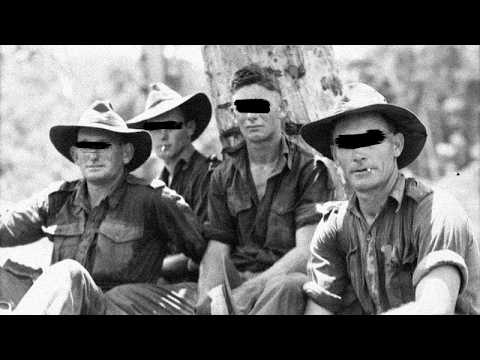
What happened next was not ordered by any general. It was born of desperation and defiance. The Maori Battalion surged out of the trench first, their war cries splitting the hot air. The Australians on their flank rose and charged alongside them. There was no covering fire, no smoke screen, no artillery support—none was left. Hundreds of infantrymen, many wounded and exhausted, sprinted across the open ground toward the stunned German battalion. The Germans managed to fire perhaps one volley before the Anzacs were upon them.
The fighting devolved into a savage melee of bayonets and rifle butts in the first olive grove. “You could hear the enemy’s breath,” one survivor recalled. Within minutes, the forward German companies ceased to exist as fighting units. The mountain troops—trained for long-range combat in rugged terrain—were utterly unprepared for close-quarters slaughter. They broke and ran, and the Anzacs pursued them through the trees for nearly a kilometer and a half.
The German 141st Regiment fled from men they had dismissed as a broken force. The Maori Battalion alone counted around 80 German dead left on the ground; German records later admitted to 121 casualties. In return, the Maori lost six killed and ten wounded. It was the most effective action by Allied forces on Crete from the first day to the last. But the charge had to be called off—not because of enemy resistance, but because the advancing soldiers emerged from the cover of the olive groves into open ground, where the Luftwaffe ruled the skies. The men reluctantly turned back, carrying their wounded, and reoccupied the same trench they had left an hour earlier.
That hour bought something priceless: time. The German advance along the coastal road halted, and when it resumed, it was cautious, probing instead of charging. Behind 42nd Street, thousands of Allied troops were already trudging up the rocky path through the White Mountains, strung out for kilometers with no cover. Every hour the Germans spent reorganizing was another hour those men gained, another kilometer closer to the evacuation beaches at Sfakia. The stand at 42nd Street was not just a tactical victory; it was a lifeline for an army on the brink of annihilation.
But the cost would be heavy. The rearguard itself would soon join the desperate march south, and many would not make it to the ships. As the sun set on May 27, the men of 42nd Street knew they had done something remarkable—but the ordeal was far from over.
The men who had charged at 42nd Street did not linger to savor their victory. By early afternoon, the order came down the line to move out. The wounded were helped onto makeshift stretchers or leaned on their comrades’ shoulders. Every man who could walk did. The trench that had briefly been a killing ground was abandoned to the Germans, who reoccupied it cautiously, as if expecting the dead to rise.
The route south was brutal. The path climbed steeply into the White Mountains, a jagged spine of rock and scrub that offered no shade and no mercy. The men walked in single file, their boots crunching on loose stone, their rifles slung across their backs. The sun hammered them without pause. Men who had fought for seven days straight now faced a march that would test even fresh troops. Some fell out of the column and simply sat down by the side of the trail, too exhausted to continue. There was no one to carry them.
Behind them, the German advance had slowed to a crawl. The mauling at 42nd Street had taught the mountain troops a lesson they would not forget: these Anzacs, even in retreat, could still bite. Reconnaissance patrols probed forward cautiously, expecting another ambush behind every olive grove. That caution was the rearguard’s final gift to the men ahead of them.
By nightfall on May 27, the first stragglers began to reach the pass above the Imbros Gorge. The gorge itself was a narrow slash in the mountains, dry and rocky, its walls rising sheer on both sides. In the darkness, the men picked their way down the streambed, stumbling over boulders, helping each other when someone fell. The wounded were carried by their mates, who were themselves barely standing.
At the bottom, the trail opened onto a rocky slope above the village of Sfakia. Below, the sea glinted under the moonlight. And there, waiting offshore, were the ships. The Royal Navy had come.
But the beach was a scene of controlled chaos. Thousands of men were crowded along the shoreline, waiting their turn. Landing craft shuttled back and forth through the surf, ferrying soldiers out to the destroyers and cruisers anchored beyond the breakers. The evacuation had begun, but it would take time—time the men at 42nd Street had bought with their blood.
The rearguard was among the last to arrive. They had held the line longest, and now they stood at the back of the queue. Some of them would make it onto the ships. Others would not. As the first light of dawn crept over the mountains, the men on the beach knew that the Luftwaffe would soon return, and the ships would have to withdraw before they were caught in the open.
The evacuation at Sfakia would continue for four more nights. Each night, the ships came, and each night, more men were taken off. But the rearguard’s ordeal was not yet over. They had held the line at 42nd Street. Now they would hold the perimeter at Sfakia, buying time for the last ships to load.
The perimeter above Sfakia was a thin crust of rock and scrub, and the men who manned it were the walking wounded of a broken army. They dug shallow scrapes with their helmets and bayonets, not trenches, because there was no strength left for digging. Below them, the beach swarmed with figures shuffling toward the water. Above them, the sky belonged to the enemy, and every hour of daylight was a sentence to be endured.
The Maori Battalion took the left flank, the Australians the right, with the remnants of the New Zealand battalions strung between. They had no artillery, no anti-aircraft guns, and almost no ammunition. What they had was a line of sight down the slope, and the grim knowledge that if the Germans came over the ridge, the men on the beach would be caught like fish in a barrel.
On the night of May 28, the first real test came. A German patrol probed the ridge in the darkness, feeling for a gap. A Maori sentry heard the scrape of a boot on stone and gave a low whistle. The line went silent. The patrol came on, closer, closer—then a single shot cracked out, and the night erupted. Rifle fire stuttered along the ridge for perhaps ten minutes before the Germans pulled back, leaving two dead on the slope.
It was not a battle. It was a warning. The rearguard had drawn a line in the dust, and the Germans had learned—again—that these men would not simply melt away. The patrol did not return that night.
But the nights were not the problem. The days were. At first light, the Luftwaffe came. Stukas dove on the beach, their sirens screaming, bombs tearing craters in the shingle. The men in the perimeter could only press themselves into the rock and watch. There was nothing to shoot at, nothing to do but endure. A New Zealand officer wrote later that the sound of the dive bombers was “the sound of helplessness.”
On the beach, the evacuation continued in fits and starts. Landing craft grounded on the shingle, took on their loads of exhausted men, and pushed back through the surf. Destroyers stood offshore, their guns silent, their crews watching the sky with the same helpless fury as the men ashore. Each night, the ships came. Each morning, they left. And each day, the perimeter held.
By May 30, the rearguard was down to its last rounds. Men counted cartridges like misers counting coins. The wounded who could not walk were given the choice to stay or to take a place on the boats, and some chose to stay, knowing they would be captured, so that a man with a family might go instead. There was no ceremony to it. Just a nod, a hand on a shoulder, and a turning away.
That night, the last ships came in. The beach was quieter now, the crowds thinned to a few hundred stragglers. The rearguard was ordered down from the ridge. They came in silence, carrying their wounded, their boots crunching on the same stones they had climbed days before. At the water’s edge, they waited their turn.
The boats came in through the surf, and the men waded out, holding their rifles above their heads. Some of them looked back at the dark mass of the mountains, where the Germans were already moving. They had held the line longer than anyone had a right to ask. Now the sea was their only road out.
On the morning of June 1, the men still waiting above the beach learned that no more ships would come. Over 5,000 soldiers remained on that shingle, deliberately including the rearguard—the units that held the perimeter were always the furthest from the water when the last boats left. They had stood between the German advance and the columns marching south, and that stand put them at the back of the line when the line ran out.
At Kydonia, above Sfakia, Lieutenant Colonel Theo Walker of the 27th Battalion surrendered the remaining force to an Austrian officer of the 100th Mountain Regiment. Across the campaign, 12,254 Allied soldiers were taken prisoner on Crete. Many came from the battalions that had held their ground so the ships could load—some had charged at 42nd Street five days earlier and walked back to the trench afterward.
The 27th Battalion had sailed from Alexandria in March with 759 men. By June 2, only 72 returned. The rest were in German hands, in the hills with Cretan villagers, or missing. A battalion reduced to less than a tenth of its strength in eleven weeks, across two campaigns, without losing a position it was ordered to hold.
German accounts call 42nd Street the most violent action by the defenders on the entire island. Their airborne losses at Maleme and Galatas were so severe that Hitler never authorized another major airborne operation for the rest of the war. The men who charged that morning had no official reason to fight side by side—Maori and Australians from different brigades, thrown into the same trench by retreat. They shared that lane for one night and walked out of it together, and today the memorial on the Sicalarian road bears both nations’ names.
The signal from Cairo authorizing the evacuation arrived at ten minutes to four that afternoon. By then, the men of 42nd Street had been back in their trench for hours, having decided for themselves what they would do about it.
What would you have done, standing in that lane with a bayonet and no orders?
Report this article
Select a reason for reporting:






