By early July 1941, Hitler’s confidence was at its peak. The Blitzkrieg had torn through Poland and France, and now the Soviet Union seemed on the verge of collapse. Hitler smugly called the USSR a ‘colossus with feet of clay,’ destined to fall with a single blow. In Berlin, plans were already underway for an autumn parade on Red Square. Moscow’s fate, it seemed, was sealed.
But the Germans were about to receive a shock. Before the Smolensk operation, they had captured western Belarus in just 13 days, the Baltics in 9, and most of western Ukraine in 17. Nothing and no one appeared able to stop the European army. Yet, as they pushed toward Smolensk—the gateway to Moscow—the Blitzkrieg mechanism began to crack.
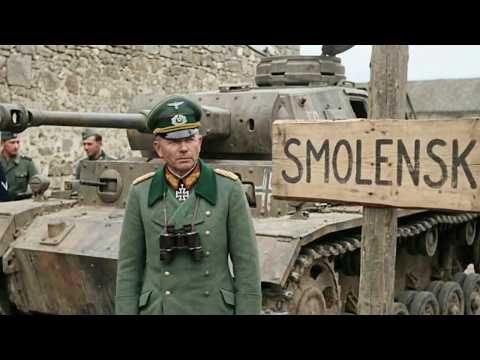
On July 10, German mobile units launched Operation Smolensk, expecting the city to fall within three days. Halder was confident; the plan was to encircle and destroy Soviet forces in five to seven days, then advance on Moscow. But reality proved far more complex. The operation would take five times longer than anticipated, shattering the timetable for capturing Moscow before autumn.
The German tank groups of Hoth and Guderian raced ahead without infantry support, leaving stretched communications and exposed flanks. They were vulnerable, fighting at extreme depth with minimal fuel reserves. German intelligence believed there were no Soviet reserves in the rear—but they were wrong.
Armies of the second strategic echelon were advancing from the depths of the country. After the catastrophic first weeks, Stalin had Pavlov and his staff shot, replacing them with Timoshenko. The Western Front had seven armies, but the first echelon had suffered catastrophic losses. Fresh armies were urgently needed.
On July 10, Hoth’s Third Panzer Group struck the 22nd Army in the north, while Guderian’s Second Panzer Group attacked the 13th and 20th Armies in the south, crossing the Dnieper. Guderian’s breakthrough reached the Dnieper ahead of Soviet reserves, surprising the high command. Timoshenko ordered a counterattack toward Vitebsk, but the Soviet armies, engaged on the march, had no time to deploy.
The 22nd Army was cut to pieces, and the 19th, 16th, and 20th Armies found themselves semi-encircled near Smolensk. The Luftwaffe dominated the skies, depriving the Soviets of any chance to stabilize the front. By July 15, Hoth’s tanks reached Yartsevo, cutting the Smolensk-Moscow highway and deeply encircling three armies from the east.
But then something unexpected happened. On the southern flank, General Kuznetsov’s 21st Army launched an offensive toward Bobruisk on July 13, driving the Germans from Rogachev and Zhlobin. This attack took the German command completely by surprise, threatening Guderian’s flank. Field Marshal von Bock was forced to transfer the 43rd Corps from reserve, weakening the central offensive.
Despite this, the German pincers tightened. By July 14, the 29th Motorized Division broke into southern Smolensk. On July 16, street fighting erupted. It seemed the city’s fate was sealed, but headquarters ordered: ‘Hold the city until reserves arrive.’ Stalin, furious, blamed the Western Front leadership. The garrison—45,000 to 50,000 men from three armies, reinforced by NKVD detachments—fought tenaciously.
Heavy fighting raged with blocks changing hands repeatedly. Soviet units dug in along the Dnieper in the northern part of the city. Three Red Army armies were threatened with encirclement, but the enemy was forced to abandon Yelnya, Velikiye Luki, and Yartsevo. Six divisions of the 13th Army were encircled near Mogilev, but it became clear that events were taking a different turn.
Stalin reinforced the Western Front with six additional armies and began forming the Mozhaisk defense line. On July 19, he dismissed Timoshenko and appointed Lieutenant General Yeremenko to lead the Smolensk salient. In the north, Soviet troops retook Velikiye Luki and prevented the encirclement of Nevel. The encircled 22nd Army broke through to friendly lines.
But the Supreme Command decided on a large-scale counteroffensive to push the enemy back to Orsha. Yeremenko led five operational groups attacking Smolensk from various directions. However, the offensive against a dense Wehrmacht defense, backed by superior airpower, failed to achieve decisive success. During the breakout, General Kachalov was killed. On July 26, Mogilev was abandoned, and two days later, the decision was made to withdraw from Smolensk.
The encircled units received almost no reinforcements, but the German command failed to completely destroy the 16th and 20th Armies, which crossed the Dnieper and held the eastern bank. By the end of July, both sides had failed to achieve their objectives, and relative stability set in. On July 30, Hitler ordered Army Group Center to go on the defensive. The tank divisions were in dire need of replacements and repairs.
Hitler, concerned about the slow progress in the south and north, transferred Guderian’s Panzer Group to Ukraine and Hoth’s forces to Leningrad. This reduced the threat to Army Group Center’s flanks, but the advance on Moscow was halted. The battle of Smolensk was not over, however. The Germans began attacking the flanks: Roslavl fell on August 3, Gomel on the 19th, and Velikiye Luki on August 25.
Soviet units launched repeated offensives near Dukhovshchina and fought trench warfare on the Ugra River. But the enemy encircled and destroyed Petrovsky’s 63rd Corps near Rogachev and Zhlobin. On September 1, 18 divisions from four armies attempted to break through toward Smolensk-Demidov, but advanced only a few kilometers. Offensive attempts continued until September 10, but were unsuccessful.
Headquarters ordered a switch to tough defense. The only tactical achievement was the 24th Army’s liberation of Yelnya on September 6, forcing the German 20th Corps to abandon its positions. This concluded the Smolensk defensive operation. Despite enormous losses—over 700,000 Soviet casualties, 1,348 tanks, 9,300 guns and mortars, and 93 aircraft—the Red Army had delayed the Wehrmacht’s advance on Moscow for nearly three months.
The Wehrmacht suffered over 100,000 casualties. Halder acknowledged that the USSR, considered a colossus with feet of clay, had demonstrated unexpected resilience, forcing the previously victorious Wehrmacht onto the strategic defensive. An important consequence was Japan’s decision to abandon plans to attack the USSR, officially rejecting them on September 6, 1941.
However, the consequences were also severe for the Red Army. Having lost their last fully equipped mechanized corps, the Soviet forces lost the opportunity to seize the operational initiative. Isolated local successes failed to turn the tide. The continuous offensives exhausted the units, contributing to the disasters at Vyazma and Bryansk in the autumn of 1941.
But this was only the beginning. The battle of Smolensk had far-reaching consequences that would shape the course of the war. What if Hoth and Guderian had maintained their pace and broken through to the capital in August 1941? How would the Eastern Front have changed if the strike force of Army Group Center had been defeated? These questions would haunt historians for decades.
To understand why Smolensk mattered so much, we have to look at what the Germans were actually trying to achieve. Army Group Center fielded 29 divisions, over 1,000 tanks, 6,500 guns and mortars, and more than 1,000 combat aircraft—a force designed for a single, rapid strike. The plan assumed the Soviet Western Front would simply dissolve, as it had in the first weeks of the war.
But the mobile wedges outran their infantry and artillery, which lagged behind by days, sometimes a week. Hoth and Guderian were fighting at extreme depth with stretched communications, exposed flanks, and minimal fuel. Without infantry, they could not hold ground, cover their flanks, or protect their rear.
This was the gamble the German command knowingly took. They believed no Soviet reserves existed in the rear capable of serious resistance. That belief turned out to be false. Armies of the second strategic echelon were already moving up from the interior of the country.
After the catastrophe of the first weeks, the entire command staff of the Western Front was shot on July 22, 1941. Marshal Timoshenko was appointed to replace General Pavlov, tasked with restoring command and stabilizing the front. By the start of Smolensk, seven armies operated under the Western Front, five in the first echelon and two in the second.
In reality, the situation was worse than the order of battle suggested. The first-echelon armies had suffered catastrophic losses, and most formations were dispersed or surrounded. Army headquarters retained control only on paper. That is why fresh armies had to be rushed in from the interior.
On July 10, the two tank spearheads of Army Group Center struck. Hoth’s Third Panzer Group hit the 22nd Army in the northern sector, bearing the brunt of the German northern thrust. Simultaneously, Guderian’s Second Panzer Group attacked the 13th and 20th Armies near Orsha and Mogilev.
Guderian broke through the southern sector and crossed the Dnieper north and south of Mogilev. His breakthrough reached the river ahead of Soviet reserves—an unpleasant surprise for headquarters. Timoshenko demanded the drive on Vyazma be halted and the threat to the Western Front’s rear eliminated.
He ordered a counterattack by three armies, supported by air power, to retake Vitebsk and consolidate along the Dnieper. But the counterattacks near Smolensk proved ineffective. The armies fought on the march, with no time to deploy. The 22nd Army was broken through before its offensive even began.
The 19th Army was struck in unprepared positions and fell back toward Smolensk, where its units joined the 16th and 20th Armies in near-total encirclement. German air dominance made it impossible to stabilize the front. Hoth’s tanks pushed north of the city and reached Yartsevo by July 15, cutting the Smolensk-Moscow highway.
And then, once again, the unexpected happened. On the southern flank, Kuznetsov’s 21st Army attacked toward Bobruisk on July 13, driving the Germans from Rogachev and Zhlobin. The German command was caught off guard by the threat to Guderian’s flank.
Von Bock was forced to pull the 43rd Army Corps from reserve, weakening the central offensive. But Luftwaffe dominance and German superiority in motorized units took their toll. By July 17–18, the 21st Army was forced onto the defensive.
Meanwhile, the catastrophe in the Smolensk direction deepened. By July 14, the 29th Motorized Division had broken into the southern districts. On July 16, Soviet troops abandoned districts in the north, and the fighting devolved into street battles. It seemed the city’s fate was sealed.
But headquarters had other ideas. On July 17, the order came: hold the city until reserves arrive. Stalin, furious, blamed the Western Front leadership for failing to organize the defense. The garrison—45,000 to 50,000 men from three armies, reinforced by NKVD detachments and militia—fought on.
Three rifle divisions were sent to support the garrison, but the moment was lost. German units had already dug in along the captured approaches. Blocks changed hands repeatedly, and Soviet units were eventually forced to dig in along the Dnieper in the northern part of the city.
As German mobile groups drove deep, three Red Army armies were threatened with encirclement. The enemy was forced to abandon Yelnya, Velikiye Luki, and Yartsevo. Six divisions of Remezov’s 13th Army were encircled near Mogilev—and it was here that events began to turn.
Realizing the complexity of the situation, headquarters made every effort to stop the advance. The Western Front was continually reinforced, and six additional armies were deployed in the rear. On the distant approaches to Moscow, the Mozhaisk defense line began to take shape.
On July 19, Stalin dismissed Timoshenko and appointed Lieutenant General Yeremenko to lead the group fighting in the Smolensk salient. In the northern sector, Soviet troops retook Velikiye Luki and prevented the encirclement of Nevel. Units of the encircled 22nd Army broke through the blockade and reached their own side.
But the previous plans were no longer working. The Supreme Command saw these successes as significant and decided on a large-scale counteroffensive to push the enemy back to Orsha. Yeremenko led five operational groups to attack Smolensk from various directions.
The new offensive struck a dense Wehrmacht defense, heavily armed with anti-tank weapons and covered by superior German airpower. It failed to achieve decisive success. And then something happened that no one expected: during the breakout from encirclement, task force commander General Vladimir Kachalov was killed in one of the battles.
On July 26, after intense fighting, Mogilev was abandoned. Two days later, the decision was made to withdraw troops from Smolensk. The encircled units received almost no reinforcements, while infantry from the 8th and 20th Corps steadily approached the German motorized divisions.
Despite the unfavorable circumstances, the German command failed to completely destroy the 16th and 20th Armies. They managed to cross the Dnieper and gain a foothold on the eastern bank. By the end of July, both sides had failed to achieve their operational objectives, and relative stability set in on the central sector.
On July 30, Hitler ordered Army Group Center, which had suffered significant losses, onto the defensive. The bulk of the losses in tank and motorized divisions occurred in late July and early August, during the fighting on the outer ring of encirclement. The units were in dire need of replacements and repairs.
At the same time, Hitler was concerned about the slow progress of Army Groups South and North. According to Operation Barbarossa, Kiev and Leningrad were also to be captured. He decided to transfer Guderian’s Panzer Group to Kleist’s units in Ukraine and send Hoth’s forces to Leningrad. This reduced the threat to Army Group Center’s flanks—but the advance on Moscow was halted.
The battle of Smolensk was not over. Having failed to break through the center, the Germans attacked the flanks: Roslavl fell on August 3, Gomel on the 19th, Velikiye Luki on August 25. Soviet units launched repeated offensives near Dukhovshchina and fought trench warfare on the Ugra River. But the enemy encircled and destroyed Petrovsky’s 63rd Corps near Rogachev.
On September 1, 18 divisions from four armies attempted to break through toward Smolensk-Demidov, but advanced only a few kilometers. The only tactical achievement was Rakutin’s 24th Army liberating Yelnya on September 6. This concluded the Smolensk defensive operation.
Despite over 700,000 Soviet casualties, the Red Army had delayed the Wehrmacht’s advance on Moscow for nearly three months. Halder admitted the USSR had shown unexpected resilience, forcing the previously victorious Wehrmacht onto the strategic defensive. Japan officially abandoned plans to attack the USSR on September 6, 1941.
But the cost was severe. Having lost their last fully equipped mechanized corps, the Soviets lost the operational initiative. The continuous offensives exhausted the units, contributing to the disasters at Vyazma and Bryansk that autumn.
What if Hoth and Guderian had reached Moscow in August 1941—would the war have ended differently? Share your thoughts below.
Report this article
Select a reason for reporting:






