The Middle East is on the brink. Tensions between Iran and Israel have reached a boiling point, and the likelihood of a second, larger-scale conflict is almost certain. With the US potentially drawn in, all eyes are on Iran’s military capabilities—and one question dominates: How good is Iran’s air power, really?
While Israel boasts near-total air dominance, Iran’s true strength lies not in its aging fighter fleet, but in its drones and surface-launched missiles. To understand this unique situation, we must trace the events that led here—from the 1950s, when Iran was reintroduced into the Western sphere, to the 1979 revolution that changed everything.
In the 1950s, Iran clashed with England over oil rights, leading to a combined Anglo-Soviet invasion. By 1951, Prime Minister Mosaddegh nationalized British oil infrastructure, prompting embargoes and economic unrest. Fearing communist influence, MI6 and the CIA orchestrated a coup in 1953—Operation Ajax—installing the Shah. Over the next 25 years, Iran aligned with the West, and weapon sales flowed, similar in scale to those acquired by Israel.
Both the Shah and his son were aviators, and special emphasis was placed on air assets. In 1968, the Imperial Iranian Air Force procured 225 F-4 Phantoms, followed by C-130s. By 1971, Chinooks were acquired, and in 1974, a major purchase included 181 F-5E Tigers, Boeing 707s and 747s for transport and refueling, and P-3 Orions for maritime defense. Finally, to bring the Air Force to fourth-gen standards, the Shah personally oversaw flyoffs between the F-15 and F-14, choosing the Tomcat with 80 ordered—its most iconic purchase.
Then everything changed. In 1979, the Islamic Revolution brought a complete change in government and military. Many pilots were jailed, but within months, they were offered a return to service as conflict broke out with Iraq. The Islamic Republic of Iran Air Force (IRIAF) continued operating American aircraft, but US trade restrictions forced Iranians to rely on intricate black market networks for parts. When the US discovered this, new restrictions prohibited civilians from purchasing aircraft components at auctions, and retired Tomcats were destroyed to prevent parts from reaching the black market. This marked a crucial moment that still impacts Iran’s air power today.
Most American-built aircraft were put under heavy strain during the Iran-Iraq war throughout the 1980s, under constant use—intercepting supersonic bombers and conducting extreme low-level bombing raids. By the 1990s, it was believed that due to part shortages and heavy use, Iran’s fighter fleet was heavily fatigued. Since then, Iran has reportedly created workarounds by domestically developing components to keep aircraft operational. However, the primary focus has now shifted to small, cost-effective drones and larger long-range surface-launched missiles.
This brings us to the current situation. Due to aging and extensive Israeli strikes in 2025, Iran’s air force has been significantly diminished. It still operates a large fleet of aging, primarily American and Soviet-era aircraft, shaped by decades of sanctions leading to a strong emphasis on domestic maintenance, reverse engineering, and the development of unmanned aerial vehicles and ballistic missiles to compensate for conventional air power limitations.
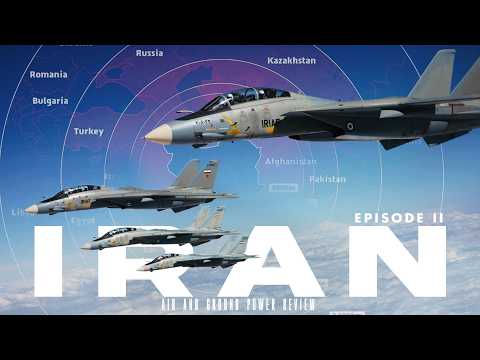
As of early 2026, the IRIAF’s active inventory consists of approximately 400 aircraft. The fighter fleet includes 63 F-4D/E and RF-5 Phantom IIs, 41 F-14A/AM Tomcats, 35 F-5E Tiger IIs, 23 Su-24MKs, 18 MiG-29As, and a range of other fighters and support aircraft. Despite upgrades, these aircraft are technologically outmatched by regional rivals. The operational status of its aging F-14s and F-4s is a testament to the ingenuity of Iranian engineers, but also highlights the struggle to maintain a modern fighting force.
Realistically, Iran’s best chance to deploy a competitive fighter aircraft is the Su-35SE. Recent reporting from late 2025 and early 2026, including leaked Russian defense documents, confirms that a deal for 24 Su-35 jets is active and production is underway. An April 2025 report states that some of these aircraft were shipped to Algeria. Iran has begun receiving Russian-made Yak-130 advanced trainer jets—a crucial step in modernizing its air force and preparing pilots for next-generation fighters like the Su-35. But given an impending war, it is unlikely that Iran will have a sufficiently large fleet of Su-35s ready for conflict anytime soon.
Before discussing surface-launched missile systems, we should review the available air defense systems. Iran maintains two advanced air defense systems: the S-300 and its domestically developed equivalent, the Bavar-373. They also tout an upgraded version of Bavar-373 as a rival to the S-400. Although untested, it reportedly has a detection range of 250 to 300 km and is claimed to intercept aircraft, cruise missiles, and ballistic missiles. Long-range platforms include the Khordad-3 and Khordad-15, both self-propelled with claimed detection ranges of 70 to 150 km. A third, the Talash, is similar, domestically built, and integrates missiles from the S-200. For medium-range defense, several mostly domestic systems are available, such as the Raad (modeled after the SA-17 with a range up to 50 km) and the Mersad (based on the MIM-23 Hawk with a range up to 75 km). For point defense, Iran fields the Herz-9 (based on China’s HQ-7), the Misagh-2 (based on the Igla), and several other lesser-known systems.
As a whole, Iran has attempted to build a modern multi-layered integrated air defense network almost entirely with domestically produced systems—not a bad achievement. How these systems fare in combat and how many are actually fielded is unknown. We can assume that based on their ballistic missile program, Iran can produce advanced rocket propulsion and guidance systems. However, it is still uncertain if they have the same level of expertise in developing search and track radar systems.
This brings us to Iran’s primary strength: missile technology. Iran fields a vast array of domestically produced ballistic missiles. Several medium-range ballistic missiles are fielded, both solid and liquid fueled, including the Sejjil and Khorramshahr-4 (solid and liquid fueled respectively) with a claimed range of 2,000 km. The Ghadr and Emad, both liquid-fueled, have a claimed range of between 2,000 and 3,000 km. Shorter-range systems include the solid-fueled Fateh missiles with claimed ranges of 300 to 500 km and the Shahab missiles, liquid-fueled, also with a 300 to 500 km range. Various other missiles are produced domestically, including two land-attack cruise missiles, the Hoveyzeh and the Paveh, with claimed ranges between 1,350 and 1,650 km. Most of these have a payload of between 450 and 750 kg, with some exceptions. The Khorramshahr is claimed to have a 1,500 kg payload, although its employment status is uncertain.
Iran has publicly claimed to possess hypersonic missiles, unveiling the Fattah-1, a maneuvering ballistic missile, and Fattah-2, a claimed hypersonic glide vehicle. While these announcements signal Tehran’s clear ambition to develop highly advanced, high-speed, and maneuverable weapons, Western defense experts are skeptical. They largely assess the Fattah-1 as an advanced ballistic missile with a maneuvering warhead rather than a true hypersonic weapon and note the lack of evidence for the operational status of the Fattah-2.
Overall, as we noted in our analysis over a year ago, this provides extensive coverage across the region. Importantly, it includes key areas such as Israel, Qatar, Saudi Arabia, and US military bases in Iraq and Syria, aligning with their military strategy. This enables Iran to hedge against regional rivals by threatening direct retaliation. As seen a year ago, and with no indication of fundamental new tech breakthroughs, it appears that the primary tactic that would be employed is saturation—whether at bases or to overwhelm the Iron Dome.
The next major focus is drone technology. Having been an early adopter of unmanned direct attack systems before the Ukraine war broke out, Iran’s drones have ironically become an international focal point. By far the most notable is the Shahed family of drones, namely the Shahed-136 and Shahed-129. Propeller-driven and easy to mass-produce, these have seemingly been replicated by Russia and Ukraine and reportedly served as inspiration for the new Lucas platform. The Shahed alongside the Arash offer ranges possibly up to 2,000 km. Beyond this, a variety of reusable drones are produced. The small short-range Ababil-3 and Mohajer-6 used by proxy forces for both reconnaissance and precision munition deployment can fly between 100 and 200 km. Larger drones such as the Kaman-22 and Karrar can fly in excess of 1,000 km offering both ISR and strike capabilities. Their largest drone, the Fotros, is an ISR platform focused on maritime patrol.
In much the same manner as their approach to missile employment, we predict that Iran’s strategy for drone warfare will be to swarm hostile positions and use non-state actors to launch threats from unpredictable locations. The primary benefits of these drones are ease of use, production capacity, and cost. In this way, they have produced a variety of recon, strike, and loitering munition systems—some conventional, others small enough for deployment in the field by militias. Overall, Iran’s domestic drone systems seem capable of their intended tasking, especially for kamikaze-like attacks. What’s more, unlike missiles, these drones’ relative simplicity means production processes can be replicated and rebuilt far more easily in the event of war.
Given all this, how does Iran’s overall military strength measure up? And how would it perform in another conflict with Israel or the US? Based on the initial exchanges between Iran and Israel a year ago, as well as the so-called 12-day war, we can form a reasonable understanding. Based on the information available, Iran is locked in a purely defensive posture. Long-range missiles and drones can strike at long distances, but these are fundamentally defensive, not offensive in nature. Without soldiers on the ground, kinetic conflict in the region rests almost entirely on a balance between intercepting incoming aerial threats and breaching the other side’s defensive systems.
During the missile barrages before the 12-day war, a combination of drone swarms and saturation attacks from Iran using surface-launched missiles indeed overwhelmed both the David’s Sling and Iron Dome systems. Other friendly assets like American air crews based along the trajectory were also unable to neutralize all threats. We assume Iran will continue to exploit this vulnerability in future kinetic conflicts by emphasizing increased launch capabilities. Israel has observed and attempted to address this vulnerability beyond targeting runways, oil depots, or hangars. The real tactical threat from Iranian missile barrages is likely to wear down an opponent.
And this brings the conversation back to the primary point of disparity. Without a large-scale intelligence network in its rival’s territory, nor a force capable of rapid forward deployment into hostile territory, Iran is fundamentally locked in a defense-only posture. Most of Iran’s military initiatives are focused on geopolitical strategies, primarily aiming to deter direct attacks through the threat of retaliation. Yet, if a vulnerability is identified in this strategy or if a nation like Israel is prepared to accept the consequences of retaliatory strikes, then this defensive stance becomes less effective. In that scenario, Iran would need to adopt an inward-focused approach, predominantly depending on militia warfare to deny access to the area.
This brings us to Iran’s position during a full-scale war. As shown, once the 12-day war actually kicked off, no major aerial threat was encountered by the Israelis, supposedly due to electronic warfare systems that kept even older platforms like the F-16 secure over Iran. The US, seemingly relying on stealth, managed to break through saturated air defenses without any major problems. Few Iranian aircraft were supposedly shot down despite reports of launches throughout the two-week war. This coincides with mixed reports of Iranian aircraft returning to base without any contact.
In the event of a larger-scale kinetic war, we can infer several points. First, Iran’s air force would probably see minimal action due to the significant electronic warfare technology gap between Israel and Iran, which largely neutralizes direct intercept threats, similar to last year’s events. If the US were to intervene, the typical result would be the grounding of Iranian fighters. This outcome is common whenever a substantial technology disparity exists between two air forces. Essentially, if the chances of a successful engagement are very low, launching attacks either makes no tactical difference or results in a net loss of personnel and assets. That’s why most smaller air forces tend to withdraw once American aircraft are involved.
Beyond this, it remains unclear how consequential Iran’s military capabilities could be. While largely outside the realm of air power, we presume that if a war between the US and Iran broke out with the goal of regime change, reliance on modern technology would deteriorate within the first week or so. Without a guaranteed ability to deny overflight of stealth aircraft, US strikes would be able to neutralize missile launch positions and production facilities. While a combination of special forces, field agents, and kinetic strikes would be used to knock out key personnel in military and government leadership positions. The presence of US naval assets in the region visible in today’s buildup suggests that ship-launched weaponry would also play a role similar to what occurred in Venezuela, the Iraq war, and Desert Storm.
Such a situation could lead to a protracted conflict with loyalists resorting to unconventional warfare—the most reliable way to fight a superior adversary—while factional warfare breaks out as power vacuums emerge. In other words, it is possible that due to the region’s volatile religious and political sectarianism alongside ethnic and factional tensions, a situation similar to that seen in Iraq could emerge if a successful regime decapitation is carried out. Whether or not this will occur is another question entirely, although it cannot be ruled out. If war were to break out, the US might attempt to prevent a complete collapse of the Iranian government. This would likely be motivated by concerns over Iran’s nuclear materials, which could fall into the wrong hands if they are not quickly secured.
Noting its inadequacy in military technology and its limited role in domestic engineering and manufacturing, Iran’s military strategy relies on two crucial components. The first, as should be well established, is the development of drones and missiles. With no air force or navy equivalent to its likely adversaries, this focus on overwhelming kinetic force is useful both as a geopolitical bargaining tool and in the case of a hot war, primarily as a means to strain an adversary’s resources rather than as an offensive tool. The second element is the use of proxy networks to hedge against regional adversaries. While highly politicized and controversial for obvious reasons, the reality is that most conflict in this part of the world is fought indirectly through proxy forces in Syria, Lebanon, Yemen, and so forth. In theory, this tactic offers decentralized retaliatory strike capabilities in the event of war through the distribution of short-range drones and smaller missile systems to these proxies.
Together, Iran’s strategy offers direct deterrence against these non-state actors entrenched throughout the Middle East. Together with the missile and drone focus, Iran has what is described as forward defense in a war. This approach also allows Iran to threaten area denial in the Strait of Hormuz, potentially crippling global oil supply and to act as a serious bargaining chip in avoiding conflict. A final point to consider is digital warfare. Although its full capabilities are unknown, Iran, similar to Israel, has focused on cyber warfare and the integration of AI into these operations. This encompasses a wide range from traditional cyber attacks on digital infrastructure to GPS jamming and related tactics.
In the final analysis, when it comes to manpower, Iran remains a serious force if motivated to fight with close to 850,000 military personnel and perhaps as many as 200,000 Revolutionary Guard members. This could pose a serious threat if effectively employed in a defensive posture. However, when it comes to air power, Iran’s air force finds itself in an interesting position. Largely outdated, the fleet has been significantly degraded by trade restrictions. While Russia has long been reported to be privately purchasing Iranian drones through back channels, both Russia and China seem hesitant to publicly sell advanced equipment to the Iranian regime, likely a tactical move given Iran’s perceived autonomy from both the East and the West.
Just as in the Iraq war, the technology gap between Iran and the US indicates that while Iran’s air defense network remains capable of threatening incoming aircraft, drones or missiles, it is only a matter of time before stealth aircraft neutralize the primary threats in this network. Once these radar threats are gone, aircraft flying at altitude can essentially strike with immunity. Thus, Iran relies almost entirely on growing its missile arsenal, building small drone systems, and having a fallback plan for defense and manufacturing in the event of war.
Put simply, Iran’s military is large, and its primary strength in air power is its surface-launched missile and drone program. The air force itself lacks modernized aircraft, while its air defense systems remain a mystery in terms of capabilities. To their credit, Iran has rigorously built up its own domestic manufacturing capabilities. While we don’t know how good any of this tech is, it is evidence of extreme motivation to hedge against its rivals. And there is every indication that it won’t be long before all of Iran’s military is put to the test.
So when the next war comes, expect the skies over Iran to fill with Shaheds and ballistic missiles—not Tomcats. “Iran’s air force is a museum piece; its missiles are the real threat.” The 12-day war proved that saturation attacks can overwhelm even the best defenses, but only for so long.
Without stealth or modern fighters, Iran’s defensive posture is a race against time. Every missile launched is a bargaining chip spent. And with Su-35s still years away, the window for deterrence is narrowing.
The region holds its breath. Will Iran’s missile swarms overwhelm Israel’s defenses, or will stealth aircraft erase them from the sky? What do you think—is Iran’s air power a paper tiger, or a hidden ace? Share your take in the comments below.
Report this article
Select a reason for reporting:






