The darkness was absolute, broken only by the rhythmic slap of waves against the hulls of a thousand ships. In the late hours of November 7, 1942, two massive armadas—one American, one British—converged on North Africa, their mission shrouded in secrecy. No one aboard knew their destination. For days, they had sailed through hostile waters, evading U-boats and enemy patrols, carrying the hopes of a free world.
On the bridge of the USS Augusta, General George S. Patton addressed his men, his voice steady despite the weight of the moment. “We do not know whether the French African Army will oppose our landing, but all resistance must be destroyed, from whatever side it comes.” The men listened, hearts pounding, as the first rays of dawn revealed the coast of Casablanca.
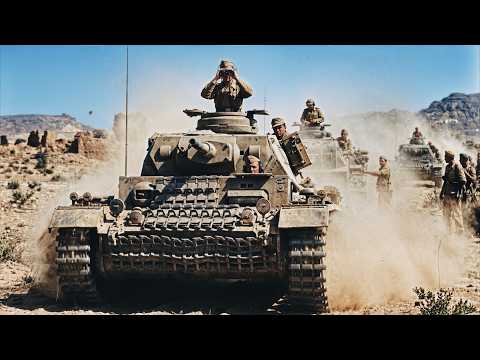
This was Operation Torch—the largest amphibious invasion in history up to that point, a bold gamble to wrest control of North Africa from the Axis and open a second front. But victory was far from certain. The French, loyal to Vichy, might fight. The Germans, caught off guard, would soon pour reinforcements into Tunisia. And the winter rains were coming, threatening to turn roads into rivers of mud.
As the first landing craft hit the beaches, the world held its breath. Would the French resist? Would the Allies secure a foothold before the Axis could react? The answer would come in the days ahead, in the fiery skies over Oran and the muddy hills of Tunisia, where young men from America, Britain, and France would forge an unlikely alliance and change the course of the war.
But before the first shot was fired, a secret meeting had taken place in Washington. President Roosevelt and Prime Minister Churchill, along with their combined chiefs, had devised a plan so audacious that few believed it could succeed. “Operation Acrobat”—the code name for the invasion—was a masterpiece of deception and coordination. For 125 days, thousands of workers and soldiers labored in absolute secrecy, assembling a force of hundreds of thousands and millions of tons of supplies.
In London and Washington, British and American officers worked side by side, forging the bonds that would become the backbone of the Allied war effort. “We didn’t know where we were going,” recalled Private Joe McAdams of Kansas. “But we knew it was big. We knew it was important.”
As the convoys slipped through the Strait of Gibraltar under the cover of darkness, the world waited. The Axis, complacent, had no idea that the greatest armada in history was about to descend upon the shores of North Africa. The trap was set. The only question was: would it snap shut?
On the morning of November 8, the first waves hit the beaches at Casablanca, Oran, and Algiers. At Algiers, French coastal batteries opened fire, but British warships quickly silenced them. The message was clear: the Allies meant business. Yet, in the chaos of battle, confusion reigned. French commanders, loyal to Vichy, were torn between resistance and surrender. At Casablanca, the French battleship Jean Bart and coastal defenses poured fire on the American fleet, but the overwhelming firepower of the U.S. Navy, including the USS Massachusetts, pounded them into submission.
Meanwhile, at Oran, American paratroopers, flown 1,500 miles from Britain, seized key airfields, while infantry stormed ashore. The fighting was fierce but brief. By November 10, the French forces in Algiers and Oran had capitulated, and two days later, Casablanca fell. The Allies had secured their foothold.
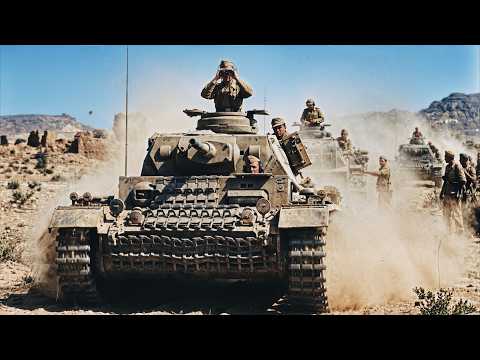
But the victory was not without cost. The French, humiliated by their own surrender, were divided. Admiral Jean Darlan, a Vichy loyalist, negotiated a ceasefire, but his collaboration with the Allies infuriated many. “We are not Nazis,” Patton had reminded his men. “We fight a common enemy.” The French forces in North Africa, though initially resistant, soon joined the Allied cause, forming a united front against the Axis.
However, the Germans were not idle. Within days of the landings, Hitler ordered the occupation of Vichy France and rushed reinforcements to Tunisia. By mid-November, 1,000 German soldiers were arriving daily in Tunis and Bizerte. The race for Tunisia had begun.
The Allies, led by General Kenneth Anderson, pushed east from Algeria, hoping to seize Tunis and Bizerte before the Germans could fortify them. But the weather was against them. The roads turned to mud, and the Luftwaffe, operating from well-built airfields in Tunisia, dominated the skies. “We were fighting the terrain as much as the enemy,” recalled one British officer. The advance was slow and costly.
At the end of November, the Allies reached the outskirts of Tunis, but a German counterattack at Djedeida pushed them back. The first attempt to take Tunis had failed. The Allies retreated to the hills, where they would spend the winter, holding the line against relentless German assaults.
Then came the rain. “The mud was worse than anything we had seen in France,” remembered Joe McAdams. “It swallowed our boots, our trucks, our tanks. We were stuck.” The airfields, hastily built, became quagmires, grounding the Allied air forces. The Germans, with their shorter supply lines, were better prepared for the winter, but even they struggled.
Yet, the Allies used the time to build up their strength. Convoys from America and Britain poured men and materiel into North Africa. The port of Casablanca hummed with activity, as thousands of tons of supplies were unloaded daily. Engineers worked around the clock to improve roads and airfields. “We knew that spring would bring a new offensive,” said General Eisenhower. “We had to be ready.”
In January 1943, Roosevelt and Churchill met in Casablanca to plan the next phase of the war. They agreed to unify the French forces under General Giraud and General de Gaulle, and to continue the campaign in Tunisia. “Unconditional surrender” was declared as the only acceptable outcome for the Axis. The meeting also saw the first public appearance of the two French generals together, a symbolic gesture of unity.
Meanwhile, the Germans were not idle. Field Marshal Erwin Rommel, the “Desert Fox,” had retreated from El Alamein and was now facing the British Eighth Army under General Montgomery. In February, Rommel struck at the Americans at Kasserine Pass, inflicting a humiliating defeat. The inexperienced U.S. II Corps was pushed back 50 miles, and panic spread. But the Germans, too, were exhausted and low on supplies. They withdrew, and the Allies, reinforced, regained the initiative.
By March, the British Eighth Army had broken through the Mareth Line, and the Americans, now under Patton, had recovered and were pushing east. The vise was closing. The Germans, caught between the advancing Allies from west and east, were being squeezed into a shrinking pocket around Tunis and Bizerte.
In April, the final offensive began. “We poured everything we had into that attack,” said a British tank commander. The Allies, with overwhelming air superiority and a coordinated ground assault, broke through the German defenses. On May 7, British forces entered Tunis, and American forces took Bizerte. The Axis forces in North Africa surrendered on May 13, 1943. Over 250,000 German and Italian soldiers were taken prisoner.
The victory in North Africa was a turning point. “It was the first time we had beaten the Germans decisively,” said Churchill. The Mediterranean was now open to Allied shipping, and the stage was set for the invasion of Sicily and Italy. But for the men who fought there, the memories of the mud, the cold, and the friends lost would never fade.
As Joe McAdams and George Metcalf looked out over the now-quiet hills of Tunisia, they thought of the future. “We’ve come a long way,” said George. “But the road ahead is still long.” Joe nodded. “Yeah, but we’re on the right path. And we’ll keep fighting until it’s over.” They turned and walked back to their unit, ready for whatever came next.
The weeks that followed the Axis surrender were strange ones. The guns had fallen silent, but the air still tasted of smoke and diesel. Soldiers who had spent months killing one another now stood in the same dusty squares, trading cigarettes and wary glances. Joe McAdams found himself staring at a young German prisoner no older than nineteen, a boy from Bavaria who spoke a little English and asked, almost shyly, whether the Americans would send him home soon. Joe didn’t have an answer.
For George Metcalf, the quiet was harder to bear than the fighting. “In battle, you don’t think,” he wrote to his girl back in London. “You just do. Now there’s too much time to think about the ones who didn’t make it.” He walked the hills above Tunis alone one evening and found a helmet half-buried in the mud, its owner long gone. He left it where it lay.
But the war was not finished with them. Even as the prisoners were marched toward the coast, rumors swept through the camps. Sicily. Italy. A new invasion. The men who had crossed the Atlantic and fought across the mountains of Tunisia were not going home. They were going to do it all again, on a larger scale, against an enemy now dug in behind the sea.
In Algiers, the Allied high command gathered beneath the whitewashed arches of the Hotel Saint-George. Maps covered the tables, and the names of Italian towns—Gela, Licata, Syracuse—were spoken in low, deliberate voices. Operation Husky was taking shape. Eisenhower, Alexander, Montgomery, Patton—the same men who had quarreled and compromised through the winter now faced the most ambitious amphibious assault yet attempted.
Joe and George were granted a few days’ leave in Algiers before the next phase began. They wandered the crowded streets, where French, Arab, British, and American voices mingled in a babel of bargaining and laughter. “You’d almost think there wasn’t a war on,” Joe said, watching a vendor sell oranges to a group of sailors. George shook his head. “There’s always a war on somewhere. That’s why we’re here.”
They sat that evening on a low wall overlooking the harbor, watching the ships come and go. George pulled out a crumpled photograph of his family’s greengrocer shop in London, its windows boarded now, he’d heard, after a bombing raid. “You know what I miss most?” he said quietly. “The smell of fresh carrots in the morning. Sounds daft, doesn’t it?” Joe laughed. “Not daft at all. I miss the smell of my mother’s bread. Can’t get that out of a tin.”
For a while they said nothing, the two of them, a Kansas farm boy and a London greengrocer, sitting in the warm African dusk. They had crossed an ocean, fought a campaign, and survived. But the hardest part, they both knew, was still ahead. Beyond that glittering sea lay Sicily, and beyond Sicily, Italy, and beyond Italy, the long, bloody road to Berlin.
George folded the photograph and tucked it back into his pocket. “Well,” he said, standing and stretching. “Suppose we’d better get some sleep. Big day coming.” Joe nodded and rose beside him. “Big day,” he echoed. “Seems like there’s always a big day coming.”
They walked back through the lamplit streets toward the docks, where the ships waited, and the men waited, and the next chapter of the war waited with them.
The morning of the invasion dawned gray and restless. Joe and George stood at the rail, watching Sicily rise from the sea like a shadow. “Well,” Joe said, “here we go again.” George managed a thin smile. “At least this time we know the way.”
Behind them, thousands of men checked rifles and whispered prayers. Ahead, the beaches waited. The same courage that had carried them through Tunisia would carry them now—and beyond.
As the first landing craft dropped into the swell, George clapped Joe on the shoulder. “Same team?” he asked. “Same team,” Joe said. The ramp fell, and they stepped forward into the surf.
What do you think awaited them on those Sicilian shores—and would you follow these men into the next fight?
Report this article
Select a reason for reporting:






