At 1:47 AM, on a gravel apron outside the gates of Camp Russell, Sergeant Major Fenwick asked a question that would echo for weeks. He stood before two dust-caked Mercedes G-Wagons, their antennas raised, weapons loaded, carrying eleven men who had just spent sixteen hours beyond the wire. The mission was simple: get the vehicles through the gate, wash them down, and get the men behind the Hesco walls before first light. Instead, the barrier stayed down.
Two of the four light towers blazed white cones onto the crushed rock. The men in the second vehicle sat illuminated like actors on a stage. The gate sergeant had written instructions and no authority to waive them. So Fenwick walked the length of the convoy, pulled a green notebook from his chest pocket, and asked a soldier in camouflage where his reflective belt was. It wasn’t a joke. It was an inspection.
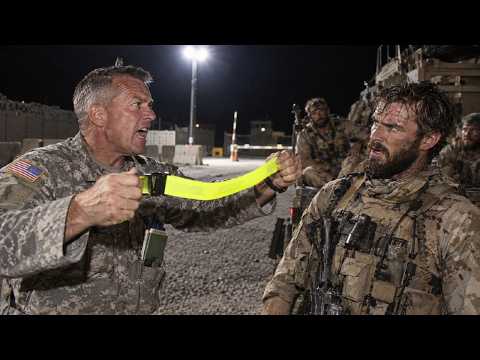
The stakes weren’t about the belt. They were about access. The main base road was the only paved route between the Australian compound, the fuel point, the airfield, and the entry control point. Losing nighttime movement on that road meant losing the one thing no equipment could replace: ready time.
Forty minutes passed. The men stayed under the lights. Just after 2 AM, the gate lifted. The vehicles rolled toward the wash point, and the return of a special operations patrol became a routine base administrative matter. But the decision arrived the next afternoon in a single paragraph: unlit movement of Australian personnel and vehicles on the main base road at night was suspended until all individuals wore reflective markings and all vehicles had them affixed.
The justification cited a specific incident—a contractor struck at low speed near the aviation fuel point the previous month, a broken ankle, a file number. The base had a hazard. The man whose job it was to own that file closed the only gap he saw.
The cost appeared in less than 24 hours. The next night’s mission required the patrol to pass through the checkpoint at a fixed time tied to aircraft availability. Routing dismounted crews through the long, lit road amid passing traffic stripped the recovery of its safety margin. The squadron sergeant had three options, listed on a whiteboard by the gate shack: comply, take an alternate route, or object in writing.
They tried the practical argument first—the way men who work with equipment usually argue. On a clear, moonless night, they put a reflective belt on one man and walked him from the wash point under the tower light. At 60 meters, the belt was a bright horizontal stripe. No one disputed its effectiveness. Then they killed the white light, switched to night vision, and walked him again. Under night vision, the belt didn’t shine. Reflective nylon bounces light back at its source. From a vehicle with headlights 200 meters down a straight gravel road, it reflected enough to become the most visible thing in the Uruzgan night.
That was the demonstration—and the whole problem in a single image. Inside the wire, the belt made the individual visible to drivers. Outside the wire, in a base under indirect fire and watched from the high ground north of Dorafshan, the belt created a visible pattern for anyone with night vision and a little patience. Movement patterns around a special operations compound are exactly the information an observer seeks.
So they argued in writing. The squadron requested a written exemption for dismounted and vehicle movement between the Australian compound, the wash point, and the entry control point, on the grounds that the marking requirement conflicted with operational security and air identification procedures. The brigade’s reply came within two days: one line. The standard applies to all personnel on the installation. There is no exemption clause.
That line mattered more than the belts because it closed the official route and left the unofficial ones. Within a week, belts were being worn to clear the barrier and removed 30 meters later. Belts hung from backpack straps instead of being worn. And most importantly, the men stopped using the main base road at night entirely—because there was a shorter path.
The shorter path is the part of this story no one wrote down until it was too late. From the vehicle pad beside the wash point, a foot track ran diagonally across the hardstand, past the pressure hose and its permanent puddle of standing mud, between two sections of Hesco barrier, and into the Australian compound through a pedestrian gap in the fence. It saved about four minutes of walking time at the end of a 16-hour night. And four minutes at that hour, carrying a rifle, two radios, night vision, a day pack, and body armor, is not a small number for a man who has been awake since the previous morning.
It also ran directly under Light Tower Four. Tower Four had been broken for days. The lamp head was intact, the pole vertical, but the unit simply didn’t work. A work order had been issued, printed, and taped to the pole at chest height inside a plastic sleeve where anyone passing could read it. The work order was unsigned. The Australian review would later establish how long that label had been there, and the base incident log held the entry that had triggered its issuance. For the men crossing that ground, none of that was actionable information. It was simply the dark zone, and the dark zone was faster, and faster was where a man didn’t wear a reflective belt—because the whole point of taking that route was not to be seen by an official while not wearing one.
Fenwick found out because men like Fenwick always find out, and because he did the one thing administrators never do: he walked the field at an hour no one expected. He came down the access lane on foot sometime after midnight, unannounced, with a notebook. He didn’t stop anyone that night. He stood near the fuel point in the shadow of a blast wall and started counting. According to the data later reproduced as an annex to the after-action review, he recorded unlit foot movements across that strip at a rate of several per hour between midnight and 3 AM, most of them Australian, most of them cutting the track diagonally.
The next morning, the brigade’s posture shifted from a standard to a person. Enforcement was no longer a paragraph exchanged between departments. It was a man with a notebook who might stand by the fuel hose at any hour, with the authority to turn any crew back from their own gate.
The effect inside the Australian compound was immediate and entirely predictable to anyone who had ever seen a base confront tired men. No one started wearing the belts. They started timing their movements to avoid his rounds. That is the detail the review would spend a long time discussing later. For roughly five weeks, the men crossing that ground at night managed their behavior around the sergeant’s presence—and none of them managed it around the heavy vehicles reversing into the fuel point in the dark with a headlight sweeping the blast wall at head height and throwing almost no light on the gravel.
The compromise was written on the same whiteboard by the gate shack in two lines, and it was the best thing available to a squadron sergeant told in writing that there were no provisions for exemption. Belts are worn inside the wire. Belts are removed at the vehicle pad before the patrol passes through the entry control point—because no one would take a strip of reflective nylon into the Koru Valley. It met the standard where the actual hazard existed, on the shared gravel with the trucks, and kept the thing off the man’s body where it could be seen from the high ground. On paper, it was acceptable. But it did not survive contact with the vehicles.
There was no good place to put a belt on a G-Wagon. The cabin was full, the floor was full, and every pocket on the men’s kit already held something more important. So the belts went on the exterior rack, hung from the same mounts that carried fuel cans and the spare tire—mounts with edges that had been welded, ground, and then worn by eighteen months of Uruzgan grit. The nylon caught on one of those edges. A vehicle covering a hundred kilometers or so of rough track at night shakes that catch into a tear, and the torn belt drops somewhere between the wash point and the far side of the province.
Within a week, the squadron’s belt allocation was short. Base supply treated reflective belts as consumables and issued them against a signature, and the Australian element had burned through its share faster than any other unit on the base—a fact brigade headquarters noticed before the Australians themselves did.
What replaced the belts was habit, and habit followed the usual path at the end of a sixteen-hour night. The men stopped asking for replacements. The remaining belts migrated to the compound fence beside the pedestrian gap, hung on the concertina like laundry on a line, where a soldier could grab one on his way out and return it on his way back. By the second week, most never left the fence at all. The Australian unit activity review recorded this arrangement in a sentence that served no one: compliance had become a gesture performed at the gate rather than a practice applied in the field.
The alternative came from an engineer’s kit box, and from a signaller who had spent three tours thinking about how to identify them from the air rather than through a vehicle window. The box held a roll of infrared reflective tape—material that coalition aircraft seek with their sensors and that soldiers seek with night vision goggles. He cut it into playing-card-sized patches. He sewed them onto the back of helmets, onto the crown of patrol caps, onto the lids of day packs, using a sewing kit from the compound and a red-filtered headlamp while he sat on an ammunition crate outside the equipment tent.
The logic wasn’t improvised. IR markings identify friendly elements to anyone with night vision and to any sensor at ranges where shouting is useless, and they do it without emitting a single photon into the visible spectrum. To the naked eye standing six meters away in the dark, there was nothing on that helmet but dull green cloth. That was exactly what the regiment wanted.
In the material later summarized for the Australian task group and quoted in the review, the force report claimed the element already carried identification markings, that these markings were superior to nylon in every scenario involving a weapon, and that they required no change in anyone’s behavior. Fenwick rejected it within a day, and the reason he gave was the reason that would matter five weeks later. The hazard in the file was the driver. Drivers do not wear night vision goggles within the base perimeter. A contractor backing a vehicle into the fuel point at 2 AM looks through a windshield coated in Uruzgan silt, and IR markings give him nothing at all. The standard existed for the man behind the glass, and a marking system invisible to that man was not compliance with it.
The brigade’s position was recorded in the force protection file, and it was correct according to its own terms. It wrote that the Australian proposal had been noted and did not meet the requirement. Then it closed the thing it had been counting. The diagonal track from the vehicle pad to the compound fence was shut down at night. Engineers drove two pickets at the track entrance beside the hose yard, strung a chain between them, zip-tied a laminated sign to the chain, and hung a pair of chem lights from it. Dismounted movement between the Australian compound and the entry control point during hours of darkness would use the main base road—lit, paved, and patrolled by military police who now had a reason to be there.
The main base road at Tarinkot was not a private place. It carried fuel contractors, transient residents, civilian logistics staff, interpreters, and coalition personnel from four nations, and anyone killing time between flights on the airfield. The detour added about 400 meters and added hundreds of eyes. Men coming off a mission now walked that road carrying what they had carried on the mission in front of people whose names no one in the Australian compound knew, at fixed hours tied to flight schedules.
Journalist Mark Dodd, writing about the regiment’s rotation in Uruzgan, noted that the elements had long considered transient base residents the most reliable leak in any facility, and the 2010 rotation’s security annex already restricted photography near the Australian lines for exactly that reason. The brigade had solved a traffic hazard by publishing a timetable. So the force did what tired men do with a longer road and the same deadline. They stopped carrying everything in one trip.
Equipment was unloaded from vehicles at the pad, stacked, and moved across in two or three carries by anyone nearby—shortcutting across hardstand the chain didn’t cover, because the chain closed the diagonal track and did not close the yard. This hand-carrying put men on their feet longer, more often, and in places they had not previously walked. No one wrote a procedure for it. No one timed the operation. It was simply how the work got done.
At 3:12 AM on a Tuesday, a returning operator carried an antenna bag and two radios across the wash point yard. He moved from the vehicle pad toward the gap in the Hesco wall through the one corner the chain had left open. He crossed the gravel strip under Light Tower Four, where the lamp head was intact and the pole vertical and the work order was still taped to the pole inside its plastic sleeve, unsigned. The ground there held standing water and mud mixed by the pressure hoses, so he was watching his feet. He had a headlamp in his pocket and it was off, because the whole squadron had trained itself not to throw white light on the gravel inside that compound.
The heavy vehicle reversed away from the fuel point apron. Its reversing alarm was mounted high on the cab roof and swept an amber wash across the Hesco wall at head height in a steady, metronome rhythm. That light never touched the ground. The reversing alarm was audible to about twelve meters, competing with the generator behind the gate shack that had been running for nine hours. The driver had a mirror, a layer of dust, and no ground guide.
The operator went down under the rear of the vehicle. His femur and pelvis broke, and he found himself face-down in the standing mud, the antenna bag still hooked in his hand when the vehicle stopped. The hose crew heard it—which is the only reason the gap between impact and reach was measured in under two minutes instead of some other, worse scenario. They crossed the yard with a flashlight, forced the driver to kill the engine, and one of them ran forty meters to the Australian gate shouting for a medic. The Role Two facility was close enough to walk to. He was on a table there before 3:30, and the base incident log holds the call time as the first precise number in the whole story that nobody disputes.
The patrol went out the next night one man short. The mission was a sensitive site exploitation in a compound west of the valley. The operator who went down was the unit’s signaller, carrying the equipment, and the only man in that troop trained on it. His replacement was in Perth. The unit reached the landing point, set in, assessed that it could not execute the technical portion of the task, and could not justify the risk of withdrawal against a partial result, and came back before dawn with nothing.
The review recorded the cancellation as a direct, second-order cost of the incident. It is the kind of sentence that gets written once and then cited for years. Fenwick’s response was formal and fast. He opened a brigade investigation into the incident that same morning. He attached the log he had compiled from the shadow of the blast wall near the fuel point weeks earlier. Then he submitted a written recommendation to the brigade commander to place the Australian special operations element at Camp Russell under base movement control—meaning every dismounted or vehicle movement inside the wire would be logged, cleared, and monitored by brigade force protection staff.
For a unit whose operational value depended on no one outside it knowing its movements, that recommendation was the most expensive paragraph written during the entire rotation. And it sat on a desk two buildings away while the squadron sergeant walked to the field hospital to find out whether his signaller still had a left leg.
The review convened two days later in a plywood room thirty meters from the wash point. It was close enough to hear the pressure hose through the wall. An Australian after-action review, not a brigade investigation, run by a major from the task group’s operations cell with no stake in either camp.
On the table: the base incident log, the brigade force protection file, a photograph of the squadron whiteboard, and a folded copy of the work order that had been taped to the pole of Light Tower Four. The work order had been there for nineteen nights, unsigned.
The review’s logic was blunt enough that two officers asked for it to be softened. It was not. A broken lamp creates a condition. It does not create a route. The diagonal track existed because it saved four minutes. It was used because it was unobserved—and being unobserved was the point. The unit had chosen that ground deliberately, used it nightly, and never controlled movement across it. No spotter, no timing, no coordination with vehicles that had every right to reverse there.
Fenwick came in on the third afternoon, read the page twice, and signed it with one condition written in his own hand. Any individual moving inside the wire at night without IR markings on his body or a card deposited for his element would be turned back at the barrier by the gate sergeant. No referral. No report. Just turned back. He withdrew his recommendation that same day.
The cards were printed that afternoon, numbered from one, and bolted to a board inside the gate shack beside the generator. From that night on, nothing moved outside the Australian compound in the dark without a number recorded against it.
Every man who signed the first card understood the price—the thing five weeks of argument had refused to pay. A ground movement card is a written record of when the element walks, where, and how many. The gate shack was manned by rotating base personnel; the transient flow through Tarinkot meant whoever read the board in November would not be the man reading it in February. The unit had just made itself legible, in writing, to people it did not know—because the alternative was a man face-down in the mud with a broken pelvis.
The first week’s file is why the system survived, and it is not a proud document. Numbers one through forty-one were deposited over seven nights. The link officer’s radio log for the same period carried crossings with no card at all. None of the gaps were deliberate. They were two-man trips, a man going back for an antenna bag, a driver walking forty meters to a hose and back—movements no one on a sixteen-hour night considered worth logging.
The review had predicted exactly this. The squadron sergeant’s answer was to brief the card at the same time as patrol orders, moving it from an administrative afterthought into the part of the night where men were still sharp.
Fenwick tested the system in week two, at the barrier at 2:30 AM, on a crew that had been outside the wire since the previous afternoon. He asked for the vehicle’s card number. The gate sergeant checked the board. There was no entry—the unit had gone out on one card and come back reorganized, two vehicles becoming three after a mechanical swap at the forward operating base, and the third vehicle existed in no one’s record. The crew sat thirty meters from their own gate while the link officer was called, a number issued, a route and window logged, and the barrier lifted. The delay was shorter than the forty minutes of the first night, and the principle was identical—except the standard being enforced this time was the Australians’ own.
What made it work was that enforcement ran both ways from that week on. The link officer at the entry control point belonged to brigade force protection, and the same net that carried the flaws carried the fixes. An unlit lamp on the perimeter lane, a heavy vehicle reversing to the fuel point without a ground guide, a chain across a track with no warning light—each became a logged entry against a specific cell, with a timestamp from an Australian voice. Two work orders raised that way were signed within seventy-two hours, faster than anything Light Tower Four had managed in nineteen nights.
The test came in week nine at 1:11 AM, and it did not come from inside the wire. Six Australians were mid-yard on the wash point, carrying nothing heavier than their weapons and water, moving under card 217 with a window closing at 1:30. The hose crew worked the far end of the hardstand. The generator ran behind the gate shack. Under the three serviceable towers, the gravel lay flat and gray, and everything on it threw double shadows.
The first round punched through the steel plate of the entry control point barrier housing. Four or five more came low from the northeast across the perimeter lane. A man at the fuel pump went to his knees behind the pump housing. The Australian element went flat where they stood, because there was nothing on that yard to hide behind, and lay along the base of the Hesco with their chests in the wet gravel slurry the pressure hose had been laying down all evening. Two of them were facing the wrong way.
The fire was coming from the dead ground beyond the perimeter lane, and it was answered within eight seconds from the tower at the northeast corner—which meant that from that moment the gravel strip between the wash point and the concrete walls was under friendly fire from two directions at once.
Ground reconnaissance against the Tarinkot perimeter was not rare in that period, and it was mostly not dangerous. Australian Defence Force base security summaries for that rotation classified such events as harassment—men in the dark firing at a fence they had no intention of crossing, usually to provoke the response that followed. What made this one dangerous had nothing to do with the men outside. It was that the base quick reaction force moved from its positions within ninety seconds, dismounted at the intersection, and began moving across the perimeter lane in the dark toward a wash point where six Australians were already lying on the ground.
The QRF advanced up the lane on night vision—correct procedure, the only way to do it. White light in that lane would have silhouetted every man in it against the Hesco, including the six already on the ground, and handed the firing point a lit face four hundred meters long. So the responders moved with lamps off and weapons up, and their world collapsed into the faint green cone of a night vision device, sweeping the ground ahead through an environment where a man prone in camouflage against a gray blast wall at fifty meters looks like a sandbag, or a stack of pallets, or a human being holding a rifle.
They saw the glint first. The patches had been cut nine weeks earlier on an ammunition crate outside the equipment tent with a red-filtered headlamp, and for eight of those weeks they had been worn because a signed page said so—which is different from anyone believing they would matter inside the wire. At about seventy meters, the lead responder’s lens caught three bright white rectangles where nothing was supposed to be: one on a helmet back, one high on a shoulder patch, one on a day pack lid, lined along the base of the Hesco in the exact geometry of prone men facing outward.
IR glint reflects night vision illumination the way nylon reflects headlights, and it shows as a glow that cannot be confused with terrain. The muzzles came off them. The team leader arced their view forward, past the wash point toward the dead ground, and the two Australians lying the wrong way were not, for one second of those seconds, a thing that needed analyzing.
The gap that remained was the one no one in the plywood room could close on paper. The tower guard that night had no assistance. His position held a multipurpose machine gun, a spotlight he was instructed not to use during the engagement, and no night vision device on the mount—because the base’s stock of thermal optics and image intensifiers went first to the towers covering the two most likely approaches, and his tower was not one of them. He saw the muzzle flashes to the northeast, heard movement on the gravel below him, and saw it half-sight as darker blocks in the dark. The reflective strip gave him nothing at all. From his position, the Australian force did not exist.
What brought them into his world was the paper card. The Australian link officer at the entry control point came off his chair with the first shots and was on the brigade force protection net before the QRF finished kitting. What he passed was not a warning and not a request. He read a number and a route: call sign 217, six dismounted personnel in the wash point yard, moving toward the compound, window open until 0130. The force protection watchkeeper passed it to the towers on the base net, and the northeast guard—within about twenty seconds of the first round hitting the barrier—had the one piece of information his optics could not give him. Not just that friendly forces were somewhere, but that six of them were in that yard, walking that direction, at a time that was not in their favor.
The price was paid in the same minute, and it was paid on open gravel. A rocket-propelled grenade fired from dead ground cleared the perimeter berm and detonated against the rock and fill before the concrete walls at the entry control point, and fragmentation spread across the yard at knee height and below. One of the six took fragments in the outside of his right thigh and lower leg, and his voice was lost under the roar of the tower gun. He rolled, could not get his leg under him, and began dragging himself on his elbows toward the concrete sections while keeping his rifle in his right hand. There was nothing between him and the concrete but thirty meters of flat, crushed rock lit by two towers.
The hose crew reached him. They were civilian contractors. They were not required to be anywhere but behind the Hesco, but two of them came out from behind the vehicle they were washing and ran across open ground while the pressure hose was still trailing behind one of them. They took him under the arms and by the belt and dragged him back, their boots cutting through the accumulated mud, and got him behind the second concrete section as the tower guns fired their third burst. He lay behind that section with a high tourniquet on his thigh within two minutes, applied by one of his own men, and was in the medical facility before 1:30.
The lane was swept under IR illumination, a flare popped invisible over the dead ground beyond the perimeter, and to everyone in the yard with a scope the ground outside the wire turned the color of pale ash. To the guard in the northeast tower, nothing changed at all. The firing position had already been abandoned. The QRF walked the lane back and forth, found empty casings, a disturbed section of the wadi bank, and no people, and logged the operation as a twenty-two-minute reconnaissance from first round to full secure. The Australian element finished its crossing on foot, one man short again, inside the window on its own card.
Fenwick was in the yard before 3 AM. He had the laminated standards card in his chest pocket and did not take it out. He walked the lane with the brigade force protection officer and a base maintenance duty supervisor, stopped at every tower on the perimeter road, and asked at each one whether the lamp worked and whether the position had optics. The answers took eleven minutes to collect. Four lamps were out on that lane, and two of them had work orders older than the one hanging in its plastic sleeve on the pole of Tower Four.
His instruction to the maintenance cell went out verbally that night and in writing the next morning, and it contained no exceptions for transformers, supply chains, or facility classification. Every failed lamp on the perimeter lane would be serviceable within twenty-four hours, and the parts request would be raised as a force protection line against the cell’s own account. All four lamps were lit the following night.
The second thing he did took the rest of the week, and it rewrote the standard that had started the whole argument on the gravel outside the barrier gate nine weeks earlier. The brigade published it at two levels. For base residents, contractors, logistics staff, transient personnel, and anyone on the installation without a tactical reason to be in the dark, reflective markings remained mandatory during hours of darkness on all roads and hardstands. That order stood unchanged, and it was enforced at the gates. For designated special operations elements, the requirement became IR markings worn permanently on helmet, shoulder patch, and day pack, plus a numbered ground movement card deposited at the control point before movement, plus a link officer reachable on the force protection net throughout the window. The two levels were not options, and an individual could not choose between them. The brigade assigned the level in writing.
The justification paragraph attached to it did not mention the operator with the broken femur and pelvis, and it did not mention the man dragged behind the concrete wall. It cited the reconnaissance operation on the eleventh of that month, and the identification of dismounted friendly personnel by the QRF at seventy meters using night vision. Then it noted, in a subordinate clause the Australians read several times, that identification from the unequipped tower position had been achieved by radio rather than by visual observation.
The signaller was no longer one. His condition was fixed at the field hospital, and he was moved to Kandahar within eighteen hours, then to the U.S. military hospital at Landstuhl, where plates went into his femur and an external fixator held his pelvis together before anyone discussed the medical prognosis. The surgical summary that eventually reached the task group ran to several pages, and the part that mattered to the regiment was two words: load bearing. A pelvis crushed against broken rock by the rear of a heavy vehicle cannot afterward carry a day pack, two radios, body armor, and water across forty kilometers of the Uruzgan hills. His medical category was downgraded in Perth the following year. He stayed in the army. He did not deploy again as an operator, and the Australian after-action assessment of why he was in that location at 3:12 AM contained a closed sentence no one in the plywood room wanted softened. He was taking the shortest route back at the end of a sixteen-hour night, on ground his unit had chosen because no one could see them on it.
His replacement arrived mid-rotation, flown into Tarinkot on a routine supply run, and walked into a unit reorganized around a tasking board in his absence. A regiment’s reinforcement cycle is not designed to replace technical specialties mid-deployment. Chris Masters, in his work on the unit’s Afghanistan deployment, described the arrival of a replacement into a mid-tour unit as the hardest social problem in special operations, because the men already there had accumulated two weeks or a month of shared assumptions that no one writes down. In this case, one of those assumptions had been written, and it was the first thing handed to him.
Movement cards were now briefed in patrol orders alongside rations, timings, and emergency rendezvous. Instead of being mentioned at the gate shack as an administrative afterthought, the first card was presented to the new signaller before his first mission with his call sign recorded on it. He did not know the ground it described well enough to shortcut it. That was the whole mechanism, and it was the only part of the solution that cost nothing. The card did not stop the vehicle from reversing. It did not light a lamp. It restored movement discipline beyond the barrier gate to the part of the night where men were still thinking—by attaching a number to something eleven tired men had considered merely walking.
The Australian review annex left Tarinkot in two directions at once. One copy went to the brigade force protection cell, where it was filed against the base incident log and the force protection file as the Australian account of what happened on that gravel strip. The other went through the special operations task group to Canberra, where it fed the task group’s periodic reports and, later, the body of material that became available to researchers through the Australian War Memorial’s holdings on Operation Slipper and through published inquiry material on Australian special operations in Uruzgan. The Australian Strategic Policy Institute’s work on base security and force protection in coalition environments during that period rested on the same general problem without naming the incident: a multinational installation runs on written standards set for the largest number of people in it, and the smallest category in it is usually the one whose business is incompatible with those standards.
The card itself traveled faster than the paper, and it traveled sideways instead of up. Within a month of the review, the two-tier standard produced a visible oddity on the base: an element moving at night with nothing reflective on it, and a number recorded in its name at the gate. Other coalition special operations detachments at Tarinkot wanted the same arrangement, because the alternative on offer was nylon. The brigade force protection cell had a sign template, a numbering sequence, and a whiteboard in the gate shack already in service. The marginal cost of adding a second element and then a third was a second and third board screwed to the same plywood wall.
Mark Dodd, writing about Australian rotations across Uruzgan, recorded the detail that gave the arrangement its durability. The cards were neither an Australian concession nor an American imposition. Neither cell could later claim it as a win—the condition under which base procedures usually survive turnover. They were tested on exactly that. A multinational base in Afghanistan is a population in permanent transition, and the surest way to lose a local procedure is to lose the two men who understand why it exists. The brigade’s personnel turnover meant the gate-shack cadre the following spring would be men who had not been on the site when the signaller fell in the standing mud. And the Australian force that had written that page would have gone back to Perth.
Fenwick’s rotation ended the ordinary way, with a week of handover and a series of appointments no one photographs. He gave no speech about the two-tier standard, and the file does not record him arguing for it. What he did was walk his replacement through the access lane in daylight, past the barrier gate with its counterweight and painted lines, past the wash point where the pressure hose was working on a vehicle that had come in dirty from the Koru road, past the four light towers on the perimeter lane with all four lamps lit. At each stop he explained which category the standard applied to and why. The base category was reflective nylon, and its enforcement at the gates was absolute—because the hazard in that file had always been a driver behind a windshield coated in silt. The special operations category was IR markings worn permanently and a numbered card deposited before movement, and its enforcement was turning men back at the barrier without referral, the condition he had written in his own hand at the bottom of the Australian page. Then he handed over the file.
The numbered movement cards were collected and destroyed at the end of each twenty-four hours as the Australians insisted. But the numbered stubs had accumulated. The brigade’s copy of the log—sequence, dates, elements, count—went to his replacement in a folder with the two-tier standard stapled to the front. He kept one document for himself and appended it to the end of the file as an annex rather than taking it home. It was the list he had written in his green notebook weeks earlier, standing in the shadow of a concrete wall near the fuel point between midnight and 3 AM, counting unlit dismounted crossings of a gravel strip he had no way to illuminate and no authority to redesign. It is the only handwritten page in the folder. Its function in the annex is not accusation. It is the baseline against which everything that followed was measured.
Light Tower Four was the first line on the maintenance cell’s revised log, dated the night the counterweight finally came down. The work order came off the pole and out of its plastic sleeve, signed. The pole does not appear in any of the significant photographs, and the sleeve was disposed of. What the system produced afterward is a matter of record rather than interpretation, because the brigade reviewed it before handing it to the next command, and the Australian task group separately reviewed its own records against the base incident log.
Over the months that followed the two-tier standard’s publication across all designated special operations elements using the entry control point at Tarinkot, the gate-shack boards carried 1,406 numbered ground movement cards. During the same period, eleven failed lamps were logged on the perimeter lane and the wash point yard, and the longest any of them stayed out of service was thirty-one hours. The nineteen-night work order in the plastic sleeve looks unique in the file. Nothing else in it comes close.
And on that lane—between the Australian compound fence and the wash point, the fuel point, and the entry control point, along two hundred meters of graded gravel and crushed rock, where a signaller’s femur and pelvis were broken at 3:12 AM by a vehicle reversing without a ground guide under a lamp no one had fixed—the number of vehicle-versus-pedestrian incidents recorded in the base log during those months was zero.
So here is the question that never made it onto any whiteboard: when a standard built for the many becomes a hazard for the few, who should carry the cost of compliance—and who should have to sign for it?
Report this article
Select a reason for reporting:






