“This is beyond risky.” Four words, spoken in a cramped planning tent in Orūzgān Province, Afghanistan, on March 14, 2010. Four words that would haunt Lieutenant Jake Morrow for the rest of his career. He wasn’t talking about the enemy. He was talking about the plan the Australians had just laid on the table.
The plan abandoned helicopters, abandoned air cover, abandoned every comfort American doctrine had drilled into him since day one at Coronado. And here’s the part that still sparks arguments among the men who heard this story from both sides of the briefing table: he was right. The plan was beyond risky. It carried more failure points than any operation he’d ever agreed to join. But it wasn’t the kind of risk he thought it was.
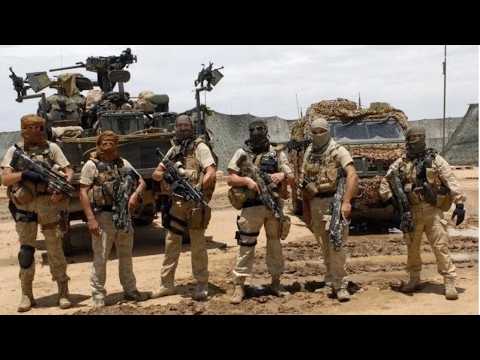
The difference between those two kinds of risk would force him to rewrite everything he believed about that quiet, underfunded, nearly invisible unit from a country of 22 million people—a unit he was about to underestimate.
So what was in that plan that made a combat-hardened American officer believe his platoon was being led into a graveyard? What happened at first light when the one thing everyone feared went wrong and the operation seemed to collapse in under a minute? And what did the Australians do in the final ten minutes of that day that made the commander himself stand on a dirt airstrip in front of his men and say aloud that he had never seen anything like it?
Stay for the end, because the detail that closes this story is still whispered in special operations circles long after everyone involved has retired.
The valley lay three hours’ drive north of the main base. A long fold of brown hills and irrigated green strips where the Taliban had spent two years building something the coalition had repeatedly failed to destroy. It was a bomb factory, though no one on the intelligence side used that word at first. They called it a facilitation network.
Fertilizer came from the south on motorcycles and donkey carts. Pressure plates and detonators arrived from across the border in the double bottoms of fuel drums. And all of it was assembled, stored, and distributed by one man whom intelligence summaries called “the Mechanic.”
A former engineering student in his early thirties, never photographed or fingerprinted, never sleeping in the same place two nights running. Over eight months, his devices had harvested the lives of Australian and Dutch soldiers on the roads, and Afghan police in the markets. Three times coalition forces had raided compounds believed to be his. Three times they found only a still-warm teapot, some wire clippings, and an empty room.
Someone was warning him. Someone always knew.
When the fourth target packet reached the planning table—a fortified compound on a rocky spur above the village of Dari Sang—the argument inside the task force was no longer about whether to go. It was about how to go without being seen.
Theoretically, the answer was simple, and it belonged to the Americans. A SEAL platoon of sixteen operators attached to the task force for this rotation had already conducted more than a dozen direct-action raids. They were fast, loud, heavily armed, and precisely coordinated. The plan was a classic helicopter assault: two birds, a landing zone 400 meters below the compound, a rapid climb, a breach at the main gate, and a second element over the back wall. All of it supported by an armed drone overhead and an attack helicopter on call.
The platoon commander, a thirty-three-year-old lieutenant named Jake Morrow, had completed two Iraq tours before this deployment and had rehearsed the plan twice. He liked it. It was a clear plan, and he knew how to make clear plans work.
Then, less than a day before execution, a message from the coalition liaison cell changed everything. A patrol from the Australian Special Air Service Regiment—six men who had been working quietly in the valley for nearly a week—would be attached to the operation. They would not be held as a reserve force. They would be inserted into the assault plan.
And when Morrow read the line explaining why, he felt the first cold knot of doubt form in his gut. Because the reason given was a single sentence: the Australians believed the helicopters were the reason the Mechanic kept slipping away.
Who makes that kind of call less than a day before H-hour? Who decides that the answer to three failed raids is to question the one tool every American in that tent trusted completely?
Most of the SEALs in the room had never trained with Australians, never shared a radio net with them, and—if they were honest—knew them only as a few bearded, sun-scorched men in mismatched gear who kept to themselves at the far end of the chow hall. That was the first problem. It would not be the last.
The compound itself was worse than the imagery suggested. It sat on a rocky spur with a single goat trail leading to the main gate, and from every angle, the approach was a killing zone. Thick mud walls enclosed a cluster of low buildings, with a watchtower in the northern corner and a view down the valley that stretched nearly four kilometers. Signals intelligence indicated at least ten fighters inside on a normal night, with more arriving from the village at dawn. Any man standing on that tower with binoculars could watch every helicopter blade cross the ridges long before the first soldier hit the ground.
Morrow looked at the model on the table and felt the familiar weight of knowing the mission would be hard no matter how well it was planned. That was strike one.
Strike two arrived in the form of the Australian brief, and it made his stomach clench before a single shot was fired. The patrol commander was a captain in his late thirties named Rhys Mackenzie, a lean, weathered man with a voice so quiet it was almost boring. He walked to the front of the tent, spread a hand-drawn map beside the American model, and said no one would be landing anywhere.
The plan was this: eleven kilometers on foot across two ridge lines and open ground in the dark. No helicopters, because observers had logged the sound signature of every helicopter in the valley for months. No drones overhead, because a drone in the sky was a clear signal that something was coming. The joint force would leave the road before midnight, climb to a position above the compound by the early hours, and hide there. Not for an hour, not for a few hours, but through the entire next day among the rocks, in full view of a valley full of people who would be looking at those hills. Then—only then—at the precise moment when the Mechanic’s routine put him alone outside the walls, Mackenzie intended to take him. Not by blowing a gate, not by clearing the compound room by room, but by walking down the goat trail in the open and snatching a man in front of his own watchtower.
And when it was done, the entire force would walk out the same way they came in, because anything with an engine would be heard for kilometers.
Mackenzie finished and waited. Morrow listened to the plan and felt something close to disbelief. In his experience, this kind of operation got people killed. It stripped away every advantage that made American raids survivable: no speed, no overwhelming force applied everywhere at once, no aircraft overhead, no attack helicopters, no quick-reaction force waiting on a runway thirty minutes away. Twenty-two men on a mountainside with nothing but patience and concealment, eleven kilometers from the nearest help. In a land where a goat herd knocking a wrong rock could end the mission and start a massacre.
It didn’t look like a special operation. It looked like a slow-motion disaster.
That was the moment he turned to his platoon chief and said it. “This is beyond risky.”
Mackenzie didn’t argue. He didn’t raise his voice or pull rank or lecture the Americans on Australian fighting doctrine. He simply asked Morrow one question: in the last three raids, how many helicopters had reached the landing zone without being heard?
Morrow didn’t answer immediately, because they both already knew the honest answer. None. Every time, by the time the first element was on the ground, the target had been gone for ten minutes.
Mackenzie’s plan wasn’t reckless. It was built on colder logic. He wasn’t choosing risk over safety. He was choosing a risk he could control over a risk he had watched fail three times. A slope full of rocks and shadows could be controlled by men trained to do it. A helicopter, with its noise and rotor wash and twenty-second landing, could not be controlled at all.
It still seemed insane to Morrow, but for the first time since the briefing began, he found himself listening instead of rejecting.
There was a third strike buried in all of this that no one in the tent dared say aloud. It had nothing to do with terrain or timelines. It was about language in the broader sense. Morrow’s platoon had spent a full year training together. Hand signals had become instinct: a closed fist, an open palm, two fingers pointing to the eyes. They carried meanings no one needed to explain anymore. The Australians used a slightly different dictionary, honed by their own selection and their years on the other side of the world. Close enough to be familiar. Different enough to be dangerous. In the middle of a firefight, half a second of confusion about what a signal meant could be the difference between coordinated success and friendly rifles pointing at the same door.
So the two commanders did something that would never appear in any after-action video. They spent nearly two hours of planning time just unifying signals, rehearsing in the dirt outside the tent using chalk lines and rocks as stand-ins for walls until the hesitation faded. It wasn’t glamorous work. But it was the work that made everything that followed possible.
And we should pause here, because this story was never about a foreign unit trying to prove itself to the Americans. The Australian SAS Regiment had spent decades building a reputation among allied special forces as one of the most patient and self-sufficient units on earth. Their patrols were famous for going where others wouldn’t and staying longer than anyone thought possible. Long-range reconnaissance in forests, deserts, and mountains. A tradition rooted in Borneo and Vietnam. It was a quiet reputation, and a quiet reputation casts its own shadows. Stories of the regiment spread quickly in the special operations world because they seemed almost impossibly disciplined. Too disciplined. Always ready to choose the slower, harder, more exhausting path if it meant a cleaner result. Such a reputation can turn into a legend, and a legend is a dangerous thing when building a joint operation involving real walls, real fighters, and real ammunition. Morrow didn’t need legends. He had sixteen men whose behavior in the dark he knew, and six more he could understand in less than a day.
When the Australians walked into the vehicle yard that evening, there was none of the swagger Morrow expected. No showmanship, no attempt to impress the SEALs standing around the trucks. Just six men moving with an efficiency and economy of motion that made their movements look almost lazy. Bags were checked once and never discussed again. They carried their weapons with the casual familiarity of men who had stopped thinking of them as anything but an extension of their arms. Mackenzie shook Morrow’s hand with a grip that wasn’t trying to prove anything.
The two men spent the next four hours going over the plan together on a stained piece of plywood. And during that rehearsal, the real disagreement surfaced—the one that would define everything that followed. It was about the snatch itself.
Morrow’s team wanted to bring the entire assault force down the goat trail the moment the Mechanic was confirmed. Blow the gate with a shaped charge. Use the chaos to clear the compound and secure the weapons—the stockpile analysts insisted was under the main building. It was standard doctrine, and on paper, it was the most aggressive and decisive option.
Mackenzie objected quietly and without drama. He said breaching that gate would turn a quiet capture into a battle in the middle of a populated area. Women and children lived inside those walls. Every shot would bring the village up the hill. His proposal was smaller and stranger: a four-man snatch team—two Australians and two SEALs—would walk up to the Mechanic in the open and take him alive. The rest of the force would stay on the ridge, watching every approach, staying hidden until the last second. If the capture was clean, no one would fire a shot. If it wasn’t, the ridge would open up. It required more trust, more discipline, and faith that two small groups, two hundred meters of open mountain apart, could execute their parts without a single word of support.
Morrow looked at the two options side by side and felt himself pulled toward the simpler, louder, more familiar one. Then he thought about the three empty compounds and the question Mackenzie had asked in the tent, and he made the decision that would set the course of the operation.
They would do it the Australian way.
The column left the road at 23:20. No lights, no radios except one check-in every hour. Twenty-two men in single file climbing in darkness so deep that the lead scout navigated by the feel of the slope under his boots. For the first three hours, the only sounds were breathing and the occasional clack of a dislodged stone. The Australians moved at a pace the SEALs, to their quiet surprise, found punishing. A steady, unbroken, unhurried rhythm that never sped up and never slowed down. As if the mountain were something to be negotiated with rather than conquered.
They reached the ridge at 03:40, and what happened next was the part Morrow didn’t think he could endure. The Australians didn’t rest. They went to work. Within forty minutes, using rocks and scrub and some local cloth, they had built six low, shallow hides along a hundred meters of the crest. Blended into the slope so well that a man could walk within five meters and never see them. Then they stopped moving, and the long day began.
The SEALs, who had never been asked to lie motionless for fourteen hours in cold dust while the sun climbed, learned a new kind of discipline that morning. No one spoke. Water was sipped, not drunk. Natural needs were handled in sealed bags in place without standing up. Herders drove goats down the slope below, close enough to hear the animal bells. A boy on a motorcycle stopped on the road beneath the hill for nearly ten minutes, scanning the hillside with the bored glance of someone who had done it every day of his life. Morrow lay with his cheek on his rifle and listened to his own heartbeat. And for the first time in his career, he understood what someone meant when they said that waiting is a weapon.
By midday, the temperature on the rock had climbed past forty degrees. By two in the afternoon, two of the younger SEALs were fighting leg cramps, and the Australians were passing silent hand signals along the line, reminding them to breathe and stretch their muscles without moving. By four, the compound below had settled into a quiet rhythm—men moving between buildings, a boy carrying water, a woman hanging laundry on a line. Through his scope, Mackenzie recorded everything: faces, weapons, doors, and patterns of life that had no idea they were being watched.
At 17:12, the Mechanic walked out of the gate.
He was younger than anyone had imagined, a thin man in grey loungewear carrying a battered plastic kettle. He walked fifty meters up the goat trail to a small stone shelter where, according to the Australians’ notes, he performed his evening ablutions before prayer—alone and unarmed.
Six days running, same time, same routine. Morrow lay in his hide and stared through the scope at the most hunted man in the valley, and felt something close to admiration for the sheer patience it had taken to find him.
The snatch team slipped from the rocks at 17:06. Four men, two flags, one target. They covered ninety meters of open ground in four minutes. No one looked down from the compound wall.
Then the dog barked. One flat, ordinary bark that carried across the valley like a gunshot. Every man on the ridge stopped breathing. The Mechanic raised his head. For two full seconds, nobody moved.
Then he threw down the kettle, spun, and ran for the gate, screaming. A rifle cracked from the tower. Morrow keyed his radio to order the ridge to fire—and heard Mackenzie’s voice, flat and unhurried: “Hold.”
Because the Australians had counted the guns. The compound was waking, but it was still unorganized—and the ridge opened fire on Mackenzie’s word, not Morrow’s. Six rifles and one sniper dropped the tower gunman, then the man beside him, then the first two fighters sprinting out the gate. In ninety seconds the fight inverted.
Smithy reached the Mechanic first, slammed him against the shelter wall, and had him cuffed before the man could catch his breath. Not one member of the joint force was scratched.
Then the radio call came: thirty fighters climbing from the eastern villages, twenty-five minutes out. They withdrew by bounding pairs, one element firing while the other moved—a drill the SEALs had rehearsed for years and never once run with another nation’s soldiers in the dark. They ran it anyway.
At the twelfth minute, a quiet Australian sniper named Callum Rees—who had barely spoken all day—spotted fighters creeping up a dry wash hidden from every other position. He didn’t wait for orders. Three rounds at 450 meters, then a fourth as the last man turned to flee. The column stopped. The wash emptied.
One random round, fired from nearly a kilometer, found Danny Vega above the knee as they crossed the scree. Smithy had a tourniquet on him before anyone could call for a medic, then he and a younger SEAL carried him down the mountain in the dark, rotating every few minutes. No one asked whose flag was on whose shoulder. Somewhere in the last thirty hours, there had stopped being half an American operation and half an Australian one. There was only the mission, and the twenty-two men who did it.
They walked six hours and reached the pickup at 01:45. The Mechanic was flown out before dawn. Morrow found Mackenzie by the last vehicle in the grey light, and told him plainly that he’d been wrong—not about the risk, which was real, but about its nature. He’d spent his career believing safety lived in speed, firepower, and noise. He’d just spent thirty hours learning it could live in silence, in patience, and in the willingness to be uncomfortable for as long as it took.
Mackenzie allowed himself something close to a smile. “It’s not complicated,” he said. “You just have to be willing to trust the plan that scares you more, if the men who wrote it earned that trust.”
They stood together in the first light, watching the sun climb over the same ridges that had nearly swallowed them the day before.
What Morrow never said aloud—though he repeated versions of it in after-action reports and training recommendations for years—was that the operation permanently reshaped his understanding of what a small allied force could bring to a fight. He had worked with other nations before. He had never met a unit whose entire approach to combat was built on patience, precision, and the willingness to take the slower, harder, more exhausting path if it meant a cleaner result. A philosophy that ran directly against every instinct drilled into him since selection—a philosophy that almost got rejected before it had a chance to prove itself.
So here’s the question that still gets argued over drinks in special operations circles: if a plan terrifies you, but the men proposing it have never once been wrong—do you trust the plan, or do you trust your fear?
Report this article
Select a reason for reporting:






