By early July 1941, Adolf Hitler was euphoric. The Wehrmacht had torn through Western Belarus in just 13 days, the Baltics in 9, and most of Western Ukraine in 17. The Soviet colossus, he sneered, was a “colossus with feet of clay”—destined to collapse with a single powerful blow. In Berlin, plans were already underway for an autumn parade on Red Square, with Hoth’s and Guderian’s panzer columns rolling through Moscow. The fate of the Soviet capital seemed sealed: it was to be wiped off the face of the earth as a symbol of Bolshevism.
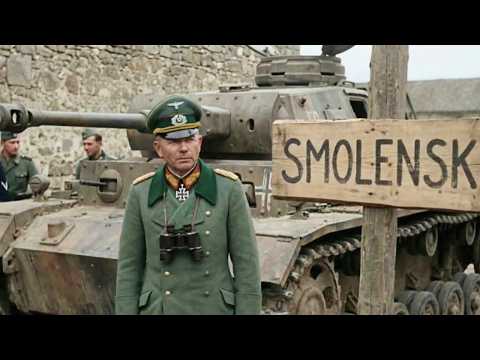
But the German command had made a fatal miscalculation. On July 10, 1941, they launched Operation Barbarossa’s next phase: the encirclement and destruction of Soviet forces around Smolensk—the city Hitler himself called “the gateway to Moscow.” According to initial calculations, the operation would take no more than five to seven days. Instead, it would become the first crack in the Blitzkrieg mechanism, a battle that would shatter the myth of German invincibility and alter the course of World War II.
The German plan was audacious. Army Group Center, with 29 divisions, over 1,000 tanks, 6,500 guns and mortars, and more than 1,000 aircraft, was to crush the Western Front in a massive double envelopment. But almost immediately, the plan began to unravel. The infantry and artillery, lagging days—sometimes a week—behind the fast-moving panzer spearheads, left the tanks dangerously exposed. “The German tank groups launched a new offensive without the support of the infantry corps,” leaving them with stretched communications, exposed flanks, and minimal fuel reserves.
Confident that no Soviet reserves remained, Hoth’s Third Panzer Group struck north, while Guderian’s Second Panzer Group smashed through the south, crossing the Dnieper River and racing toward Smolensk. The speed of the advance stunned the Soviet command. “Guderian’s breakthrough allowed the Germans to reach the Dnieper ahead of Soviet reserves,” catching Stalin’s headquarters off guard. By July 14, German motorized corps had broken into the southern districts of Smolensk. The city seemed on the verge of falling.
But something unexpected was happening. The Soviet 21st Army launched a surprise counteroffensive toward Bobruisk, driving the Germans from Rogachev and Globin. “This attack took the German command completely by surprise,” forcing Field Marshal von Bock to divert forces from the central sector. Meanwhile, inside Smolensk, a desperate defense was being organized. Lieutenant General Lukin, commander of the 16th Army, was ordered to hold the city at all costs. “Hold the city until reserves arrive,” Stalin demanded, enraged by the loss of the city. The garrison, some 45,000 to 50,000 men from three shattered armies, dug in among the burning ruins.
Street fighting raged block by block. German motorized corps tried to close the encirclement ring east of the city, but Soviet units tenaciously held the central districts and launched counterattacks. The battle for Smolensk had become a brutal, grinding affair—exactly what the Blitzkrieg was supposed to avoid. And then came the turning point: on July 19, Stalin relieved Marshal Timoshenko and appointed Lieutenant General Rokossovsky to lead the fight. Fresh armies were rushed from the interior, and the defense of the Mozhaisk Line began to take shape.
Yet the Germans were not done. They continued to press the attack, and by late July, both sides had failed to achieve their operational objectives. “By the end of July, both sides had failed to achieve their operational objectives, and relative stability had set in,” a stalemate that signaled the first strategic defeat for the Wehrmacht. Hitler, furious at the delay, ordered Army Group Center to go on the defensive and diverted Guderian’s panzer group to Ukraine and Hoth’s forces to Leningrad. The drive on Moscow was halted—for now.
The respite was brief. Having failed to break through the Red Army’s defenses in the central sector, the Germans turned their attention to the flanks. Roslavl fell on August 3, Gomel on the 19th, and on August 25, Soviet troops were forced to abandon Velikiye Luki. The Wehrmacht, though bloodied, was still a formidable machine—and it was probing for any weakness it could exploit.
Meanwhile, the Red Army launched repeated offensives near Dukhovshchina and fought brutal trench warfare along the Vop River. But these were costly, grinding affairs that achieved little. In the area of Rogachev and Globin, the enemy encircled and destroyed Petrovsky’s 63rd Corps. On September 1, eighteen divisions from four armies of the Western Front attempted to break through the German defenses and reach the Smolensk–Demidov line, but the units—exhausted by weeks of fighting—advanced only a few kilometers.
Offensive attempts continued until September 10, all of them unsuccessful. Headquarters finally ordered a switch to a tough defense. The only tactical achievement was the advance of Rakutin’s 24th Army, which managed to eliminate the Yelnya salient and liberate the city on September 6, forcing the German 20th Corps to abandon its positions.
But this was only a superficial impression. The Smolensk defensive operation was over—and the cost had been staggering. Soviet total losses exceeded 700,000 men, of which approximately 480,000 were permanent. During the fighting, 1,348 tanks, 9,300 guns and mortars, and 93 aircraft were lost. The Wehrmacht, by contrast, suffered over 100,000 casualties.
After the operation, Chief of the General Staff Franz Halder acknowledged that the USSR—that “colossus with feet of clay”—had demonstrated unexpected resilience, forcing the previously victorious Wehrmacht onto the strategic defensive. It was here that the story began that historians would later debate for decades.
An important consequence was the change in Japan’s position. Observing the progress of the fighting in the Smolensk direction, Tokyo abandoned the idea of attacking the USSR, officially rejecting this plan on September 6, 1941. The Soviet Union would not have to fight a two-front war.
However, the consequences were also severe for the Red Army. Having lost its last fully equipped mechanized corps, the Soviet forces lost the opportunity to seize the operational initiative. Isolated local successes failed to turn the tide. The continuous offensives exhausted the units—which was one of the causes of the disasters at Vyazma and Bryansk in the autumn of 1941.
The battle of Smolensk had ended, but the war was far from over. The Wehrmacht, though halted, was regrouping. The Red Army, though bloodied, had survived. And both sides now understood that the struggle for Moscow—and for the fate of the Soviet Union—was only just beginning.
The autumn rains arrived early that year, turning the roads of the Smolensk region into rivers of mud. German logistic columns, already strained to the breaking point, bogged down in the mire. Panzer divisions that had once covered forty kilometers a day now crawled forward at the pace of a marching infantryman. Fuel deliveries fell behind schedule, spare parts grew scarce, and the repair depots behind the front lines could not keep pace with the wear on engines and tracks.
In Berlin, the mood had shifted. The confident predictions of August gave way to anxious debates in the Führer’s headquarters. Hitler, who had once dismissed the Red Army as a broken instrument, now demanded explanations. “How many divisions does the Soviet Union still possess?” he reportedly snapped at Halder during a situation conference. The Chief of the General Staff, armed with intelligence estimates that had proven wildly inaccurate, could offer no satisfactory answer.
Rokossovsky, now commanding the battered but still intact 16th Army, used the lull to reorganize his defenses. His troops dug trenches along the eastern bank of the Dnieper, laid minefields in the approaches, and registered artillery on the likely crossing points. The men were exhausted, but they were no longer the disorganized rabble of July. They had learned—painfully, bloodily—how to fight the Wehrmacht.
What neither side fully grasped was that the strategic initiative had already begun to slip from German hands. The diversion of Guderian’s panzer group to Ukraine, ordered by Hitler in late August, opened a new chapter in the campaign. Guderian’s tanks, swinging south, achieved spectacular encirclements around Kiev—but at a cost. The panzer group would not return to the Moscow axis until October, its vehicles worn, its crews exhausted, and its ranks thinned by months of continuous combat.
In the north, Hoth’s forces faced similar difficulties. The advance on Leningrad had stalled at the city’s outskirts, where a determined defense and the onset of winter promised a long, grinding siege. The three army groups that had once advanced on parallel tracks toward their objectives were now diverging, each fighting its own desperate battle.
Stalin, meanwhile, was not idle. He summoned Zhukov from the Leningrad front and entrusted him with the defense of the capital. New armies were raised from the interior—some from as far away as Siberia and the Far East, where intelligence reports of a Japanese intention to strike south had allowed the transfer of experienced divisions westward. By early October, the Western Front had been reinforced with nine fresh rifle divisions, two tank brigades, and hundreds of anti-tank guns.
But the Germans were not finished. On October 2, Operation Typhoon was launched—the final, desperate attempt to take Moscow before winter closed in. Once again, panzer spearheads tore through Soviet lines, encircling entire armies at Vyazma and Bryansk. The road to Moscow, it seemed, lay open.
Yet the same pattern that had doomed the July offensive now repeated itself on a larger scale. The infantry could not keep up. The fuel ran short. The mud deepened. And the Soviet defenses, though battered, refused to collapse entirely. The men who had survived Smolensk now formed the core of the capital’s defense—veterans who no longer panicked at the sight of German tanks, who knew how to dig in, how to hold, and how to counterattack.
The battle of Smolensk had taught the Red Army a bitter lesson: that the Wehrmacht could be stopped. It was a lesson that would be tested again and again in the months to come—on the approaches to Moscow, at the gates of Leningrad, and in the frozen ruins of Stalingrad. But the first crack in the Blitzkrieg had appeared at Smolensk, and it would never fully close.
The mud of October was followed by the ice of December. On December 5, 1941, the Red Army launched its great counteroffensive before Moscow, and the divisions that had bled at Smolensk now drove the Wehrmacht back in a rout that no German commander had thought possible. The myth of invincibility shattered in the snow.
Halder, reviewing the wreckage of Operation Typhoon, returned to the same admission he had made in September. “The colossus with feet of clay,” he wrote, had proven to have feet of iron. Hitler, dismissing his generals one after another, took personal command of the army—and of its fate.
Smolensk had bought the Soviet Union something more precious than territory: time. Two months of it, paid in blood, enough to raise new armies, to fortify the Mozhaisk Line, to move the factories east beyond the Urals, and to learn the grim grammar of modern war. The Blitzkrieg had cracked at Smolensk; at Moscow, it broke.
And so the war that was supposed to be over by autumn entered its second, harder year—a war of attrition that Germany could not win and the Soviet Union refused to lose. The parade on Red Square that Hitler had planned never came; instead, on November 7, 1941, Soviet troops marched past the Kremlin and straight to the front.
Historians still argue about those July days. Was Smolensk the true turning point of the Eastern Front—or merely the first warning of what was to come? What do you think: if Hoth and Guderian had broken through in August 1941, would Moscow have fallen—and how different would the world look today? Share your thoughts in the comments below.
Report this article
Select a reason for reporting:






