December 13, 1937. Nanjing, China. The city had fallen. Japanese troops, after weeks of brutal combat, poured through the gates. What followed was not the end of violence, but the beginning of a reign of terror that would shock the world.
For six weeks, soldiers unleashed a campaign of systematic brutality against prisoners of war and civilians. Men were lined up along the Yangtze River and machine-gunned, their bodies cascading into the water. In residential neighborhoods, soldiers dragged men from their homes and executed them in the streets. Women and girls were subjected to widespread sexual violence, many not surviving the attacks.
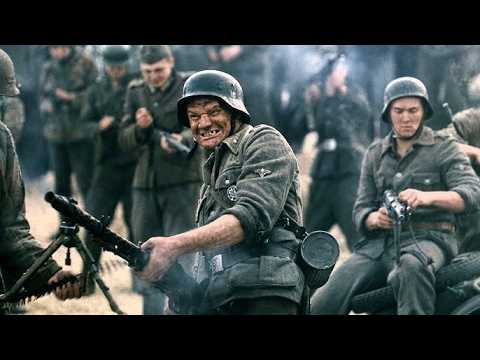
The scale of the atrocity was staggering. Historians estimate between 200,000 and 300,000 deaths, with a widely accepted minimum of 100,000. Foreign residents, horrified by what they witnessed, scrambled to create safety zones. A German businessman named John Rabe coordinated an area that sheltered approximately 200,000 civilians. American missionary Minnie Vautrin at Ginling College protected thousands of women, though soldiers repeatedly invaded the campus to drag them away.
“The streets were littered with corpses,” one witness recorded in a diary. “The river ran red.”
But Nanjing was not an isolated incident. Across the vast theater of war, similar horrors unfolded—each with its own context, its own perpetrators, its own victims. From the frozen experiments of Unit 731 to the killing fields of Eastern Europe, from the death marches of the Philippines to the firestorms of Germany and Japan, the Second World War revealed a chilling truth: the line between combat and atrocity was often blurred beyond recognition.
In the forests near Vilnius, pits originally dug for fuel storage became mass graves for tens of thousands. In the ravine of Babi Yar, over 33,000 Jews were shot in just two days. In the French village of Oradour-sur-Glane, 642 men, women, and children were massacred in a single afternoon. These were not battle casualties—they were deliberate, organized acts of terror.
As the war progressed, the violence escalated. Entire cities became targets. The bombing of Dresden created a firestorm that melted glass and metal. The Tokyo firebombing killed 100,000 in a single night. “If we had lost the war, I probably would have been prosecuted,” admitted Curtis LeMay, the architect of the Tokyo raid.
The end of the conflict brought not closure, but a reckoning. Tribunals were held, but justice was uneven. Some perpetrators were executed; others were granted immunity in exchange for data. Many were never prosecuted at all. The Cold War cast a long shadow, and political expediency often trumped accountability.
Today, these events remain subjects of debate, denial, and painful memory. Archives have been opened, testimonies recorded, and memorials erected. Yet the scars endure—a reminder of what humanity is capable of when hatred and obedience override conscience.
This is the story of those crimes—not to dwell on darkness, but to ensure that the victims are not forgotten, and that the lessons of the past are not lost to silence.
April 9, 1942. Bataan Peninsula, Philippines. After months of combat, hunger, and disease, approximately 76,000 Filipino and American soldiers surrendered to Japanese forces—the largest surrender in American military history. What followed would become one of the war’s most notorious forced marches.
The prisoners, already weakened by starvation and malaria, were forced to walk more than 100 kilometers under the tropical sun to detention camps. Japanese guards beat those who fell or slowed. Requests for water were answered with bayonets, rifle butts, or bullets. Artesian wells along the route were deliberately denied to the prisoners.
“If you stopped, you were shot,” one survivor recalled. “Men dropped like flies. We left them where they fell.”
Estimates place the death toll between 5,000 and 18,000 Filipinos and hundreds of Americans during the march alone. Those who survived arrived at Camp O’Donnell, where overcrowding and disease continued to kill. General Masaharu Homma was later tried and executed for failing to control his troops.
That same spring, thousands of kilometers to the west, another killing operation was being prepared in secret. In the forests near Smolensk, the Soviet NKVD had selected a site known as Katyn. Polish officers, police, and intellectuals—captured after the Soviet invasion of 1939—had been held in camps for months without explanation.
In the spring of 1940, orders signed by Stalin authorized their execution. Approximately 22,000 people were killed. Each prisoner was led individually to the edge of a pit, hands bound, and shot in the back of the head. The bodies were stacked in mass graves prepared in advance.
Among the victims were career soldiers, doctors, university professors, engineers, and priests. The objective was clear: eliminate Poland’s social leadership and cripple its capacity for national resistance.
For decades, Moscow denied responsibility. When German forces discovered the graves in 1943, the Soviet Union blamed the Germans—a lie maintained even at Nuremberg. Only in 1990, during Glasnost, did Moscow officially acknowledge the truth.
But Katyn was not the only site of mass execution in the East. As German forces advanced into Soviet territory in 1941, mobile killing units—Einsatzgruppen—followed behind the front lines. Their task was to eliminate Jews, Roma, Soviet officials, and anyone deemed a threat.
In the ravine of Babi Yar, on the outskirts of Kiev, 33,771 Jews were murdered in just two days. Victims were told they were being relocated. They arrived, handed over their belongings, undressed, and were led in groups to the edge of the ravine. They were made to lie over the bodies of those already killed and shot in the back of the head.
Over the following months, the site would receive other victims—Roma, Soviet prisoners, psychiatric patients—until the total reached an estimated 100,000 to 150,000 dead. Before retreating, the Germans forced prisoners to exhume and burn the corpses to destroy evidence, then executed them too.
In Soviet memory, the Jewish identity of Babi Yar’s victims was suppressed for decades. Only after the fall of the Soviet Union did a proper memorial emerge.
The pattern was not confined to the east. In the forests near Vilnius, in present-day Lithuania, a series of large pits—originally excavated for fuel storage—became the site of another systematic killing operation. Between July 1941 and August 1944, German units and local collaborators brought prisoners to the site. Most were Jews, but Soviet prisoners and members of the Polish intelligentsia were also among the victims.
They were told they were being transferred for labor. Upon arrival, they surrendered their belongings and removed their clothing. They were then taken to the edges of the pits and shot, falling directly onto the bodies of those already killed. Executions occurred almost daily for years. Estimates place the death toll between 70,000 and 100,000.
In 1943, as the Red Army advanced, the Germans attempted to erase the evidence. A group of Jewish prisoners—later known as the Burning Brigade—was forced to exhume the corpses, burn them on improvised pyres, and crush the remaining bones. In April 1944, some of these prisoners managed to escape through a tunnel they had secretly dug, later providing detailed testimony. The others were killed before the German withdrawal.
After the war, Soviet authorities avoided emphasizing that the victims were predominantly Jews, describing them only as Soviet citizens. Only after Lithuania’s independence did memorials begin to explicitly recognize the character of the massacre.
As the war entered its final phase, the violence escalated beyond executions and massacres. Entire cities became targets. On the night of February 13, 1945, the German city of Dresden was struck by a massive aerial operation conducted primarily by the Royal Air Force, followed by American bombers. Over approximately 48 hours, nearly 4,000 tons of high-explosive and incendiary bombs were dropped.
Dresden was not one of Germany’s largest industrial centers, but it held significant logistical importance. Railway lines converged there, transporting troops and supplies to the eastern front. At the beginning of 1945, the city was also filled with refugees fleeing the Soviet advance, raising the population to over one million.
The strategy unfolded in stages. First, high-explosive bombs destroyed roofs, doors, and windows, exposing the interiors of buildings. Next, thousands of incendiary bombs fell onto the open structures. Isolated fires quickly merged into a firestorm. The intensity of the heat created its own air currents, pulling oxygen from surrounding areas and feeding the flames. Temperatures reached levels capable of melting glass and metals.
Underground shelters became traps. The air consumed by the fire caused the asphyxiation of those hiding inside. In the streets, people were struck by winds so strong they were dragged toward the burning areas. Witnesses described individuals running with their clothes on fire. Many bodies were completely carbonized.
The following day, American bombers attacked again, targeting railway yards, but residential areas were also hit. After the attacks, German teams collected corpses and burned them in public squares due to the enormous number of dead. Modern estimates point to about 25,000 fatalities. Much of the historic city center was destroyed, with approximately 1,600 hectares reduced to rubble.
The operation remained controversial. Air commander Arthur Harris defended the action as necessary to disrupt German military transportation. Critics argued that at that stage of the war, Germany was already militarily defeated and that the strategic impact was limited. The controversy was amplified by Nazi propaganda that spread inflated death tolls, later repeated by some authors, though subsequent research corrected these estimates.
Only a few weeks later, on the night of March 9–10, 1945, an air attack on Tokyo would become the deadliest single bombing raid in history. 334 American B-29 bombers flew at low altitude and dropped about 1,700 tons of incendiary bombs. Commander Curtis LeMay had concluded that high-altitude bombing against industrial targets was not producing sufficient results. The new strategy consisted of striking entire urban neighborhoods.
Most Japanese houses were built of wood and paper, which favored rapidly spreading fires. The aircraft flew between approximately 1,500 and 2,700 meters to improve accuracy and avoid interception. The M-69 bombs opened in the air, scattering submunitions containing napalm. Upon hitting the ground, they ignited fires simultaneously in hundreds of locations. Soon, the fires merged into a gigantic firestorm similar to the one in Dresden.
Extremely strong winds fed the flames. Temperatures reached levels capable of melting metal structures and boiling water in reservoirs. People who sought refuge in canals and tanks died from extreme heat or lack of oxygen. Crowds attempted to escape through narrow streets, causing crushes. Survivors reported seeing people in flames as they ran.
Within a few hours, about 100,000 people died, and approximately 1 million were left homeless. More than 40 square kilometers of the city were destroyed. In the months that followed, similar attacks occurred in dozens of Japanese cities, causing hundreds of thousands of additional deaths.
“There was no safe place within the cities,” one survivor recalled. “The shelters failed. The hospitals burned. We simply ran, and the fire ran faster.”
After the conflict, these bombings were not judged as war crimes. LeMay himself declared years later that if the United States had lost the war, he probably would have been prosecuted. The episode continues to be remembered in different ways—in the United States, often associated with the attempt to end the war; in Japan, treated as a large-scale civilian tragedy.
In the decades that followed, the world struggled to reckon with what had been done. Tribunals in Tokyo, Nuremberg, Manila, and Khabarovsk examined some of the crimes, but justice remained uneven. Unit 731’s researchers were granted immunity in exchange for their data. Many perpetrators vanished into civilian life. Victims’ families waited decades for recognition—sometimes forever.
Archives opened, testimonies were recorded, memorials erected. Historians cross-referenced railway records, military telegrams, and survivor accounts to confirm that these acts were not isolated incidents, but deliberate policies. Yet in some countries, the memory of these events remains contested, suppressed, or politicized.
The Second World War ended in 1945. The reckoning never truly did.
What do you think—can humanity ever fully confront the darkness of its own history, or will some truths always remain buried beneath the rubble of politics and silence? Share your thoughts below.
Report this article
Select a reason for reporting:






