The winter of 1941 hit the Eastern Front like a hammer blow. Temperatures plummeted to -20°C and below, turning the battlefield into a frozen hell. For the soldiers trapped inside the steel beasts of war, the cold was as deadly as any bullet. The T-34, a marvel of Soviet engineering, was built for war, not comfort. Its interior was a freezer, and at -20 degrees, the steel hull became an icy tomb.
Inside, the crew huddled in quilted jackets, flannel underwear, and felt boots, but even these layers couldn’t stop the bone-chilling cold. The driver-mechanic suffered most, forced to open his hatch for visibility, letting an icy wind blast directly into his face. “During halts, commanders allowed bonfires to heat the personnel,” one veteran recalled. But these moments were brief, and the cold always returned.
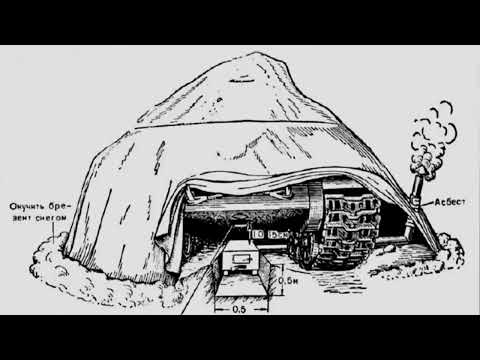
Desperation bred ingenuity. The crews devised a method to warm their tank using a simple metal bucket. When fires burned, smoldering coals were scooped into the bucket and placed inside the combat compartment. It was a small relief, but it kept the men from freezing. For longer stops, they dug trenches, placed a metal stove inside, and covered the tank with a tarpaulin. The edges were pegged to the ground and packed with snow, creating a makeshift dugout that warmed both crew and tank. In a few hours, the interior became bearable, and the engine could start without protest.
If time was short, a smaller hole was dug, just big enough for the stove. The tank was covered, and the crew took turns tending the fire. “I think that this design is very similar to the Russian bath,” a tanker mused. Indeed, the method mirrored the traditional banya, using heated stones and steam. Even today, Russians use similar techniques by rivers, heating stones and pouring water to create a sauna.
The Germans faced the same bitter cold, but their situation was dire. The Wehrmacht had planned to conquer the USSR before winter, so they were unprepared. “At -20 degrees Frost, the German tankers had only the heat from the rolling tank engine,” one soldier remembered. But the engine compartment was separated from the fighting compartment by a protective shield. In a desperate move, they drilled a hole and inserted a hose to channel heat—and carbon monoxide—into the crew space. It was a dangerous gamble; many risked poisoning for a few degrees of warmth.
When halted in villages, they could sleep in houses, but often they had to spend nights in fields or forests. They used a kerosene lamp to warm the engine and themselves, huddling together in the tank. After everyone fell asleep, the lamp often went out, filling the compartment with smoke. Carbon monoxide poisoning was a risk, but freezing was a certainty. Many woke up completely frozen, their hair stuck to the icy armor. “If during sleep they unknowingly touched their hair to the icy iron, their hair instantly froze and they had to tear themselves free,” a German tanker recalled.
For the Soviets, the first built-in heater for the combat compartment didn’t appear until the 1960s, on the T-64 tank. Until then, it was the stove, the bucket, and the tarpaulin that kept them alive. The Eastern Front was a crucible of endurance, where men fought not only the enemy but also the merciless cold. Their stories of survival are a testament to human resilience in the face of nature’s fury.
But survival in the frozen steppe was not only about warming the tank. It was about warming the soul. In the brief respites between battles, the crews found small rituals that kept them human. A shared cigarette, a flask of vodka passed around, a joke told through chattering teeth. “We laughed at the cold,” one tank commander wrote in his memoirs. “Because if we stopped laughing, we would have frozen to death inside our own minds.”
The tank itself became a character in their stories. The T-34 was beloved and cursed in equal measure. Its sloped armor deflected German shells, but it also trapped the cold. Its wide tracks gripped the snow, but its engine oil thickened like tar. Mechanics learned to thin the oil with kerosene, and drivers learned to start the engine only after the stove had done its work. “The tank was our home, our weapon, and our coffin,” another veteran said. “We treated it like a stubborn horse—feed it warmth, and it would carry us through hell.”
There was one story that spread through the ranks like wildfire. In January 1943, during the chaos of the Voronezh Front, a lone T-34 became separated from its unit. The crew—four men—found themselves stranded in a frozen swamp, their radio dead, their engine seized. For two weeks, they survived on melted snow, a few tins of meat, and the warmth of their stove. They took turns standing watch, not for Germans, but for wolves. The pack circled their tank every night, drawn by the smell of food and the heat radiating from the hull. “We fought the wolves with shovels and pistols,” the tanker later recalled. “But the cold was the real enemy. It never slept. It never gave up.”
When they were finally rescued by a patrol, the men were barely recognizable. Frostbitten, emaciated, but alive. Their tank, they said, had saved them. The stove had held out. The tarpaulin had held out. And their stubborn refusal to die had held out. “We were not heroes,” the tanker insisted. “We were just men who wanted to see the spring.”
That spring, when it finally came, brought mud instead of relief. The frozen ground turned to a quagmire, and tanks sank to their hulls. But the crews didn’t complain. They had survived the winter. They had learned to beat the cold with fire, steel, and sheer will. And as they pulled their tanks from the mud, they knew the next winter would come again. It always did.
The lessons of that first winter were written in frostbite scars and buried in the frozen ground. But the Red Army was nothing if not a fast learner. By the winter of 1942, the makeshift bucket-and-tarpaulin methods had been refined into something closer to doctrine. “We no longer waited for the cold to teach us,” a logistics officer noted. “We taught the cold what to expect.”
Supply units began issuing winter kits as standard equipment: felt-lined boots with double soles, sheepskin mittens with trigger fingers, and padded coveralls that could be worn over the standard uniform. The tank crews also received small, portable kerosene stoves designed specifically for the fighting compartment, replacing the open buckets of smoldering coals that had caused more than a few carbon monoxide scares.
But the most important change was tactical. Winter offensives were now planned around the cold, not in spite of it. “We learned to use the frost as a weapon,” a Soviet marshal later wrote. “The Germans froze in their positions while our men moved like ghosts through the snow.” Ski battalions and white-camouflaged tanks struck at dawn, when the enemy’s engines were still cold and their crews sluggish.
The Germans, by contrast, never fully adapted. Hitler’s insistence on holding every inch of ground meant that panzer crews spent the winter of 1942-43 shivering in static positions, their tanks immobilized by frozen fuel lines and cracked engine blocks. “We had become prisoners of the cold,” a Wehrmacht lieutenant wrote in his diary. “The Russians moved through the snow like wolves. We sat in our steel boxes and waited to die.”
Some German units improvised, building insulated shelters from logs and packed snow, but these were exceptions. The supply chain, already stretched to breaking, could not deliver the winter clothing and antifreeze needed. Crews resorted to burning anything they could find—furniture from abandoned villages, wooden fences, even the stocks of their own rifles—just to keep the stoves alive for another night.
One captured German tanker, interrogated by Soviet intelligence, admitted that his crew had stopped trying to start their engine altogether. “We just sat in the dark and talked about home,” he said. “We talked about the smell of bread, the sound of our children. We talked until our voices froze.”
The contrast was stark. Soviet tank crews, hardened by two winters of brutal lessons, had turned survival into a science. They knew exactly how long a stove would burn, how much tarpaulin was needed to seal a dugout, how many minutes of engine heat could be captured before the radiator cooled. This knowledge was passed down in informal briefings, written in notebooks, and shouted over the roar of battle.
“The cold was our teacher,” a Soviet tank commander recalled. “And we were good students. The Germans, they were too proud to learn.”
But even the best students had their limits. The winter of 1943 brought new challenges: temperatures that plunged to -40°C, blizzards that buried tanks under meters of snow, and a German enemy that fought with the desperation of the doomed. The crews knew that the cold would not spare them, no matter how many lessons they had learned. It would test them again, and again, until the war was won or they were buried in the frozen earth.
The winter of 1944 brought no mercy, but by then the Soviet tankers had become masters of the frost. “We could build a dugout in under an hour,” a T-34 commander recalled. “The stove was our hearth, the tarpaulin our roof, and the snow our insulation.” Crews passed down tricks from veteran to rookie: how to angle the stovepipe to draw smoke away from the hatch, how to pack snow around the tracks to keep the oil from freezing solid.
German tankers, by contrast, were now fighting a retreating war. The winter kit that finally arrived in late 1943 was too little, too late. “We had warm coats, but no fuel to heat the engines,” a panzer driver wrote. “We had stoves, but no wood to burn.” The Wehrmacht’s logistics had collapsed under the weight of the Russian winter and Soviet counteroffensives.
In January 1945, during the Vistula-Oder Offensive, a Soviet tank brigade advanced through a blizzard so thick that crews navigated by compass and the sound of artillery. “The cold was our ally,” a lieutenant recalled. “The Germans were frozen in place. We moved like bears through the snow—slow, steady, unstoppable.” When they captured a German tank crew, the prisoners were huddled around a dead stove, their faces blue, their fingers too stiff to surrender properly.
One Soviet tanker, a veteran of three winters, summed up the difference between the two armies. “The cold does not care about your uniform or your orders,” he said. “It only asks: are you ready to fight it? We were ready. The Germans were not.”
When the war ended, the survivors returned home with frostbite scars and stories that would be told for generations. The stove, the bucket, the tarpaulin—these humble tools had saved more lives than any medal could honor. “We did not defeat the cold,” an old tanker said at a reunion decades later. “We made peace with it. And then we used it to win.”
Today, the Russian banya remains a national tradition, a ritual of heat and steam that echoes those wartime dugouts. And in the quiet of a winter night, a veteran might close his eyes and remember the smell of burning coal, the warmth of a shared flask, and the sound of wolves circling in the dark.
What would you have done to survive a winter inside a frozen tank—would you have trusted the stove, or found your own way to beat the cold?
Report this article
Select a reason for reporting:






