What if you could lock eyes with Chief Joseph, the leader who led his people on a heart-wrenching journey across thousands of miles, and ask him what courage truly means? Or glimpse the mystic glow in Nostradamus’s eyes as he scribbled prophecies that would haunt centuries? These are not mere fantasies. They are the heart of an extraordinary journey that blurs the line between past and present, thanks to the power of artificial intelligence.
In a world where history often feels distant and dusty, AI has become a time machine, resurrecting legends with startling vividness. This is not just about seeing faces; it is about feeling the weight of their stories, the fire of their convictions, and the tragedy of their fates. From the battlefield to the throne, from the Wild West to the mystical realms, these icons are back—and they have something to say.
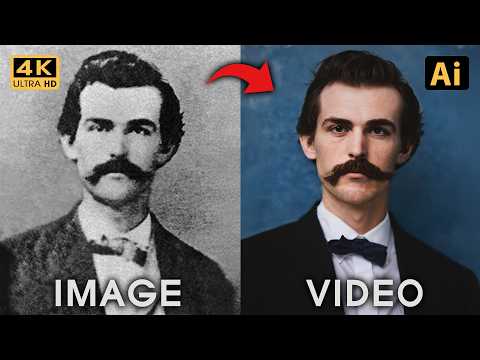
Imagine standing before George Armstrong Custer, a man whose name is forever etched in controversy. His eyes, brought to life by AI, might reveal the bravado that led him to the Little Bighorn—and the haunting realization of his final defeat. Or consider Doc Holliday, the dentist-turned-gunslinger, whose tuberculosis-ravaged frame belied a deadly precision. “I’m your huckleberry,” he might drawl, and you’d feel the chill of the OK Corral.
But the resurrection doesn’t stop there. Bohdan Khmelnytsky, the Ukrainian hero who defied Polish oppression, stares back with the resolve of a nation’s birth. Elizabeth Barrett Browning’s gentle gaze hints at the passion behind Sonnets from the Portuguese, while Chief Joseph’s dignified face carries the sorrow of a people betrayed. These are not just images; they are windows into souls that shaped our world.
Then there’s the impossible: Pope Francis, whose purported death in 2025 is a stark reminder of our own mortality, and yet here he is, his humility palpable even through a digital veil. Harry Houdini’s eyes twinkle with the mischief of a master escape artist, and Sitting Bull’s stoic presence commands the respect of a warrior-prophet. Each face is a story, each wrinkle a chapter of history.
As we delve deeper, the Red Baron’s piercing gaze takes you to the skies of World War I, where chivalry and death danced on the wind. Vercingetorix, the Gaul who dared to challenge Caesar, stands defiant, his spirit unbroken by time. And Shirley Temple, the golden-curled beacon of hope during the Great Depression, smiles with the innocence that once lifted a nation’s heart.
But why do these figures matter now? Because in an age of uncertainty, their stories offer lessons in resilience, courage, and the complexity of human nature. AI has given us a gift: the chance to look into the eyes of those who walked before us and ask, “What would you do?” The answers might surprise you.
So sit back, relax, and prepare to meet the legends. This is not just a video; it is a conversation across time. And as you watch, you might just find yourself whispering a question to the past—and waiting for an answer.
The parade of faces continues, each one a door swinging open onto a different century. Here is Manfred von Richthofen, the Red Baron, his sharp features framed by the leather cap of a bygone sky. Eighty victories trail behind him like smoke, and yet AI renders him almost serene—a hunter at peace with the hunt. “Chivalry did not die in the trenches,” his steady gaze seems to insist, even as the war that killed him at twenty-five swallowed such ideals whole.
Beside him flickers Molly Brown, the unsinkable survivor of the Titanic, her expression warm but iron-willed. She clutches an oar that isn’t there, as if ready to row through any disaster history throws at her. “Women’s rights, labor, education—survival was never just about me,” her posture declares, and you can almost hear the applause of the lifeboats.
Then the mood shifts. The Venerable Bede appears, quill in hand, his monk’s tonsure and quiet eyes radiating the patience of a scholar who mapped the English people onto parchment. He is the calm center of the storm, a reminder that some legacies are built not in battles but in libraries.
And suddenly the air grows strange. Helena Blavatsky looms from the digital mist, her heavy gaze swirling with secrets from The Secret Doctrine. She seems to look through you rather than at you, as though reading a page of your future written in a language only she understands. Whatever you believe about her mysticism, the woman’s intensity is undeniable—a mind that refused the boundaries of her age.
Charles V follows, the weight of an empire sagging his shoulders beneath velvet and gold. Here is a ruler who commanded half the world and still chose to abdicate for a monastery cell. “Power is a burden, not a prize,” his weary eyes confess, and the lesson lands harder than any battlefield charge.
General George S. Patton storms into view next, jaw set, a star-studded helmet gleaming. You can practically hear the bark of his commands, the rumble of tanks, the controversy that clung to him like dust. “Wars are fought with blood and guts,” he might growl—and then, just as quickly, the image softens, hinting at the sudden, mysterious death that still fuels a hundred conspiracy theories.
His old adversary Erwin Rommel stands opposite, the Desert Fox, his expression a study in reluctant honor. He fought for a monstrous regime yet refused its worst orders, and his forced suicide leaves a shadow no AI can fully brighten. “Duty without conscience is tyranny,” his measured look suggests, and you wonder how many soldiers across time would nod in grim agreement.
Finally, the oldest face of all emerges from the sands of Egypt: Seti I, pharaoh of the Nineteenth Dynasty, his kohl-lined eyes carrying the authority of a god-king. Behind him rise the temples of Abydos and the memory of campaigns that restored an empire. “I built for eternity,” his regal stillness declares—and staring back at him, you feel the millennia collapse into a single heartbeat.
Twenty legends. Twenty windows into the human story. And somewhere in the quiet after their faces fade, a question lingers in the air, waiting for you to answer it.
The screen flickers, and for a moment there is only static—then a new face assembles itself from the digital haze, and the room seems to hold its breath. She is young, impossibly young, her golden curls catching a light that no longer exists. Shirley Temple, the child who danced a nation out of despair, looks out from the screen with eyes far older than her years. “I sang because people needed to smile,” her small voice seems to say, and you realize that hope, too, is a kind of resistance.
But the parade refuses to slow. Doc Holliday materializes beside her, gaunt and elegant, a ghost with a gambler’s smile and a dying man’s cough. “I’m your huckleberry,” he drawls again, and this time the words carry the weight of a man who knew every sunrise might be his last. Tuberculosis was his executioner long before any bullet—and yet he chose to stand at the OK Corral anyway.
Then the mood darkens like a storm rolling over the plains. Chief Joseph appears, his braided hair and weathered face carrying the dignity of a leader who marched his people fifteen hundred miles toward a freedom that never came. His eyes hold no anger—only a sorrow so deep it has become quiet. “I will fight no more forever,” he whispers, and the words land like stones in still water.
And then—the air itself seems to change. Nostradamus steps forward from the shadows, his long robe trailing centuries of speculation behind him. His eyes are not kind; they are curious, almost amused, as though he has been waiting for this moment longer than anyone knows. “You wish to know what I saw?” his expression teases. “I saw you. I saw all of you, standing here, staring back at me through a machine I could never have imagined.”
The quatrains scroll faintly behind him, cryptic verses that have been bent to fit every disaster and triumph of the last five hundred years. Whether prophet or fraud, the man understood something essential: that humanity will always hunger for a glimpse of what comes next. And here he is, the ultimate tease, resurrected by the very technology he might have predicted.
Helena Blavatsky drifts closer, her heavy-lidded gaze fixed on something just past your shoulder. “The secrets were never hidden,” she murmurs, “only ignored.” The Theosophist’s strange blend of Eastern wisdom and Western mysticism feels oddly at home in this digital séance—as if AI itself were a kind of medium, calling spirits through the veil of data.
But it is Sitting Bull who commands the deepest silence. The Lakota chief stands with arms folded, his presence so still it feels like the prairie before a storm. He was there at the Little Bighorn, where Custer fell, and he outlived the victory only to be killed by his own people’s protectors. “The earth remembers,” his steady look declares. “Do you?”
The faces begin to blur together now—Bede with his quill, Charles V with his weary crown, Patton with his gleaming helmet, Rommel with his haunted honor. Each one steps forward, holds your gaze for a heartbeat, and then dissolves back into the luminous fog. Twenty lives. Twenty lessons. And still the question hangs in the air, unanswered and electric.
Because this is not merely a gallery of the dead. It is an invitation. The past has been cracked open like a door, and on the other side, legends are waiting to speak—if only you dare to ask.
The screen softens, the faces fading into a warm, golden glow—and then, one by one, they return. Not as separate images, but as a single, shimmering constellation. Custer’s bravado, Doc Holliday’s fatal charm, Chief Joseph’s quiet dignity, the Red Baron’s serene focus—all of it swirls together like a dust storm of souls. “We are not ghosts,” the collective whisper seems to say. “We are echoes. And echoes never truly die.”
Nostradamus steps forward one last time, his cryptic smile now tinged with something like warmth. “You asked what I saw,” he says, his voice carrying the weight of five centuries. “I saw a world that would one day build a mirror and call it a machine. I saw you—looking back at us, searching for answers we never had.” He pauses, and the quatrains behind him dissolve into pixels. “The future was never mine to give. It was always yours to write.”
And then the constellation collapses into a single point of light—and from it steps Shirley Temple, small and radiant, her golden curls untouched by time. She doesn’t speak. She simply dances, a few quick, joyful steps, and suddenly the room feels lighter. Hope, it seems, is the one prophecy that never fails.
The light fades. The screen returns to stillness. But the question remains, hanging in the silence like a breath held too long: If you could look into the eyes of one legend and ask them anything—what would you say? Tell us in the comments. Your voice might just summon the next face from the fog.
Report this article
Select a reason for reporting:






