He could feel the weight of the rifle in his sleep. 3.96 kilograms, just under four, but Billy Sing never rounded up. He knew it the way a pianist knows the weight of the keys under his fingers, the way a surgeon knows the heft of a scalpel. On a Tuesday afternoon at the edge of the world, with the sun hammering down on the Gallipoli Peninsula and the stench of death thick in the air, he rested the worn walnut stock across a sandbag for the nine-hundredth time and waited.
The rifle was a short magazine Lee-Enfield, chambered in .303 British, its barrel 635 millimeters of cold steel. It had been designed to arm the infantry of the British Empire, but it had been educated in the red dust of Central Queensland, where it had killed hundreds, maybe thousands, of kangaroos. That was before the war. Before the world demanded a different kind of pest control.
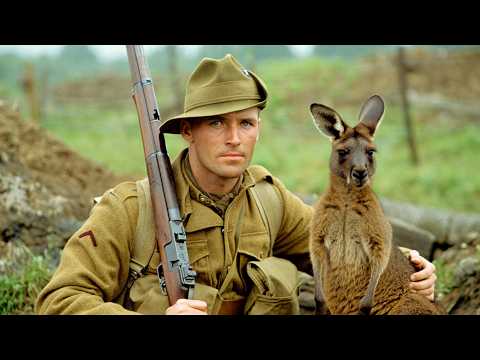
Billy Sing was a small man, 5 foot 5, 64 kilograms, with a jet-black mustache and goatee that made him look, as one observer put it, “a picturesque-looking man killer.” His father was Chinese, his mother English, and in the White Australia of 1915, that made him an outsider even as he fought for the empire. But the army needed men who could shoot, and Billy could shoot like no one else.
He had learned his trade on the plains west of Clermont, Queensland, where the heat cracked the earth and the silence was so vast you could hear a kangaroo shift its weight at 200 meters. Every round cost money. Every miss was a loss. He learned to make each shot count because his family’s income depended on it. By the time he enlisted in October 1914, the rifle had become an extension of his body, the stock molded to the geometry of his cheek, the trigger pull known by instinct.
At Gallipoli, he arrived to a catastrophe. The Anzac forces had been pinned into a perimeter barely a thousand meters deep, the trenches so close in places that you could hear the enemy talking. Turkish snipers occupied the high ground, and men died daily just walking between positions. Into this killing ground came Billy Sing and his rifle.
His method was deceptively simple. He rose before dawn, moved to a hide built from sandbags and scrub, and waited. Beside him sat a spotter with a telescope, scanning the Ottoman trenches for targets. “He spends all day and every day in a sniping position with a telescope and rifle,” wrote his commanding officer. “And if they show their heads at all, he has them.”
The kills mounted—one a day, then two, then three, then on exceptional days as many as nine. Each one was verified by an observer, noted, and passed along the trenches like a cricket score. The Australians, who understood cricket the way they understood breathing, followed the tally with dark humor and absolute respect.
By early September 1915, Brigadier General Granville Ryrie officially recorded 119 confirmed kills. The real number was higher—much higher—because those were only the kills observed by a spotter. Major Stephen Midgley estimated the true total at closer to 300. Three hundred men, one rifle, 174 grains of lead at a time.
But Billy’s war was not without cost. The Turks sent their own specialist, a marksman they called Abdul the Terrible, to hunt him down. The duel that followed was a deadly game of cat and mouse, played out over days and weeks, until one bullet passed through a spotting telescope and into Billy’s shoulder. He was back in position within a week.
The rifle that killed Abdul the Terrible weighed 3.96 kilograms and fired a bullet at 744 meters per second. It had been designed for the infantry of the British Empire, but it had been perfected in the kangaroo paddocks of Central Queensland. And its story was far from over.
By late October, the peninsula had begun to eat its defenders alive. Not with bullets—those were almost a comfort, a known quantity, a threat you could see coming—but with dysentery, with flies, with the slow rot of men who had not eaten a proper meal in months. Billy had already been hospitalized once with influenza in August. His shoulder, where Abdul’s bullet had torn through, had healed into a knot of scar tissue that ached when the cold came off the water at night.
He kept shooting. The tally climbed. On the 23rd of October, General William Birdwood—commander of the entire Anzac force—issued an official order complimenting Trooper Sing on accounting for 201 enemy kills. The general was willing to credit a higher number than the regimental records, which sat stubbornly at 150 confirmed. The Anzac War Diary noted it with the flat understatement of men who had seen too much to be impressed by anything: “Our premier sniper, Trooper Sing, yesterday accounted for his 199th Turk. Every one of this record is vouched for by an independent observer.”
Birdwood himself had joined Billy as a spotter on at least one occasion, peering through the telescope, watching the small dark man with the goatee settle the stock against his cheek and wait. Lord Kitchener was told that if all the Allied forces could match the capacity of the Queensland sniper, they would be in Constantinople within the month. They could not. And they were not.
The evacuation began in December. It was, paradoxically, the most successful operation of the entire campaign—tens of thousands of men withdrawn from multiple beaches without a single casualty. The rifles were among the last things to leave. Some were rigged with water-drip mechanisms that would fire a round hours after the men had gone, simulating continued occupation of the trenches. The Turks did not realize the Anzacs had left until they found the positions empty.
Billy Sing left Gallipoli with his reputation, his rifle, and a number the world was beginning to learn. The Distinguished Conduct Medal came in March 1916, second only to the Victoria Cross. The citation read: “For conspicuous gallantry from May to September 1915 at Anzac as a sniper. His courage and skill were most marked and he was responsible for a very large number of casualties among the enemy, no risk being too great for him to take.”
No risk being too great for him to take. From the official record of the British Empire. But Gallipoli was only the beginning.
He transferred to the 31st Battalion and went to France. The Western Front was a different war entirely—distances greater, artillery heavier, the role of the individual sniper diminished by the industrial scale of the killing. Billy served at Polygon Wood in Belgium in 1917, where he was recommended for but not awarded the Military Medal for leading an anti-sniper fighting patrol. He was mentioned in dispatches again by Birdwood. He was awarded the Belgian Croix de Guerre. He was wounded again, more seriously this time, and gassed.
The rifle went with him—the same 3.96 kilograms, the same worn stock, the same trigger pull known by instinct. But the war around the rifle had changed, and the rifle could not change with it. Billy’s particular genius, the close-range intimate precision that had made him lethal at Gallipoli, was less suited to the mechanized slaughter of France and Belgium. He was a hunter in a war that had become a machine.
He returned to Australia in July 1918 aboard the troopship SS Boonah, serving as a submarine guard during the voyage—his marksmanship still in demand even on the journey home. He was discharged as medically unfit, his chest wrecked by the gas, his body carrying the accumulated damage of three years of war.
Proserpine gave him a hero’s welcome. A procession. A band. Speeches at the town hall. A purse of sovereigns from well-wishers who had read his name in the London papers and wanted to shake the hand of the man who had killed two hundred Turks. For a few weeks, Billy Sing was exactly what the empire had promised he would be: a celebrated soldier, home at last.
Then the band packed up. The speeches ended. The sovereigns were spent. And Billy Sing discovered that peacetime had no particular use for a man whose greatest skill was putting bullets into targets at three hundred meters.
He went back to Clermont, to the red dust and the brown grass and the vast silence he had grown up in. He took up a mining claim on the Misery goldfield—the name was not lost on him, though he never said so. The gold was sparse. The money was worse. He had married a Scottish woman named Elizabeth in Edinburgh in June 1917, and she may or may not have followed him to Australia; the record is contradictory, and within a few years she had vanished from it entirely. The transition from Edinburgh’s green hills to the heat and dust of a central Queensland mining district would have broken a stronger woman than the record suggests she was.
He tried sheep farming. He tried other claims. Nothing held. The skills that had made him extraordinary in war—patience, precision, the ability to remain motionless for hours, the capacity to kill without hesitation—were not skills the peacetime economy valued or rewarded. A man who could read the wind and the light and the subtle distortions of heat mirage could not read a ledger or a market or the slow arithmetic of a failing farm.
The years passed. The fame faded. The man known to an army and a nation became a man known to a shrinking circle of old soldiers and neighbors. His medals were lost, sold, or given away somewhere in the long decline—nobody knows when, nobody knows to whom. The Distinguished Conduct Medal that ranked second only to the Victoria Cross, the Croix de Guerre, the mentions in dispatches: all gone.
In 1942, with another war consuming the world, Billy left Clermont for Brisbane. He told his sister Beatrice that it might be cheaper to live in the city. He took a laboring job. He was fifty-six years old, his chest still troubling him, and the city was not kind to a small dark man with a famous name nobody remembered.
On the 19th of May, 1943, William Edward Sing died alone in his room at a boarding house at 304 Montague Road, South Brisbane. He was fifty-seven. The cause of death was a ruptured aorta. His significant possessions at the time consisted of a hut on a mining claim valued at approximately twenty pounds and the sum of five shillings.
Five shillings.
The man who had been worth more to the Anzac campaign than a battery of artillery owned five shillings when he died. His rifle—the 3.96 kilograms of walnut and steel that had changed the dynamics of the Gallipoli sniping war—was not among his possessions. Its specific fate is unrecorded. It may have been returned to military stores after his discharge. It may have been sold or traded. It may be sitting in a private collection somewhere, unrecognized, its history invisible to anyone who does not know what the wear pattern on the stock means.
Or it may have been destroyed. Scrapped. Melted down. 3.96 kilograms of metal and wood returned to raw material, the story it carried erased.
There is a photograph in the Australian War Memorial Collection, catalog number C00429, showing Billy Sing at his sniping post in August 1915. The rifle is there, laid across the sandbag, the barrel pointing toward the Turkish lines, the stock pressed against the earth. The wear on the grip is invisible now. You cannot feel the heat of the metal or the smoothness of the walnut where his cheek had rested ten thousand times, but you know it is there because you have been told.
In 1995, a statue of Billy Sing was unveiled in Clermont. It shows him in a sniping pose. In 2004, an Australian Army sniper team operating in Baghdad named their position the Billy Sing Bar and Grill. In 2009, the Chinese Consul General laid wreaths at Billy’s grave in Lutwyche Cemetery. Each year, on the weekend before Anzac Day, the William Billy Sing Memorial Shooting Competition is held on the Sunshine Coast using Lee-Enfield service rifles.
The same platform. The same bolt action. The same .303 British cartridge. The same design that Billy carried from the kangaroo paddocks of Clermont to the ridges of Gallipoli.
The rifle did not look like a weapon that shaped a campaign. That is the point. It looked like what it was: a standard issue infantry arm designed for mass production and general service. It was not customized. It was not exotic. It was not fitted with advanced optics or precision modifications. It was a tool, a working tool carried by a working man, adapted through years of use to the specific geometry of one body and the specific habits of one mind.
Its power was not in its specifications. Its power was in the ten years of daily practice that preceded the war, and the cold, patient, relentless discipline that defined its use during it.
One hundred and fifty confirmed kills. Perhaps three hundred in total. With a rifle made for kangaroos.
Billy Sing was born to a Chinese father and an English mother in a country not sure it wanted either of them. He grew up shooting pests in the dust, went to a war no one was prepared for, and brought the only tool he trusted.
He sat in the heat and the flies and the stench of Gallipoli for months, and he killed men one at a time with the patience of a man who had learned that patience was not a virtue but a technique. He came home. He was celebrated. He was forgotten.
He died with five shillings, no medals, and no rifle.
3.96 kilograms. The stock was walnut. The walnut was worn. One side rough. One side glass.
If you ever find it, you will know it by the feel. But will anyone still remember what that feel was for?
Report this article
Select a reason for reporting:






