At 2 a.m. in a moonless Afghan valley, a line of men moves with the silence of ghosts toward a mud-walled compound. They carry the night on their helmets; the man inside sleeps, believing the dark is his. In ninety seconds, he will learn it never was. This is the story of the night raid—the most effective tactic of the Afghan war, one the enemy could never beat, yet it was ultimately banned by the very people who wielded it.
For years, the daylight war made headlines: patrols, firefights, roadside bombs. But the war that truly terrified the insurgency happened after dark. “Kill or capture,” the army called it—a precise, violent instrument designed to find one man in a country of millions and reach him in the dark. Australia’s Special Operations Task Group, built around the SAS and commandos, turned this tactic into an art form in Uruzgan province.
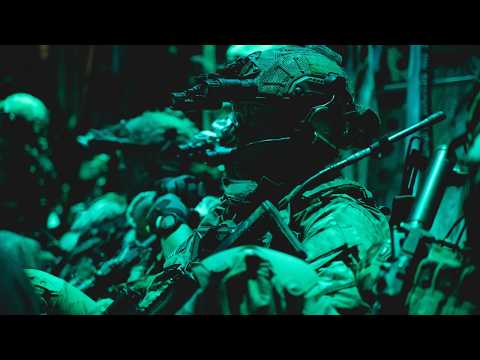
Their job was not to hold ground or win hearts; it was to reach into the insurgency and pull out the men who made it work. “Be the wrong man, sleep in the wrong compound, and you would not hear them coming,” the rumor spread. And it worked—so well that even the Americans, who relied on night raids more than anyone, grew wary of where it led.
The machine behind the raid was built on patience. Before a single soldier moved, a target was constructed from patterns of life: who the man was, where he slept, who visited him. “The violent few minutes at the end were the smallest part of the whole thing,” one operator recalled. Insertion came by foot or helicopter, always in darkness, exploiting the enemy’s blindness. Then the assault—speed, surprise, and overwhelming violence in the first seconds. Done right, it was over before it began.
But the same things that made the raid deadly to the enemy made it deadly to everyone else. Speed left no time to check; surprise turned frightened families into apparent threats. “The very things that worked were the very things that on a bad night killed the wrong people.” And the information was never perfect. Informers held grudges; phones changed hands; names were shared. Across hundreds of operations, the law of averages was pitiless.
To the people of those valleys, the night raid was a violation of something sacred. Even when it hit the right target, it left behind a village full of people who would never forgive—and some who would pick up a weapon because of it. “The most precise weapon in the war was helping to fill the very insurgency it was trying to empty.” Afghan President Hamid Karzai understood this perfectly, demanding the raids stop. For years, the coalition resisted, arguing they were the single most effective thing they did.
Then came the turning point. In 2009, General Stanley McChrystal tightened the rules, restricting air strikes and pulling raids in close. Afghan soldiers were to lead the way through the door. For Australia, the reckoning arrived in February 2009, when a raid in Uruzgan killed six Afghans—five of them children. “It is the exact nightmare the whole tactic carried inside it from the beginning.” Australia charged its own soldiers over a battlefield death for the first time in history.
The night raid was being surrounded—not by the enemy, but by its own side. Rules, politics, and law were closing in. And it was only a matter of time before all that pressure found its way onto a single piece of paper.
That piece of paper was signed on the 8th of April, 2012. After years of fury from Kabul, years of argument inside the coalition, the United States and Afghanistan put their names to an agreement that did what Karzai had demanded all along. It handed the night raid to the Afghans. From that point, Afghan forces would take the lead. And every raid now required the thing the tactic had never tolerated: a warrant.
An Afghan court order, sought in advance where it could be, and within three days where the intelligence simply could not wait. Strip away the tidy bureaucratic name—the Afghanization of special operations—and look at what it actually did. It took the single most effective tactic of the war and placed it behind a wall of warrants and review panels.
The thing that made the raid work was speed and surprise and the freedom to go on the operator’s own judgment in the dark on a moment’s notice. The agreement traded all of that away. You cannot keep the element of surprise and also seek a court warrant first. The two things cannot live in the same room. In every way the men who ran these operations cared about, the tactic as they had known it was finished. Banned not by defeat but by signature.
Here is where the honest version of the reaction matters, because it is more interesting than the version you would expect. The men most unsettled by this were not only the Australians. They were the Americans, too. The United States had built more of its war on this kind of raiding than any nation on Earth, and American operators understood better than anyone what was being given away.
There was real frustration in the special operations world—a sense that the politicians were handcuffing the one tool that genuinely worked, surrendering the dark back to an enemy who had never earned it. “The fear in those rooms was not of the enemy. It was of fighting on without the weapon that had kept the enemy off balance for years.”
But sit with the other half of that reaction, because it is just as real. There were senior commanders, the Americans among them, who had watched the bill come in night after night and had come to fear the tactic for exactly the right reason. They had seen how a flawless raid could still poison a village. They had watched the most precise weapon in the war quietly manufacturing new enemies in the villages it touched.
To them, what frightened them was not losing the night raid. It was what the night raid was doing to the whole war while they kept it. The whole coalition had grown afraid of its own sharpest weapon. Because they had finally understood that every time they used it well, they were also, somewhere out in the dark, losing something they could never get back.
Step back from the single raid and the single agreement, and the night raid turns out to be the clearest window there is into why the whole war ended the way it did. For more than a decade, the coalition was the master of the tactical fight. Nobody beat these men in the field. On the level of the single operation, the night raid was about as close to unbeatable as warfare gets.
If wars were decided by who won the raids, this one would have ended early and cleanly, in the coalition’s favor. But wars are not decided by who wins the raids, and the night raid is the perfect proof of it. Every tactical victory in the dark came with a strategic bill attached, and the bill was paid in the daylight.
The coalition kept winning the nights and kept losing the country, and the two things were not separate. They were the same thing seen from two ends. You cannot raid your way to the loyalty of the people whose doors you are kicking in. That is the hard lesson the night raid leaves behind, and armies are still arguing about it.
There is a kind of war where finding and killing the enemy is the whole job. In that war, the night raid is a masterpiece. And there is a kind of war where the prize is the people, where the entire point is which side they choose. In that war, a tactic that wins every fight and loses every village is a slow way to defeat dressed up as success. Afghanistan was the second kind of war, and it took the coalition the better part of a decade and a great many raids to fully accept it.
The signature in 2012 was, in the end, an admission. An admission that the most effective tactic they had was not the same thing as the most useful one. And that their own weapons can be too good for their own good.
And there is a piece of this that belongs to Australia in particular. A small nation with a small force was for years trusted to run one of the most demanding and dangerous slices of the entire effort: the targeting of the men who mattered most in the south. The coalition did not hand that work to the Australians as a courtesy. It handed it to them because they were among the best in the world at it.
That is a real and earned thing, and it should not be lost in the reckoning over the cost. But it sits beside the other real and earned thing: that being the best in the world at the night raid also meant being among those who paid its highest prices. In dead children in a compound in Uruzgan, in soldiers in front of a court, in a reputation the whole country is still arguing about today.
Both of those truths belong to the same men and the same tactic. You do not get to keep one and put the other down.
In the end, strip away the directives and the agreement and the strategy, and the night raid comes down to a handful of people on each side of a mud wall in the dark, in the worst few seconds of their lives. Think about the team leader at the wall, carrying the full weight of it in the last seconds before they go in. He has read the picture a dozen times. He believes the right target is inside and the innocent are not. And he knows, because he is not a fool, that he might be wrong.
And that if he is, it will be children. And it will be his to carry for the rest of his life. He gives the word anyway, because that is the job. There is no version of that moment that is clean. He lives in the gap between two unbearable mistakes and has to choose in less than a breath.
Then think about the people on the other side of the wall. A family asleep. A father who hears the gate go and rises in the dark to stand between strangers and his children, exactly as any father would—and who in doing so makes himself, for one fatal instant, look like a threat. The children who wake to noise and light and men they cannot understand. On the worst nights, those were the people the tactic killed. Not enemies. Not fighters. People whose only crime was to be asleep in a compound that a flawed picture had marked as something it was not.
The five children who died in Uruzgan in 2009 were real. And they were the price of the contradiction the whole tactic carried, paid in full on one night by people who had chosen nothing. That is the human weight of it, and it does not resolve. The same tactic in the same dark asked the best of some men and took everything from others, often within the same few minutes.
The soldiers who ran these raids carried both halves home with them. The men they saved and the ones they could not be sure of. And most of them have never said a word about any of it in public. That silence is its own kind of answer. There are things this work does to the people who do it that no court and no agreement ever reaches. And the men who carry them tend to carry them alone.
So how does a tactic the enemy never beat end up banned anyway? By now the answer should feel less like a riddle and more like a hard truth about the difference between winning a fight and winning a war. The night raid was taken away because it worked. It was not restricted because it failed. It was restricted because it succeeded so completely, and at a cost so high, that its own side could no longer afford its success.
It found the men it hunted. It reached them in the dark. It won in the small hours almost every time. And every one of those wins bought a little more of the thing that was quietly losing the larger war—until the people running that war did the hardest thing a military can do: put down a weapon that was still winning, because they had finally understood what the winning was costing them.
The regiment is still there, still based in Perth on the far western edge of the country, still doing the quiet dangerous work that nations ask of such men and then would rather not look at too closely. The war in Afghanistan is over. The agreement that ended the night raid as they knew it is a footnote now. But the thing the night raid taught is not a footnote. It is one of the hardest things the whole long war had to teach, and it was written in the dark.
A tactic the enemy could never beat. Feared by the people it hunted, and feared in time by the people who owned it. Used every night it was used, and taken away for exactly that reason. That is the whole of it. Not a story about a weapon that failed—but a story far rarer and far harder, about a weapon that worked, and what it cost the men who were the best in the world at using it.
So here is the question that outlives the war: if you build a weapon that wins every night but quietly loses the country, when do you set it down—and who gets to decide?
Report this article
Select a reason for reporting:






