The morning of July 4, 1879, dawned cold and misty over the White Umfolozi River. In the British camp, men checked their rifles and tightened their belts, the air thick with tension. They knew that somewhere beyond the rolling hills, an army of twenty thousand Zulu warriors was waiting. This was the moment Lord Chelmsford had been desperate for—a chance to erase the humiliation of Isandlwana and restore his shattered reputation.
But the Zulus were not merely defending their capital. They were fighting for the survival of their entire kingdom, the legacy of Shaka Zulu himself. As the British square advanced, the sound of thousands of shields rattling and war cries echoing across the valley sent a chill through even the most battle-hardened veterans.
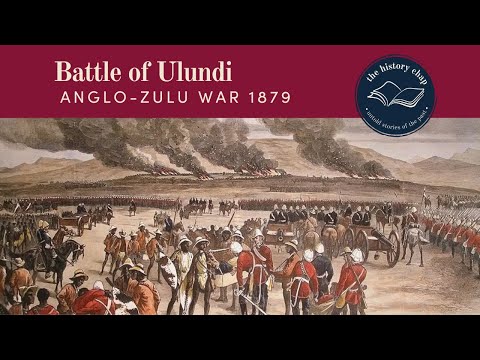
The previous day had been a warning. A reconnaissance mission led by Sir Redvers Buller had nearly ended in disaster when four thousand Zulu warriors sprang from the long grass. Only quick thinking and desperate courage had saved them. Now, as Chelmsford ordered his men into a massive square formation, he knew there would be no second chances.
“Can’t you fire faster?” Chelmsford shouted to the men of the 90th Regiment as the Zulu left horn charged the square’s vulnerable corner. The air filled with smoke and the deafening roar of Gatling guns—the first time these weapons were used in battle by the British Army.
The Zulus fought with incredible bravery, but the British firepower was devastating. Within thirty minutes, the charge was broken. Hundreds of Zulu warriors lay dead or dying, and the rest began to fall back. Chelmsford seized the moment and ordered his cavalry to pursue.
As the 17th Lancers lowered their lances and charged, a cheer went up from the square. For two hours, the mounted troops cleared the field, driving the Zulus back through their own capital and beyond. The battle was over, but the cost was immense. Over 1,500 Zulu warriors died that day, and the independent kingdom of Zululand was shattered forever.
When the British entered the royal kraal at Ulundi, they found it deserted. King Cetshwayo had fled before the battle, leaving behind only a photograph of his coronation and the crown the British had given him less than a decade earlier. It was a bitter irony—the allies who had once supported him had become his destroyers.
As Chelmsford’s men marched back to camp, the band played “Rule Britannia,” and the square reformed. Behind them, the Zulu capital burned. The war was over, but the scars would last for generations.
The smoke had barely cleared when Chelmsford’s cavalry reined in their horses at the edge of the smoldering capital. The 17th Lancers returned with lances bloodied, their horses lathered and blown. Buller’s mounted irregulars came in more slowly, many walking their mounts, some leading wounded comrades. The pursuit had been relentless—two hours of chasing a broken enemy across the veld, cutting down stragglers and scattering the last organized resistance. “Not a single Zulu got within thirty yards of the square,” one officer later wrote, still unable to believe what he had witnessed.
Inside the square, the infantry stood down. Men slumped against the stone walls, some laughing, others staring blankly at the carnage before them. The 80th Regiment had fired so many rounds that barrels were too hot to touch. The Gatling guns, which had jammed repeatedly in the early minutes, now sat silent, their crews wiping sweat and soot from their faces. Lieutenant Chard—the hero of Rorke’s Drift—moved among the Royal Engineers, checking on his men. He had survived another battle, but the haunted look in his eyes suggested he was thinking of the men who hadn’t.
By midday, Chelmsford ordered the square to reform for the march back across the White Umfolozi. The band struck up “Rule Britannia,” and the men stepped out with a swagger, the kind that comes only from absolute victory. Behind them, Ulundi burned. The flames leapt from hut to hut, sending black smoke into the clear winter sky. Thirty-five thousand spent Martini-Henry cartridges littered the ground around the square, a testament to the ferocity of the fire. And in the long grass, for miles in every direction, lay the bodies of over fifteen hundred Zulu warriors.
But the victory was not without its bitter ironies. When the British had entered the royal kraal, they found Cetshwayo’s personal belongings untouched—his photograph from the coronation, the silver crown the British had presented him, even a few letters from colonial officials who had once called him a friend. The king himself was gone, fled north with a handful of loyal followers. “He was never a fool,” Buller remarked later. “He knew when the game was up.”
That evening, as the British camp settled into an uneasy quiet, Chelmsford sat alone in his tent, writing dispatches by lamplight. He had won his decisive victory. The blot of Isandlwana was erased. Yet the telegram from London still weighed on him—General Sir Garnet Wolseley was already on his way to take command. The glory would be shared, if not stolen outright. Chelmsford sealed the dispatch with a heavy hand and stared at the canvas wall, listening to the distant sound of Zulu war songs drifting from the hills. The singing was not defiant now. It was a lament.
Among the Zulu survivors, the meaning of Ulundi was already sinking in. The old regiments—the veterans of Isandlwana, the men who had faced the British at Kambula and Gingindlovu—had been shattered. The young warriors who had charged so eagerly that morning now wandered the hills in small groups, leaderless and hungry. The kingdom of Shaka, which had terrorized southern Africa for half a century, had fallen in a single morning. Some warriors refused to believe it. Others simply sat down in the grass and wept.
Back in the British camp, the celebrations were muted. The men were too exhausted for revelry. They boiled water for tea, dressed their wounds, and wrote letters home. Sergeant Fitz-Maurice, still shaken from his near-death experience the day before, sat by a fire with Lord William Beresford and Sergeant O’Toole. The three men said little. There was nothing to say. They had survived, and that was enough.
But the war was not quite over. Cetshwayo was still at large, and Chelmsford knew that as long as the king remained free, the Zulus might yet rally. He ordered patrols sent north, into the rugged hills where the king was rumored to be hiding. The 17th Lancers, their horses too exhausted for another charge, were held in reserve. Instead, Buller’s irregulars—those hard-bitten colonials who knew the country better than any British officer—were sent to track the king.
It would take another month to find him. And by then, everything would have changed.
The pursuit north began at first light on July 5. Buller divided his mounted men into three columns, each tasked with sweeping a different valley. The country beyond Ulundi was brutal—steep, rocky, choked with thorn bush that tore at clothing and flesh alike. The irregulars moved slowly, scanning the ridges for any sign of the king’s party. “He’ll not be riding,” Buller told his officers. “A man like Cetshwayo travels on foot, with maybe fifty warriors at most. Look for fresh spoor, broken branches, the ashes of small fires.”
For three days they found nothing but abandoned kraals and scattered cattle. The Zulu population, once so confident, now hid in the hills, watching the British patrols with hollow eyes. Some surrendered willingly, laying down their spears and shields. Others simply vanished into the bush. The old order was collapsing faster than anyone had predicted.
On the morning of July 8, a young colonial trooper named Jenkins spotted something—a thin column of smoke rising from a gorge about fifteen miles north of Ulundi. It was too small for a British camp, too deliberate for a wildfire. Buller ordered his men forward, leaving their horses tethered in a concealed hollow and advancing on foot.
They found the king’s camp just before noon. It was modest—a handful of huts hastily constructed from branches and grass, a few cooking fires, and perhaps forty warriors gathered around their monarch. Cetshwayo himself sat on a carved stool, a blanket draped over his shoulders against the winter chill. He did not run when the British appeared on the ridge above. “He looked at us like a man who had been expecting this for a very long time,” Jenkins later recalled.
Buller approached alone, his hands open and empty. The Zulu warriors tensed, their hands moving toward their assegais, but Cetshwayo raised a single hand and they froze. For a long moment, the two men faced each other—the colonial adventurer and the last independent king of the Zulus. Then Cetshwayo spoke, his voice steady despite everything. “I have done what I could,” he said. “My people are broken. I will go with you.”
Word of the king’s capture reached Chelmsford’s camp the following evening. The general received the news in his tent, surrounded by his staff. He read Buller’s dispatch twice, then set it down carefully on the table. “Send word to London,” he said quietly. “The king is taken. The war is ended.” There was no triumph in his voice. Only exhaustion, and something that might have been relief.
The captured king was brought back to Ulundi under heavy guard, passing through the blackened ruins of his own capital. Zulu women lined the route, wailing and tearing at their clothes. Cetshwayo did not look at them. He walked with his head high, a king to the last, even in defeat. That evening, he was placed in a tent near Chelmsford’s own quarters. The two men met briefly, alone. No record of their conversation survives, but when Chelmsford emerged, his face was pale and he refused to speak of what had been said.
The next morning, the British column began its march south toward the coast, the captive king traveling in a covered wagon at its center. Behind them, the hills of Zululand lay silent. The war songs had ceased. The regiments were scattered. The kingdom that Shaka had forged with blood and iron had been broken in a single season.
But as the column wound its way through the river valleys, a young Zulu warrior named Sigananda watched from a distant ridge. He had fought at Isandlwana, survived Kambula, and fled Ulundi with the last of his regiment. Now he watched his king disappear into the haze of the British column. He did not weep. He did not rage. Instead, he turned and walked north, into the wild country beyond the reach of the Queen’s soldiers. “The British have won a battle,” he murmured to himself. “But they have not won the land.” It was a small comfort, but it was something to hold onto in the years ahead.
Cetshwayo was taken to Cape Town aboard a British ship, then exiled to London, where he was paraded before Queen Victoria like a curiosity. The British public, who had cheered the war, now pitied the fallen king. “He has dignity,” one newspaper wrote. “More than his conquerors.”
Zululand was carved into thirteen petty chiefdoms, each ruled by a British-appointed chief. The old regiments were disbanded. The royal kraals were burned. And yet, in the hills, the war songs did not die. They were sung softly, at night, by old men who remembered Isandlwana.
Cetshwayo never saw his kingdom again. He died in 1884, a broken man. But his son Dinuzulu would rise, and the Zulus would fight again—in 1888, in 1906—against a world that had already decided their fate.
What do you think—was Ulundi the end of a kingdom, or the beginning of a resistance that never truly ended?
Report this article
Select a reason for reporting:






