The American soldier’s helmet alone was worth more than everything the Australian carried into the valley that night. Nine kilograms of panoramic night vision, thermal optics, infrared lasers, bone-conduction headsets, and a wrist-mounted display that tracked every man in the platoon in real time. The battery pack needed replacing every four hours. Total cost: over $38,000.
Twenty meters away, the Australian soldier carried a single-tube night scope, a rifle with a simple laser he’d zeroed himself the week before, and a handheld radio whose battery life he’d tested personally because he didn’t trust the spec sheet. His entire kit—including night vision—cost the Australian Army just under two thousand dollars.
He also carried a laminated 1:50,000 map folded inside his chest rig and a lensatic compass hanging from a paracord around his neck. That was his entire navigation suite.
In roughly six hours, that soldier would lead a four-man patrol from the Special Air Service Regiment into a valley system north of Tarin Kowt—a region American intelligence had marked red in its reports, a place no coalition foot patrol had entered and exited safely in over a year. The patrol would cover eleven kilometers through terrain controlled by a Taliban logistics network of unknown strength. They would confirm the location of a mid-level bomb-making cell that had slipped through three previous strikes. And they would withdraw without firing a single round in anger.
Nine days earlier, Delta Force had tried to approach the same valley with a full squadron. Two MH-6 Little Birds for overwatch. A Reaper drone on station. A quick-reaction force twelve minutes away by air. The operation lasted barely an hour and ended with the assault force pinned by sporadic small-arms fire from three directions, one Little Bird taking a hit to its tail, and a withdrawal under fire that produced nothing but empty casings and a target that had vacated the compound eighteen minutes before the first helicopter reached the ridgeline.
The Australians did it with four men and a compass.
This is the story of what happened in that valley—and why the most technologically advanced special operations command on the planet quietly rewrote its patrol doctrine within eighteen months based on lessons learned from a regiment a fraction of its size.
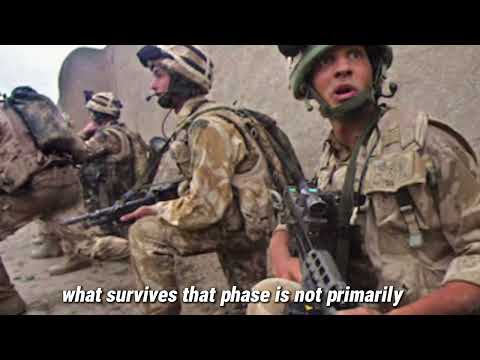
To understand what happened in that valley, and in dozens of similar operations across Uruzgan and Helmand between 2007 and 2012, you first have to understand that this was never a story about courage. Both sides had it in equal measure, in quantities that made the question pointless. It wasn’t about fitness or commitment or willingness to die for the man next to you. Delta’s selection course at Fort Bragg and the Australian SAS selection course run out of Campbell Barracks in Perth were, by any fair comparison, two copies of the same brutal filter—designed independently on opposite ends of the planet to produce the same rare breed of human.
What separated the two forces wasn’t the men themselves. It was the doctrine wrapped around them—and that doctrine was visible in every piece of kit either force carried into the field.
By the mid-2000s, American special operations doctrine rested on a concept the Pentagon called “information dominance.” On paper, the idea was elegant: flood the battlespace with such overwhelming sensor coverage, such massive bandwidth, such instantaneous situational awareness that the enemy’s decision cycle simply couldn’t keep up with yours. By 2008, a Delta troop could enter an Afghan valley while a Reaper streamed live footage to an operations center on the other side of the world, where analysts—armed with years of accumulated pattern-of-life data—could identify a suspicious vehicle before the men on the ground ever saw it. Every man carried a transmitter that placed him on a screen to within less than a meter. Helmet cameras fed images to commanders who could, theoretically, redirect the assault mid-breach based on information the man kicking the door hadn’t received yet.
It was the most digitally surveilled infantry force in history, and it produced results no honest narrative of the war could ignore. Under the strike-cell model refined over a decade of continuous operations, American task forces could execute six, eight, sometimes ten raids in a single night across one province. The tempo of kill-and-capture was extraordinary.
But technology bred a kind of dependency—and dependency fails precisely when you need it most.
When satellite links dropped in the deep valleys of Baluchi—which happened constantly because the terrain blocked line-of-sight—operators who had trained for years on a steady flow of aerial imagery suddenly found themselves relying on memory for a map they’d glanced at during the briefing.
When networked radios lost contact with each other behind three hundred meters of compressed mud-brick compound walls, coordination between elements collapsed into hand signals and shouting in Pashto over the noise of goats. When the helmet display simultaneously showed a moving map, a chat window from the operations center, a red icon for a possible target two hundred meters away, and a battery-life warning, the human brain behind that helmet slowed down exactly when it needed to be at its fastest.
Independent reviews conducted after several costly nights in Kandahar and Helmand provinces—reviews whose language reached unclassified presentations years later—indicated that cognitive overload during close-quarters breaching operations was directly correlated with hesitation in the first critical two seconds of room clearance. Two seconds in that kind of fight isn’t a delay. It’s the difference between the man who walks out of the room alive and the man who doesn’t.
The Australians took a different path, and it’s worth being honest about why. It wasn’t philosophy—not at first. It was arithmetic.
The entire annual budget of Australian special operations in the years when the SAS Regiment ran its heaviest rotation in Uruzgan was a fraction of what a single American joint task force spent on fuel and ammunition in the same province in the same year. Credible estimates put total Australian special operations spending during that period at under $200 million annually, covering the SAS Regiment, the commando regiments, and all supporting elements. American special operations spending in Afghanistan during the same period, across all branches, reached into the billions.
The Americans were spending more than the Australians by a margin that made direct technological competition simply impossible. And rather than pretend otherwise, the Regiment built its doctrine around that gap.
The result was that when American liaison officers visited SAS patrol bases in Uruzgan, what they found was, by their own later accounts, unsettling in its simplicity. An American operations officer who served two tours alongside the Australians—referred to in later professional military education materials as “Captain Holt,” his real identity never published—described his first visit to the Australian planning space at Camp Russell outside Tarin Kowt in terms that stuck in the minds of those who heard him tell it.
He walked in expecting shouting and noise. What he found was a plywood table with a printed satellite image tacked down at the corners, string pulled taut between key points, and four men arguing quietly about pace-count calculations. His own unit’s fusion cell at Kandahar Airfield employed over two hundred analysts working around the clock. The Australians’ entire intelligence support for that operation consisted of two analysts and a warrant officer who had walked that ground himself eighteen months earlier and still remembered the irrigation channel paths.
Two hundred analysts versus three men and a memory.
And yet, by the second half of that deployment rotation, something strange was showing up in the numbers both sides quietly compared over shared meals and post-operation drinks. The Australian SAS Regiment was executing roughly a third as many operations per month as the American task forces operating in the same areas. But when an Australian patrol went out to hunt a specifically named target, the target was actually present at the objective on first contact roughly 70 percent of the time—a figure later cited in Australian Defence Force studies of the campaign. The comparable figure for American direct-action raids in the same areas during the same period was closer to 45 percent.
The Australians were hitting fewer targets. But when they hit, the target was there three times out of four. The American machine was casting a massive net across the province. The Australians were using a sharp blade—and the blade was sharp precisely because the men carrying it had trained to function without the net.
Selection is where that blade gets honed, and it deserves some detail. Because the men who moved through that valley near Tora Khaw were the product of a process built specifically to strip the soldier of every form of technological and psychological support he normally relies on.
The Australian selection course begins with what candidates simply call “the cycle.” Weeks of solo navigation through the scrub of Western Australia and the brutal terrain east of Perth, carrying a rucksack that grows from twenty-two kilos to over thirty, moving from grid reference to grid reference against time standards that are never disclosed. That silence is the mechanism. A candidate who doesn’t know the standard can’t pace himself against it. There is no strategic reserve of effort to save for later, because “later” might be the checkpoint he fails.
No known distance. Only the next ridgeline, and it might decide everything.
What survives that course isn’t primarily a stronger body. Every candidate arrives already exceptionally fit. What survives is something closer to navigational and psychological self-sufficiency—the proven ability to move alone through hostile ground with only a map, a compass, and the discipline to keep panic at bay when the terrain doesn’t match the paper. By the time a man earns the beret, he has walked hundreds of kilometers carrying his own weight without leaning on anyone. He can read contour lines in the dark, in the rain, at the edge of exhaustion, and fix his position to within fifty meters.
Those were the skills that astonished the Americans in the valleys north of Tarin Kowt. And they were the skills that made the difference on the night of the operation that became the center of gravity for everything that followed. Four men, a dry riverbed, a barking dog, and six minutes of lying flat against a rock wall with rifles up and breathing controlled. A collapsed wall they slipped through rather than a cordon they announced. A camera lens pressed to a curtain gap at 3:27 a.m., a scarred jaw confirmed, a whispered code word into a handheld radio.
Sixteen minutes of waiting that felt like a geological age. Then the helicopters, and four minutes of breach, and a cell taken without a shot fired from either side.
The phone they seized unspooled eight more operations against the same network over the following two months. No coalition casualties. No civilian injuries. The villagers told the civil affairs team the next day they’d heard some activity before dawn and assumed it was the Afghan police.
Four men with a map and a compass did in one night what a full American battalion with helicopters, a drone, and a quick-reaction force had failed to do nine days earlier with far more muscle. And the ripples moved outward through the coalition special operations community in ways still referenced in professional military education today. The clearest change showed up in how American task forces began planning what they called sensitive site approaches. The principle—approach unseen, confirm what you came for, and only then apply the force that ends the fight—wasn’t new to Australian doctrine. It traced straight back through decades of long-range reconnaissance patrols honed in Borneo and Vietnam. What was new, at least to much of the American special operations establishment, was the realization that this wasn’t merely the legacy of a smaller, poorer ally. In certain terrain, against a certain kind of enemy, it was measurably superior to the technology-heavy alternative.
The number that mattered most, once analysts from both sides sat down and compared notes, was the compromise rate—the percentage of operations where the target learned of the approaching force before it arrived. In the valleys of Uruz-Marjan, American operations using vehicles or helicopters showed a compromise rate of roughly 30 percent. Three times in ten, the target knew coalition troops were coming before the first boot touched the ground. The Australian foot patrols in the same province, over the same period, ran under 10 percent.
Thirty-five against under ten isn’t a marginal difference. It’s nearly a difference in rank, and it explains almost the entire gap in target presence between the two forces.
If the target doesn’t know you’re coming, he’s still there when you arrive. It really is that simple—and that simplicity is exactly what makes the underlying capability so hard to buy. Consider navigation alone. The American operator carried a GPS unit accurate to a few meters anywhere on the planet, requiring no skill beyond keeping the battery charged and pressing a button. The Australian carried a map, a compass, and years of trained skill at reading contours, counting paces, and building a three-dimensional mental picture of the ground from a two-dimensional sheet. If the American’s battery died or his signal was jammed, that operator became, in that instant, a degraded asset. If the Australian’s map got soaked crossing a river, he could often still navigate from the mental image he’d built by studying it for hours before the patrol left base.
None of this is an argument that technology doesn’t matter in modern war. It obviously does. The drones, the satellite links, the precision fires the Americans and their allies brought to that campaign saved a great many lives and made operations possible that would once have been unthinkable. But the valley near Tora Khaw taught a quieter lesson that the best-funded military on earth took seriously enough to rewrite its own playbook: sometimes the most advanced thing a soldier can carry is the confidence to walk into the dark with nothing but a map, a compass, and the training that told him he didn’t need anything else.
So here’s the question worth sitting with. In an age when every soldier can be tracked to the meter and every decision can be second-guessed from a continent away, is the future of elite warfare more technology—or the deliberate, uncomfortable choice to carry less of it and trust the human being underneath the helmet? What would you have carried into that valley?
Report this article
Select a reason for reporting:






