Master Sergeant Cole Marsh had spent twenty years believing he was the best. Then he climbed onto a shoulder of Afghan rock and learned he was wrong.
In late August 2008, Marsh and his eight-man sniper section took up a forward position above a fire base called Anaconda, overlooking a wide valley in Aruskin province. Their mission was simple: dominate the ground. But during the briefing, an officer pointed past a long ridge of rock and said, “Everything past that line belongs to the Australians. The SASR own everything past the ridge.” Marsh filed it away as allied talk—the kind of claim he’d heard before, from Brits, Canadians, even his own men. Everyone owned the ground until the ground proved them wrong.
He picked up his glass and went to look for himself.
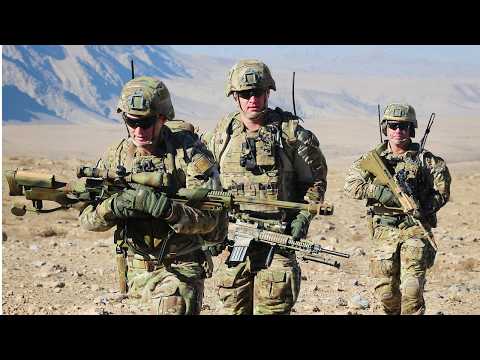
The far country fell away in broken shelves of stone, then opened into a bowl two kilometers wide, its pale floor cut with old wadies. Marsh read the distances by eye and didn’t like the answers. A man in the middle of that bowl would be more than 500 meters out; from the far rim, closer to 2,000. Past 1,000 meters, the air itself turned against you—heat shimmer, crosswinds, a hundred feet of drop. He had made shots out there. He had missed them, too.
The bowl was a killing floor. Coalition patrols had tried to cross it three times in the past year. Each time the enemy melted into the far rim and fired down from ground they knew by heart. Each time the patrol pulled back with men hit and nothing to show for it. Nobody owned a killing floor. You could deny it with enough men and fire, but “owned” was a word for a backyard.
Marsh swept the glass along the far rim, left to right, then right to left. He was hunting for the Australians—a glint of glass, a shape that didn’t belong. He found nothing. The rim was bare, the floor empty. That should have settled it. Empty meant talk. Empty meant he was right.
Except he couldn’t make himself say empty. The ground out there was perfect. If he had been told to hold that bowl with four men, he would have put them exactly where he could not see them—on the reverse of the far slopes, low and patient, letting the floor do the work. The very emptiness that should have proven the Australians were bluffing was the thing that told him they were not. An amateur shows you a bad position. A real one shows you nothing at all.
He held on the rim a long while, running the problem from the other side. Where would he lie? How long would he wait? What would he let walk past untouched to keep the position a secret? The answers came easy: if there were men out there, he would never find them with a glass. He would find them after they fired.
Marsh had spent his life learning to see what other men missed. He was better than good, and the knowing of it had never let him down. Now he crouched on Afghan rock with the finest optics his country could buy pressed to his face, and the ground was telling him that somewhere in all that nothing were men who were flatly, completely better at the one thing he had built his life around.
He did not believe it yet. But he had stopped being sure. For a man like Marsh, the end of being sure was its own kind of falling.
The light was going, the bowl filling with the long blue shadow that comes before dark in high country. One of his men crouched beside him and asked what he had.
“Nothing,” Marsh said. Then he said it again, slower, more to himself than to the man beside him. “Nothing at all. That is exactly what worries me.”
The SASR came in the next afternoon, and they came as Marsh should have known they would: without noise. A small vehicle patrol rolled up the track, and six men climbed down and pulled their kit off without ceremony. Six. Marsh counted them twice. He had pictured a troop. What he got was a patrol he could number on one hand and a thumb.
They had flown into Anaconda a couple of days earlier, chasing a Taliban leader who proved to be elsewhere. Rather than wait for a flight, they had asked the Americans for something to do. Their team leader was a sergeant named Troy Simmons. Their gear was worn as only hard use wears gear. The rifles were long, heavier than his, built for one job and not pretending to do anything else.
Within the hour, two of the six had gone. Marsh didn’t see them leave. He looked up at some point and there were four where there had been six, and nobody thought it worth a word.
Marsh found one of the four who had stayed and asked him straight, “How do you hold the bowl with six men?”
The Australian thought about it a moment, the way a man does when the answer is so plain he isn’t sure how to say it out loud. “We do not hold it,” he said. “We watch it. There is a difference. You hold ground by standing on it. You own it by knowing it better than the men who want to cross.”
Then he laid it out flat and unbothered, a trade he had stopped finding remarkable years before. The two who had gone were already moving onto the far slopes—not to the high points where a man expects a sniper, but low onto the reverse ground, into folds and shadow that gave a glass nothing to bite on. They would lie up there for days if the job asked it. They had ranged the whole bowl since the hour they arrived, the same as they ranged every piece of country they sat on. Every fold, every whitey, every goat track—until they carried the floor in their heads as a sheet of numbers. A man stepping into the open down there was stepping onto a figure they already held. There was no ranging to do in the moment. The ranging had been done long before the moment came.
Marsh listened and part of him wanted to argue. His instinct was to push back—do it the way his section did it: fast, aggressive, dominate the ground with rate and weight of fire, then move. He said as much. The Australian didn’t take offense. He shrugged and said that worked fine on ground you were willing to lose. Out here they were not willing to lose any of it. So they did it the slow way, because the slow way was the only way that held.
What unsettled Marsh most was how little the method seemed to cost the men running it. There was no tension in them, no edge. They cleaned their kit, brewed their tea, slept in turns, and waited while two of their number lay out on the far slopes, turning hours into days. The discipline was not in the shooting. The shooting was almost the easy part. The discipline was in the waiting, in the hundred shots they chose not to take, so that the one shot when it came would arrive from nowhere.
He had built a career on speed. These men had built theirs on stillness, and stillness, he was starting to see, was the harder thing to master.
It was the officer who had given the first brief who settled it. He had worked beside these men on another tour. He pulled Marsh aside and told him plainly to put his pride in his pocket for a few days and watch. “You came here to learn the ground,” the officer said. “These are the men who know it. Stop trying to outshoot them and start trying to read them.”
Marsh didn’t enjoy hearing it. But he had not lived this long by ignoring men who had earned the right to tell him things, so he watched.
The first two days taught him a patience he had thought he already owned. The SASR did almost nothing, and they did it for hours. Once a lone figure crossed a corner of the floor—a shepherd by the look of him—and Marsh watched the man on the gun track him the whole way and never touch the trigger. “Wrong man,” the spotter said. That was all. Another time, a fighter showed himself on the far rim for three full seconds. A clean shot by any standard Marsh knew, and the gun stayed silent. Taking him would have spent the position for one body. They wanted the position more than the body. They always did.
Then on the second evening, the bowl began to change.
Movement on the far rim—not one man, several spread wide, careful, using the dead ground the way men move when they believe no one is watching. Then more behind them. Marsh counted twelve before the light went, and he had the sense there were others he had not caught. They were not crossing. Not yet. They were gathering the way water gathers before it finds the crack.
He went and found the Australian he had spoken to and gave him the count. Twelve, maybe more, massing on the far side. The man nodded. He did not reach for the radio. He did not wake anyone. He looked at the dark where the rim had been and said, “They will come at first light. They always come at first light.” Then he went back to his brew.
Marsh lay down that night and did not sleep much. Every instinct told him to range the far rim now and lay his guns on it. Instead, he lay in the cold and waited to learn where six Australians and a memorized map of ranges were worth more than everything he knew.
Dawn came gray and cold, and the men on the far rim came with it. Twelve of them, maybe fourteen, well spread, dropping into the wadies and rising out of them. Marsh had his glass up before the sky held any real color. He was working out whether there was even a shot to be had when the bowl answered him.
He never heard the report come back. The distance ate it. He saw the lead man fall, and then a long beat later, the flat crack rolled up the slope and broke over them. The rest froze. They looked for cover that was not there. The floor took a second man before they grasped that the open ground they were standing in was already somebody’s range card, drawn well before and waiting for them. Then it took a third.
No muzzle flash, no dust signature, no giveaway from the far slopes at all. The shots came out of clean country, one after another, spaced and unhurried, as though the bowl itself had decided who would not be walking out of it. The survivors broke and ran for the far rim, and most of them reached it, and the Australians let them go. Chasing a runner would have shown the world where the shots had come from, and the position was worth more than three more bodies.
It was over in under a minute. Marsh sat with his glass still up, his own firing solution half finished and useless now. He had not even settled the wind. The SASR had not needed to. They had solved that ground long before and had been lying out there still as the rock around them, waiting for someone to walk into the answer.
When it was done, the bowl went back to what it had been: empty, still, the dust settling, the wind picking at the wadies. Three shapes lay out on the pale floor, and nothing moved to claim them. Within minutes, the country looked exactly as it had at dawn, as though nothing had happened there at all.
It was not the noise that stayed with him afterward. It was the silence after.
Report this article
Select a reason for reporting:






