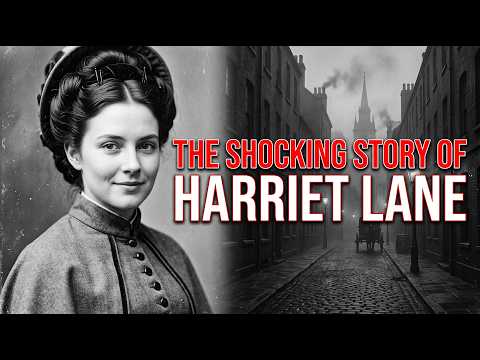
In the autumn of 1875, the bustling streets of Whitechapel held a secret so gruesome it would etch itself into the annals of British criminal history. A young woman had vanished without a trace, and the man who should have protected her was about to become the architect of her doom. This is the story of Harriet Lane—a tale of betrayal, forensic brilliance, and a murder that shook Victorian London to its core.
Harriet Louisa Lane was no stranger to hardship. Born in 1852 to a gas fitter and his wife, she grew up in the working-class town of Waltham Cross, Hertfordshire. By her early twenties, she had become a skilled hatmaker, employed in the millinery trade—a respectable but precarious life for a woman of her station. Described by contemporaries as pleasant and lively, with a particular fondness for fine clothing, Harriet seemed destined for an ordinary existence. But her path crossed with Henry Wainwright, a brushmaker of Whitechapel, and from that moment, her fate was sealed.
Henry Wainwright was a man of standing in the East End community—a successful businessman, a member of a book club, and a confident public speaker. But beneath his respectable facade lurked a darker nature. In 1871, he began an affair with Harriet, setting her up in a house under the false name of Mrs. Percy King. She bore him two daughters, Beatrice and Miriam, and for a time, lived a life of relative comfort. Yet Harriet had no legal claim on Henry, no income of her own, and her security rested entirely on his goodwill. As the economic depression of the 1870s tightened its grip, Henry’s business faltered, and his financial support for Harriet dwindled.
By the summer of 1874, Harriet’s situation had grown desperate. With two young children and no means of support, she began to drink heavily and demanded money from Henry with increasing urgency. She even threatened to expose their relationship to his legitimate wife. For Henry, this was intolerable. He devised a scheme to divert Harriet’s attention: his brother, Thomas George Wainwright, wrote letters under the pseudonym ‘Edward Frick,’ hoping Harriet would accept the fictional gentleman’s offer of marriage and leave Henry’s life forever. The ruse failed. Harriet remained, and Henry’s desperation deepened.
Then, in early September 1874, Henry told Harriet that he intended to leave his wife and start a new life with her. He asked her to meet him on Friday, the 11th, and to tell anyone who inquired that she was going to see a Mr. Frick. On that fateful morning, Harriet left her lodgings in Sidney Square, dressed in a grey gown with jet buttons, a bonnet, and a cape, carrying a bundle of nightclothes. A friend saw her that afternoon, and Harriet repeated the story of meeting Mr. Frick. She then headed toward Whitechapel. She was never seen alive again.
For a year, Harriet’s disappearance went unnoticed by the authorities. Henry told anyone who asked that she had gone to Brighton. Letters arrived, purportedly from Edward Frick, claiming that Harriet was under his protection and would marry him on the condition that she cut ties with her family. No police report was filed. No investigation was launched. Harriet’s two daughters were placed in the care of a neighbor, Miss Wilmore, with Henry paying 25 shillings a week for their upkeep. The crime might have remained hidden forever were it not for Henry’s financial ruin.
Declared bankrupt in 1874, Henry was ordered to vacate his warehouse at 84 Whitechapel Road. On 11 September 1875—exactly one year after the murder—he entered the warehouse and dug up the body he had buried beneath the floor. He had covered it with chloride of lime, believing it would hasten decomposition, but the chemical had instead preserved the remains. Henry cut the body into pieces, wrapped them in two heavy cloth parcels, and enlisted the help of a former employee, Alfred Stokes, to guard the packages while he hailed a cab. Stokes noticed the unusual weight and a foul odor emanating from the parcels. When Henry was gone, Stokes opened one and saw a human head, a hand, and a wrist.
Stokes said nothing to Henry when he returned, but as the cab was loaded, he followed on foot through the streets of Whitechapel. He approached two police constables in Lingham Street, but they dismissed him as a madman. Undeterred, Stokes continued to trail the cab until he caught the attention of two officers in Southwark. The cab was stopped near the Borough High Street, and Henry Wainwright was arrested on the spot. His brother Thomas was arrested later. A woman named Alice Day, who was waiting for Henry and was in the cab at the time of the arrest, was detained but not charged. The parcels were taken to St. Saviour’s Mortuary, where the remains were officially taken into custody.
The discovery on 11 September 1875 set in motion a formal investigation that would captivate the nation. Inspector Fox led the inquiry, and the police soon uncovered Henry’s previous relationship with a woman known as Mrs. Percy King in Mile End. Witnesses from Harriet’s family, her neighbors in Sidney Square, and workers at the Whitechapel warehouse provided testimony that established the history of their relationship. The warehouse was examined, and the burial site beneath the floor was identified, with remnants of chloride of lime found—consistent with the attempt to conceal the body. A small-caliber pistol known to belong to Henry was recovered, and black jet buttons from the grave matched those on the grey dress Harriet had worn on the day she vanished.
The forensic examination was groundbreaking. Conducted by Dr. Frederick George Larkin, assisted by Thomas Bond—who would later assist in the 1888 Whitechapel murders—the autopsy revealed that Harriet had been shot three times in the head with a small-caliber pistol. Her throat had been cut after death, and the angle of the wounds confirmed this sequence. The examination of her wisdom teeth matched her known age, and the condition of her uterus confirmed she had borne children. A distinctive scar below her right knee was identified by family members, and the arrangement of her hair, described by Larkin as styled over a velvet pad with numerous hairpins, matched Harriet’s known preference. The chloride of lime had preserved the remains, aiding rather than hindering the forensic examination.
Henry and Thomas Wainwright were committed for trial at the Central Criminal Court. The case opened at the Old Bailey on 22 November 1875, with Sir Alexander Cockburn, Lord Chief Justice, presiding. The prosecution, led by John Holker, presented a wealth of evidence. Alfred Stokes testified as the chief eyewitness, describing his discovery of the remains and Henry’s attempt to remove them. Larkin and Bond provided detailed forensic testimony, and Harriet’s family gave identification evidence based on the scar, buttons, and hair arrangement. The letters written under the name Edward Frick were proven to be in Thomas Wainwright’s handwriting, and the pistol found in Henry’s possession was shown to be consistent with the murder weapon.
Henry’s defense argued that the remains were too decomposed to be positively identified as Harriet Lane and that he had no knowledge of the contents of the parcels, claiming he had received them from an unknown man at a pub. But the forensic evidence and the family’s identification testimony, combined with Stokes’s detailed account, dismantled this story. Throughout the trial, Henry maintained a composure that contemporaries noted. The Spectator described him as arrogant and audacious, seemingly unbothered by the gravity of his situation. When the Lord Chief Justice summarized the most damaging evidence, Henry appeared momentarily disconcerted but quickly regained his composure.
The jury deliberated briefly and returned a verdict of guilty of wilful murder against Henry Wainwright and guilty of being an accessory after the fact against Thomas George Wainwright. Henry thanked his counsel with a composure that the judge rebuked. He refused to acknowledge the identity of the remains, referring to them only as ‘these remains.’ The court recorded the verdict, and the case moved to sentencing. The Lord Chief Justice pronounced the death sentence on Henry Wainwright and seven years’ penal servitude on Thomas. No petition for mercy survives, and no challenge to the verdict was made.
Henry Wainwright was hanged at Newgate Prison on 21 December 1875. The execution took place inside the prison walls, in accordance with the Capital Punishment Amendment Act of 1868, which had abolished public hangings. The hangman was William Marwood. The Times reported that a large crowd gathered outside the Old Bailey from the early morning, though none could see inside the prison walls. About 200 people were documented as witnesses to the execution. Henry’s last words were not recorded, and he maintained his characteristic composure to the end. He was buried within the precincts of Newgate Prison.
Harriet Louisa Lane’s remains were properly buried in Waltham Holy Cross Cemetery in Waltham Abbey, Essex, as recorded in William Winter’s ‘Our Parish Registers’ published in 1885. Her grave returned her, in death, to the county where she had grown up and from which her London life had begun. She was twenty-two years old when she was killed. Her two daughters, Beatrice and Miriam, remained in Miss Wilmore’s care throughout the year of concealment and the trial, with their expenses covered by funds from Henry Wainwright. Their father was executed, and their mother was murdered. No record of their later lives survives.
Thomas George Wainwright served his seven years of penal servitude. After his release, no documented record of his life has been found in the sources reviewed. Genealogical sources show that the brothers of Henry’s wife, Elizabeth Fanny Wainwright, were partners in the Wainwright business. Those brothers later emigrated to Melbourne, Australia, and established a brushmaking business there. No information about their subsequent circumstances survives in the extant records.
The case dominated the press during the trial, becoming one of the most discussed criminal cases of the decade. The Times reported every detail from the first day of the trial to the verdict and execution. Regional newspapers across England carried extensive reports. Contemporary media dubbed the proceedings the ‘Whitechapel Tragedy.’ The Spectator’s report of 4 December 1875 compared the public interest to the Palmer poisoning case of the 1850s, though its impact outside London was somewhat less. The massive crowd outside Newgate on the morning of the execution testified to the case’s grip on the public imagination.
A broadside titled ‘Execution and Confession of H. Wainwright’ was printed and sold immediately after his death. A copy is held in the London Museum’s collection, and another in the British Criminal Broadsides collection at Kent State University Library in the United States. The broadside featured woodcut portraits of Wainwright and Harriet Lane, two engravings of the crime scene, and an image of the gallows. Such broadsides continued to be sold as street literature in the years after public executions were abolished, and the Wainwright case became a notable example of the genre.
In 1920, when H.B. Irving edited a book on the trial, the case was included in the Notable British Trials series. That edition was based on the official trial transcript and contemporary newspaper reports, cementing the case’s place in Victorian crime literature. A copy of Irving’s book, annotated in Larkin’s hand, is held in the library of the Royal College of Surgeons of London—a valuable primary source for the case’s forensic history. A full monograph by Neil Watson published in 2023 discusses the case in detail, and it also features in Judith Flanders’s 2011 survey of Victorian crime and newspaper culture. The case regularly appears in compilations of Victorian crime history and East End crime; its forensic aspects, social context, and unique chain of discovery have ensured its enduring place in history.
There is a cultural afterlife to the case, documented in primary sources, that is directly linked to the victim’s name. In the late nineteenth and early twentieth centuries, the name ‘Harriet Lane’ became slang in working-class and naval usage for Australian tinned meat, specifically corned beef. The connection arose from the dismembered state of the body and its resemblance to tinned meat, recalling the parcels in the cab stopped in Borough High Street in September 1875. Evidence of this usage appears in James Ware’s ‘Passing English of the Victorian Era,’ published posthumously in 1909, and in a naval slang article in the Northern Daily Mail and South Durham Herald on 14 July 1894. The victim’s name detached from its context and entered common parlance, becoming something with no outward connection to the woman whose disappearance had given it origin.
The forensic significance of the case outlasts its immediate legal outcome. The autopsy performed by Frederick Larkin and Thomas Bond at St. Saviour’s Mortuary in September 1875 was one of the earliest examples of advanced forensic pathology being used as the primary basis for victim identification in a British murder case. Ballistic examination of the skull to determine projectile trajectories, dental examination to estimate age, biometric recording of physical measurements, and uterine examination to prove prior maternity—these techniques were applied with a precision and evidentiary weight that impressed the court, and the Lord Chief Justice formally recognized the surgeons with special fees. Thomas Bond’s later involvement in the forensic examination of the victims of the 1888 Whitechapel murders is a notable connection in the history of Victorian forensic medicine, and the Wainwright case was an early chapter in his professional life.
The social dimensions of the case are as important as the forensic ones. Harriet Lane lived in a state of structural invisibility. She had no legal status as a wife, no power to make legal claims against the man who kept her under a false name at a false address, no income or profession of her own. After her disappearance, no formal investigation was conducted. The letters sent under the name of Edward Frick, written by Henry Wainwright’s brother at his direction, closed the matter before it could begin. Her disappearance was invisible to the official authorities because of her social position. The case was solved not by official intervention but by the accidental observation of a former employee who noticed the weight and smell of the parcels and who, after two police constables refused to listen, had the determination to follow the cab on foot through the streets of Southwark. The official record was opened a year after her death, and only because the man who killed her was forced by bankruptcy to vacate the ground-floor room beneath which he had hidden her body.
The case of Harriet Louisa Lane is the only one discussed here. The conviction was secured. The execution was carried out in 1875. The case became part of the national record. It has not left it since.
Yet beyond the gallows and the headlines, two small girls vanished from the record entirely. Beatrice and Miriam Wainwright—orphaned by their father’s rope and their mother’s murder—left no documented trace after 1875. Their silence is the case’s quietest tragedy.
Harriet Lane’s name, meanwhile, lived on in the unlikeliest of places: the slang of sailors and laborers, where ‘Harriet Lane’ meant a tin of corned beef. A woman erased in life became a punchline in death.
Her grave in Waltham Abbey returned her to the county of her childhood, but the lessons of her invisibility—no legal claim, no income, no investigation until a warehouse floor gave up its secret—echo far beyond Victorian London.
What does it say about justice that Harriet’s case was solved not by the law, but by a bankrupt killer’s eviction notice and a loyal worker’s stubborn nose?
Report this article
Select a reason for reporting:






