The white flag was supposed to mean surrender. In the scorching desert of Tobruk, April 1941, it meant a bullet to the head. German snipers had found a new, vicious tactic: they would raise a white flag above the sand, wait for an Australian soldier to stand and accept the surrender, and then shoot him dead from hundreds of yards away. It was a trap, repeated daily along the barbed wire fence that encircled the besieged city.
The situation was desperate. Around 14,000 Australian soldiers were trapped inside Tobruk, surrounded by a massive German army led by the legendary General Rommel. They couldn’t escape by land, and supply ships barely made it through the sea without being bombed. Every morning, the snipers returned to their hideouts. In the first weeks alone, the Australians were losing 15 to 20 men a day to sniper fire near the outer fence. Many of those deaths were directly caused by the fake flag trick.
A piece of white cloth would appear on a stick above the sand. The Australian soldier would think the enemy was surrendering. He would raise his head above the trench wall. Then a German bullet would hit him from 300 yards away. The white flag was not a sign of peace. It was a sign of death.
Hot desert winds blew sand into the wounds of fallen men, and there was nothing that could be done to stop the killing. The normal rules of war dictated that the Australians had to accept the surrender. The famous rulebook known as the Geneva Convention was very clear on this. If an enemy soldier raised a white flag, you must stop shooting and take him prisoner. The British officers in charge issued strict orders to follow this rule without discussion. They said the laws of war must be obeyed, no matter what the enemy did.
And so, the Australian soldiers kept standing up. They kept walking forward with open hands, and they kept falling to sniper bullets. The rule that was supposed to save lives was getting men killed. The old way of doing things was failing in the worst possible way. Every time a soldier followed the rules, he paid with his life.
The trench dirt around them turned dark with blood. Dense swarms of flies gathered on the wounds of dying men. The men who faced this nightmare were not trained professional soldiers. They were ordinary people from small towns across Australia. They were shopkeepers from Queensland. They were farm boys from New South Wales. They were bakers, truck drivers, and school teachers. Most had never held a weapon before the war began. They had no training for fighting in a scorching desert against one of the strongest armies in the world.
Even German radio stations mocked them over the airwaves. They called the Australians “Tobruk Rats.” The name was meant as a cruel insult. The goal was to make the world think the Australians were dirty and weak, hiding in holes like rodents. But the men in the trenches didn’t care about the insult. All that mattered was staying alive. And in that moment, staying alive seemed nearly impossible.
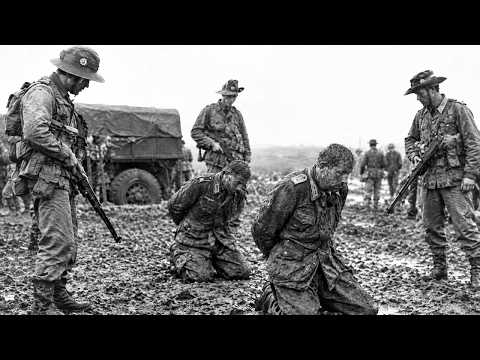
The powerful commanders far from the fighting didn’t understand the real problem. British generals sitting in their cool offices in Cairo, hundreds of miles to the east, heard reports of the fake flags. But they didn’t think it was a serious issue. They described the incident as small and rare. They wrote official letters insisting that the rules must be followed at all times. They ordered the men in the trenches to keep accepting surrenders, even though the men were dying by the dozens. These generals wore clean uniforms, drank cold drinks, and studied maps on their walls. They didn’t smell the blood soaking into the sand. They didn’t hear the terrifying crack of sniper bullets passing by their ears. They didn’t watch their friends fall face-first into the dirt after reaching for a white flag.
From their safe offices, the problem seemed small. From inside the trenches, it felt like a death sentence. The men on the ground knew they had to find a completely new way to fight back, and they had to find it fast.
Then a small group of Australian soldiers noticed something crucial. They were ordinary men, but they were smart observers. They began watching the fake flags very carefully over several days. They noticed that the white cloth never moved the way a person surrendering really would. A real person would shake, wave, and duck for cover. But these flags stayed perfectly still, as if tied to a stick in the ground. The soldiers also noticed that there was never a human body standing behind the flag. The sand around it was completely empty.
Most importantly, they finally discovered where the real sniper was hiding. The shooter was not at the flag at all. The shooter was about 30 to 50 yards behind it, lying in a shallow hole with his long rifle aimed directly at the white cloth. The flag was just a clever trick to make the Australians look in the wrong direction. It was bait, like a worm on a fishing hook.
Once the Australians realized this simple truth, everything changed. The flag itself was not the source of danger. The ground behind the flag was the source of danger. And that clear realization was about to save hundreds of lives in the weeks to come.
Once the Australian soldiers understood the German trick, they came up with a new plan they called “Beat the Flag.” They decided they would never climb the trench wall again when they saw a white cloth. Instead, they made a homemade periscope using small shaving mirrors and empty food cans. They mounted the glass on long wooden sticks and raised them under the bright sun. This simple tool allowed them to peek over the sandbags without exposing their heads to the enemy.
Through the small mirrors, they pinpointed the exact location of the white flag. Then they searched the ground 30 to 50 yards behind it. That was where the real shooter had to be. Once they spotted a slight bump in the sand or the dark tip of a rifle barrel, they didn’t shout. They didn’t charge into the open. Instead, they brought up their heavy Bren machine guns. These powerful weapons could fire 300 to 500 rounds per minute. The Australians aimed directly at the hidden sniper nest and opened fire. The hot metal tore through the dirt and sand until the threat was completely eliminated.
The first real test of this new idea came along a dirt track at the southern edge of the perimeter. Over two long days, the Germans raised three different white surrender flags in that area. In the past, Australian soldiers would have rushed to help the men waving them. This time, the platoon stayed deep in their dirt holes. They smelled the sharp gunpowder and felt the sun’s heat on their necks, but they did not move an inch. Instead, they looked behind the white cloth and fired their machine guns in long, loud bursts. The sharp crack of gunfire echoed across the empty desert. After the dust finally cleared, two German sniper teams had been completely wiped out. And for the first time in weeks, not a single Australian soldier was wounded. No man died during those fights.
The numbers proved the new idea worked. In the past, soldiers had to walk 400 yards across open ground with no cover at all. Now, the Australians stayed protected behind thick sandbags, fighting from safe distances of 150 to 200 yards. They had to use more bullets to sweep the area, but the trade-off was worth it. The men stayed alive at the end of each day.
However, not everyone was happy with this new method. British officers who visited the front lines were shocked by what they saw. They said ignoring the white flag violated the strict rules of war. They argued it looked bad and might be considered a crime. A hastily written order came from the high office in Cairo telling the Australians to stop shooting at surrender flags and return to the old rules immediately.
That was when an Australian commander named Brigadier Leslie Morshead stepped in. He was a strict and brave leader who cared deeply about his men. He looked at the written complaint and ignored it completely. He told the other commanders that he would never force his soldiers to walk into a deadly trap just to satisfy a piece of paper the enemy had already torn up. Morshead gave his men full permission to keep using their new method. His strong support gave them the confidence they needed to keep fighting their way.
The biggest test came during the massive Easter battle in mid-April 1941. The German army launched a huge attack on the wire defenses all at once. The air filled with black smoke, the roar of tank engines, and the sharp smell of burning oil. During the chaos, German snipers tried to use fake white flags at multiple locations to trick the defenders. But the Australian soldiers did not hesitate. They used their mirrors, found the hidden nests, and poured continuous machine-gun fire into the ground behind every flag. The enemy’s trick failed miserably.
When the battle finally ended, the Germans had lost around 600 men, while the Australians lost only 90. The defenders achieved this amazing victory with very few resources. Each group of about 800 men had only 25 Bren machine guns. They had no modern sniper scopes or advanced equipment. They made do with captured Italian binoculars and mirrors pulled from garbage piles. Despite the fierce heat, water shortages, and limited weapons, ordinary soldiers proved that smart thinking was stronger than the enemy’s cruel trap.
The results of the new plan appeared almost instantly across the ocean. In the first two weeks of fighting, the Australian division was losing 15 to 20 men a day to snipers and fake surrender tricks. But by mid-May, the story had changed completely. The number of soldiers hit by sniper fire dropped to just two to four men a day. That was an 80 percent drop in casualties. The men who would have died walking into the open sand were now safe behind their dirt walls.
By June 1941, all 14,000 defenders of Tobruk knew exactly what to do. The men wrote survival instructions in small pocket notebooks. They passed these field notes from trench to trench under the blazing sun. The simple rule spread by word of mouth. Never trust a flag. Always check the ground behind it. And let the heavy machine guns do the answering.
The German forces soon realized their favorite trick no longer worked. So they tried to make things harder. They began placing real wounded soldiers in the open with white cloths tied to short sticks. Snipers hid in deep holes directly behind the injured men. This created a horrible and painful choice for the Australian soldiers. It broke their hearts to look through the mirror scope and see an injured man asking for water, knowing that a rifle barrel was aimed at anyone who came to help. But the Australians stayed firm and careful. They learned how to direct their fire precisely around the wounded men to hit the snipers hiding behind them.
In nearby desert areas, other Allied units refused to change their old ways. British units that kept walking out to accept surrenders in the traditional manner suffered three times as many losses during the same weeks. General Morshead was proud of how his soldiers adapted to this brutal fight. In his official war diary, he wrote words the men would remember for the rest of their lives. He wrote that the enemy chose to make the white flag a weapon, so the Australians chose to treat it as one. That clear statement gave the soldiers full permission to protect each other first and worry about outdated paper rules later.
Each morning brought a new test of courage along the outer wire. The desert at dawn was already hot, with temperatures climbing fast past 100 degrees. The bright morning sun made the dry ground look like blinding white glass. Suddenly, the sharp crack of a German rifle shot would pass by a soldier’s ear, making a terrifying sound like tearing cloth. Two hundred yards across the open sand, a piece of white cloth fluttered on a steel bayonet stuck in the red dirt. There was no human body standing behind that cloth. The air smelled of burnt gunpowder, sweat, and the bitter sting of fresh blood on the rocks. Dry desert winds pushed fine yellow dust into everyone’s mouths, making their teeth feel like rough sandpaper.
A young soldier crouched low, his knuckles pale as he gripped his rifle. His mate beside him reached out, touched his shoulder, and whispered in a low, steady voice: “Don’t look at the flag. Look behind it.”
That simple lesson created an unexpected benefit across the entire front line. Because the Australians became experts at looking past obvious tricks, they started applying the same sharp vision to the rest of the battlefield. When the enemy set up fake wooden tanks to distract them, the Australians searched the nearby rocks and spotted the real anti-tank guns. When the Germans built dummy observation towers, the Australians searched the low bushes 300 yards away and found the real observers. This smart habit of questioning what was right in front of them saved countless lives in all kinds of different battles.
The brutal battle of Tobruk went on for a very long time. The siege lasted 241 days, from April to December 1941. The Australian 9th Division stayed trapped in their trenches, surrounded on all sides by enemy tanks and heavy artillery. Yet despite hunger, scorching heat, and constant deception, the defenders never broke. Over those long months, the garrison inflicted more than 5,000 casualties on the enemy forces, while suffering about 3,000 of their own. It was a brilliant victory against a much larger and stronger army. Ordinary citizen soldiers had outsmarted the best troops of the German army, turning a deadly trap into a textbook lesson in desert survival.
After Tobruk, the lessons traveled with the men. At El Alamein in 1942, white cloth appeared again over distant dunes. No Australian rushed forward. They searched the sand forty yards back and answered with Bren fire. The trick that once killed twenty men a day now killed almost no one.
By 1943, Allied commanders quietly rewrote their field manuals. The old blind advance was replaced with cautious verification from cover. And in 1949, the world gathered in Switzerland to update the Geneva Conventions, formally outlawing perfidy—using the white flag as a weapon.
The shopkeepers and farm boys sailed home and rarely spoke of the dust or the flags. Brigadier Morshead was knighted, then faded from history outside Australia, content to let his soldiers’ quiet courage speak.
Their story leaves one unsettling question: when the world’s rules are twisted into a deadly trap, at what point does blind obedience become surrender?
What would you have done behind that trench wall—follow the rulebook, or look behind the flag? Tell us in the comments.
Report this article
Select a reason for reporting:






