At 7:30 a.m. on July 1, 1916, whistles pierced the morning air along a 15-mile front in Picardy, France. Thousands of British soldiers climbed out of their trenches and walked steadily toward the German lines, believing the week-long artillery bombardment had annihilated the enemy. They were wrong. Within hours, the fields of the Somme would be carpeted with the dead and dying, and the British Army would suffer the worst day in its history.
For nearly two years, the war on the Western Front had been a bloody stalemate. Britain, a nation whose strength lay in its navy, had been forced to build a mass army from scratch. Volunteers had rushed to join the colors, forming “Pals battalions” of friends and neighbors. But by 1916, with conscription newly introduced, many of these men were barely trained. They were about to face a hardened enemy in deeply fortified positions.
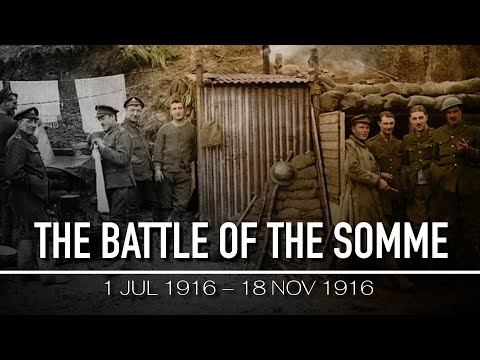
The plan was simple: a massive artillery barrage would obliterate German defenses, allowing the infantry to walk through and capture the shattered trenches. General Douglas Haig, commander of the British Expeditionary Force, believed this would break the deadlock. But the Germans had other ideas. Their trenches were deep, their machine guns well-placed, and they had learned of the impending attack. As the British guns fell silent, the Germans emerged from their dugouts, ready.
Captain Wilfred Nevill of the East Surrey Regiment, known as Billie to his men, had brought four leather footballs to the front. He promised his company that whoever kicked a ball into the German trenches would win a prize. It was a gesture of bravado meant to steady nerves. As the men went over the top, Nevill kicked one ball high into no man’s land. He was shot dead minutes later, his body never recovered.
The first waves were mown down before they reached the German wire. Those who made it found the barbed wire largely intact, despite the bombardment. The shells had been too thin, too shrapnel-heavy, and many had failed to explode. The Germans, safe in their deep dugouts, had survived the onslaught and now manned their machine guns. “We were mown down like grass,” recalled one survivor. “The noise was deafening, the fumes choking. It was a veritable inferno.”
By the end of the day, 57,470 British soldiers were casualties, of whom 19,240 were dead. The French, to the south, had fared better, but the British had suffered a catastrophe. The Battle of the Somme would grind on for another 141 days, but the first day would be remembered as the bloodiest in British military history.
As the sun set on July 1, 1916, the survivors huddled in their trenches, haunted by the screams of the wounded and the stench of death. The war would go on, but for Britain, the Somme had changed everything.
In the days that followed, the truth of what had happened on July 1 began to seep back through the lines. Men who had been told the German wire would be cut to ribbons found themselves trapped in it. “The illusion of being able to walk into the devastated German lines was shattered in just minutes,” wrote Lieutenant Alfred Bundy of the Middlesex Regiment. He had dropped into a shell hole and watched his platoon fall around him, bullets forming what he called an impenetrable barrage.
Yet the battle did not stop. Haig, refusing to accept that the breakthrough had failed, ordered the attacks to continue. On July 14, four British divisions struck at Longueval Ridge in a dawn assault, catching the Germans by surprise and securing the ground by midday. It was a small, hard-won success, but it did nothing to change the larger picture.
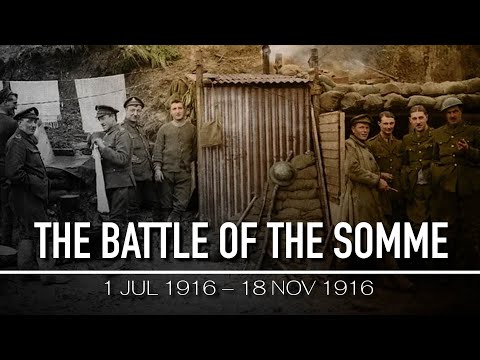
Through August and September, the fighting settled into a brutal rhythm of limited objectives and mounting casualties. The British and French chipped away at the German lines, but every gain was measured in yards and paid for in blood. The Germans, meanwhile, were growing short of supplies and reinforcements, their defenses stretched thin.
Then, on September 18, 1916, something appeared on the battlefield that the Germans had never seen. It was the tank. These armored goliaths lumbered toward the German lines, shrugging off machine-gun fire and crushing wire beneath their tracks. The Germans had little that could stop them, and the British advanced a mile and a half behind the enemy lines before being forced to pull back.
It was a spectacular debut, but one that was not built upon. The tanks were few, unreliable, and prone to breaking down. The opportunity they offered slipped away, and the battle settled back into its grim pattern.
The Pals battalions, which had been the pride of the volunteer army, were now hollowed out. Replacements arrived from all over Britain, men who had no connection to the local communities that had formed these units. The old identities faded, and the survivors found it harder and harder to integrate the newcomers into their ranks.
By November, the winter weather had turned the battlefield into a frozen swamp. On November 18, Haig finally called off the offensive. The Allies had advanced just seven miles. The Germans had suffered some 450,000 casualties, but the British Empire had lost 420,000 men, and the French over 200,000.
For the British people, the Somme was a victory only in the coldest arithmetic. It had relieved the pressure on Verdun and worn down the German army, but the cost was staggering. “It was a nauseating job,” recalled Lance Corporal Rupert Whiteman, describing the burial parties that recovered the dead from no man’s land. “The things that had once been men were rotting after being left out too long in the hot sun. They were just things without personality, carrion to be removed from sight.”
The Battle of the Somme would be remembered not for the ground gained, but for the generation of young men who never came home. And as the survivors returned to their trenches, staring across the scarred landscape at the enemy lines, they knew the war was far from over.
The survivors of the first day carried with them a strange, bitter knowledge. They had been told that the bombardment would leave nothing alive, that they could walk across no man’s land at a stroll. Instead, they had learned the hard way that artillery, however vast, could not dig out an enemy who had burrowed ten meters into the chalk. “We were told not even a rat would live through it,” one private wrote home. “There were rats enough in that wire, and Germans behind every one of them.”
Letters like that one were censored, of course. But the men who wrote them found other ways to speak. In the estaminets behind the lines, in the barns where they were billeted, and in the hospital trains that carried the wounded back toward the coast, the story of July 1 spread faster than any official dispatch. The word was always the same: the generals had not known what they were sending the men into.
What the men could not yet see was how the battle was already changing them. The Pals battalions had been built on a simple idea — that men who worked together, drank together, and lived in the same streets would fight better together. On the Somme, that idea died alongside the men themselves. A battalion that had marched to war as one neighborhood now had gaps where its heart had been.
In the German lines, the mood was different. The defenders had held, and held spectacularly, but they too were being worn down. Crown Prince Wilhelm’s Fifth Army had been ordered to hold Verdun at all costs, and now the British were grinding forward in Picardy as well. German divisions were being shuttled from one furnace to the other, and the men in the ranks understood what that meant. “We have no fresh troops,” one German officer noted in his diary. “Only the same faces, growing thinner and older each week.”
The German high command drew its own lessons from the first day. The deep dugouts had worked. The machine guns had worked. But the British had shown that they were willing to pay any price, and that was a kind of strength the Germans had not fully reckoned with. Falkenhayn’s plan at Verdun had been to bleed France white. Now the Somme was bleeding Germany in turn.
By early autumn, the battle had become a machine with its own logic. Attacks were ordered not because the ground mattered, but because the enemy had to be kept under pressure. The village of Thiepval, which had resisted every assault since July 1, finally fell on September 26. The men who took it walked through streets that no longer existed, past cellars where the German defenders had lived and died underground.
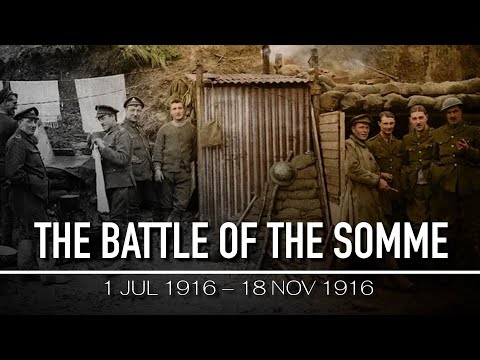
It was in these weeks that the true cost began to be counted — not in the casualty lists, which were published in the newspapers, but in the smaller, quieter losses. Men who had been the life of their platoon went silent. Men who had never flinched at a shell learned to flinch at the sound of a whistle. The medical officers had a name for it, though they rarely used it in front of the men. The soldiers had their own names for it, most of them unprintable.
And yet the battle went on, and the men went on with it, because there was no other choice. The war had become a place, not an event — a country of mud and wire that they inhabited, day after day, until the day they were finally allowed to leave it.
When the battle finally ended, there was no ceremony. No flags, no speeches, no triumphant march. The guns simply fell silent one last time, and the men who had survived the Somme looked out at a landscape that resembled nothing so much as the surface of the moon. Seven miles. That was the measure of it. Seven miles bought with 420,000 British and Empire casualties, 200,000 French, and 450,000 German. The arithmetic of the Somme was a language no one wanted to learn.
Back home, the telegrams kept arriving. In towns and villages across Britain, the church bells that had rung to send the volunteers off to war now rang only to mark the funerals. The Pals battalions, which had promised that neighbors would serve together, had delivered on that promise in the worst possible way — whole streets, whole workplaces, whole generations of young men were gone in a single morning.
“We were told it would be over by Christmas,” one survivor wrote years later. “It was over for a great many of us by teatime on the first of July.” The war would grind on for two more years, but something had broken at the Somme that no victory could mend. The confidence of 1914, the eager rush to the colors, the belief that courage and numbers could carry any position — all of it lay buried in the chalk of Picardy.
Haig would insist to the end that the Somme had been necessary, that it had saved Verdun and worn down the enemy. Perhaps he was even right. But the men who crawled out of those trenches on July 2 knew a simpler truth: the war had changed, and so had they. The tanks would come, the tactics would improve, and the Allies would eventually win. Yet the Somme would remain the wound that never quite closed — the battle that taught Britain what the twentieth century would cost.
And so we are left with the question that has haunted every generation since: was any of it worth the price?
What do you think — should the Somme be remembered as a necessary victory, or as a tragedy that should never have happened? Share your thoughts in the comments below.
Report this article
Select a reason for reporting:






