In the summer of 1915, an engineer walked into the War Office in London with blueprints under his arm and a claim so bold that the generals laughed him out of the room. He said his engine could produce more power per pound than anything the British military had ever seen—cleaner, cooler, smarter. They shook their heads. Engines didn’t work that way. Everyone knew how engines worked. You burned fuel, you moved pistons, you made noise. Nobody was measuring anything inside the cylinder. Nobody was tracking the flame front or the pressure peak. Nobody except Harry Ricardo.
They told him to come back when he had something practical. He picked up his blueprints without a word and walked out. Back in his workshop, he rolled up his sleeves and built them a tank engine that saved the British Army. And when it proved everything he had claimed, the same men who had laughed came back with apologies and contracts. He accepted both without fanfare. He was already thinking about the next problem.
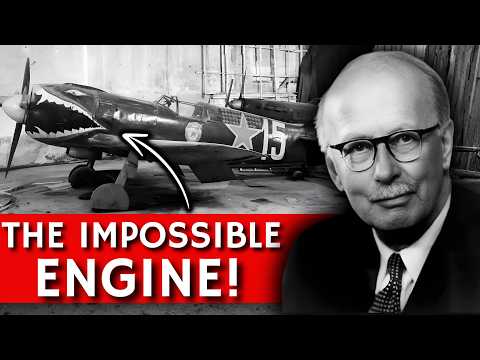
Harry Ralph Ricardo was born in 1889 into a family that valued thinking above almost everything else. His grandfather was a civil engineer, his father an architect. The house was full of drafting tables and mechanical curiosity. From boyhood, Harry was fascinated not just by how machines worked, but by why they worked that way. Other children took apart clocks to see the gears. Harry wanted to know why the gears were that particular size.
He studied engineering at Cambridge, and even there his approach stood out. While his peers calculated outputs and designed components, Ricardo was obsessed with measurement. He wanted to know what happened inside the cylinder during combustion—not roughly, not approximately, but precisely. To the decimal. He believed that if you could measure the process of burning fuel with enough accuracy, you could control it. And if you could control it, you could improve it beyond what anyone had imagined possible.
He was not popular with every professor. One tutor reportedly told him that engineering was the art of the practical, and that he should spend less time measuring things that did not need measuring. Ricardo disagreed politely. He had an instinct, already fully formed by graduation, that the things nobody bothered to measure were precisely the things that mattered most.
He graduated in 1910 and almost immediately began building his own test equipment in a small workshop, funded by money borrowed from his grandfather. He designed instruments to track pressure inside firing cylinders in real time. He recorded temperature curves, flame propagation speeds, and the exact relationship between fuel mixture and the knock that everyone called a nuisance but nobody understood. He built indicator diagrams—graphical records of pressure against piston position—with a precision that allowed him to see the combustion event as a shape, a curve, something that could be compared and analyzed. He was building the vocabulary of combustion science at a time when most engineers were still working by intuition and trial and error.
Then the war came.
By 1915, the Western Front was a nightmare of mud, wire, and stalemate. The British Army needed something that could cross no-man’s-land, crush barbed wire, and take machine gun fire without stopping. They found their answer in the tank. But the first British tanks, the Mark I, had an engine problem that nearly killed the entire program before it began.
The engine chosen for the original tanks was a Daimler sleeve valve unit, a design that had worked reasonably well in cars. But inside the hull of a tank, sealed in armor plate with no proper ventilation and subjected to violent jolting, it overheated catastrophically. Crews were abandoning tanks, not because of enemy fire, but because the engine simply gave up and died. The War Office had built a weapon of war that was defeated by heat. They needed someone who understood what was actually happening inside an engine when everything went wrong. Someone who could measure the problem, not just guess at it.
They found Harry Ricardo.
Ricardo’s approach was unlike anything the military engineers had encountered. He did not arrive with a catalog of ready-made solutions. He arrived with instruments. He designed a purpose-built test stand where he could run engines under controlled conditions and record every variable simultaneously: oil temperature, water temperature, exhaust composition, cylinder pressure at every point in the combustion cycle. He mapped the failure modes of the Daimler engine with clinical precision and identified the root causes.
The problem was not simply one of cooling. It was a combination of detonation—that violent, uncontrolled explosion in the cylinder that the industry casually called pinging—and inadequate air flow through the hull. But more fundamentally, it was a problem of combustion chamber geometry. The shape of the space above the piston determined how efficiently the fuel and air mixture burned. A poorly shaped chamber created hot spots. Hot spots caused early ignition. Early ignition caused knock. Knock caused heat. Heat caused failure. It was a chain reaction, and Ricardo had traced it back to its first link.
He designed an entirely new engine for the Mark V tank. It was a six-cylinder Ricardo unit purpose-built from the ground up with a combustion chamber shape he had calculated to minimize hot spots and promote smooth, even burning. He relocated the valves. He changed the compression ratio. He optimized the fuel mixture. He changed the cooling circuit layout so that heat dissipated uniformly rather than concentrating in vulnerable areas. Each decision was documented, tested, measured against the previous design, and documented again. Ricardo kept ledgers of engine test data the way other men kept diaries. Every number had a date and a note explaining what variable had changed since the last run. It was obsessive. It was unprecedented. And it produced an engine that worked.
The result was an engine that ran cool, ran reliably, and gave the crews inside the hull a fighting chance of surviving not just enemy fire, but the machine beneath them. The Mark V tank, powered by Ricardo’s engine, went into action in 1918. It was dependable in a way that earlier tanks had never been. Crews trusted it. Commanders could plan around it. For the first time, tanks could be deployed in coordinated assaults without half of them breaking down before they reached the enemy line. The weapon that had seemed like an expensive mechanical gamble became, in the final year of the war, a decisive instrument of breakthrough.
But Ricardo himself was not satisfied. He had solved the immediate problem. He had given the army a working engine. What he wanted now was to understand the deeper science—because during all those hours on the test stand, watching instruments and recording data, Ricardo had noticed something that no one in the industry had properly explained: the knock. That metallic hammering sound that destroyed engines and limited power. Everyone knew it was bad. Nobody knew exactly what caused it. Most engineers assumed it was simply a result of using low-quality fuel or running too much compression. Ricardo believed it was something more fundamental—something chemical, something that could be measured and controlled.
After the war ended, he formalized his company, Ricardo Engineering, at Shoreham-by-Sea in Sussex. He built the most advanced engine testing facility in the world—a place where engines did not simply run. They were interrogated. Every combustion event was recorded. Every variable was isolated. Ricardo and his team worked through the problem of detonation systematically, testing hundreds of different fuel compositions, compression ratios, and chamber shapes over several years. What he discovered was that different fuels had fundamentally different resistance to detonation. Some fuels burned smoothly under high pressure. Others detonated violently. The difference was measurable.
Ricardo developed a standardized test engine, which he called the standard engine, and used it to compare fuels against a reference blend. He ran systematic trials with hundreds of fuel combinations, recording the conditions under which each one began to knock. He mapped the relationship between chemical structure and detonation resistance with the same methodical patience he applied to everything. The rating system he created became the foundation for what the world would eventually call the octane number.
This was not a minor footnote in engineering history. The octane rating system would go on to define how petrol was refined, how engines were designed, and how aviation fuel was developed for the next century. Every time a motorist fills their car with fuel rated at 95 or 98, they are using a measurement system that Harry Ricardo built in a Sussex workshop between the wars with hand-recorded data and carefully calibrated instruments.
His work on combustion chamber shapes was equally transformative. Ricardo developed what became known as the Ricardo turbulent combustion chamber—a carefully designed inlet port configuration that caused the fuel-air mixture to rotate and tumble as it entered the cylinder. This rotational motion promoted more complete mixing and more efficient burning. It increased power without increasing fuel consumption. It was an elegant solution to a problem that had been dismissed as unsolvable, born entirely from the discipline of measurement and the refusal to accept approximation.
And he turned that same discipline toward diesel engines. At the time, diesel engines were brutish, heavy, and slow. They were used in ships and industrial generators, not in vehicles where speed and responsiveness mattered. The fundamental problem was that diesel combustion was difficult to control. Without a spark plug, the fuel relied entirely on the heat of compression to ignite, and the burning process was uneven and violent. Ricardo believed this was a problem of combustion chamber design, not of the diesel principle itself.
He developed the Comet combustion chamber—a pre-chamber system in which a portion of the compressed air was swirled at high speed before the fuel injected into it. The swirl caused rapid, even mixing and produced a fast, controlled burn that could power smaller and lighter diesel engines at much higher speeds than anyone had previously achieved. The Comet chamber transformed the diesel engine from an industrial workhorse into something that could power buses, trucks, and eventually passenger cars. It was perhaps his most consequential single invention, because the diesel engine was by the middle of the 20th century moving more freight and people than any other form of land transport on Earth.
Ricardo himself regarded the Comet chamber with particular satisfaction—not because it was his most celebrated achievement (it was rarely celebrated outside specialist circles), but because it represented the purest application of his method. He had taken a process that seemed inherently chaotic—the self-ignition of fuel under compression—and through understanding its physics, shaped it into something controllable, predictable, and efficient. The chaos had not been eliminated. It had been disciplined. That, for Ricardo, was what engineering meant.
Through the 1930s, as war began to gather on the horizon again, Ricardo was advising the Air Ministry on fuel and engine design for British combat aircraft. The critical question was fuel. Aircraft engines of the era were being pushed toward ever higher compression ratios to extract more power, but higher compression meant higher risk of detonation. The fuel available at the time limited how far designers could push their engines. Ricardo’s octane research now became strategically important. He had spent years understanding exactly which chemical properties determined a fuel’s resistance to detonation. He knew which refining processes produced higher octane blends. He worked with British fuel companies and with the Air Ministry to push toward 100 octane aviation fuel—a grade that would allow aero engines to run at compression ratios previously impossible.
And that work was about to become the difference between survival and defeat.
September 1939. The Luftwaffe flew on 87 octane. The RAF flew on 100—fuel made possible by Ricardo’s research. With it, the Merlin engine could run at higher boost without detonating, giving Spitfires and Hurricanes a surge of power at exactly the moment it mattered.
In a dive over Southern England, the British pilot slammed the throttle forward and pulled away from the Messerschmitt behind him. German pilots noticed it and could not explain it. The reserve was chemistry—the octane advantage Ricardo had spent a decade engineering into existence.
He was knighted in 1948 and returned to Sussex the next morning, data charts in hand. Sir Harry Ricardo died in May 1974, aged 84. His company still exists, still measuring, still assuming nothing.
He never built a famous aircraft or a legendary car. What he built was invisible—the shape of the chamber, the number on the pump, the quiet even burn. His numbers mattered more than anyone’s courage.
So here is the question: the next time you fill your tank, will you remember the man who refused to guess?
Report this article
Select a reason for reporting:






