August 1944, Normandy. The Allied advance is being killed—not by German bullets, but by an enemy no one saw coming: its own supply lines. Patton’s tanks sit silent, out of gas. Ammunition depots are full while soldiers at the front ration bullets. Traffic jams stretch for miles. The system is choking on its own success.
Into this chaos steps Lieutenant Colonel Bill Murphy—a 34-year-old from rural Manitoba who managed grain elevators before the war. British officers sneer at his accent and ill-fitting uniform. But Murphy sees what they don’t: supply transport isn’t about moving convoys from point A to B. It’s about flow, timing, and decision-making authority.
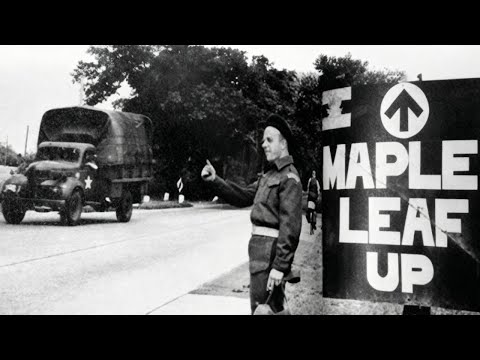
While American Red Ball Express convoys of 100 trucks crawl bumper-to-bumper, burning fuel and time, Murphy’s small Canadian units are arriving 40% faster. No one notices—until he proposes a radical idea at a planning meeting: break convoys into small, independent packets of eight trucks, each led by a junior officer with authority to choose routes and make real-time decisions.
“Convoy discipline has governed military transport since Caesar’s legions,” the British brigadier sneers. “We’re not going to abandon 2,000 years of proven doctrine for railway station thinking, Colonel.”
Murphy sits down, face burning. But he’s already decided: if the brass won’t listen, he’ll prove them wrong. He has 50 aging trucks, a company of loyal mechanics, and a theory. What he doesn’t have is permission.
That same week, Murphy starts building his system in secret, using principles from 15 years of moving grain across the Canadian prairies. Each packet: six cargo trucks, one maintenance vehicle, one command vehicle with a radio. They travel 200 yards apart—not bumper-to-bumper—so one breakdown doesn’t stop everyone. Junior officers get one instruction: “Use your judgment. If a route looks bad, find another. Don’t wait for permission. Just get the supplies there.”
The first unauthorized test comes on September 12th. Three packets, 24 trucks, carrying artillery ammunition to the Second Canadian Infantry Division. Murphy doesn’t sleep. He tracks check-ins every 15 minutes. The results exceed his hopes: average journey time 6 hours 20 minutes—half the time of comparable American convoys on the main route.
When Murphy’s trucks roll into the depot, the quartermaster radios with confusion: “Maple Leaf Up, I thought you fellows weren’t due until tomorrow morning.”
Murphy finds his pivotal supporter by accident: Brigadier James Lister, an artillery commander who cares about results, not procedures. When a British logistics officer threatens to report Murphy for breaking protocol, Lister’s response is ice cold: “Your regular procedures deliver excuses and empty promises. I’ll take the ammunition.”
Through autumn, Murphy expands quietly. By November, 200 trucks in 25 packets achieve 92% on-time delivery—compared to 61% for British units and 58% for the Americans. Fuel consumption drops 37%. Breakdowns are fixed roadside in under 30 minutes. The math becomes undeniable.
By December, 800 trucks in 100 packets cover routes from Antwerp to the Rhine, delivering 4,200 tons daily with one-third the personnel of American operations. The phrase “Maple Leaf Up” enters Allied radio protocol—a call sign that means fast convoy, priority clearance, supplies that actually arrive.
German intelligence officers mark Canadian fast columns as priority targets, but Murphy’s decentralized system proves resilient. When ambushes loom, packet leaders don’t wait for orders—they fight through, back up, or reroute. Captured German reports express frustration at the “impossible Canadians” who seem to navigate by instinct.
Official recognition comes slowly, but by January 1945, Montgomery’s headquarters issues a memorandum recommending all transport units adopt Canadian packet methodology. American generals quietly copy the system without acknowledging it. By war’s end, “Maple Leaf Up” appears in tactical doctrine manuals as a proper noun: efficient convoy operations using decentralized authority and flexible routing.
Between D-Day and VE Day, Murphy’s packets deliver 2.8 million tons of supplies, evacuate 47,000 wounded, and travel 42 million miles. Zero complete packets are lost to enemy action. When Montgomery needs critical supplies urgently, his staff doesn’t request units by number—they ask for Canadian packets by name.
But Murphy’s story doesn’t end with the war. It’s just the beginning of a revolution that will reshape logistics forever—and a lesson in innovation that remains urgently relevant today.
When Bill Murphy returned to Canadian Pacific Railway in 1946, he carried a promotion to full colonel and a head full of ideas the war had sharpened. CPR handed him authority over freight operations, and he quietly began applying packet principles to grain, lumber, and manufactured goods. Long freight trains were broken into shorter, flexible consists. Local dispatchers gained real-time authority instead of waiting on distant headquarters. Standardized repair kits cut downtime on locomotives the same way they had on Normandy roadsides.
Within two years, cross-country delivery times fell 28 percent. Fuel costs dropped 19 percent. Competitors scratched their heads, wondering how CPR had suddenly become so efficient. The company never advertised the truth: a Manitoba grain man had brought a war’s worth of hard lessons home.
Murphy’s plain-language logistics manuals—written for truck drivers and dispatchers, not generals—found their way to the US Army Transportation School at Fort Eustis, Virginia. Young officers studied decentralized authority, flexible routing, standardized maintenance, and the radical notion that junior leaders should be trusted to make decisions. None of them knew the author had once been dismissed as a colonial amateur playing at warfare.
In 1945, Murphy received the Order of the British Empire in a small London office with a handful of witnesses. He thanked the presenting officer politely and never mentioned it again. When a military historian interviewed him in 1974, Murphy waved away the attention.
“I just moved the groceries,” he said. “Other fellows did the fighting and dying. They’re the ones who mattered.”
He retired from CPR in 1968 after 42 years, moved to a small house in Winnipeg, and spent his days tending a garden and reading history. He died in 1982 at 72. His obituary in the Winnipeg Free Press ran six sentences. No monuments bear his name. No schools commemorate his achievement.
Yet his ideas outlived him in ways he never imagined—and in ways that would soon be tested on battlefields far from France.
When American forces rolled into Iraq in 2003, the ghost of the 100-truck convoy returned with a vengeance. Supply columns stretched for miles along Highway 8, easy targets for ambush, strangled by sandstorms and broken bridges. A young captain named Elena Vasquez, commanding a transportation company out of Fort Hood, found herself rereading a dog-eared manual she’d picked up at Fort Eustis years earlier. The cover was plain. The language was blunt. It described packets of eight vehicles, 200 yards of spacing, and one simple instruction: use your judgment.
She ran her first packet test on a run from Kuwait to Baghdad—six cargo trucks, one maintenance vehicle, one command Humvee. Her battalion commander called it reckless. Her sergeants called it common sense. The packets arrived eleven hours ahead of the main convoy, and not a single vehicle was lost.
Within a month, Vasquez’s company was running supply missions the old manuals described, and she began to wonder who had written them. A name appeared in the footnotes, buried beneath decades of revisions: Lt. Col. W. J. Murphy, Canadian Army Service Corps, 1944.
She asked her logistics colonel about it. He shrugged. “Some Canadian from World War II. Before your time.” But Vasquez pulled the thread anyway, and what she found would change how she thought about her own war—and about the quiet man from Manitoba whose name had nearly vanished from history.
The thread led her to a dusty archive in Winnipeg, where a retired railway clerk named Margaret Doyle answered her email after three weeks. Margaret had worked under Murphy at CPR in the sixties. She remembered him as a man who walked the yards in winter without a coat, who knew every dispatcher by name, who once rerouted an entire grain shipment around a washed-out bridge before headquarters even knew the bridge was gone.
“He never once said he’d been a hero,” Margaret wrote. “He said he moved groceries. But my father was at the Scheldt. He said the shells came because of the Canadians. I put it together years later.”
Vasquez printed the email and carried it in her cargo pocket through the summer. The ambushes got worse that fall. Roadside bombs turned Highway 8 into a graveyard of stalled convoys, and every week brought another memorial service for soldiers who’d died waiting for fuel that never came.
Her battalion commander, a West Point graduate with two stars on his collar, called a meeting to demand answers. The PowerPoint slides showed red lines and broken arrows. He wanted bigger convoys, more escorts, tighter schedules.
Vasquez raised her hand. “Sir, with respect—bigger convoys are what’s killing us. One bomb stops forty trucks. We need smaller packets, more spacing, and commanders on the ground who can reroute without calling battalion.”
The room went quiet. The colonel stared at her the way the British brigadier had once stared at Murphy across a French schoolhouse table.
But this time, the numbers were already on her side. She’d run forty packet missions. Zero vehicles lost. Her on-time rate was 94 percent while the battalion average sat at 61. The colonel studied the printout, jaw tight, and finally said the words she hadn’t dared hope for.
“Brief the other company commanders tomorrow. All of them.”
Within six weeks, the battalion had reorganized into packets. Within three months, the brigade followed. A logistics major from another unit flew in to observe and left with a copy of Vasquez’s briefing slides, muttering that he’d seen something like this in an old doctrine manual.
Vasquez didn’t tell him where it came from. She’d learned something from Murphy’s silence. The idea mattered more than the name attached to it. But she kept Margaret Doyle’s email folded in her pocket, and on the night before her unit rotated home, she sat alone in her tent and wrote a letter she never intended to send.
It was addressed to a man who’d been dead for twenty years, and it began simply: Colonel Murphy—I moved the groceries. They arrived on time.
She folded it, tucked it into her journal, and stepped out into the cold desert dark where the packets were already rolling north, spaced two hundred yards apart, each one carrying its own small universe of fuel and food and ammunition toward soldiers who were still waiting, and still—because of a prairie dispatcher’s stubbornness—alive.
Years later, a young lieutenant in a dusty staff college classroom would study a case file labeled simply Maple Leaf Up, and the instructor would ask the room the same question that had once shattered two thousand years of doctrine: “Why do we still build hundred-truck convoys when eight trucks and a trusted officer move the world faster?”
The silence that followed was the same silence that had once filled a French schoolhouse in 1944—and somewhere in it, a prairie dispatcher’s quiet answer still echoed.
Because the lesson was never really about trucks. It was about trusting the person closest to the problem, about asking whether the accepted wisdom still made sense, and about the courage to test an idea when every expert insists you’re wrong.
Murphy moved the groceries. The groceries arrived. And eighty years on, the question he left behind is still waiting for an answer.
So here’s yours to carry: what hundred-truck convoy is still crawling through your own life—and what would happen if you finally broke it into packets?
Report this article
Select a reason for reporting:






