Dr. James Coleman had seen thousands of old photographs in his career, but something about this one made him pause. The portrait, dated 1889, showed a typical American family—father, mother, and two children—posed stiffly in their Sunday best. Their faces were serene, almost unnaturally so. But it was the mother’s hands that caught his eye. They were folded in her lap, yet something was off. The fingers seemed twisted, as if hiding something.
He leaned closer, his breath fogging the glass. “That’s not a normal pose,” he muttered. The mother’s hands were not just folded; they were clenched, the knuckles white, as if she were gripping something invisible. James felt a chill despite the warm July air.
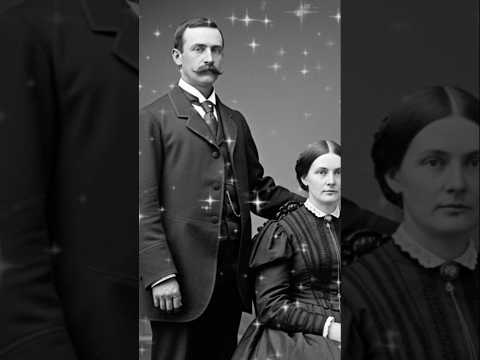
He had been surveying the Smithsonian’s collection of 19th-century vernacular photography for weeks, a routine task that usually bored him to tears. But this portrait was different. The family’s eyes seemed to follow him, their smiles frozen in time. He checked the catalog entry: “Unknown family, circa 1889, donated by estate of Margaret Ellsworth, 1972.” No other information.
James carefully removed the photograph from its protective sleeve and placed it under a magnifier. The mother’s hands were indeed strange—the left hand seemed to have six fingers. He blinked, certain it was an artifact of the image. But no, there it was: an extra digit, small and pale, tucked between the thumb and index finger. “A sixth finger?” he whispered. That was impossible. Or was it?
He thought back to his training. Vernacular photography often captured the oddities of everyday life—double exposures, blurred figures, but never deliberate anomalies like this. He decided to dig deeper. The donor, Margaret Ellsworth, had passed away in 1971, but her estate had included a diary. James retrieved it from the archive, its pages yellowed and fragile.
As he read, the room seemed to grow colder. Margaret wrote of her grandmother, Eliza, who was the mother in the photograph. “Grandma Eliza always wore gloves, even indoors,” Margaret had written. “She said her hands were cursed.” James’s heart raced. Cursed? What did that mean?
He turned the page. The next entry was dated October 1889, just months after the portrait was taken. “The thing in her hand grew again last night. Father burned it with a hot iron, but it came back.” James dropped the diary, his mind reeling. What kind of thing? He looked back at the photograph, at the mother’s twisted hands, and realized the sixth finger wasn’t a finger at all. It was something else—something that moved.
James grabbed a pair of cotton gloves from his desk and slipped them on, his hands trembling. He lifted the photograph again and angled his desk lamp to cast a raking light across the surface. In the oblique glare, the sixth digit cast a shadow of its own—a thin, curling shadow that seemed to bend away from the mother’s hand like a root seeking water.
“That’s not possible,” he said aloud, his voice echoing in the empty storage room. Photographs don’t cast shadows of things that aren’t there. He set the portrait down and rubbed his eyes, certain the humidity was playing tricks on him.
But when he looked again, the shadow was still there—and it had moved. It now curled toward the father’s hand, as if reaching for him. James stepped back, knocking a stack of archival folders off the table. Papers scattered across the floor, but he didn’t look away from the photograph.
He needed a second opinion. He called Dr. Lena Ortiz, the museum’s forensic imaging specialist, and asked her to come down immediately. “Bring the multispectral scanner,” he added, his voice tighter than he intended.
Lena arrived twenty minutes later, her brow furrowed. “You said it was urgent,” she said, wheeling the scanner into the room. “I canceled a meeting with the director for this.”
James didn’t answer. He simply pointed at the photograph. Lena leaned in, studied the mother’s hands, and went very still. “Is that a sixth finger?” she asked quietly.
“Look at the shadow,” James said. She did, and her face drained of color. Without a word, she began setting up the scanner, her movements quick and precise. The device hummed to life, casting a pale blue light across the portrait.
The scan took twelve minutes. When the image appeared on her laptop screen, Lena gasped. Beneath the surface of the photograph—under the emulsion, in the layers of paper and albumen—there was something else. A faint, dark shape coiled around the mother’s left hand, extending upward into her sleeve. It had no clear form, but it was unmistakably organic: a thin, segmented body, like a centipede or a root.
“That’s not a photographic artifact,” Lena said. “That’s something that was there when the picture was taken. Something real.”
James thought of the diary entry. The thing in her hand grew again last night. He swallowed hard. “We need to find out what happened to Eliza Ellsworth after 1889,” he said. “And we need to find out if anyone else in that family had the same… condition.”
Lena looked at him, her eyes wide. “You think this is a medical condition?”
“I think,” James said slowly, “that we’re not looking at a curse. We’re looking at an infection.”
Lena pulled the scanner’s data into her analysis software, isolating the dark shape in a false-color overlay. The thing had a definite structure now: a segmented body no thicker than a pencil lead, with fine hairlike filaments branching from each segment. “It’s not a parasite I recognize,” she said, zooming in. “But look at how it enters the wrist. It doesn’t break the skin. It goes through it, like it’s passing through a membrane.”
James pulled on a fresh pair of gloves and returned to the diary. Margaret’s handwriting grew more erratic in the later entries, the ink pressed hard enough to emboss the page. “Grandma Eliza stopped eating. Said the thing fed her instead.” He read the line twice before it fully registered.
“Fed her?” Lena repeated, wheeling her chair closer.
“That’s what it says.” He turned the page carefully. The next entry was dated November 1889. “Father locked her in the root cellar. He says the thing talks to her at night. He says it’s teaching her things.”
James set the diary down and stared at the portrait again. The father’s face, so stern and composed, suddenly seemed less like a proud patriarch and more like a man holding himself together by sheer force of will. The children—a boy and a girl—sat between their parents, their hands folded neatly, no anomalies visible.
“The children,” Lena said, following his gaze. “If this was an infection, why didn’t they show it?”
James spent the next three days in the archive, pulling every document connected to the Ellsworth estate. He found a death certificate for Eliza Ellsworth dated March 1891. Cause of death: “exhaustion.” He found a land deed showing the family had sold their farm in upstate New York and moved west in 1890, only months after the portrait was taken.
But it was a bundle of letters, tucked inside a hymnal donated with the estate, that made his hands shake. They were from a country doctor named Amos Pruitt, addressed to Eliza’s husband, Silas. The first letter was dated December 1889.
“Silas—I have consulted with two colleagues in Albany. None of us have seen a growth that behaves as hers does. It retracts when touched with silver and extends again when the light is removed. I must ask: has she been near stagnant water? Has she handled any strange roots or soils?”
The second letter, dated February 1890, was shorter and colder. “I can no longer attend to your wife. The thing in her arm has begun to show what I can only describe as intent. It reached for my hand during the examination. I am sorry. Do not write to me again.”
James photographed the letters and sent them to Lena. Her reply came within the hour: “Come to the lab. I ran the scan data through a pattern-matching algorithm against known biological specimens. You’re not going to believe what it flagged.”
James hurried to the lab, his mind racing with the doctor’s words. “Intent?” he muttered, pushing through the double doors. Lena stood before a large monitor, her face pale in the glow.
“It flagged a match,” she said, pointing to a side-by-side comparison. On the left was the coiled shape from the photograph; on the right, a microscopic image of a rare parasitic fungus known as Ophiocordyceps—specifically, a strain that manipulates its host’s behavior. “This fungus infects ants, forces them to climb and clamp onto a leaf before it kills them. But this… this is different. It’s adapted for human hosts.”
James felt the blood drain from his face. “You’re saying that thing in Eliza’s hand was controlling her?”
“Not just controlling,” Lena said, pulling up another image. “Look at the segmentation. It’s not a single organism—it’s a colony. Each segment can act independently. It could have been learning from her, using her nervous system to communicate.” She paused. “That’s what the diary meant. ‘It’s teaching her things.’ It wasn’t teaching her—it was teaching itself through her.”
James sank into a chair. The family had sold their farm and moved west. Eliza died of “exhaustion” in 1891. But what happened to the thing inside her? “If it could spread,” he said slowly, “if it could find new hosts…”
“Then someone else might have it,” Lena finished. “Or something like it.”
They spent the next week tracing the family’s movements. The son, Thomas, had settled in Colorado and died in 1932 of “nervous collapse.” His daughter had donated a box of his belongings to a local historical society. James called the society and asked about any unusual items. The curator hesitated, then mentioned a small wooden box that Thomas had kept locked in his desk. “He called it his ‘inheritance,'” the curator said. “We never opened it.”
Two days later, the box arrived at the Smithsonian. James and Lena opened it together. Inside, nestled in velvet, was a glass vial containing a dried, segmented specimen—identical to the shape in the photograph. A note in Thomas’s handwriting lay beneath it: “It left Mother when she died. It tried to enter me. I burned my hand to stop it. I kept this piece as a warning.”
James stared at the vial. The specimen was dead, but the memory of its shadow, curling toward the father’s hand, was still vivid. “We need to test this,” he said. “If it’s still viable, if there’s any chance it could infect someone…”
Lena sealed the vial in a biohazard bag. “I’ll take it to the containment lab. But James—what if there are other photographs? Other families?”
He thought of the 200 photographs in the drawer, each a window into a life. “Then we start looking,” he said. “And we don’t stop until we know how far this thing spread.”
That night, James sat alone in his office, the portrait of the Ellsworth family propped against his lamp. The mother’s hands were still twisted, the sixth finger still visible. But now he saw it differently—not as a curse, but as a survivor’s scar. Eliza had fought something ancient and hungry, and she had lost. But her family had survived.
He picked up the diary one last time and read the final entry, dated March 1891, just days before Eliza’s death. “It’s leaving me now. I can feel it pulling away. I don’t know where it’s going, but I pray it never finds another home.”
James closed the diary and looked at the photograph one last time. The mother’s eyes seemed to meet his, and for a moment, he felt a chill that had nothing to do with the air conditioning. “What if it already has?” he whispered.
What would you do if you found a family portrait with a secret like this—would you dig deeper, or would you lock it away and never look back?
Report this article
Select a reason for reporting:






