Imagine standing in the pitch-black mountains of Afghanistan in 2006. You are surrounded by the most heavily armed, technologically advanced fighting force in human history—the United States military. You’re supposed to be allies, on the same joint combat patrol. But instead of fighting the Taliban, the Australian SAS commander does the unthinkable. He turns his men around, looks at the Americans, and simply walks away into the night. No warning, no permission—just gone.
What the hell happened? Was it betrayal? A breakdown in command? A rogue squad going off the reservation? The official reports tried to bury this. The brass didn’t want you to know that the most elite operators from two Allied nations nearly came to blows in the deadliest terrain on Earth. But the truth is finally coming out—and it exposes a shocking fatal flaw in the American war machine that the Australian SAS refused to die for.
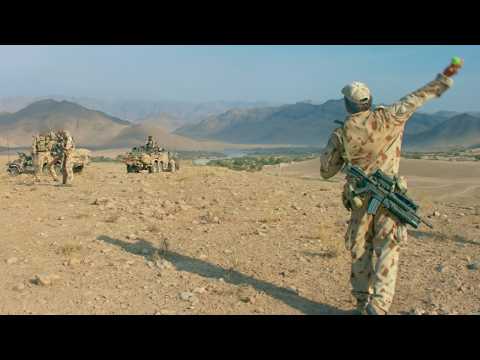
The year was 2006, and the jagged, unforgiving ridges of Uruzgan province in southern Afghanistan were rapidly transforming into a catastrophic trap for coalition forces. This desolate landscape of shattered rock and narrow winding valleys had swallowed entire armies throughout history. Now it was the epicenter of a surging, highly coordinated insurgency. The operational tempo had reached a fever pitch, demanding a massive increase in joint combat patrols between the two most elite military organizations on the planet: the Australian Special Air Service Regiment and the Special Operations Forces of the United States military.
On the pristine whiteboards of coalition headquarters, this unprecedented partnership looked like the ultimate unstoppable tactical solution. The generals firmly believed that combining overwhelming American firepower with surgical Australian reconnaissance would quickly bring the insurgents to their knees and secure the province. But this bureaucratic delusion was merely the first crack in a rapidly crumbling foundation.
In the harsh, unforgiving reality of the Afghan rock formations, this forced marriage was immediately proving to be a spectacular and incredibly dangerous disaster. The friction between the two units was not born from a lack of courage or a shortage of professional respect, but from a fatal collision of deeply ingrained military philosophies. The alliance was tearing itself apart because these two legendary forces held completely incompatible views on what a successful combat patrol should actually look and sound like.
The American doctrine, shaped by decades of massive defense budgets and technological superiority, was heavily predicated on the concept of absolute physical dominance. An American military patrol was explicitly trained and equipped to project an aura of overwhelming capability, essentially announcing their formidable presence to anyone hiding in the shadows. The underlying logic was that an adversary who recognizes the approach of a heavily armed, air-support-connected infantry unit will inevitably choose to retreat rather than face total destruction. If the insurgents decided to stand their ground, the American forces would simply summon an overwhelming storm of precision air strikes to violently resolve the situation. Therefore, the sheer undeniable presence of the troops was considered a powerful weapon in itself.
The Australian doctrine, however, operated from a premise so radically different that it might as well have been developed on another planet entirely. For the operators of the Australian Special Air Service Regiment, the very moment an enemy becomes aware of their presence, the entire mission has essentially failed. The fundamental purpose of their deep reconnaissance patrols was to gather critical intelligence, map out supply routes, and track high-value targets without ever leaving a single trace of their existence behind.
And the most glaring, incredibly hazardous manifestation of this doctrinal clash was the astonishing amount of noise generated by the Allied troops. The Australians firmly believe that a patrol that moves like an invisible shadow is infinitely more effective and vastly more secure than a patrol that loudly broadcasts its arrival. Once a silent reconnaissance unit is detected by the enemy, its ability to collect meaningful intelligence evaporates instantly, and the operators are violently forced into a defensive posture—trapped in an unwanted engagement, fighting for survival on terrain chosen by the adversary and operating on a chaotic timeline dictated entirely by the insurgents.
Placing these two diametrically opposed mindsets on the exact same mountain path at the exact same time was not just strategically unwise. It was an open invitation to an unprecedented tragedy.
But this staggering reliance on advanced technology was about to lead them straight into a devastating trap. The American soldier deployed in 2006 was undoubtedly an absolute marvel of modern logistical engineering and cutting-edge military technology. He carried an unprecedented amount of sophisticated equipment, possessing more raw firepower, advanced navigation tools, and instant communication capability than any warrior in the history of human conflict. He could rapidly coordinate with distant headquarters, summon devastating airborne support, and illuminate the darkest nights with state-of-the-art optical systems.
Yet to the highly trained, hypersensitive ears of the Australian operators, this magnificent American super soldier was a catastrophically, dangerously loud liability. The specific echoing acoustic signature of a moving American patrol was the direct, unavoidable consequence of carrying massive amounts of heavy, technologically complex gear. This brutal characterization was not a simple metaphor. It was a terrifyingly accurate description of an electronic and physical footprint that practically screamed for unwanted attention.
According to deeply critical Australian after-action reports from this intense period, the standard American combat load read like a detailed checklist of everything silent patrol doctrine explicitly forbids. Individual American soldiers routinely carried anywhere from three to four separate radio systems, depending entirely on their specific designated role within the heavily armed squad. Every single one of these intricate communication devices required its own bulky battery pack, adding significant burdensome weight and shifting uncomfortably with every single step taken on the uneven ground. The astonishing array of long sweeping antennas that a typical American unit carried into the steep valleys was so incredibly prominent that the Australians privately coined a highly derogatory nickname for them. The hardened operators of the regiment openly mocked their heavily burdened allies, frequently referring to the American soldier as a cumbersome “walking antenna farm.”
But the severe noise pollution extended far beyond the multitude of radios and their endlessly shifting power supplies. The entire philosophy of American kit management seemed completely disconnected from the absolute necessity of maintaining stealth in a highly resonant rocky environment. The soldiers were wrapped in complex body armor systems featuring dozens of separate attachment points, each heavily laden with bulky pouches, extra magazines, and secondary tactical accessories. They heavily utilized standard commercial metal carabiners to secure their extensive gear, leaving these rigid metal clips completely exposed and totally unpadded against the harsh elements. With every strained step up the steep inclines, these heavy metal carabiners aggressively slammed against hard ceramic armor plates, rigid rifle stocks, and other metallic surfaces. The resulting sharp, incredibly distinct metallic ringing sliced through the famously thin, entirely still mountain air of southern Afghanistan with an absolutely terrifying clarity.
Furthermore, the standard-issue combat boots worn by the conventional forces were heavily reinforced, designed entirely for maximum durability and rigid ankle support on brutal terrain. These boots were emphatically not designed to provide any semblance of silence, and they crunched violently and loudly against the notoriously loose mountain shale with every single heavy footfall.
In extremely sharp contrast, the elite Australian operators treated noise suppression not as an afterthought, but as a primary tactical requirement, absolutely equal in importance to accurate marksmanship. Before an Australian patrol ever dared to leave the safety of the forward operating base, every single operator engaged in a meticulous, highly obsessive ritual of silencing their equipment. Every potential metal-to-metal contact point on their carefully selected kit was heavily wrapped in thick black electrical tape or tightly bound with strong paracord. The operators deliberately selected soft-soled footwear specifically designed to absorb the harsh impact of the rocky ground rather than loudly broadcasting it across the expansive valleys. Their highly disciplined movement patterns were dictated entirely by the surrounding acoustic environment, deliberately timing their careful steps to coincide perfectly with howling gusts of wind. If the cold mountain air suddenly became still, the entire Australian patrol would instantly freeze in place, remaining completely motionless like stone statues until the masking winds returned.
The resulting tactical effect was a combat unit that simply did not generate any unnatural sound that could be reliably distinguished from the ambient everyday noises of the rugged wilderness. It was a terrifying, heavily documented reality that severely compromised joint missions and directly threatened the lives of every single man walking the jagged ridge lines. And this terrifying realization meant that the entire joint operational strategy was built upon a highly fatal flaw that could lead to an unprecedented disaster.
The catastrophic consequences of this noise disparity were famously recorded during a deeply classified observation mission. An Australian patrol element was holding a static, perfectly concealed position in the freezing darkness, monitoring a heavily trafficked insurgent transit route. Suddenly, without any thermal optics or intercepted radio chatter, the operators clearly heard an approaching American tactical unit moving through the treacherous terrain.
The Australians calculated the exact distance of the approaching force based purely on the chaotic rhythmic clinking of unpadded carabiners and the heavy crunching of rigid combat boots. The distance between the silent observers and the incredibly loud Allied patrol was precisely 400 meters. For the Australian commanders, attempting to conduct a sensitive deep reconnaissance mission under these deafening conditions was not merely frustrating—it was tactical suicide.
The hardened Taliban insurgents operating throughout Uruzgan province were absolutely not poorly trained amateurs. They had been fighting, surviving, and hunting in this exact unforgiving terrain for 25 years, mastering every nuance of the environment. They maintained an extensive network of hidden listening posts strategically positioned across the highest peaks and deepest valleys. These experienced fighters knew exactly what the natural mountains sounded like—and they could easily differentiate between a falling rock and the unmistakable chaotic clatter of a heavily equipped Western military unit.
If an Allied patrol could be clearly heard from four football fields away, the adversary had more than enough precious time to execute a multitude of devastating responses. The insurgents could effortlessly reposition their fighters, establish a coordinated ambush from elevated firing positions, or simply melt away into the shadows without leaving a trace.
The horrifying reality for the Australian Special Air Service Regiment in 2006 extended far beyond the treacherous mountain ridgelines. When elite Australian liaison officers finally stepped inside the heavily fortified American command centers to coordinate critical intelligence gathering, what they discovered sent an icy shockwave through their ranks. The tactical operations rooms—the highly restricted spaces where deeply classified missions were planned—were operating with a level of security negligence that bordered on the surreal. The doors to the most sensitive planning rooms were functionally wide open to anyone with basic clearance.
Dozens of analysts, supply coordinators, and passing liaison officers routinely moved through these restricted areas, casually listening to highly classified discussions regarding imminent combat patrols. For the intensely secretive Australian operators who operated on a strict need-to-know basis, watching sensitive patrol routes being openly debated in a crowded room was absolutely horrifying.
And the terrifying negligence extended straight into the electronic spectrum. The chilling truth documented extensively in classified post-war assessments was that the standard American encryption protocols utilized during this specific period were shockingly inadequate. The Taliban commanders possessed highly effective radio intercept capabilities supported by a sophisticated network of local informants. The insurgents were systematically listening to American frequencies, casually absorbing critical details about imminent air strikes, troop movements, and high-value target locations before the operations even commenced.
This invisible electronic betrayal meant that working alongside conventional forces was practically guaranteeing a catastrophic ambush. The Australian regiment operated under the absolute ironclad assumption that the enemy was relentlessly monitoring every single transmission, treating any unsecured communication as a direct gift to the Taliban.
And this rapidly boiling tension finally reached an irreversible, highly explosive breaking point during a deeply classified joint infiltration mission that coalition command desperately tried to erase from the official history books. In the darkest months of 2006, an elite combined element was tasked with deeply penetrating a notoriously hostile sector of the Kora Valley. The strategic plan called for the highly specialized Australians to conduct an invisible close target reconnaissance of an insurgent stronghold while the heavily armed Americans provided a robust security perimeter.
However, as the joint patrol aggressively pushed into the freezing mountain darkness, the devastating reality of their fundamentally incompatible doctrines became impossible to ignore. The Australian patrol commander carefully monitored the massive echoing acoustic signature generated by the heavily burdened American element and quickly arrived at a terrifying, undeniable conclusion. The deafening symphony of clinking metal carabiners, scraping combat boots, and constant radio chatter was practically screaming their exact location to any insurgent listening post within a massive radius.
In that critical heartbeat, the Australian commander made an unprecedented decision that would send shockwaves through the highest levels of command. He did not pause to convene a tactical conference, nor did he attempt to contact distant coalition headquarters. Without uttering a single word of warning, without seeking a shred of permission, and without offering any apology, he simply signaled his operators and completely severed his unit from the joint formation. The Australian operators instantly vanished into the treacherous mountain shadows, fluidly altering their infiltration route and leaving the incredibly loud American element to continue marching along their original, highly compromised path.
The official aftermath of this extraordinary abandonment was a devastating, merciless blow to the conventional military ego. When furious American commanders eventually demanded an explanation, the subsequent Australian after-action report delivered an icy, ruthlessly professional condemnation. The meticulously drafted document stated with absolute unyielding clarity that the American methods of movement and their complete lack of noise discipline were fundamentally incompatible with the operational survival of a close target reconnaissance unit. It was not a petty insult or a cultural misunderstanding. It was a clinical, deeply factual assessment declaring that operating alongside the American forces was the equivalent of committing tactical suicide.
And the undeniable proof of this brutal assessment would soon be delivered during one of the most remarkable, completely invisible operations of the entire grueling campaign. During the bitter autumn of 2006, the massive American intelligence apparatus completely lost track of a highly dangerous, incredibly elusive Taliban command network operating deep within the Uruzgan highlands. Three separate heavily armed American combat patrols had aggressively attempted to locate the hidden insurgent leadership, and three times they had returned completely empty-handed. The highly experienced Taliban commanders possessed an uncanny ability to simply melt away into the rugged terrain long before the incredibly noisy, highly visible American units ever reached their suspected positions.
Recognizing the utter futility of conventional tactics, a highly specialized element of exactly four elite operators from the Australian Special Air Service Regiment was quietly tasked with achieving the impossible. They were ordered to deeply infiltrate the exact same hostile territory, but they would do it completely stripped of the massive American safety net. The four Australian operators deployed into the freezing, oxygen-starved altitude entirely devoid of heavy fire support, deliberately severing all voice communication with distant coalition command centers. They operated under strict, uncompromising orders, denying them any right to request an emergency extraction for a grueling, incredibly tense period of precisely 72 hours.
Once they silently crossed the wire and disappeared into the jagged landscape, they became absolute ghosts—entirely disconnected from the massive, heavily monitored electronic grid that defined the modern war. For three agonizing, completely silent days and nights, these extraordinary men survived exclusively on freezing, unheated combat rations, absolutely refusing to spark even the smallest flame for warmth. They maintained a relentless, excruciatingly slow pace, carefully managing every single footfall to ensure that absolutely no unnatural sound ever betrayed their incredibly vulnerable position. They slept in highly staggered, rigorously timed shifts of precisely two hours, continuously maintaining a perfectly concealed observation posture over the suspected insurgent transit routes. During the entirety of those terrifying 72 hours, surrounded by heavily armed fighters, the four Australian operators did not utter a single solitary word aloud.
When they finally emerged from the treacherous mountains and silently returned to the heavily fortified Allied base, they carried a highly encrypted, utterly invaluable data package that stunned the American intelligence analysts. They had achieved the absolute pinnacle of special operations dominance without ever firing a single shot. The Australians delivered a highly detailed, incredibly comprehensive map of the exact Taliban command nodes that the massive American military machine had spent months desperately attempting to locate. They had successfully penetrated the absolute heart of the hostile network, meticulously gathering highly actionable intelligence while the heavily armed enemy remained completely, utterly oblivious to their presence. The insurgents had never heard a clinking carabiner. They had never intercepted a careless radio transmission. And they had never suspected that four elite operators were watching their every move.
The Australian Special Air Service Regiment had definitively proven that in the most unforgiving terrain on Earth, the ultimate weapon was not overwhelming firepower, but absolute flawless silence.
The most devastating military verdict in modern coalition warfare was never delivered in a courtroom, never broadcast in a press conference, and never printed on the front page of any newspaper. It was delivered quietly in the form of a comparison that NATO commanders refused to include in official briefings because the numbers were simply too humiliating to publish. In the same province, at the same time, under the same hostile Afghan sky, two vastly different forces were operating against the same enemy. One of them had armored vehicles, helicopter support, hundreds of professional soldiers, and a full NATO mandate backed by the most powerful military alliance in history. The other had four to six men, cold rations, electrical tape, and 60 years of absolute doctrinal silence.
The Dutch contingent deployed to Uruzgan province in 2006 arrived with every advantage that modern military logic could provide. Their personnel were professionally trained. Their equipment was NATO standard. And their operational mandate gave them the authority and resources to establish a genuine security presence across the district. By conventional metrics, they had everything required to succeed. Yet the province refused to cooperate with those metrics. Dutch patrols encountered ambushes with a regularity that pointed not to bad luck, but to a systematic enemy awareness of their movements. Control over key terrain remained elusive despite a persistent, well-armed presence. The insurgents seemed to know with uncomfortable precision where the patrols were going and approximately when they would arrive—which is the defining signature of an adversary who has been studying your patterns long enough to exploit them.
And the more NATO tried to suppress that uncomfortable comparison, the more loudly it screamed inside the special operations community. At exactly the same moment, in exactly the same province, the Australian Special Air Service Regiment was achieving results that defied conventional military arithmetic. Patrols of four to six operators were producing intelligence assessments that shaped offensive operations across the entire southern Afghanistan theater well beyond the immediate boundaries of Uruzgan itself. These results were not achieved through superior firepower, broader manpower, or better technology. They were achieved through the systematic, obsessive application of a single principle that the Dutch and American conventional forces had never fully internalized: the enemy cannot respond to what he cannot detect, and he cannot detect what he cannot hear.
Inside special operations circles, the Uruzgan comparison was discussed with a directness that official documents rarely permit. The conclusion that senior practitioners arrived at repeatedly and independently was not that the Dutch were incompetent or that NATO was poorly led. The conclusion was structural and doctrinal. In a counterinsurgency environment, the relationship between force size and operational effectiveness is not linear. It can be actively inverse. A larger force generates a larger signature. A larger signature provides more warning time to a skilled adversary. More warning time means more compromised approaches, more avoided contacts, more intelligence lost before it could be gathered, and more patrols walking into prepared ground rather than finding the enemy on their own terms. The Dutch were not failing because of a lack of professionalism. They were failing in part because they were too loud to be invisible. And in Uruzgan, invisibility was the only currency that actually bought results.
But even this chilling institutional verdict was not the most powerful evidence of what silence could achieve. The Taliban themselves—and their internal communications—were constructing a taxonomy of their enemies. And that taxonomy was built not on ideology or political analysis, but on pure practical sensory experience of what each coalition partner felt like in the field. They were categorizing the forces arrayed against them based on what their listening posts heard, what their scouts observed, and what their command networks could anticipate. The conclusions they reached were devastating in their clarity.
American patrols had a recognizable acoustic and electronic signature that gave experienced insurgent commanders meaningful, actionable warning time. Patrol routes could be anticipated. Timings could be estimated. Ambush positions could be prepared. The Americans were not just loud in the mountains. They were readable. And a readable enemy is an enemy that can be managed, avoided, or engaged on favorable terms.
The Australians, by every account embedded in the historical record, were something entirely different. The Taliban had a specific term for what they encountered when Australian patrols operated against them. And the English translation offered in the post-war analytical record is both precise and entirely appropriate: Ghosts. Not soldiers. Not operators. Ghosts. The word does not describe a supernatural phenomenon. It describes an operational outcome. It describes what it feels like when your listening posts report nothing. Your scouts find empty ridgelines. Your intercept teams cannot catch a usable transmission. And then the consequences arrive anyway—days or weeks later—in the form of operations that your commanders had no ability to anticipate because the reconnaissance enabling those operations was conducted in a silence so complete that it registered as an absence. The Australians were confirmed only by their aftermath.
And that aftermath was built on a physical discipline so extreme that it bordered on the incomprehensible to conventional military thinking. Individual operators from the Australian Special Air Service Regiment were routinely spending between five and seven consecutive days in the field without any form of resupply. Carrying everything they needed on their backs into terrain that punished every unnecessary gram of weight, they consumed cold rations throughout, refusing to apply heat to food or drink that might produce even the faintest smell or light signature detectable at distance. Movement was conducted exclusively under the cover of darkness, with daylight hours spent in completely static concealment, lying motionless in observation positions for stretches of time that most human beings would find psychologically intolerable. When communication with the base was operationally unavoidable, it was conducted via encrypted burst transmission—compressed data packages fired in fractions of a second rather than voice, reducing radio frequency exposure to intervals so brief that even a dedicated intercept team would struggle to characterize the transmission before it ended.
The combined effect of these disciplines was a combat unit that existed, for all practical enemy intelligence purposes, as a rumor rather than a reality. This was not an accident of terrain or a product of favorable conditions. It was the deliberate, rigorously enforced output of a doctrinal tradition that the regiment had been developing, testing, and refining for six decades across multiple conflicts. The attrition rate in SASR selection training during this period remained consistently above 70 percent. And that figure is not incidental. The men who survived that process were not simply physically exceptional. They were men who had demonstrated—under sustained and extreme pressure—the psychological capacity to maintain absolute discipline in conditions specifically designed to break it. The noise discipline requirement was not a separate skill layered on top of their other capabilities. It was an expression of the same fundamental quality that the selection process was designed to identify and confirm: the ability to overwrite instinct, physical discomfort, and the urgent human desire for communication in service of a tactical imperative that demanded total silence.
And that imperative did not diminish after 2006. It became more relevant with every analysis that emerged from the Afghan campaign. In the years following the critical period in Uruzgan province, the doctrinal gap between Australian and American special operations approaches became a subject of serious institutional examination at the senior command levels of both military establishments. American special operations formations—MELE in particular, the direct action units that operated at the highest end of the capability spectrum—began incorporating noise discipline assessments into their pre-deployment training frameworks with a seriousness that had not previously characterized the broader institutional approach. Some elements started adopting the Australian practice of taping all metal contact points before field operations, treating it not as an exotic foreign technique, but as a basic professional standard that should have been universal from the beginning. The practical adjustments were real, and in the units that implemented them with genuine rigor, measurably effective.
But the gap between acknowledging a problem and systemically correcting it in a force of tens of thousands is a gap that does not close quickly or easily. In the structural reality of the American military—its scale, its procurement architecture, its command culture built around continuous information flow, and its deeply embedded doctrine of technological dominance—there was an institutional momentum that individual training adjustments could not fully counteract. Each radio system was still required by doctrine. Each command layer still expected its updates in near real time. Each procurement decision that added capability also added weight. And added weight meant added acoustic signature in mountain terrain. The individual soldiers who understood the problem perfectly well could not unilaterally redesign their own equipment lists. The officers who agreed with every Australian assessment could not personally rewrite the operational security protocols governing their command centers. The system changed at the pace that large systems change—which is to say slowly, partially, and with considerable institutional friction at every stage.
The Australians did not wait for permission to be right, and they did not adjust their doctrine to accommodate the pace of anyone else’s institutional learning curve. They returned to the mountains and continued operating according to the principles that had made them the most effective small-unit reconnaissance force in the coalition. They taped their carabiners. They selected their boots for silence. They moved when the wind gave them cover and froze when the air went still. They reduced their transmissions to fractions of a second and their spoken communication to nothing at all for days at a stretch. They produced intelligence that shaped operations they would never receive public credit for—against an enemy that never knew they had been there until the consequences made their presence undeniable.
The province of Uruzgan in 2006 did not reward volume or technology or the sheer physical weight of an overwhelming presence. It rewarded patience, discipline, and a silence so total that even the most experienced mountain fighters in the world had no reliable word for it except one. And that word—ghost—is the most precise military verdict ever delivered on the question of what actually works.
Uruzgan in 2006 is not a story about carabiners and radios, even though those details carry the lesson most efficiently. It is a documented, analyzed, repeatedly confirmed demonstration of a principle that conventional military doctrine has historically resisted because it runs against the institutional instinct to acquire more, communicate more, and project more. The principle is this: in a counterinsurgency reconnaissance environment, the force that cannot be detected does not merely perform better than the force that can be heard. It operates in a categorically different tactical reality—one in which the enemy cannot prepare, cannot anticipate, and cannot respond effectively because he has been denied the one resource that all defensive military action requires: time.
The Australian Special Air Service Regiment earned the name they were given, not through aggression or firepower or technological sophistication. They earned it through the mastery of absence—the hardest, most demanding, and most consequential tactical skill in the entire operational catalog. And as long as there are mountain valleys where silence means survival, the lesson of Uruzgan will remain exactly as relevant as it was in the coldest hour of the night in the Kora Valley.
So here’s the question that should keep every military strategist awake at night: if a four-man patrol wrapped in electrical tape can outperform an entire battalion of the most advanced military on Earth, what does that say about the trillions of dollars we spend on the noise—and what are we still refusing to hear?
Report this article
Select a reason for reporting:






