At Nui Dat, the distance between a cold beer with your mates and a desperate fight for your life was exactly 50 meters of concertina wire. In the legendary Australian hub of Phuoc Tuy, every digger lived a double life—a mundane routine of red dust and canned rations by day, and a terrifying hunt as ghosts of the jungle by night.
This is the story of a single day inside that base, where survival hinged on rituals older than the war itself.
The morning at Nui Dat begins not with an alarm clock but with the cold, heavy realization of vulnerability. At 5:51 a.m., the central base of the 1st Australian Task Force is a world of monochrome grays and deep shadows. This is the hour of “stand to”—a mandatory ritual rooted in centuries of military tradition and sharpened by the brutal realities of the Vietnam War.
In the pre-dawn mist that clings to the symmetrical rows of rubber trees, every Australian soldier, from the fresh-faced private to the seasoned major, takes his place in the trenches. During stand-to, silence is the absolute rule. The soldiers man the perimeter wire, leaning against sandbags perpetually damp from the monsoonal rains. They peer through the soup—the thick tropical fog that reduces visibility to a few dozen meters.
This is the most dangerous window of the day. It is the time when the Viet Cong or North Vietnamese Army regulars are most likely to launch a surprise assault, using the transition from darkness to light to mass their movement. For 30 to 45 minutes, the base holds its breath. There is no idle chatter, no clinking of metal, and certainly no cigarettes—a single spark could give away a position to a sniper waiting in the treeline.
The diggers check their SLR L1A1 rifles by touch, ensuring a round is chambered and the safety is on. They listen to the rhythmic sounds of the jungle—the sudden squawk of a bird or the rustle of a leaf—trying to discern if the noise is natural or the sign of an approaching sapper team.
This ritual serves a dual purpose. Tactically, it ensures the base is at 100% combat readiness during the peak hour of danger. Psychologically, it transitions the soldier from the vulnerability of sleep to the heightened state of a predator. As the sun begins to bleed through the canopy, turning the mist into a pale orange haze, the tension slowly begins to ebb. Only when the stand-down order is whispered down the line can the men finally relax their grip on their weapons.
Stand-to at Nui Dat is the heartbeat of the base—a somber, focused start to a 24-hour cycle where the line between safety and a firefight is as thin as the concertina wire surrounding the red soil of the camp. For the digger, the day has officially begun, and the first hurdle of survival has been cleared.
Once the stand-down order ripples through the perimeter, the oppressive tension of dawn dissipates, replaced by the mundane necessity of breakfast. For the Australian digger, this is the most sacred time of the morning: the brew-up.
Returning from the damp trenches to their hoochies—small makeshift shelters constructed from wooden frames and green plastic hutchies—the men immediately begin coaxing heat from the humidity. The center of this ritual is the Tommy cooker, a small collapsible metal stove fueled by hexamine tablets. These white blocks burn with a steady blue flame and a faint chemical odor that becomes synonymous with mornings at Nui Dat.
In a canteen cup, water is brought to a boil for the essential morning tea or coffee. In the Australian Army, a hot drink is more than just a source of caffeine. It is a psychological reset, a brief moment of civilization amidst the red dust and the looming jungle.
Breakfast usually consists of items from the 24-hour combat ration packs. A favorite is the ham and lima beans or the beef and vegetables, often eaten cold or heated slightly over the hexamine flame if time permits. The infamous hardtack biscuits—durable enough to survive a helicopter drop but nearly impossible to chew without soaking them in tea—provide a gritty foundation for the meal.
This is also the time when mail is distributed—letters from home that serve as the ultimate lifeline to the world south of the equator. As the soldiers sit on ammunition crates, they read letters from wives, parents, and girlfriends. These pieces of paper, often crumpled and stained with sweat, are read and reread until the ink fades.
The smells of the base—a mix of diesel, burnt refuse from the crap burners, and the earthy scent of rubber trees—fade into the background as the men briefly transport themselves back to the beaches of Sydney or the sheep stations of the outback.
However, camaraderie is the true nourishment. Conversations are peppered with Aussie slang and dark, self-deprecating humor. They mock the quality of the rations, complain about the heat already rising from the ground, and discuss the previous night’s patrol. This morning interaction is where the mateship that defines the Australian army is forged.
By the time the last drop of tea is drained, the digger is no longer a sleepy individual. He is once again part of a cohesive unit, ready to face the physical demands of the day.
As the morning sun climbs higher, burning off the last of the mist, the domesticity of the brew-up vanishes. The morning now shifts toward the meticulous and repetitive task of gearing up. For an Australian infantryman at Nui Dat, his equipment is not merely a collection of tools—it is his life support system and his only insurance policy against the unpredictable nature of the Phuoc Tuy jungle.
The preparation is silent and methodical, a ritual of muscle memory that ensures every piece of gear is exactly where it needs to be when a contact occurs. The centerpiece is the L1A1 Self-Loading Rifle. The digger spends a significant portion of his morning ensuring the weapon is spotless despite the ubiquitous red dust that threatens to jam the gas regulator. He strips the rifle, wipes down the working parts, and checks the tension of the magazines.
Unlike the American M16, the SLR is a heavy, powerful weapon, and its 7.62mm rounds are heavy to match. A soldier usually carries upwards of ten magazines distributed across his webbing to balance the weight.
Then comes the kit inspection. The basic load for a digger is staggering, often reaching between 30 and 40 kilograms. On his belt and harness—the webbing—he carries water cantens, a bayonet, a first aid kit, and basic survival tools. His large pack is a mountain of necessities: spare socks vital for preventing trench foot, three days of rations, a poncho for the sudden monsoons, and the heavy claymore mines used for night ambushes.
Every item is taped or secured to prevent rattle. In the jungle, the sound of a metal buckle hitting a canteen can be a death sentence.
Water is the most critical component. In the oppressive forty-degree heat, a soldier can sweat out liters in a single hour of movement. Each man carries at least four to six liters of water, often treated with bitter-tasting iodine tablets. The weight is punishing, pressing the canvas straps into the shoulders until the skin is raw, but no one complains about the extra cantens.
The final touch is personal preparation. The digger applies mosquito repellent to his neck and wrists to ward off the swarms of mosquitoes and leeches. He checks his boots, ensuring they are laced tightly to provide ankle support on the uneven forest floor.
As he heaves the pack onto his back, a visible transformation occurs. The relaxed man who was joking over tea minutes ago disappears, replaced by a heavily laden combatant. The physical burden is immense, but it is a weight he shares with his mates. Standing in the red dirt, adjusted and checked by his partner, the digger is now a self-contained fortress—ready to step beyond the wire into the emerald silence of the rubber plantation.
The transition from the relative safety of the Nui Dat perimeter to the outside world is a sensory jolt. Once the section is geared up, they receive the order for a clearing patrol. This is a short-range reconnaissance mission conducted daily to ensure that no Viet Cong sappers or mortar crews have infiltrated the immediate surroundings of the base overnight.
As the soldiers move through the gap in the concertina wire, the atmosphere shifts instantly. The noise of the base—the shouting, the idling truck engines, the clatter of the mess—falls away, replaced by a silence so heavy it feels physical.
The digger moves into the rubber trees in a staggered file or patrol diamond formation. In the plantation, visibility is deceptive. You can see hundreds of meters down the perfectly straight rows of trees, but the diagonal views are a tangled mess of shadows and gray trunks. Every man has a specific arc of responsibility.
The lead scout has the most nerve-wracking job. He scans the ground for trip wires or disturbed earth that might indicate a mine while also looking for the telltale signs of human presence—a broken twig, a discarded cigarette butt, or the faint smell of a cooking fire.
Communication is entirely non-verbal. A raised hand means stop. A thumb pointed down means enemy spotted. The only sound is the rhythmic, muffled crunch of boots on dry leaves and the heavy, controlled breathing of men under exertion.
The heat begins to bake the red soil, and within minutes the digger’s jungle greens are soaked with sweat. Despite the discomfort, his eyes never stop moving. He is looking for anomalies—something that doesn’t belong in the natural geometry of the forest, like the horizontal line of a rifle barrel or the unnatural green of a khaki uniform.
The psychological strain of the clearing patrol is different from a major battle. It is a game of high-stakes hide-and-seek. The Viet Cong are masters of the stay-behind ambush, and the Australians know that an entire squad could be watching them from a spider hole just five meters away. The diggers rely on their training in jungle craft—a set of skills the Australian SAS and infantry perfected to out-stealth the local guerrillas. They move slowly, freezing in place for minutes at a time to listen to the forest’s heartbeat.
As the patrol reaches the limit of its assigned area and begins the loop back toward the base, the tension remains high. The re-entry into the perimeter is just as dangerous as the exit. Communication with the sentries on the wire must be perfect to avoid friendly fire.
When the section finally clears the wire and re-enters the base, there is a collective, silent exhale. They haven’t fired a shot, but the mental exhaustion is equivalent to hours of manual labor. They have successfully pushed back the frontier of the enemy for another morning, keeping the heart of Nui Dat safe for the men inside.
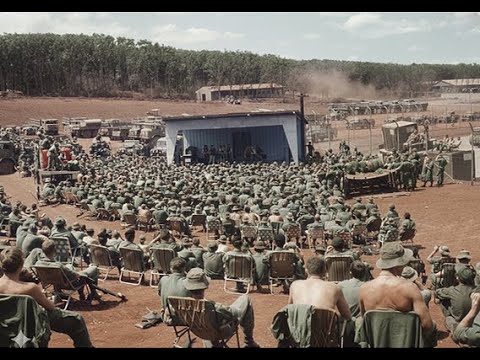
By noon, Nui Dat becomes a shimmering furnace. The red volcanic dust invades pores, weapons, and food alike, turning sweat-streaked bodies into part of the landscape itself. Men fill sandbags and burn latrines under a merciless sun, their dark humor the only shade.
As shadows lengthen, the base exhales. Two lukewarm tins of Victoria Bitter, cooled in ammo-box fridges, become a sensory bridge back to Brisbane. “She’ll be right, mate” is murmured over two-up and touch rugby, every SLR still within arm’s reach.
Then twilight falls, and the transformation is chilling. Cam paint blurs faces into silhouettes; claymores are checked with obsessive care. The ambush party flows through the wire and vanishes into the mud, becoming ghosts who will lie motionless for twelve hours.
By 22:00, the picket takes over—two hours on, four off—filtering cricket song from the click of a rifle. As gray bleeds into the eastern sky, the cycle closes. Stand-to.
What would you have found hardest to endure—the waiting, the heat, or the dark?
Report this article
Select a reason for reporting:






