The valley was supposed to be loud. Every patrol that left the Australian base at Tarin Kowt was announced, tracked, and described in real time by a network of Taliban spotters armed with two-dollar radios. The Australians called them ‘the idiots’—boys on motorbikes, men on rooftops—but their chatter was deadly accurate. By the time a patrol reached the green zone, the enemy already knew how many men were coming and from which direction.
Then, one day, the radio net went silent. Not the tense silence that preceded an ambush—that silence was a countdown. This was different. It was the silence of men who had nothing to report. And in that silence, a signal sergeant found a pattern that would change how the regiment moved through the valley for the rest of the war.
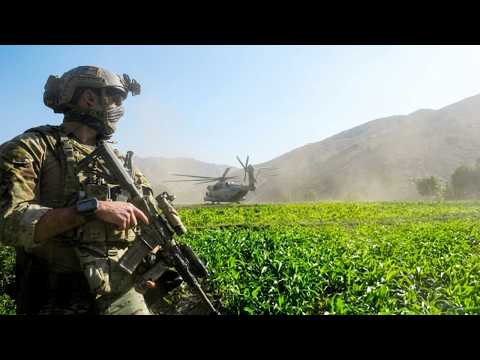
To understand why that silence mattered, you have to picture the terrain. Oruzgan is a province of two colors: the brown desert where a man can be seen from kilometers away, and the green zone—a narrow, dense belt of farmland along the rivers. Walls, irrigation ditches, and head-high crops turned every field into a maze. You couldn’t drive through most of it. You had to walk, slowly, at close quarters, into ground the enemy knew by heart.
For the Taliban, this was perfect. The vegetation gave cover. The ditches gave firing positions. The compounds gave both cover and human shields. And the narrow paths meant patrols could be funneled into kill zones chosen in advance. All of it was set up because the radios told them you were coming.
The Australians learned the cost of that ground early, and they learned it in blood. In July 2006, a coalition force pushed into the Chora Valley in an operation the Australians called Perth—nine days of fighting that would become, by the standards of the time, the most intense combat Australian troops had seen since Vietnam. One coalition soldier was killed, thirteen wounded, six of them Australian. An estimated 150 Taliban died. That was what it took to clear one valley in the green zone.
In terrain like that, not being seen before you arrive isn’t a minor advantage. It is often the difference between coming home alive and not coming home at all. And that’s why the radios mattered. The Taliban network was a sensor web built from people and cheap equipment—no single node was critical. You couldn’t destroy it by killing one spotter or smashing one radio. The intelligence didn’t live in a person; it lived in the exchange, voice to voice, across the ground faster than you could walk.
So when the chatter suddenly stopped, the Australians didn’t relax. They braced. Because for most of the war, silence meant the enemy had stopped describing you and started planning against you. It was a countdown. But then came a different kind of silence—one that lasted, and nothing happened. No ambush. No attack. Just an empty net and a patrol that passed through untouched. It shouldn’t have been possible.
To understand how it was possible, you have to look at the men walking through those crops—and the deliberate way they moved.
The force at the heart of this wasn’t large. Australia’s contribution to special operations in Oruzgan was built around the Special Operations Task Group—a rotating formation of roughly 300 personnel at Camp Russell inside the multinational base at Tarin Kowt. It wasn’t a single unit. It was a package. At its core were two very different kinds of soldier: a company-sized special forces element drawn mainly from the Australian Commando Regiment, and a much smaller platoon of about sixteen men from the Special Air Service Regiment—the reconnaissance specialists, the men trained above all else to see without being seen.
Different tribes, different skills, fused into one package under one command. The men who found the enemy in silence and the men who struck him hard were parts of the same machine. And as the war went on, the Australian role grew heavier. In October 2012, Australia took command of the entire combined team in Oruzgan from the Americans.
The SASR rotated through missions of about four months at a time, cycle after cycle, for years—roughly twenty rotations across the campaign. And the thing the SASR was founded for, decades before Afghanistan, was patrolling in small teams deep in hostile ground, moving in a way that draws no attention. That sounds simple. It is not.
The discipline of movement at that level is a hard craft, and it is mostly invisible in any photograph, because the whole point is that nothing happens for the eye to catch. Spacing—men far enough apart that no single observer can see the whole patrol at a glance and get an accurate count. Timing—moving in the dead hours. Crossing open ground one man at a time. Staying still for long stretches where an ordinary unit would keep advancing.
Route—refusing the obvious path, the dry track, the line of least resistance that every patrol before had taken and every fighter on the hill was watching. And absolute noise discipline, so that the radios stayed as faint as a whisper and the loudest thing in the patrol was the wind moving the crops.
There is a technique that appears in the Australian accounts of the green zone and gains real weight here. The reconnaissance soldiers did not move as one block that could be spotted and reported. Snipers and observers accompanied the main patrol from a distance, then split off and took hidden overwatch positions on the flank. Watching. Watching the ground the patrol was about to cross. Watching the man with the trigger device squatting over a buried charge.
And though the accounts focus on the bombs, the watching included watching the watchers themselves—the men whose only job was to raise a radio and talk. None of this was invented for Afghanistan. The regiment had carried these habits through decades of other wars and long years of training, where the only mission was to observe an enemy who should never learn you exist. Oruzgan was a new map for an old craft.
What was new was the radio net laid over it—and the question of whether the old craft still worked against an enemy who could talk faster than a patrol could walk.
Put these pieces together and you get a force doing something very different from a conventional patrol. A conventional patrol imposes itself on the ground. It arrives. It is loud. It can be counted. It uses the roads. The hardened SASR patrol tries very hard to leave no trace at all. Different spacing, different hours, different terrain, no clear signature for a spotter to grab and describe.
And the cost of that, on the men who did it, was enormous. This is the part that never shows up in the highlight reel. Moving this way is not comfortable. It is the exact opposite of comfortable. It means carrying exhausting weight and then moving as if you carry nothing, because a stumble is a sound, and a sound is a report.
It means lying motionless in an irrigation ditch, soaked and cramping for hours, because the moment to cross had not come, and crossing early meant being seen. It means the youngest, fittest, most aggressive men in the army consciously doing the slow, boring thing, while every instinct in them screams to push forward. Because patience in that valley meant survival, and haste meant a call on the radio.
The discipline the whole story rests on wasn’t a tactic written on a card. It was a physical ordeal, chosen by the men again and again, night after night, knowing the alternative was destruction.
Now, this is the honest heart of the whole thing, so I’ll say it plainly rather than dress it up. There is no declassified record, no public source, that proves enemy radios went quiet on a specific schedule every time an SASR unit crossed a stretch of valley. That absolute claim is not something the public record can give you.
What the record does give you is this. The doctrine, the technique, and the testimony of the men who did it all confirm that moving the way the regiment moved made a patrol very hard to detect. And a patrol you cannot see is a patrol you cannot describe. And a spotter with nothing to describe has no reason to use his radio.
That is the mechanism. From there, a silence can come that isn’t a countdown. Not magic—just a man on a hill raising his handset out of habit, looking at the ground below, and finding he has nothing to say.
So we come back to the signal sergeant and the eight words, and I owe you total honesty about what they are. The intercept teams weren’t only listening to the enemy in the moment. They were logging the frequencies, the timings, the volume of traffic, the rhythm of the net across the valley and through the night. If you record something long enough, you start to see patterns in it that no single day can show you.
And that is exactly what the signal sergeant saw. Night after night, the logs told the same quiet story: on certain patrols, along certain stretches of the green zone, the enemy net didn’t surge with running commentary and it didn’t drop into the coiled silence of an ambush. It simply went thin, confused, and ordinary. Men who never realized anyone was slipping between them, fading into nothing because they had nothing to report.
Then the patrol passed, and the ambush that silence was supposed to herald never came—because there was never an ambush to begin with. Just men no one had seen.
The eight words came out of that pattern, and I’ll be straight with you about them: I’m reconstructing the phrase, not quoting a document. But the pattern it describes is real in every way that matters. It flows directly from the doctrine, the terrain, and the testimony we’ve already walked through. When a patrol kept its spacing, its silence, and its unpredictable route, the men whose only job was to describe it had nothing to make noise about. The two silences were linked. One caused the other.
And once you see it that way, the mystery dissolves into something far more useful. The enemy’s greatest strength in that valley—the net, the constant commentary, the certainty that every patrol announced itself—was also its single fatal condition. It was a machine for describing movement, and you could starve it. Not jam it, not outshout it. Starve it. Give it no input, and for a slice of ground and a stretch of night, the machine had no output.
That is a quieter and far more interesting skill than the movie version of war. No single hero. Just a group of men doing the unglamorous, exhausting, disciplined thing correctly for hours in the dark, until the watching machine on the high ground was handed a night with nothing in it.
And notice what that did to the enemy’s confidence over time. A spotting net runs on trust—the men in the ditches trusting the men on the hills to warn them. Insert a force that sometimes moves unseen, and you have poisoned that trust. A quiet net no longer meant a reliably empty patch of ground. That doubt is corrosive. It makes a confident enemy hesitant, and a hesitant enemy slow. And in that valley, slow was the margin that kept patrols alive.
But it did not always work, and the story would be a lie without saying so. The green zone was never defeated. At best it sometimes slipped, and on the days it pushed back, it bit to the bone. No technique ever made those men safe. The same valleys that sometimes fell quiet are valleys carved with Australian names, and the record must hold both truths together.
In October 2007, Sergeant Matthew Locke of the SASR was killed in a firefight in Oruzgan—a man who already wore decorations for extraordinary courage in that same province, and who possessed every skill we’ve spent this story admiring. The ground took him anyway. And on 2 September 2008 at Khaz Oruzgan, two SASR patrols and their American and Afghan partners were hit by mortar and small-arms fire that fell, in the words of the reports, like rain on water, and did not stop for some nine hours. One American was killed, nine Australians wounded, and Trooper Mark Donaldson ran roughly eighty meters through open ground under fire to reach a wounded interpreter and carry him back—earning Australia’s first Victoria Cross in nearly forty years.
That day corrects everything. The regiment was at the peak of its craft, the day was not quiet, the net saved no one, and men were carried out bleeding or not at all. Whatever edge movement discipline gave in the green zone, it was an edge, not a shield. It changed the odds. It never abolished them.
And the bomb does not care whether you were seen. It sits buried in the track or the ditch or the wall, patient and blind, and kills the silent patrol as easily as the loud one. Much of the Australian blood in Oruzgan was spilled that way—not in a dramatic firefight, but in the sudden, flat violence of a device in the earth. You could starve the net of information and still lose a man to something that was in the ground before you arrived.
So what actually caused the quiet on the nights it came? Strip away the myth and only a few honest answers remain. First, the one best supported by the evidence: you cannot describe what you cannot see. Spacing defeats counting. Darkness and stillness defeat the passing glance. Refusing the obvious path frustrates the man watching the obvious path. A silent net, by this reading, wasn’t something done to the enemy at all—it was the absence of the thing the enemy needed. Cut the input, and the output fades on its own.
Second, unpredictability. The net wasn’t just a set of eyes; it was a set of expectations, watching the routes and hours and patterns that humans, even trained ones, fall into. A force that deliberately broke its patterns broke the enemy’s model. A spotter doesn’t just look—he looks for what he expects to see. Hand him a night that matches nothing he has learned, and for a crucial moment he may fail to recognize a patrol at all. Not silent because he chose silence, but silent because he never knew there was anything worth talking about.
There is a hard side to this worth naming, because it’s why the whole thing was fleeting. A pattern the enemy hasn’t learned yet is an advantage. The moment he learns it, it becomes a liability—it is now your signature, and signature is exactly what the net was built to catch. Every clever route becomes a used route. Every good hour becomes a watched hour. The edge could never be secured permanently. It had to be re-earned rotation after rotation, patrol after patrol, by men who couldn’t afford to cling to last week’s trick, because last week’s trick is this week’s ambush.
And third, the honest gap in the record, which I won’t dress up. Australia has a signals-intelligence agency, and the army has electronic-warfare specialists, and it is openly acknowledged that these capabilities existed and supported deployed operations. What is not publicly recorded anywhere, by any nation—deliberately—is the tactical detail of how or whether signals and electronic-warfare tools were used against insurgent radio nets alongside patrols in the Oruzgan green zone. No country discloses that. Its absence from the public record is not proof nothing happened; it is exactly what you’d expect to see whether something happened or not.
So the honest word for that door isn’t ‘jamming.’ The honest word is ‘undisclosed.’ I can tell you the capability existed. I cannot confirm it was in that valley on those nights, and no one committed to the truth can either.
Weigh those three together and the mystery turns into something far less magical and, to my mind, far more impressive. The silence on the nights it happened was probably not a trick or a gadget. It was a starved net, beaten by men who made themselves into nothing worth reporting—plus, perhaps, a margin of capability no government will ever confirm. That is all the evidence will honestly bear. Anything beyond it is a story people tell because the true version is quieter than they’d like.
But the true version has a special kind of power. Think about what it really says about that enemy network. The thing that made it so lethal—its reach, its speed, the way it turned a whole population of watchers into a single tracking machine—was also its one fatal condition. It could only describe. It could not perceive. And a machine that can only describe can be beaten, not by breaking it, but by refusing to feed it.
That lesson is far older than Afghanistan and older than the regiment, and it is the real inheritance of those horsemen in the green zone. Australia’s war in that province ended the way most such wars end—not with a battle, but with a handover. By late 2013 the Australians were leaving. In December of that year, the main base at Tarin Kowt passed to Afghan control, and the last Australians flew out of the province. Across the entire campaign, forty-one soldiers were killed and more than 260 wounded. A bill paid disproportionately in valleys exactly like the ones in this story.
So what was that quiet worth? Not victory. No single skill wins a war like that, and this one didn’t. What it’s worth is harder to carve on a memorial. On the nights it came, it was worth a patrol coming home. It was worth a spotter on a hill raising his handset, looking at ground that told him nothing, and lowering it again without a word. It was worth that narrow margin between being found and being invisible—bought not with technology, but with discipline so complete that the loudest thing in the patrol was the wind in the crops.
This is where these stories should always end: not with a myth of ghosts who could switch off a valley at will. That telling insults the men, because it makes what they did the hard way look easy. The truer picture is smaller and stronger—a group of ordinary-looking soldiers doing an extraordinarily difficult thing, hour after hour, in the dark, in the most dangerous farmland on earth, and doing it so well that on the best nights the enemy’s greatest weapon had nothing to describe.
Which brings us back to those eight words. When we hide, they hide too. The radios of the enemy only ever spoke about what the enemy could see. Remove the seeing, and you remove the speaking. The two silences were one silence—and the men who managed it on the nights they could had found the one gap in a net that held an entire valley in its grip.
The valley didn’t fall quiet by accident. It fell quiet because, for a few hours at a time, there was nothing to hear. And if this is the story of an enemy who couldn’t hear the Australians—is there a story of an enemy who couldn’t see them either? Years before, in the rice paddies and rubber plantations around Nui Dat, the Viet Cong faced the same regiment working the same trick, and gave them a name they never shook: the Ghosts. That story is already on the channel—the other half of what you just watched.
So here’s my question for you: if a network of ordinary people with cheap radios can hold an entire valley hostage, what does it mean that the only real counter was a handful of men willing to be invisible—and is that kind of patience even possible in the wars we’re likely to fight next? Tell me in the comments.
Report this article
Select a reason for reporting:






