On January 27, 1945, the silence over Auschwitz was shattered—not by gunfire, but by the crunch of Soviet boots on snow. The SS had fled, forcing 56,000 prisoners on a brutal death march westward. Those left behind—around 7,000 souls—were too ill to move, left to die in the frozen barracks. The Nazis, in a final act of panic, set fire to piles of documents, desperate to hide their crimes. But the evidence of their atrocities could not be erased: 370,000 men’s suits, 837,000 women’s clothing, and seven tons of human hair remained as silent witnesses.
When Red Army scouts of the 322nd Rifle Division stumbled upon the camp, they had no idea what they would find. The liberators, battle-hardened and accustomed to death, were unprepared for the horror that awaited them.
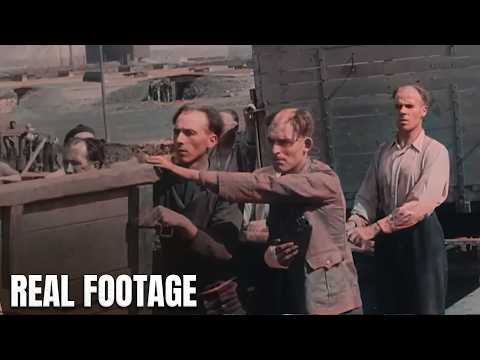
As the soldiers approached, prisoners feared they were Germans returning to finish the job. But then came the shout: “Hello, comrades! Don’t be afraid—the Germans are gone!” Those words broke the spell. Soviet soldiers, exhausted and in rags themselves, wept like children at the sight of skeletal corpses stacked like firewood and living skeletons barely clinging to life. “We shared everything we had in our backpacks with them,” one soldier recalled.
The female prisoners, realizing their liberators were real, sobbed and kissed their hands. The encounter was beyond words—a moment of humanity amidst the ruins of the Holocaust.
But liberation was only the beginning. The Red Army found 600 corpses and thousands of severely ill survivors. Two Soviet field hospitals arrived, and with the Polish Red Cross, they cared for over 4,500 former prisoners from more than 20 countries. Adults weighed as little as 25 kilograms—mere skin and bones. Despite the chaos and the cacophony of languages, doctors and volunteers worked tirelessly, diagnosing diseases like tuberculosis and typhus, providing clothing and identification, and sending over 7,000 letters to help survivors locate loved ones.
Yet, freedom came too late for some: at least 500 patients died after liberation, many from refeeding syndrome. The camp itself remained a prison—this time for German POWs forced to dismantle the very facilities they had once run.
Today, the anniversary of the liberation is honored as International Holocaust Remembrance Day. The Auschwitz-Birkenau Museum, opened in 1947, stands as a testament to the survivors and the soldiers who brought them hope. But the story of that day—of the soldiers who wept, the children who played despite their emaciated bodies, and the world that slowly learned the truth—is one that must never be forgotten.
For the children, liberation was a strange and fragile gift. More than 500 young ones had survived Auschwitz, including about 60 who had been born inside the camp itself. They had never known a world beyond barbed wire and roll call. Some could not even remember their own names.
Local residents from Oświęcim and nearby towns crossed the camp’s barriers, carrying bread, milk, and blankets. They dedicated themselves especially to the youngest survivors. Some children were adopted by these local families; others were later reunited with relatives who had somehow survived the war scattered across Europe.
One nurse from the Polish Red Cross recalled a boy of six who refused to leave his bunk. He kept asking when the guards would come to count him. It took weeks before he understood that no one would ever count him again.
Soviet and Polish filmmakers arrived on January 28, recording the evidence for the world. Their cameras captured what words could not: the piles of shoes, the mountains of suitcases, the barracks where the dead and the barely living lay side by side. When the footage was later shown in Moscow and Warsaw, even hardened officials turned away.
But the liberation of Auschwitz was not a planned objective. The Red Army had simply advanced westward through Poland, and the camp happened to lie in its path. Soviet commanders had no idea it existed. Stalin had heard rumors through intelligence channels, but no orders were ever issued to seize the site. It fell almost by accident, a grim landmark swallowed by the tide of war.
And yet the war raged on. While survivors took their first trembling steps toward life, Soviet forces continued their push toward Berlin. The camp complex was repurposed almost immediately. Its barracks became a prison for German prisoners of war, forced to dismantle the very crematoria and factories they had once guarded. Some Poles who had declared German ethnicity during the occupation were also pressed into this labor, made to haul away the wreckage of the Reich they had served.
The IG Farben synthetic rubber factory at Monowitz—where tens of thousands had worked as slaves—was methodically taken apart, its machinery shipped east as reparations. The irony was not lost on the survivors: the Nazis’ industrial killing machine was now being dismantled by its own defeated soldiers.
Back in the barracks, the sick continued to die. Of the 4,500 patients treated by Soviet and Polish medical teams, at least 500 did not survive. Some were too far gone. Others died from refeeding syndrome, their starved bodies unable to process the sudden flood of nutrients. One doctor wrote that it was the cruelest kind of death—to survive the gas chambers only to die from a bowl of soup.
The Polish Red Cross workers, many of whom had fought in the Warsaw Uprising just months earlier, threw themselves into the task with a desperate energy. They had seen their own city reduced to rubble; they had treated wounded insurgents in basements and sewers. But nothing had prepared them for this.
When they first entered the camp, they found body parts scattered around makeshift cremation pits—the SS had demolished the Birkenau crematoria before fleeing, leaving human remains half-burned in the snow. Human excrement and ash were everywhere. The barracks reeked of death and dysentery. “We worked in silence for the first hour,” one volunteer later wrote. “There were no words. Only the sound of our boots in the mud and the moans of the dying.”
Survivors suffered from an appalling catalogue of afflictions: malnutrition, bed sores, frostbite, ulcers, gangrene, typhus, tuberculosis. The medical teams triaged as best they could, but the scale was overwhelming. They navigated a cacophony of languages—Yiddish, Polish, Russian, Hungarian, French, Greek—using hand gestures and scraps of broken German to ask names, ages, symptoms.
Identification was its own ordeal. Many survivors had lost their documents, their memories, even their sense of self. Volunteers issued temporary papers and sent over 7,000 letters in the first weeks, desperate attempts to reconnect families scattered across a shattered continent. Some patients did not understand they were free. They saluted the doctors. They asked permission to sit. They lined up at dawn for roll call that no longer existed.
Among the survivors were those who could still walk—Poles from nearby towns who had been swept up in the roundups. Many simply went home. They slipped through the camp’s barriers and walked back to villages where neighbors might or might not remember them, where homes might or might not still stand.
Others fled in the opposite direction, terrified that the Germans might return. The war was not over. Soviet forces were still pushing toward Berlin, and rumors of German counterattacks swept through the camp. Some survivors, too weak to move, simply waited—for what, they did not know.
The Soviet soldiers, meanwhile, struggled to process what they had seen. They were young men, many from rural villages, who had marched across a devastated landscape from Stalingrad to Poland. They had liberated camps before—in the Baltic region, in eastern Poland—but Auschwitz was different. The scale, the industrial precision, the children.
“It may seem pitiful to say, but it is not so impactful for a soldier during an offensive to come across dead bodies,” one Soviet officer recalled. “After all, he has seen many of them. However, here it was different. These people did not die in the heat of battle. That was clear.”
The soldiers shared whatever they had—bread, sugar, tins of meat—with the children who clustered around them. The children were a shocking sight: prematurely aged bodies, sunken eyes, stick-thin limbs. And yet, impossibly, they shouted and played. They chased each other between the barracks. They made toys from scraps of wire and wood.
One Soviet soldier, a father himself, sat down on a frozen mud puddle and wept openly as a little girl of perhaps four climbed into his lap and fell asleep. He held her for an hour, afraid to move, afraid to wake her.
The war did not pause for grief. While survivors took their first steps toward life, Soviet forces pressed on toward Berlin. The camp complex was repurposed almost immediately—its barracks became a prison for German POWs, forced to dismantle the crematoria and factories they had once guarded. Some Poles who had declared German ethnicity during the occupation were also pressed into labor, hauling away the wreckage of the Reich they had served.
At Monowitz, the IG Farben synthetic rubber factory—where tens of thousands had worked as slaves—was methodically taken apart, its machinery shipped east as reparations. “The Nazis’ industrial killing machine was now being dismantled by its own defeated soldiers,” one Soviet officer observed with grim satisfaction.
Back in the barracks, the sick continued to die. Of the 4,500 patients treated by Soviet and Polish medical teams, at least 500 did not survive. Some were too far gone. Others died from refeeding syndrome, their starved bodies unable to process the sudden flood of nutrients. “It was the cruelest kind of death—to survive the gas chambers only to die from a bowl of soup,” one doctor wrote.
The Polish Red Cross workers, many of whom had fought in the Warsaw Uprising just months earlier, threw themselves into the task with desperate energy. They had seen their own city reduced to rubble; they had treated wounded insurgents in basements and sewers. But nothing had prepared them for this.
When they first entered the camp, they found body parts scattered around makeshift cremation pits—the SS had demolished the Birkenau crematoria before fleeing, leaving human remains half-burned in the snow. Human excrement and ash were everywhere. The barracks reeked of death and dysentery. “We worked in silence for the first hour,” one volunteer later wrote. “There were no words. Only the sound of our boots in the mud and the moans of the dying.”
Survivors suffered from an appalling catalogue of afflictions: malnutrition, bed sores, frostbite, ulcers, gangrene, typhus, tuberculosis. The medical teams triaged as best they could, but the scale was overwhelming. They navigated a cacophony of languages—Yiddish, Polish, Russian, Hungarian, French, Greek—using hand gestures and scraps of broken German to ask names, ages, symptoms.
Identification was its own ordeal. Many survivors had lost their documents, their memories, even their sense of self. Volunteers issued temporary papers and sent over 7,000 letters in the first weeks, desperate attempts to reconnect families scattered across a shattered continent. Some patients did not understand they were free. They saluted the doctors. They asked permission to sit. They lined up at dawn for roll call that no longer existed.
Among the survivors were those who could still walk—Poles from nearby towns who had been swept up in the roundups. Many simply went home. They slipped through the camp’s barriers and walked back to villages where neighbors might or might not remember them, where homes might or might not still stand.
Others fled in the opposite direction, terrified that the Germans might return. The war was not over. Soviet forces were still pushing toward Berlin, and rumors of German counterattacks swept through the camp. Some survivors, too weak to move, simply waited—for what, they did not know.
The Soviet soldiers, meanwhile, struggled to process what they had seen. They were young men, many from rural villages, who had marched across a devastated landscape from Stalingrad to Poland. They had liberated camps before—in the Baltic region, in eastern Poland—but Auschwitz was different. The scale, the industrial precision, the children.
“It may seem pitiful to say, but it is not so impactful for a soldier during an offensive to come across dead bodies,” one Soviet officer recalled. “After all, he has seen many of them. However, here it was different. These people did not die in the heat of battle. That was clear.”
The soldiers shared whatever they had—bread, sugar, tins of meat—with the children who clustered around them. The children were a shocking sight: prematurely aged bodies, sunken eyes, stick-thin limbs. And yet, impossibly, they shouted and played. They chased each other between the barracks. They made toys from scraps of wire and wood.
One Soviet soldier, a father himself, sat down on a frozen mud puddle and wept openly as a little girl of perhaps four climbed into his lap and fell asleep. He held her for an hour, afraid to move, afraid to wake her.
In the months that followed, the world slowly learned the truth. Soviet and Polish filmmakers had recorded the evidence—the piles of shoes, the mountains of suitcases, the barracks where the dead and the barely living lay side by side. When the footage was shown in Moscow and Warsaw, even hardened officials turned away.
The liberation of Auschwitz was not a planned objective. The Red Army had simply advanced westward through Poland, and the camp happened to lie in its path. Soviet commanders had no idea it existed. Stalin had heard rumors through intelligence channels, but no orders were ever issued to seize the site. It fell almost by accident, a grim landmark swallowed by the tide of war.
Today, the anniversary of the liberation is honored as International Holocaust Remembrance Day. The Auschwitz-Birkenau Museum, opened in 1947, stands as a testament to the survivors and the soldiers who brought them hope. But the story of that day—of the soldiers who wept, the children who played despite their emaciated bodies, and the world that slowly learned the truth—is one that must never be forgotten.
As the last witnesses pass away, the burden of memory falls to us. The seven tons of human hair, the 837,000 items of women’s clothing, the 370,000 men’s suits—these are not mere artifacts. They are the final voices of the murdered, demanding that we never look away.
What will you do to ensure that the world never forgets?
Report this article
Select a reason for reporting:






