What happens when cinema throws away the rulebook and dives into chaos? The ’70s were a decade of rebellion where filmmakers broke every convention and unleashed pure anarchy on screen. These were movies too raw, too wild, and too fearless for the mainstream. Some shocked audiences, some got banned, all of them rewrote the rules of storytelling.
From Pam Grier’s electrifying avengers to Romero’s paranoid apocalypse, from desert races to chainsaw massacres, these films didn’t just entertain—they confronted. They exposed the rot beneath the American dream, gave voice to the voiceless, and proved that low-budget grit could carry high-voltage truth. Hollywood’s status quo would never be the same.
Take Coffy (1973). When Pam Grier exploded onto screens as a nurse turned revenge-seeking vigilante, critics called it brazen, dangerous, and revolutionary. She was not a damsel waiting for rescue. She was justice with a shotgun. The film tackled police hypocrisy, addiction, and systemic rot, all wrapped in a pulpy revenge story that audiences devoured. Moral watchdogs claimed it glorified violence. Some theaters refused to screen it. Yet Coffy endured, becoming a midnight movie sensation and inspiring a wave of fearless female leads.
Then came The Crazies (1973), George A. Romero’s unflinching portrait of a country at war with itself. A military experiment leaks into a small town’s water supply, turning neighbors into monsters and sanity into collateral damage. The real monsters were not the infected, but the people in charge. The military condemned it. Distributors panicked. Some theaters pulled it after violent audience reactions. But Romero’s bleak realism and refusal to offer hope turned what was dismissed as pulp into a timeless warning.
Few films capture the loneliness of rebellion like Vanishing Point (1971). Kowalski, a former cop turned delivery driver, accepts a dare to drive from Denver to San Francisco in 15 hours. As he tears through endless highways chased by flashing lights, a blind DJ narrates his journey like a prophet calling him the last American hero. Some called it meaningless speed. Others saw it as a hymn to counterculture freedom and fatalism. Several European countries briefly banned it, labeling it nihilistic propaganda. But its imagery of dust, sunlight, and rebellion still fuels music videos and car ads.
And then there’s Switchblade Sisters (1975), Jack Hill’s fierce portrait of power in the hands of women society refused to understand. The Dagger Debs run their high school like generals, commanding respect through violence and loyalty. Beneath the wild fight scenes lies a portrait of female rage simmering under male control. Censors called it corrupting filth. Several states tried to restrict its screenings. For decades, it vanished—until Quentin Tarantino personally re-released it, calling it one of the most honest portraits of rebellion ever filmed.
Pam Grier returned in Foxy Brown (1974), no longer just an actress but an icon of vengeance. She was taking the power fantasy Hollywood reserved for men and giving it to a woman who had nothing left to lose. Studio executives feared her dominance would alienate audiences. She proved them wrong. The movie exploded across drive-ins and grindhouse circuits, making her one of the decade’s most bankable stars. Every modern action heroine owes something to Foxy’s fire.
Rolling Thunder (1977) began as a quiet story about a soldier returning home from Vietnam. By the time it hit theaters, it had become one of the most controversial revenge films of the decade. Major Charles Rane comes back a broken man. When criminals murder his family, something inside him snaps. Every act felt earned and every silence carried unbearable weight. Censors demanded cuts. Some theaters refused to screen it. One British board called it psychological terrorism. For years it was suppressed, but whispers spread, bootlegs circulated, and filmmakers like Tarantino and Rodriguez hailed it as the blueprint for the modern revenge thriller.
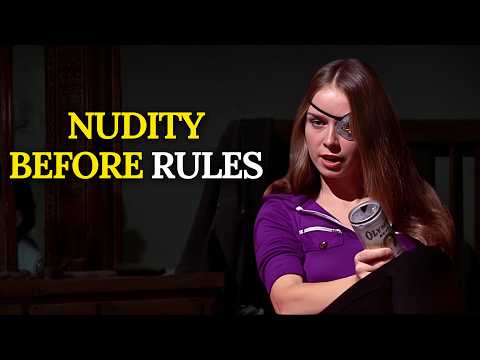
Swedish filmmaker Bo Arne Vibenius unleashed Thriller: A Cruel Picture (1973), a film so cold, so methodical, and so silent it felt like a scream breaking through censorship. A woman, brutalized and left voiceless, becomes a one-woman army trained in martial arts, marksmanship, and revenge. In America, it was banned outright, but underground audiences whispered that the full version still existed in shadowy reels traded among collectors like contraband. Christina Lindberg performed almost entirely through her eyes, her silence more powerful than dialogue. Her eye patch and cold poise became icons copied decades later in Kill Bill.
And then there’s Ilsa: She Wolf of the SS (1975), a cinematic grenade that detonated on impact. Set in a Nazi medical camp, the film follows Ilsa, a commandant conducting horrific experiments. Governments across Europe banned it instantly. Germany outlawed it permanently. Yet every attempt to bury it only made it grow stronger. Star Diane Thorne approached her role with eerie discipline, portraying evil not as madness, but as bureaucratic routine. Critics eventually reevaluated it not as history, but as nightmare.
Wes Craven’s debut, The Last House on the Left (1972), rattled audiences like few films ever had. Sold as simple shock, it was really a cry of cultural collapse. Two teenage girls fall victim to a gang of criminals, only for the violence to rebound in the most shocking way possible. Craven wanted viewers to feel complicit, to look away, and realize what that meant. The film was banned in several countries, bootlegs spread, and years later it was reappraised as one of the most important horror experiments ever made.
And we’re just getting started. From the sweltering heat of The Texas Chainsaw Massacre to the neon-lit paranoia of Taxi Driver, from the dystopian carnage of Death Race 2000 to the hypnotic nightmare of Suspiria, these films didn’t just break the rules—they set them on fire. The most controversial was yet to come.
When The Texas Chainsaw Massacre (1974) hit theaters, audiences staggered out in silence. Some fainted, others demanded refunds, but everyone remembered it. Tobe Hooper shot it on a shoestring budget, and the horror came from suggestion, from sound, from atmosphere. Critics accused it of being obscene when it was actually restrained—that irony made it even more terrifying. Britain kept it off screens for nearly two decades. Australia followed suit. Yet it spread like wildfire through word of mouth and bootleg tapes.
Behind the scenes, the chaos was real. Gunnar Hansen wore the same costume for weeks without washing. The dinner scene, filmed under scorching lights, became a genuine ordeal where exhaustion turned to madness. Hooper’s handheld camera and raw documentary tone predicted modern horror’s realism. Its legacy echoes through every slasher and every found footage film that followed.
Then came Taxi Driver (1976), born from the same streets and paranoia that fueled the grindhouse circuit. Travis Bickle prowls New York’s neon underworld, dreaming of cleansing the city through violence. Each night he drives deeper into madness. Each moment he loses one more piece of himself. After the film’s release, reports surfaced that real criminals quoted Travis during police interrogations. That terrified censors and fascinated scholars.
Robert De Niro worked twelve-hour shifts driving a real taxi through midnight streets to stay in character. The famous mirror scene was improvised. When John Hinckley Jr. later cited the film as inspiration for his assassination attempt, its reputation darkened further. But the message was never glorification—it was reflection. It showed how isolation can twist into obsession, how a society that ignores pain creates its own monsters.
Death Race 2000 (1975) was marketed as cheap futuristic mayhem. What audiences got was prophetic satire that predicted celebrity worship and political decay decades ahead of its time. In a dystopian America, drivers score points for hitting pedestrians. David Carradine played the stoic Frankenstein, while a young Sylvester Stallone stole scenes as his deranged rival. Some cities banned it, claiming it encouraged violence, yet it thrived in midnight screenings where audiences cheered every absurd twist.
Roger Corman’s crew shot on real highways dodging police and accidents. The stunts were often improvised, and actors risked their lives for shots lasting seconds. Its final image of Frankenstein killing the president and taking over the nation was outrageous in its time. But it asked the same question we still face: when power turns entertainment into destruction, who is really behind the wheel?
And then there was Suspiria (1977). Dario Argento tore apart every convention of horror, turning a gothic fairy tale into one of the most hypnotic nightmares ever committed to film. A young ballet student discovers her prestigious academy is a front for a coven of witches. The plot was secondary to the experience. Light filtered through stained glass. Shadows bled crimson. Every scream sounded like music. Goblin’s pulsating soundtrack rattled nerves. Argento’s lighting design turned every frame into living art.
Some European theaters refused to screen it, claiming it induced nausea. In the United Kingdom, it joined the infamous list of video nasties banned for nearly a decade. Yet every ban only made it more desirable. Collectors traded smuggled copies like treasure. Jessica Harper recalled filming in freezing conditions surrounded by blinding lights and deafening music—that discomfort shows in her wide, terrified eyes. Suspiria proved that exploitation could be art, that horror could be beauty, and that madness could be poetry.
But no film split audiences more violently than the one that closed out the decade’s darkest chapter—a film so brutal it ignited protests, censorship, and philosophical debate that still burns today.
That film was I Spit on Your Grave (1978), and it remains the most radioactive title on this list. Jennifer, a writer retreating to a cabin, is brutalized by a gang of men—and what follows is her cold, systematic revenge. There are no heroes, no morality, just endurance and retribution. Roger Ebert called it vile and hateful; others claimed it was the only honest depiction of trauma they had ever seen. The controversy became its oxygen. Ireland and Norway banned it outright. Britain pulled it from circulation for decades.
Director Meir Zarchi insisted the film was never about shock—it was about survival. Camille Keaton delivered a performance of raw stillness that unsettled even the crew. No score, no stylization, just realism and silence. That made it unbearable. It refused to die, traded secretly on VHS, discussed in film schools, cited by Tarantino and Eli Roth as foundational for a generation’s raw filmmaking.
So what did the ’70s leave behind? Not just banned reels and midnight legends, but a permanent crack in the wall of polite cinema. These filmmakers proved that danger and poetry could share the same frame—that grit could carry truth. Every fearless heroine, every uncompromising horror, every film that refuses to look away owes a debt to this anarchic decade.
The rulebook was burned, and the ashes still smolder in everything we watch today. The question was never whether these films went too far—it was whether we could handle what they showed us about ourselves.
Which of these ’70s rebels do you think pushed cinema the furthest—and would you dare to watch it today? Sound off in the comments below.
Report this article
Select a reason for reporting:






