The jungle wasn’t supposed to win. Not against a general with twenty-two years of unblemished service, a stopwatch around his neck, and a green notebook full of certainties. Brigadier Marcus Whitfield believed in productivity, in inputs and outputs, in the holy arithmetic of war. He had briefed two Secretaries of Defense. He had never once admitted failure. And on a spring morning in 1970, he stepped off a helicopter into the red dust of Nui Dat expecting to measure six Australian commandos and bury a myth.
He was wrong before he even started walking.
The commander of the commando team, a sun-scorched sergeant named Thomas Sheridan, didn’t wait for the exercise to begin. His men had already been in position for forty minutes, sitting in the shade, eating cold rations with their fingers, their weapons resting on their knees. No name tapes. No radios. No briefing tent. Just a folding table with a single map and a young Australian corporal who shrugged and said, “That’s how they work.”
Whitfield wrote it down anyway. Early deployment. Unscheduled. No coordination. The first entry in what would become four pages of increasingly desperate handwriting.
He explained the exercise with the clipped procedural tone he’d used in a hundred briefings. A simulated reconnaissance-in-force against a company-sized OPFOR. Objectives evaluated on speed of advance, engagement ratio, communications discipline. Then he asked Sheridan to confirm his radio call sign for the record.
“We won’t be carrying radios.”
Whitfield actually laughed. A short, disbelieving bark. The exercise wasn’t designed to be evaluated that way. Sheridan looked at him with an expression that held neither hostility nor even interest. “The evaluation is the general’s problem. Not mine.” Then he picked up his weapon, gestured to his men, and walked toward the tree line without waiting for a reply.
Whitfield stood there for ten full seconds, the stopwatch still in his hand, unstarted. He felt something he hadn’t felt in a very long time: the sharp sting of being professionally ignored. He followed them because there was nothing else to do.
Within the first three hundred meters, he realized he wasn’t walking with soldiers conducting an exercise. He was walking with men conducting a hunt. The fact that the prey was a simulated American company instead of a real enemy didn’t seem to change their manner by a single degree.
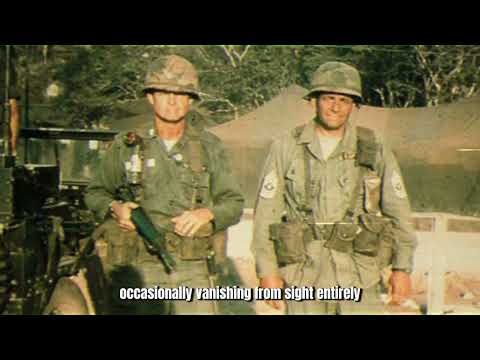
They moved in a loose, irregular formation that broke every standard American squad tactic. They spread wide through the scrub, vanishing from sight for minutes at a time before reappearing exactly where they should have been. Whitfield’s own boots, standard issue and well-worn, sounded like drumbeats on the forest floor compared to the near-total silence of the men ahead. He tried to log their pace in his notebook and found, to his growing frustration, that he couldn’t keep them in sight long enough to time anything.
Fifteen minutes in, he had failed to collect a single valid data point.
The first contact came without warning, and it came from behind him. Whitfield was so focused on watching the commandos ahead that he never noticed the two American OPFOR soldiers who had crept to within twenty meters of his flank. He only became aware of them when the youngest member of Sheridan’s team, a quiet, wiry corporal named Aaron Doyle, rose from a shallow scrape in the ground directly beside the Americans and, with a movement that was almost invisible, touched each man on the shoulder in turn. Under exercise rules, a touch counted as a kill.
Two American soldiers were dead before they knew a threat existed.
Whitfield spun toward the sound—if it could be called a sound—and demanded to know how long Doyle had been there. Doyle, without a trace of pride in his voice, said he’d been in that position since before the general arrived at the assembly area. He’d watched Whitfield walk past him twice.
Whitfield felt his stomach drop. He looked at his stopwatch, still reading zero, and understood with the first real flicker of horror that he had walked within arm’s reach of a man lying motionless in the dirt and never seen him once.
By the midpoint of the exercise, the green notebook was nearly useless. Scribbled-out timings. Incomplete observations that faded into nothing because the events he was trying to measure kept happening in places his eyes weren’t pointed.
The American company—sixty men, equipped with radios and standard doctrine—was being systematically infiltrated, observed, and neutralized without a single shot fired in a real engagement. And worse, they never realized how exposed they were until Sheridan’s team simply appeared inside their lines to announce their deaths.
The company commander, a competent young captain named Ray, radioed a report that was, by exercise standards, almost incomprehensible in its shock. His forward listening post had been eliminated without a single warning shot. His command element had been penetrated to within grenade range without a single guard seeing movement. Twice he requested a pause to re-secure his perimeter. A request Whitfield would normally have granted instantly—but he found himself hesitating, because pausing the exercise felt like admitting the entire basis of the evaluation had collapsed.
Then, near the third hour, deep in a dense stand of trees that swallowed sound entirely, Whitfield finally understood the true scale of what he was witnessing. It had nothing to do with stealth or speed. Sheridan’s team had stopped moving altogether and taken a static observation position on a low rise overlooking a bend in a dry creek bed. Whitfield, irritated by the sudden loss of momentum, demanded to know why they’d stopped. Sheridan pointed without a word toward the creek below.
Whitfield followed the gesture and saw nothing. Just water-smoothed stones and ordinary tangles of vegetation. He said so sharply. Sheridan simply waited.
Two minutes passed. Then three. Then, with a suddenness that made Whitfield’s pulse jump involuntarily, a squad of American OPFOR emerged from cover along the far bank, moving with perfect discipline in a textbook formation Whitfield himself had drilled into thousands of soldiers—heading directly toward what they believed was an empty rise.
Sheridan’s team didn’t move to intercept. They just watched, patient and utterly still, as the American squad took a wide, unnecessary detour around a position they’d clearly marked as dangerous, adding fifteen minutes to their advance to avoid a threat that wasn’t actually where they thought it was.
When Whitfield asked why Sheridan hadn’t engaged them the moment they appeared, the sergeant said something Whitfield would secretly repeat to himself for years afterward. He said there was no value in killing men who were already lost. The information that mattered wasn’t the body count. It was that the enemy now believed the entire rise was fortified, and would waste the rest of the day proving it to themselves.
Whitfield had spent his career believing that engagement was the only currency of value. In one sentence, a nameless sergeant had explained an entire philosophy of war that made his own record look like a child’s arithmetic exercise.
The moment that would define the entire report—the moment that eventually reached the desks of Washington despite every attempt to contain it—happened almost by accident an hour later, when the exercise’s command structure quietly collapsed.
Captain Ray, still stinging from the earlier infiltration, had repositioned his command element into a position he considered impregnable, deep inside his own perimeter. The site was fortified according to every American standard: two full platoons ringing it, guards at every possible approach. Whitfield had personally reviewed the site selection over the radio and approved it without reservation.
Forty minutes after that approval, Sheridan’s team walked directly into the heart of that headquarters. Doyle tapped Captain Ray on the shoulder from less than three feet away, ending the exercise’s designated command authority mid-sentence while Ray was issuing an order over the radio net.
The broadcast was recorded—the American officer’s voice cutting off in the middle of a command, followed by a long, stunned silence that was later transcribed verbatim in the after-action report because no one could summarize it any other way.
When Whitfield demanded to know how six men in an environment containing sixty rifles had reached the center of a fortified position without being touched, Sheridan’s answer was simple to the point of insult. He said the Americans had built their perimeter to stop an attack. His team hadn’t attacked anything. They had simply walked in as if they belonged there, at a pace and posture that never triggered a single guard’s instinct to raise an alarm, because their movement never looked like a threat until they were already standing in the command post.
It wasn’t a tactic Whitfield had a classification for. It wasn’t in any manual he had written or read. It was, quite literally, a thought that had never occurred to the American doctrine he had spent his career perfecting. And the fact that it had never occurred to him felt, in that moment, like the most damning entry in his record—except that he never wrote it down.
What happened in the final hour of the exercise was, on paper, anticlimactic—which is precisely what made it unbearable for Whitfield. With the American command structure declared dead and the exercise’s outcome a lopsided defeat by any honest measure, Sheridan’s team didn’t celebrate. They didn’t huddle to debrief. They didn’t even discuss what had happened. They simply re-formed their loose file and began walking back toward the extraction point at the same quiet, unhurried pace they’d used all day, as if the past three hours had been an afternoon stroll rather than the systematic dismantling of an American training exercise designed by a general with twenty-two years of service.
Whitfield walked behind them, his notebook now closed, his stopwatch still displaying a useless series of partial timings, and found himself for the first time in a long while with nothing to say. He tried once to ask Sheridan how his team trained for this level of environmental awareness, expecting a technical answer about drills or schedules he could take back and replicate in a training program. Sheridan considered the question for a long time, then said most of it wasn’t training in the sense the general meant. It was more like unlearning. Unlearning the instinct to make noise when you feel tense. Unlearning the need to talk on a radio just to feel less alone in the dark. Unlearning the assumption that help is on the way—because the moment you build your plan around someone else arriving to save you, you’ve already handed the enemy the only piece of information they actually need: that you’re waiting.
Whitfield turned that phrase over in his mind the whole way back. We don’t wait. It wasn’t a challenge. It wasn’t even a philosophy, not exactly. It was just a fact about how these men had decided to live inside a hostile environment. And it made every layer of infrastructure Whitfield had spent his career defending—the radio nets, the fire support coordination, the elaborate evacuation plans—look less like strength and more like an extraordinarily expensive way of telling the enemy exactly where you were and how long you intended to stay.
A second incident occurred that afternoon, smaller than the command post collapse but somehow more personally humiliating to Whitfield because it happened to him directly rather than to the exercise as a whole. As the team moved toward the extraction assembly area, pushing through a stretch of low scrub that offered almost no cover, Whitfield found himself walking beside Sheridan for the first time all day—close enough for an actual conversation—and made the mistake of trying to reclaim some authority on a day that had already stripped him of most of it.
He asked, in the tone of a man conducting a final inspection, whether Sheridan’s team had a contingency plan in case the exercise scenario had been real. In case they’d walked into a genuine ambush instead of a simulated one. It was a fair question, the kind Whitfield had asked a hundred different units a hundred times. He expected the usual answer: an alternate rally point, a pre-coordinated extraction window, a fire support plan held in reserve.
Sheridan didn’t change his walking pace. He said that if the scenario had been real, they would have known it was coming about forty minutes before the Americans did—because they would have noticed indicators the Americans had never trained to look for. And by the time contact happened, they would already have been somewhere else.
Whitfield pressed further, asking what would happen if they were wrong, if the enemy somehow managed to surprise them despite everything. Sheridan finally stopped walking for a moment and looked at him with an expression that wasn’t harsh so much as genuinely puzzled—the way a man looks at a question that assumes a premise he’s never had to consider.
He said being wrong wasn’t really a category they planned for. Not because they believed they were invincible, but because the entire approach existed specifically to make the probability of error as close to zero as six men in a jungle could manage. Every choice—from their boots to their silence to the total absence of a radio that could be located—was a small vote against the odds of failure, repeated thousands of times until the odds tilted in their favor through sheer accumulated insistence.
Whitfield, who had spent his entire career building elaborate contingency structures because he assumed failure was statistically inevitable at some point, found he had no immediate reply to a man who had built his entire operational philosophy around refusing to accept that premise in the first place. He didn’t write anything in his notebook for about ten minutes after that—the longest gap of the entire day. Because for the first time since the exercise began, he wasn’t even sure which column this conversation belonged in.
The extraction itself, when it finally came, provided one last quiet correction to everything Whitfield had assumed about how this day would end. He radioed almost spontaneously for an extraction helicopter for the combined element, assuming that after roughly five hours in difficult terrain, both his team and Sheridan’s would want the fastest possible route back to the assembly area. The reply came back through his own radio operator, and it was laughably brief. Sheridan’s team would be walking out. They had a pickup point about six kilometers from the exercise boundary. They’d reach it before dusk, and they saw no reason to introduce a helicopter into an airspace over a province where the sound of rotor blades carried for miles and told every listening ear exactly where a valuable unit was located, exercise or no exercise.
Whitfield found himself, after five hours of exhaustion and sunburn and moral collapse, in the strange position of being offered a helicopter by men who had outperformed him on every measurable axis and had refused it. He took the helicopter. He would remember later that he took the helicopter, and that Sheridan’s team disappeared into the trees on foot without a single one of them looking back at the aircraft settling into the clearing behind them.
From the air, he watched the green canopy swallow six men who had spent an afternoon demolishing an American general’s professional worldview.
He began drafting the report in his mind, and he knew before a single word touched paper that it would be the hardest document he had ever written. Not because the facts were complicated—but because every fact pointed in a direction his twenty-two-year career had been spent walking away from.
In the recommendations section, where he had always filled paragraphs with dense amendments and training revisions, he wrote a single sentence. He wrote that the greatest tactical advantage observed during the evaluation was not a piece of equipment, a formation, or a weapons system, but the deliberate absence of reliance on others—and that no amount of additional funding or technology could replicate what these men had built simply by refusing to need it.
The report was filed, reviewed, and quietly shelved. But copies survived, tucked into liaison files and personal archives, and the phrase a nameless sergeant had spoken in the middle of a jungle exercise began to pass almost randomly through the ranks of officers who read it. “We don’t wait.”
It stopped being a throwaway comment from a man with no name tape and became something closer to a quiet, bitter joke among certain circles of American officers—shorthand for the day the Pentagon’s own evaluation system was used to prove, with the general’s own stopwatch, that the system itself was the vulnerability.
Whitfield never spoke about the exercise publicly again. But those who served with him in the years that followed noticed a change none of them could fully explain at the time. The man who had measured every operation by rounds fired and minutes elapsed began, quietly and without ever crediting the source, to push for smaller, more independent reconnaissance elements within his own command.
Somewhere in that file cabinet in Arlington, the report still exists. Four pages of a general’s increasingly desperate handwriting, followed by one quiet sentence that demolished twenty-two years of certainty in a single afternoon.
Because in the end, the lesson wasn’t really about six men who outclassed sixty in the jungle. It was about what happens when the entire confidence structure of a superpower is built on the assumption that someone will always come to help—and then confronts reality for the first time.
A handful of men had decided, long before Whitfield landed on that airstrip, that they would not wait for anyone at all.
So here’s the question that still hangs over that buried file: if the most powerful military in the world can be out-thought by six men who refused to carry radios—what else is being measured that we’re still not seeing?
Report this article
Select a reason for reporting:






