London, spring 1980. The Iranian Embassy in South Kensington stood as a quiet diplomatic outpost—until six armed men stormed through its doors, turning a routine Wednesday into a national crisis. Within minutes, 26 people were hostages, including a police officer and journalists. The gunmen, members of the Democratic Revolutionary Front for the Liberation of Arabistan, demanded the release of 91 prisoners held in Iran. If their demands weren’t met, they threatened to blow up the embassy and kill everyone inside.
The world watched as the siege unfolded over five agonizing days. Negotiations stalled, and the British government, led by Home Secretary William Whitelaw in Margaret Thatcher’s absence, refused to give in. As the deadline passed and a hostage was executed, the situation turned desperate. That’s when the SAS—Britain’s elite, shadowy special forces—were called in.
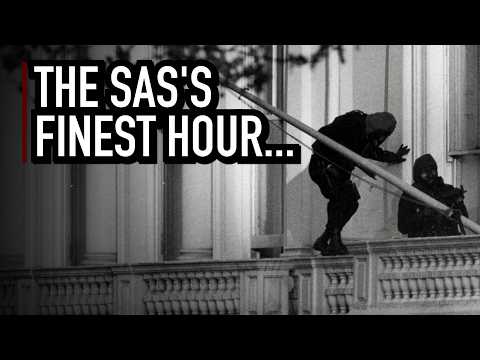
For the first time, the world would witness the SAS in action. But before the raid, the gunmen’s motives and the hostages’ ordeal would grip the nation. The siege began on April 30th, when the six men, armed with pistols, grenades, and submachine guns, burst into the embassy. PC Trevor Lock, on duty and carrying a revolver, was quickly overpowered. He hid his weapon, refusing to remove his coat, and became an unlikely hero.
Inside, hostages included Iranian nationals, British staff, and journalists like Sim Harris and Chris Kramer of the BBC. They had come for visas or interviews—now they were pawns in a political standoff. The gunmen, led by 27-year-old Oan Ali Mohammed, were members of the DRLA, seeking independence for Arabistan, an oil-rich province in Iran. They had been trained and equipped by Iraq, led by Saddam Hussein.
As police surrounded the building, the gunmen made their first demand: release 91 Arab prisoners by noon the next day. The British government’s emergency committee, Cobra, convened. They refused to negotiate under duress. Meanwhile, the SAS began preparations. Two teams, Red and Blue, arrived from Hereford, equipped with tear gas, stun grenades, and explosives. They moved into a neighboring building, ready to strike at a moment’s notice.
On day three, the gunmen’s frustration grew. They demanded a BBC broadcast of their statement and safe passage out of the UK. The BBC aired a shortened version, infuriating the gunmen. They threatened to kill British hostages first, and tensions escalated. Police negotiators, led by Max Vernon, tried to buy time, but the gunmen’s patience wore thin.
By day five, the SAS had a plan. They discovered a skylight and prepared for a rooftop assault. But then, at 1:45 p.m., three shots rang out. The body of press officer Abbas Lavasani was thrown from the front door. The SAS was ordered to move. Operation Nimrod was about to begin.
The assault began at 7:23 p.m. on May 5th. Four men from the Red Team abseiled down the rear of the building while another four hurled a stun grenade through the unlocked skylight. The plan called for explosives to be detonated in sync with the descent, but one soldier became tangled in his rope, delaying the blast. His teammate helped free him, and they smashed through a window with a sledgehammer instead. The shattering glass was the first warning Muhammad had that the raid was underway.
Inside, chaos erupted. A fire broke out as the teams swept through the smoke-filled corridors. Sim Harris, the BBC journalist, had just entered a room when the assault began. He was forced to flee again, crawling out onto a first-floor balcony as grenades detonated behind him. “They were throwing in grenades and the room was burning,” he later recalled. “I was ready to jump. I thought, well, if I could get out of this with a broken leg I would be all right.”
PC Trevor Lock, still in his coat, heard the explosions and knew the moment had come. He tackled Muhammad to the ground, preventing the gunman from escaping or attacking the troops. In the ensuing struggle, Muhammad was shot dead by an SAS soldier. Meanwhile, the Blue Team swept through the ground floor and cellar. In a panic, one of the gunmen opened fire on the separated male captives, killing Ali Akbar Samad Zade and wounding two others.
The operation lasted just seventeen minutes. When the smoke cleared, five of the six gunmen were dead. The only survivor was Fowzi Badavi Nejad, a 22-year-old who had been the youngest of the group. He had been promised that a Jordanian ambassador would intervene before any violence occurred—a promise that proved hollow. Nejad was captured alive and would spend the next 27 years in British prisons.
Outside, journalists and protesters watched as hostages were led to safety. Sim Harris climbed from one balcony to another in full view of the cameras, his escape broadcast live to the nation. The SAS had succeeded, but the cost was heavy: two hostages dead, several wounded, and a building gutted by fire.
In the aftermath, the SAS were thrust into the global spotlight. General Sir Michael Rose, who led the operation, reportedly called the siege “the worst thing that had ever happened to the SAS.” The unit had been a shadowy legend before; now the world knew their name. Action figures were manufactured in their likeness. Books and films followed. The Iranian Embassy Siege had transformed Britain’s covert operatives into household heroes.
But the siege also had broader consequences. Just four months later, Iraq invaded Iran, beginning an eight-year war that would cost millions of lives. The DRLA’s cause was forgotten in the conflagration that followed. The Iranian Embassy in London remained closed until 1993, its walls scarred by fire and bullet holes.
Fowzi Badavi Nejad, known as “Fuzzy” in prison, was a quiet inmate who caused no trouble. In the early 2000s, new evidence emerged—testimony from hostages who said he had repeatedly refused to kill, saving more lives than the other gunmen. He wrote letters of apology to his victims. In October 2008, he was released after serving 27 years and allowed to remain in the UK.
The siege changed everything. It changed how governments responded to terrorism, how the media covered hostage crises, and how the public viewed special forces. Margaret Thatcher’s government emerged stronger, and the SAS became a symbol of decisive action. But for the hostages who lived through those six days, the memories remained raw—the sound of gunfire, the smell of smoke, the terror of not knowing if they would see another morning.
Yet for all the official silence that followed Operation Nimrod, the most revealing accounts came not from generals or politicians but from the hostages themselves. In the months after the raid, debriefings and quiet interviews painted a portrait of six days that defied the simple narrative of villain and victim. Several captives described moments of strange, uneasy courtesy—gunmen who apologized for the cramped conditions, who shared food, who seemed as frightened as their prisoners. One hostage recalled that Oan Ali Mohammed had wept openly when news of the first deadline’s collapse reached him, not from rage but from despair.
The negotiators, too, emerged with complicated feelings. Max Vernon, the chief inspector who had spent five days on the field telephone, later admitted that he had genuinely believed a peaceful resolution was possible until the final hour. “We were talking to men who had convinced themselves they were soldiers in a war,” he said. “But they were boys with borrowed guns and promises nobody intended to keep.” The field telephone itself became an artifact of quiet fascination—a simple military handset that had carried the weight of twenty-six lives.
Meanwhile, the political fallout rippled outward in directions few had anticipated. The Iraqi government, which had trained and bankrolled the DRLA, issued a flat denial of any involvement, calling the accusations a British fabrication. But the 2014 academic study that examined the weapons and the diplomatic bags would later leave little doubt. The siege, in hindsight, looked less like an isolated act of desperation and more like a proxy strike in a conflict that was already gathering its forces.
Within the SAS itself, the reckoning was more personal. The soldiers who had abseiled down the embassy walls that evening were never publicly named, and most refused all interviews for the rest of their lives. But one, speaking anonymously years later, described the raid as “seventeen minutes of pure noise”—the stun grenades, the shouting, the crackle of the fire, and then the sudden, ringing silence. He said the hardest part came afterward, walking past the bodies of men his own age who had died for a province most Britons could not have found on a map.
The press, meanwhile, had found its own heroes and villains. Sim Harris, the BBC sound technician who had crawled across the balcony in full view of the cameras, became an unlikely celebrity. He returned to work within weeks, but the footage of his escape played on loop for years. Chris Kramer, whose exaggerated illness had won him an early release, was haunted by a different guilt—he had left his colleagues behind. “I got out because I made myself sick,” he said in a rare interview. “I’ve never quite forgiven myself for that.”
And then there was PC Trevor Lock. The officer who had hidden his revolver beneath his coat for five days, who had tackled a gunman to the ground in the middle of a firefight, was awarded the George Cross. He accepted it quietly and returned to duty, but the siege had marked him. He later confessed that he still flinched at the sound of breaking glass.
As the months turned into years, the Iranian Embassy Siege settled into British memory as a story with a clean ending—the good guys had won, the bad guys had lost, and the SAS had proven their worth. But the deeper truth was messier. The DRLA’s grievances had not vanished; they had simply been drowned out by the roar of the Iran-Iraq War.
The embassy building on Prince’s Gate stood blackened and silent for thirteen years, a charred monument to a crisis that had ended in seventeen minutes but whose echoes would not fade. When it finally reopened in 1993, the diplomats who walked through its restored corridors did so under a new shadow—one shaped by the memory of smoke, gunfire, and the strange, fleeting mercy of men who had been told they were fighting for a homeland.
In the years that followed, Operation Nimrod became a case study taught in military academies and a cautionary tale whispered in diplomatic corridors. The SAS’s seventeen-minute assault had rewritten the rules of counter-terrorism, but it had also shattered the myth of the quiet, invisible operator. Recruiters noticed a surge in applications—young men drawn by the grainy footage of black-clad figures descending from a burning rooftop. The unit that had once existed in rumor now had a public face, and some within its ranks quietly mourned the loss.
For the hostages, the reckoning was slower. Some wrote books, others never spoke of it again. Sim Harris returned to the BBC and spent decades as a sound technician, but he never watched the footage of his own escape. PC Trevor Lock, the George Cross recipient, retired from the force and lived out his years in relative obscurity, flinching only when glass broke unexpectedly. The embassy’s scarred walls were rebuilt, but the memories of those six days remained lodged in the bones of everyone who had been inside.
Fowzi Badavi Nejad, the lone surviving gunman, vanished into the quiet anonymity of a life in Britain—a man who had come to London as a soldier and left as a ghost. He had been promised a homeland and given a prison cell; he had been told he was a liberator and became a cautionary footnote. Whether he found peace, no one could say for certain. The letters of apology he wrote were never made public, and his victims never spoke of receiving them.
And so the story closes—not with a bang, but with the slow erosion of memory. The embassy on Prince’s Gate once again hosts diplomats and dignitaries, its corridors scrubbed clean of soot and blood. The SAS remains a legend, its operatives still faceless, still silent. But the question that lingers, decades later, is not who won or lost—it is what any of us would do, trapped between borrowed guns and broken promises.
What would you have done, had you been inside those walls—hostage, gunman, or negotiator, with the clock ticking toward noon?
Report this article
Select a reason for reporting:






