On the misty morning of March 29, 1879, the British camp at Khambula stood as a lone bastion of defiance in the heart of Zululand. The air was thick with tension, the silence broken only by the occasional snort of horses and the low murmur of soldiers. They knew the Zulu army was coming—a force of 20,000 warriors, fresh from their triumph at Hlobane just a day earlier, their blood still hot with victory. For Colonel Evelyn Wood, a man who had survived being trampled by a giraffe and earned the Victoria Cross in India, this was the moment he had prepared for. His 2,000 men, entrenched behind a network of wagons, earthworks, and a stone redoubt, awaited the onslaught. The Zulus, confident and fierce, believed they were invincible. But Wood had other plans.
As the sun rose higher, the Zulu impi appeared, a dark tide sweeping across the rolling hills. They moved with disciplined precision, adopting the legendary horns of the buffalo formation. The right horn swung around to flank the camp from the north, while the left horn advanced up the steep southern slope. The main chest halted a mile east, waiting for the horns to link up. But the Zulus had not reckoned with the British determination—or their firepower.
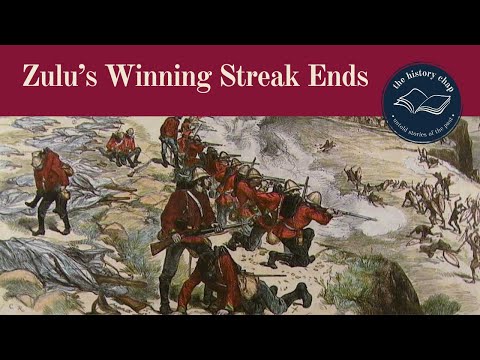
“We are the boys from Isandlwana!” the young warriors shouted, ignoring their elders’ orders to wait. They charged prematurely, their enthusiasm overriding discipline. Wood seized the moment. He ordered Colonel Redvers Buller to take a hundred mounted men and provoke the right horn into an attack. Buller’s men fired a volley and then galloped back, drawing the Zulus into the range of the British guns.
The artillery roared, case shot tearing through the Zulu ranks, but still they came. Wave after wave crashed against the wagon laager, only to be met with relentless rifle fire. The defenders, hardened by years of colonial warfare, stood firm. “They take a lot of stopping,” one soldier later remarked, but stop them they did. The right horn faltered, then fell back, leaving the ground littered with Zulu dead.
Meanwhile, the left horn had finally reached the crest of the ridge, only to be pinned down by the 13th Regiment’s deadly volleys. Hand-to-hand fighting erupted at the cattle laager, where Zulu warriors, some armed with captured Martini-Henry rifles, fought with desperate courage. But the British, though outnumbered, held their ground. Private William Groves stood over his fallen color sergeant, fighting off Zulu attackers until help arrived. The laager became a killing ground, and the Zulus, unable to break through, began to waver.
By mid-afternoon, the main chest launched its final assault, but Wood had shifted his guns and infantry to meet the threat. The Zulu charge broke under the withering fire, and they took cover in the rocky folds, sniping at the British with captured rifles. Wood, calm amid the chaos, borrowed a private’s rifle and shot two Zulu indunas, then ordered a bayonet charge to clear the snipers. The 90th Regiment surged forward, led by Major Robert Hackett, pipe still in his mouth, until a bullet struck him down. The British pushed on, and the Zulus, exhausted and demoralized, began to retreat.
At 5:30 PM, Wood unleashed his mounted troops. “No quarter, boys! Remember yesterday!” they cried, charging after the fleeing Zulus. For seven miles they pursued, cutting down the stragglers until darkness fell. The battlefield was strewn with 1,500 Zulu dead, their bodies a testament to the ferocity of the fight. British losses were light—18 killed, 65 wounded—but the victory was decisive. The Zulu winning streak had been shattered, and the myth of their invincibility lay broken on the slopes of Khambula.
Yet even in triumph, controversy lurked. Private John Snook of the 13th Regiment wrote a letter describing how, the day after the battle, the British had come across 500 wounded Zulus begging for mercy—and shown none. The letter sparked outrage in Britain, but Wood denied the allegations, and the truth was buried in the fog of war. What remained was the stark reality: Khambula was a turning point. King Cetshwayo would never again field such a massive army, and the British, finally victorious, saw the beginning of the end for the independent Zulu Kingdom.
But the story of Khambula did not end with the pursuit. In the days that followed, the British camp became a place of grim accounting. Burial parties worked from dawn to dusk, digging long trenches for the Zulu dead, while the surgeons’ tents overflowed with wounded men from both sides. The stench of blood and powder clung to the ridge, and even the victors moved through the camp with hollow eyes.
Wood, ever the pragmatist, wasted no time in consolidating his position. He knew that a single victory, however decisive, would not end the war. Reinforcements were already on their way from Natal, and Lord Chelmsford—still smarting from the humiliation of Isandlwana—was desperate for a triumph of his own. “The Zulu is not beaten yet,” Wood wrote in a dispatch to headquarters, “but his horns have been blunted, and he knows it.”
Among the British rank and file, the mood was more complicated. The men of the 13th and the 90th had fought with discipline and courage, but the sight of hundreds of Zulu wounded being killed after the battle—if Snook’s account was to be believed—left a stain that no amount of official denial could erase. Some soldiers wrote home with pride; others wrote nothing at all.
Far to the south, at his royal kraal at Ondini, King Cetshwayo received the news of Khambula with a heavy heart. He had warned his young warriors not to attack the British in their entrenchments, but his orders had been ignored. Now, thousands of his best men lay dead, and the regiments that had won at Isandlwana were shattered. The king summoned his remaining indunas and spoke to them in the great cattle enclosure, his voice carrying the weight of a kingdom’s fate.
“The white man has shown us his teeth,” he is said to have told them. “We cannot fight him in the open any longer. We must use the land, the rivers, the hills. We must make him bleed slowly, or we will lose everything.”
But even as he spoke, the British were already moving. Chelmsford, determined to redeem his reputation, was preparing a second invasion—this time with overwhelming force. The coastal column under Colonel Pearson, still besieged at Eshowe, would soon be relieved. And the final showdown at Ulundi, the royal capital, was drawing near.
At Khambula, Colonel Evelyn Wood stood on the redoubt at sunset, looking out over the battlefield. The wagons had been repaired, the laagers restocked, and the men were drilling again. But Wood knew that the war was far from over. He had won a great victory, but the Zulu Kingdom, though wounded, was not yet dead.
He turned to his orderly and said quietly, “We have given them a lesson they will not forget. But mark my words—there will be more blood spilled before this is done.”
The sun dipped below the horizon, casting long shadows across the ridge. The British had turned the tide, but the tide, once turned, does not stop flowing. The war would go on, and the fields of Zululand would drink deep before the final peace was made.
The weeks that followed Khambula were a strange limbo of drill, patrols, and waiting. Wood pushed his men relentlessly, keeping them sharp, but the camp itself seemed to settle into a rhythm of grim routine. Burial details still turned the earth each morning, and the surgeons’ tents slowly emptied as the wounded either recovered or succumbed.
It was during this lull that a new face arrived from Natal—a young officer named Lieutenant Henry Lysons, fresh from England and eager to prove himself. He had missed the great battle by a matter of days, and the veterans of the 13th and 90th regarded him with the weary amusement reserved for greenhorns.
“You’ll get your chance soon enough,” one sergeant told him, gesturing toward the empty plains to the east. “The king’s men are still out there, and they haven’t forgotten what happened here.”
Lysons would not have to wait long. Word came from Chelmsford’s headquarters that the main advance on Ulundi was being prepared, and Wood’s column was ordered to move south to join the concentration of forces. The men broke camp with practiced efficiency, the wagons creaking into motion along the dusty track.
But the Zulus had not been idle either. Cetshwayo, stung by the defeat at Khambula, had dispatched envoys to the British camp under a flag of truce, hoping to negotiate a peace. The envoys were received with cold formality, and Chelmsford, under pressure from London to deliver a decisive victory, refused to entertain any terms short of unconditional surrender.
“The king must submit himself and his army,” Chelmsford reportedly told the envoys. “There can be no other outcome.”
The envoys returned to Ondini with the message, and Cetshwayo, his pride wounded but his kingdom bleeding, weighed his options. Some of his remaining indunas urged him to flee north, to seek refuge among the Swazi or the Portuguese in Mozambique. Others, the fire-eaters, demanded one final stand at Ulundi.
It was during this tense period that a small but significant event occurred. A patrol from Wood’s column, now on the march south, encountered a group of Zulu women and children near a burned-out kraal. They were starving, their crops destroyed, their menfolk dead or scattered. The patrol’s commander, a young lieutenant, ordered his men to share their rations—a small mercy in a war that had shown precious little of it.
When Wood heard of the incident, he said nothing, but he did not countermand the order. Perhaps the old campaigner, who had seen so much bloodshed, understood that the war would end one day, and that the peace after would require some measure of humanity.
Meanwhile, at Ulundi, the king made his decision. He would fight. The regiments were called in, the great cattle enclosure was prepared, and the warriors gathered for what would be the last great battle of the Zulu Kingdom.
Wood’s column marched on, the men unaware that they were heading toward the final act of the drama. The ridge of Khambula was behind them now, a scar on the landscape, but its lesson—that the Zulus were not invincible—marched with them every step of the way.
The march south was grueling, the dust of Zululand coating every man and horse in a fine grey film. But on the morning of July 4th, 1879, the column finally halted on the rolling plain before Ulundi, the royal capital. Chelmsford had his victory in sight, and Wood’s veterans, who had held the line at Khambula, now formed part of the great square that would decide the war.
The Zulus came as they always did—with courage, with discipline, with the horns of the buffalo. But this time, there were no captured rifles, no rocky slopes to shelter behind. “Steady, boys, steady!” the sergeants called, and the square held. The rifles spoke, the guns roared, and the Zulu charges broke upon the British line like waves upon a cliff.
Within half an hour, it was over. The Zulu army, the last great host of the kingdom, scattered across the plain. Ulundi burned that night, and Cetshwayo fled north, a king without a kingdom. The war was done.
Wood, standing amid the smoke and the cheering, thought of the ridge at Khambula, of the men who had died there, and of the brave enemy who had charged into the guns. “It is finished,” he said quietly. “But at what cost?”
What do you think—was Khambula the true turning point, or was the war already lost for the Zulus the moment the first British boot touched African soil?
Report this article
Select a reason for reporting:






