The sun had barely crested the jagged peaks when the first rocket screamed through the valley. It was September 2008, and the dusty riverbed of Khad was about to become a slaughterhouse. A young U.S. Army sergeant, trained in the finest schools and equipped with the best gear money could buy, watched in disbelief as a small band of Australians—dirty, bearded, and utterly calm—did something his training had told him was impossible. They didn’t wait for air support. They didn’t hunker down. They attacked.
Within seconds, the sergeant realized he was witnessing a kind of war he had never been taught. These men fought like they had been born in the dust and heat, not like soldiers who had flown in from a base. And as the Taliban poured fire from the ridges, one young Australian, Mark Donaldson, would do something that would earn him the Victoria Cross—and leave the Americans wondering if they had ever truly understood combat.
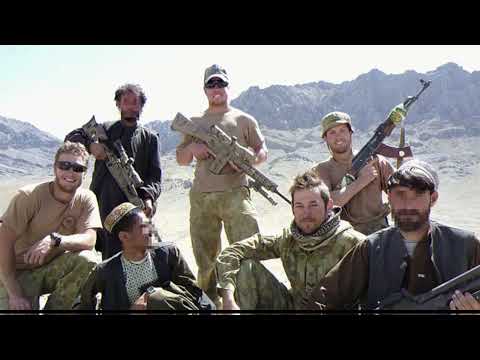
The Australians weren’t superhuman. They bled and died like anyone else. But they moved through chaos as if it were routine, as if their training had been carved into their bones. “We felt like amateurs,” the sergeant would later admit. It was a confession echoed by many American soldiers who fought alongside the Australians during Operation Slipper—a 13-year war that became Australia’s longest.
To understand why these men from a country of just 20 million could leave such an impression, you have to go back decades, to the jungles of Malaya and Borneo, where a small Australian unit learned the art of silent patrolling, of moving unseen, of fighting in small teams without support. That unit became the Special Air Service Regiment—the SASR—and its culture of independence, fieldcraft, and stubborn initiative was passed down from generation to generation.
By the time they arrived in Afghanistan, they were already legends in their own right. But nothing could prepare them for the cauldron of Uruzgan Province—a place of sharp mountains and narrow valleys where the Taliban had deep roots and a willingness to fight for every inch of ground. It was here that the Australians would face their greatest test.
And it was here, in a dusty valley called Khad, that a small patrol would find itself surrounded by over 100 fighters, with rockets and machine guns raining down from the heights. What happened next would become the stuff of legend—and the beginning of a story that would change how the Americans viewed their Australian allies.
The ambush at Khad was not a fluke. It was a rehearsal for a fight the Australians had been preparing for since the jungles of Vietnam. And it would not be the last time the Americans watched them with something close to envy.
In the years that followed, as the war in Afghanistan dragged on, the Australians became a quiet benchmark for what special operations could look like. They were not trying to impress anyone. They simply did what they had been trained to do—and that was enough to leave a mark.
But the story of Operation Slipper is not just about tactics and firefights. It is about a culture that shaped the way these soldiers thought, fought, and cared for one another. And to understand that culture, you have to look beyond the battlefield—to the way they trained, the way they led, and the way they lived.
One American officer who served alongside the Australians in Uruzgan described it this way: “They didn’t need to be told what to do. They just knew. It was like they had a sixth sense for the ground, for the enemy, for each other.” That sixth sense was not magic. It was the product of decades of small-unit patrolling, of learning to read the land and the people, of trusting the man next to you more than the plan on paper.
The Australians also brought a different kind of discipline—one that was not about rank or protocol, but about competence. A young corporal could challenge a major’s decision if he saw something the officer had missed. That was not insubordination. It was survival. And in the deadly valleys of Uruzgan, survival was the only metric that mattered.
This approach came with a cost. The Australians were often deployed to the most remote and dangerous areas, where the Taliban were strongest and the terrain was hardest. They took casualties. They lost friends. They carried the weight of those losses long after they returned home.
But they also earned something that few armies can claim: the respect of their enemies. Taliban fighters learned to fear the Australians, not because they were cruel, but because they were relentless. “They fight like men who have nothing to lose,” one captured Taliban fighter reportedly said. It was a grudging compliment from an enemy who rarely gave them.
Back in Australia, the public saw only fragments of this war—a medal ceremony here, a news report there. The true cost was hidden in the quiet struggles of veterans who came home with invisible wounds. The same independence that made the Australians effective in combat also made it hard for them to ask for help.
That paradox would haunt the aftermath of the war, as the nation grappled with the mental health crisis among its veterans. But in the heat of the fight, in the dust and blood of places like Khad and Chora, the Australians did not have time for such reflections. They had a job to do.
And they did it with a quiet professionalism that left even the most seasoned American soldiers shaking their heads. “We came to teach,” one U.S. officer later said, “but we ended up learning.” It was a sentiment that would echo through the years, long after the last Australian patrol left the valley.
The sun was setting over the mountains when the sergeant finally climbed back into his vehicle. His hands were still shaking. He had seen bravery before, but this was different. This was something else entirely—a kind of war fought not with superior numbers or technology, but with skill, patience, and an unbreakable bond between men who trusted each other with their lives.
He would never forget what he saw that day. And he would never again assume that the biggest army always knew best.
But the story of the Australians in Afghanistan did not end with a single act of heroism. It continued through years of grinding patrols, through the dust and heat of Uruzgan, and through a slow accumulation of lessons that the Americans would carry with them long after the war was over.
One of those lessons was about patience. In the American system, speed was often prized above all else. Missions were planned, executed, and debriefed with a tempo that left little room for hesitation. The Australians, by contrast, were willing to wait. They would spend hours watching a compound before moving a single man toward it. They would sit in the dirt, sweat running down their faces, and simply observe—looking for the pattern that didn’t fit, the shadow that moved when it shouldn’t.
That patience was not passive. It was a form of aggression, a way of seizing control of the battlefield before the first shot was fired. And it drove some American commanders crazy. They wanted action. They wanted results. But the Australians understood something that took years for their allies to fully appreciate: in a war like Afghanistan, the side that rushed usually lost.
Another lesson was about trust. The Australians lived with their Afghan partners. They ate with them, slept near them, and shared the same dangers. That closeness came with risks—the insider attacks of 2012 proved that—but it also built something that no amount of money or equipment could buy. It built relationships. And in a country where loyalty was everything, relationships were the only currency that truly mattered.
But it would be wrong to paint the Australians as flawless. They made mistakes. They lost men. And in the years after the war, the Brereton Report would reveal that some among them had crossed lines that no soldier should ever cross. That reckoning would force the Australian military to confront uncomfortable truths about its own culture—truths that the Americans, with their own scandals and failures, understood all too well.
Still, for the majority who served, the war was not about glory or politics. It was about the man next to them. It was about getting through the day, getting back to base, and doing it all again tomorrow.
That ethos—simple, unglamorous, and deeply human—was perhaps the Australians’ greatest export. It was not written in any manual. It was not taught in any school. It was passed down from soldier to soldier, from generation to generation, like a family secret.
And when the Americans looked across the valley and saw those dusty, bearded men moving with quiet purpose, they recognized something they had almost forgotten. They saw soldiers who fought not for medals or headlines, but for each other.
That was the real lesson of Operation Slipper. Not that the Australians were better, but that they had held onto something the Americans had let slip—a kind of war-fighting that was as old as war itself, and as necessary as ever.
By the time the last Australian patrol left Uruzgan in December 2013, the valley had already begun to forget them. The dust would cover their tracks. The compounds would crumble. But the men who fought there would carry the valley with them forever.
“We didn’t win the war,” one veteran would later say. “But we didn’t lose each other.” That was the quiet truth that no report could capture—the bond forged in the heat and blood of places like Khad and Chora.
The Americans who served alongside them took that lesson home. Some changed the way they trained. Some changed the way they led. And some simply carried the memory of those dusty, bearded men who fought like they had nothing to lose and everything to prove.
Mark Donaldson still speaks of the men who didn’t come back. Cameron Baird’s name is still spoken with reverence. And in a thousand kitchens across Australia, veterans still wake before dawn, still hear the rockets in the silence, still wonder about the people they left behind.
The war is over. The mountains are quiet. But the story of Operation Slipper—of a small nation’s sons and daughters who answered the call—will not fade. They came to teach. They ended up learning. And they left a mark that no enemy could erase.
What do you think—did the Australians change the way America fights, or did they simply remind us of something we had forgotten?
Report this article
Select a reason for reporting:






