On January 13, 1842, a lone rider approached the walls of Jalalabad from the Khyber Pass, slumped over the neck of a dying horse. His name was William Brydon, an assistant surgeon in the East India Company’s army, and he was the sole survivor of a column of 16,500 soldiers and camp followers that had left Kabul a week earlier under promises of safe passage. That promise didn’t survive the first night. The column was annihilated in the passes, one frozen defile after another, by men who knew every rock above the road. Brydon survived, the story goes, because he stuffed his hat with a magazine, causing a sword blow to glance off. True or not, the army was gone, and the mountains hadn’t even needed to resort to trickery. The army marched through a narrow land believing it was alone. It was not.
One hundred sixty years later, in the same mountain range, in the early hours of March 9, 2002, six U.S. Navy SEALs lay behind a wall of stacked stones on a slope overlooking a dry side valley. In the snow that had been falling since midnight, the wall was knee-high. It was the only cover they had. Below them, where the scrub gave way to scree, a line of men armed with rifles and a belt-fed machine gun were spreading out on either side of the rocky outcrop. They were not climbing toward it. They were encircling it.
The team’s radio operator had been trying to reach command for an hour, and the voice that answered kept breaking up with static. The helicopters that were supposed to extract them were stuck on a runway in Bagram and Kandahar, and the reason went back to a date: March 4, five days earlier. On a mountain called Takur Ghar.
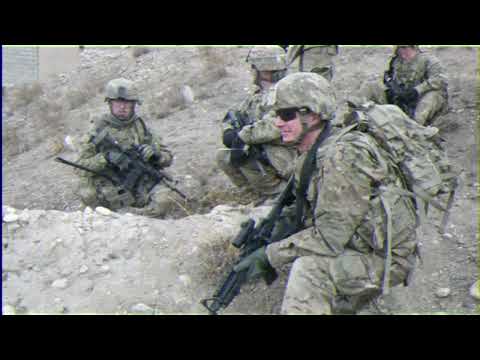
Before we go further, a word about this channel. Most of what is told about special forces is the version that fits the legend. I’m looking for the parts that don’t. The delays, the arguments, and the radio calls no one wanted to make. This story is a reconstruction. The team, the ridge, and the men on it are a composite of multiple individuals. Their names have been changed. And the rescue at the heart of this story is dramatized based on the documented way such operations are conducted. When I give you a fixed record—dates, units, places—I’ll tell you it’s documented. The rest is a story about a real problem that cost many lives during those same weeks. And now, back to the file.
The last full bottle of water had gone around the wall twice, and the snowfall was getting heavier. The only people who could have reached that outcrop were already on the mountain, and they didn’t know the SEALs were there. The SEALs didn’t know about them either.
Eleven kilometers to the east, four men lay in a rock cleft above a valley, with a brass compass that had been at Gallipoli and a radio that was picking up fragments of a distress call no one was supposed to hear. To understand why they were all there, you have to understand what the war looked like that week.
In the fall of 2001, after the September 11 attacks, a coalition formed to remove the Taliban from power and deny al-Qaeda a safe haven in Afghanistan. Conventional fighting was short. The Taliban fell in the cities within weeks, and what remained was a manhunt in a country the size of Texas, over mountains most of the world had never mapped. Out of that manhunt came an unusual organization. It was called Task Force K-Bar, after the combat knife, and it was led by a Navy commander, Robert Harward. It brought together special operations forces from half a dozen countries. There were American Special Forces and Army Special Forces, but also Canadians, Danes, Germans, Norwegians, Brits, and from the other side of the world, Australians and New Zealanders.
The Australians were from the Special Air Service Regiment based in Swanbourne, Perth. The regiment was founded in 1957. One squadron was raised to learn the jungle skills the British had mastered in Malaya. It earned its reputation the hard way. Borneo in the confrontation with Indonesia in the mid-1960s. Then Vietnam from 1966 to 1971, where small patrols of four and five men worked for days inside Phuoc Tuy province. So quietly that sometimes the enemy didn’t discover they had been there until later. East Timor in 1999. And now Afghanistan, where the regiment’s first squadrons arrived in late 2001 in Kandahar to work for the Americans. New Zealand’s Special Air Service was founded in 1955, and with its own history in the jungle, it followed them there. The two countries had fought side by side since the landing at Anzac Cove in April 1915. Their special forces had inherited that habit.
There was one obstacle, and it mattered for everything that came later. The Australians worked under American tactical direction, but they remained Australians. Their government had set conditions on what they could do and where. These are called national caveats, and every coalition has them. A patrol might receive an order to watch a valley and report. If the situation changed, or the mission grew larger, the question of who had the authority to approve it went back over the satellites to headquarters in Australia. That arrangement makes sense in a quiet week. But in the wrong place on the wrong mountain, it could be the difference between life and death.
On March 2, the Americans launched Operation Anaconda in the Shah-i-Kot valley in Paktia province. The plan was to trap a large force of Taliban and foreign fighters in a mountain basin and crush them between American and Afghan coalition forces. The operation was supposed to take three days. Reconnaissance teams, including Americans, Australians, and New Zealanders, had climbed the surrounding peaks to observe. On the first morning, the plan met the enemy. The fighters were more numerous than the planners had expected. They were well dug in and had mortars. The weather turned worse. The battle stretched past two weeks.
On March 4, on a peak called Takur Ghar, a Chinook carrying a team of special forces was hit by a rocket-propelled grenade as it tried to land. A special forces sergeant named Neil Roberts fell from the open rear ramp as the helicopter staggered away. The crew couldn’t return immediately. A second Chinook flew in with a quick reaction force to rescue him, and it was shot down too. Seven Americans died on that mountain before the battle ended. For everyone in the task force, it was a lesson learned in blood. A rescue mounted in haste against an alert enemy could kill the rescuers too.
By March 9, an unwritten rule had taken hold in the operations center, and no one had put it in an official order. No helicopter goes into a hot valley without armed escort, without a clear cloud ceiling, and without a colonel’s signature. Each condition made sense on its own. Together, they made a door that took a long time to open. That was the world a six-man special forces team entered on the night of March 6.
Their mission looked simple. Sit on a mountain edge at the boundary of the Anaconda area and watch the goat trails leading south toward the Pakistani border. Count who used them and report. The task force wanted to know where the enemy would run if the noose tightened. The team was picked from a platoon in Kandahar. The team leader was a lieutenant in his early thirties, and for the purposes of this story, we’ll call him Danny Mercer. Beside him was a chief petty officer named Hollis Brandt, who had spent eighteen years in the Navy and once done a six-week exchange with the Australian SAS in Western Australia, returning home with a taste for Vegemite and a grudge over an unpaid bet. Tony Salerno carried the radios. Rob Tate walked point. The corpsman, Wes O’Keefe, whom everyone called Doc, carried a medical bag that weighed as much as a small child. And Ed Lindgren carried a scoped rifle and a notebook in which he recorded in pencil every time a man crossed a goat trail. Mercer wore a battered Ka-Bar knife on his vest. It had belonged to his father, who had carried it in the Mekong Delta. Every man in the task force knew the name because they had all worn it on a shoulder patch for months.
They entered by helicopter in the dark and were dropped on a barren mountain saddle two valleys away. From there, they walked for two nights up a spur of limestone and shale at close to 3,000 meters. The cold was sharp in a way that is hard to describe to anyone who hasn’t experienced that much of it. The snow fell and melted. Each man carried between thirty-five and forty kilograms. The water ration was four liters per man, and it froze if you put it in the wrong pocket. They carried no tents. They built a hide from fallen stones along the ridgeline and covered it with netting. And they discovered, to their surprise, that they were not the first to use the site.
Along the top of the hill ran a line of ancient stone fortifications in a shallow, half-collapsed trench that an American intelligence officer had marked on the map as probably Soviet. It was. In the 1980s, the Soviet army had fought for these mountains for most of a decade. They had bled in the coastal area, in a place called Zawar Kili, where in the spring of 1986 the Soviets and Afghan government forces had thrown everything they had at a cave complex and a hill very much like this one. After that, much of the world forgot there had been a war for another empire here. But the hill had not forgotten. The trench was waist-deep and ran along the southern side of the outcrop toward a dry riverbed, and the Soviets had used it to supply their position. Mercer’s team noticed it and moved on. No one thought it would matter.
For three days, the plan worked. Lindgren logged forty-one men on the trail in seventy-two hours, most carrying nothing but a blanket roll and a rifle. And a string of mules loaded with crates, which Salerno reported matched the profile of mortar shells. Command thanked them. Nothing happened. Brandt said later that was the problem with quiet. Quiet teaches you not to expect the thing that is coming.
What none of them knew was that eleven kilometers to the east, on a high hill across a deep valley, four other men had been lying in a rock cleft for nine days. They were Australians, a patrol from the Special Air Service Regiment, and they were watching the same trails from the opposite side. A planning cell had put them there without sharing its maps with the American cell, a gap that was neither deliberate nor unusual. A coalition of twelve countries does not have one whiteboard. It has several.
The patrol leader was a sergeant in his late thirties. The regiment does not release the names of its men. So, for the purposes of this story, we’ll call him Tom Renick. With him were his signaller, Carl Burke, a medic named Alf Nogan, and a tracker named Ned Calligan, a quiet man from the wheat belt of Western Australia who could read goat tracks the way other people read newspapers. Renick carried a small prismatic brass compass on a cord around his neck. It had belonged to his grandfather, a soldier in the 1st Battalion who had waded onto Anzac Cove on April 25, 1915, at the wrong beach in the dark. The old man had kept the compass for sixty years and given it to his grandson the day Renick graduated from the selection course. The glass was cracked. But the needle still pointed true.
For nine days, the patrol had learned the trails better than the men who used them. Calligan had a habit of naming the regular travelers by what they carried: the teapot man, the accountant, the man with the umbrella. Burke’s notebook held the timings of eighteen separate crossings at a stream the enemy clearly believed was safe. They had enough water for three more days. And Burke carried something the others didn’t think much about. In addition to the satellite radio that talked to their squadron, he had a small receiver tuned to the joint task force K-Bar net, so the patrol could listen, without transmitting, to the movement of American communications around them. It was a courtesy someone in Kandahar had thought of. It was a way to keep the Australians from stumbling into an American airstrike. Burke had complained twice about the weight.
And on the evening of March 8, things began to change. A trail that had carried a dozen men a day suddenly carried twenty, then thirty, all moving in the same direction, west, toward the hill opposite across the gorge, and none of them carrying blanket rolls. At first, Renick thought they were going to a village. Then Calligan, who had been watching through the spotting scope, said something in the same flat tone he used for everything. He said the man at the head of the column kept looking at the far outcrop, and that he wasn’t looking at it the way a man looks at a mountain. He was looking at it the way a man looks at a house he is about to enter.
Renick looked across the gorge for a long minute. He saw rocks. He saw snow. He saw nothing. Then, at a quarter to six on the morning of the ninth, he heard something that told him what the rocks were hiding. The sound came through the small receiver in Burke’s hand, through static from somewhere across the gorge. It was an American voice, broken by cold and distance. A unit of six men. Contact. Estimate thirty to forty. Request immediate support. Then there was nothing at all, as if the voice had passed through a door and it had closed.
Here I should explain what had gone wrong across the gorge. On the American hill, the cold did what cold does. Shortly after six, when the first mortar rounds began to arrive, a rock splinter knocked Salerno’s satellite antenna off its mount and bent its mast. He fixed it with a rifle sling and tape, and the set worked, barely, in short bursts, when he held the antenna in his hand and pointed it toward a gap in the clouds. That was all they had. A bent antenna, a cold battery, and a voice that appeared and disappeared. Command was hearing half of every call.
Command at that hour was not certain how many men were on the hill. The mortar fire began at a quarter to seven. One round landed forty meters short of the stone wall and threw up a gray pile of rock. The second fell wide. Lindgren, who had spent a decade on ranges, said later that the third round was the one that convinced him the crew was professional, because it landed precisely between the first two. The fourth round hit the wall. Rob Tate was hit. A steel fragment the size of a thumbnail tore into his left thigh. He didn’t scream. He said, with remarkable precision: “I’m hit.” O’Keefe cut the trouser leg, dressed the wound, and tied a tourniquet. He wrote the time on Tate’s forehead with a marker, because that’s what corpsmen are taught, and because there was nothing else to write on. That was the first problem, and it changed everything.
Six men could leave the hills fast. Five could. Five men and one who couldn’t walk could not. And below, the enemy was digging in on both sides without haste, with the patience of men who understood exactly what the ground was giving them. A machine gun was placed in a rock fold to the east. Two rocket men moved west, and a third group, thirty or forty strong by Lindgren’s estimate, began to climb the back of the hill from the side the SEALs couldn’t see. He wrote that in pencil and beneath it wrote two words: “Not a patrol. A cordon.”
Mercer got on the radio and managed to get half the message through. In the operations center in Kandahar, the duty officer, a commander named Alan Pruitt, wrote down what he heard and asked for a repeat. For the purposes of this story, that is the name he was given. A man in his forties, a former helicopter pilot, he had been in the center five days earlier when things began to go wrong at Takur Ghar. Mercer’s message, as it reached him, was fragments. Six men, in contact with a cordon, request extraction. He knew the arithmetic before Salerno finished speaking. The nearest Chinooks were fifty minutes out. The valley lay under a cloud ceiling at 2,800 meters, which was below the height of the hill. A Chinook flying into a valley in the clouds was no longer a Chinook. It was a coffin.
The only attack helicopters available were a pair of Apaches whose weapons load was not yet complete. And the aviation platoon commander, a chief warrant officer named Ray Soto, who had lost friends on the fourth, stood beside Pruitt and said quietly that he would fly the mission, but he would fly it once, and properly. Pruitt believed him, and that was precisely the problem, because Pruitt could not authorize it alone.
He needed a colonel named Walter Dempsey, a fifty-year-old Army officer with a gray mustache and a habit of closing his eyes when he thought. He closed them now. In the half hour that followed, this is what happened in that room, in order. At 7:15, he asked how certain they were of the numbers. No one could answer. At 7:24, he asked about the weather. Nothing had changed. At 7:30, he asked whether any other friendly forces were in the area. Pruitt confirmed there were none. That turned out to be untrue, and no one on the floor knew it.
A liaison cell two corridors away held the coordinates of an Australian patrol eleven kilometers east, and a young captain there had been staring at two maps for ten minutes trying to decide if the dots pointed at the same hill. At 7:47, Dempsey cleared the Apaches to launch and hold at a staging point, no more. The Chinook would wait for the ceiling to lift.
Eleven kilometers away, Tom Renick had been watching the cordon close for an hour. He hadn’t been asked to watch it. He’d been tasked to watch the trails. But when twenty men became thirty, then forty, and a machine gun was carried up the slope and set among the rocks facing a netting he could barely see, the mission changed without anyone ordering it. He lay on his belly with the spotting scope and described what he saw, while Burke wrote it down. By 7:30, the notebook held a sketch of the ground. The machine gun, the two rocket men, and a third group of twelve climbing the far side of the outcrop, out of sight of the Americans.
It was Calligan who said what they were all thinking. If the third group reached the top above the netting, its men would be behind the Americans, looking down at them. They wouldn’t need to attack. They’d only need to look over the edge.
Burke raised the squadron on the satellite set, aiming the antenna toward a gap in the clouds, and the voice that answered belonged to the squadron major. A man unnamed in this story, because the regiment’s officers are even less visible than its sergeants. He asked three questions, the questions of a careful officer. Were the men on the hill American? Renick said they probably were. No one else would build a hide like that. Had the Americans asked for help? Renick said he’d heard a broken call on the joint net, and believed they had. And was this his mission?
That was the last question, and the major asked it in the flat voice of a man who would have to justify the answer in Canberra. The patrol’s written orders were to observe and report. They said nothing about crossing a valley on foot to defend a coalition partner whose own command couldn’t find a way to reach them. There was a caveat, and the major knew it better than Renick. Every extra step the patrol took outside its brief might one day be asked about by someone in Australia.
Renick didn’t argue, because Renick was not a man who argued on the radio. He said—and Burke wrote it down, because Burke wrote everything down—: “They’ll be dead before anyone else gets there, boss.” There was a silence of about eleven seconds. Then the major said: Go. Leave the packs, report hourly, and Tom, don’t let me read about it in the papers. That was the whole of the authority. It was given by a man who knew exactly what he was risking on the word of a sergeant who hadn’t asked for anything.
There was another problem, small, but it turned out to be the most important problem of that morning. The patrol could listen to the American net, but it couldn’t talk on it. The little receiver Burke had complained about was one-way. To speak to the SEALs, they needed an American handset, and the Australians had been issued one in Kandahar inside a sealed bag for emergency use only. Burke had carried it for nine days. The frequencies were a day old because the Americans had changed them after the Australians left. No one knew that yet. Burke put it in his pouch beside Renick’s tin of Anzac biscuits, which his mother had sent in a parcel that took five weeks to reach Kandahar, and which he rationed one biscuit a day, broken into four pieces and dealt out like a man dealing cards.
They left the packs, the sleeping bags, and the stove in a rock cleft under the netting, with a note in a plastic bag for whoever came to collect them. They went down the mountain with what remained. Each man carried about eighteen kilograms. Rifles, bandoliers for the patrol’s single machine gun, a sniper rifle, a medical kit, two liters of water, and three days of food of the kind that can be eaten while walking.
At 7:50, they crossed the crest. The distance was eleven kilometers on the map, and much more on the ground. Between the hills lay a valley six hundred meters deep, and the only way across was down a boulder-strewn stream bed the size of cars, then up the other side. The snow, light at first, began to fall heavily. By 9:00, the patrol was moving in a blizzard so thick that Calligan, in front, could no longer see the man behind him. Navigating by the ridges was worthless in the valley because the ridges had vanished. And at that moment Renick took the compass from around his neck. He wiped its cracked glass with his thumb and held it flat in his palm. The needle swung and settled. His grandfather had used it on a cliff in the dark on April 25, 1915, under the wrong beach while men died around him, and had survived and kept it. Renick took a bearing toward a rock he could barely make out, then another, and drew the patrol a line. Calligan led them up the far side on that line.
And on the hills, the cordon tightened. Mortar rounds fell every few minutes, with a steady, maddening rhythm the men could feel in their teeth. The second problem was water. They had started the day with slightly less than nine liters between them, and with the sun beginning to break through the edges of the clouds and the thin air at nearly three thousand meters, the bottles were emptying at a rate of a liter an hour. Brandt, who did the calculations for the team, wrote the numbers on his forearm with a pen. The third problem was the weather.
Over the radio, an Apache pilot said, in a clipped and apologetic voice, that his two aircraft were flying below the clouds, and that they could only see the hills as a gray line. And that the clouds were dropping to meet them every time they tried to climb toward the valley. He said he could try a pass at fifty meters using thermal vision. Pruitt refused. Dempsey, eyes closed, refused too. Losing an Apache in that valley would be the second helicopter lost in the mountains of Anaconda in five days.
A pair of A-10s arrived at a quarter to ten. They had found a small gap in the clouds and were looking for the hills. They couldn’t find them. Salerno gave them the coordinates of the position. The lead pilot read them back, saying he saw nothing at those coordinates but clouds, clouds only. And that the nearest clear area was four kilometers to the west. The cloud cover that hindered the helicopters was hindering the fire too.
The fourth problem was ammunition. Brandt came down to the wall at 10:30 and did the count. Each man had started with seven magazines. They had used a little less than half. No one needed to say anything. The fifth problem was behind them.
At a quarter to eleven, Lindgren, who had been pointing his scope at the slope above for an hour, saw a flicker of movement on the crest of the back slope, three hundred meters north. A man carrying a long tube on his shoulder, then two men, then six, moving carefully along a rock line that ran straight toward the northern side of the SEALs. He told Mercer the third group had arrived.
Mercer looked at the rocks, at the leg of the man on his back, at his corpsman who hadn’t slept in thirty hours, at his chief, at the water. He didn’t speak for several seconds. Then he picked up the handset, raised the bent antenna toward a gap in the clouds, and told Kandahar, in a tone Pruitt later described as completely calm, that his unit was surrounded on three sides, with one casualty, almost out of water, about a hundred rounds left per man, and that he expected his position to be overrun between one and three in the afternoon.
Pruitt wrote it down and passed the paper to Dempsey. Dempsey read it, and after a pause the operations center logs recorded as fifty-one seconds, he ordered the cloud ceiling checked every ten minutes and asked the liaison cell whether there was anything on the maps in that area. The young captain in the liaison cell, who had been staring at two sets of grid coordinates for three hours, finally said what he had been preparing himself to say. He said: “Sir, I think we have an Australian patrol on the next hill. I think they left their hide about three hours ago. I think they’re coming.”
No one in the operations center said anything. After a moment, Pruitt asked: “Do they know the SEALs are there?” The captain looked at the paper in his hand. He said: “I don’t know, sir. I think they’ve just found out.”
The Australians reached the far edge of the valley a little after eleven, climbing on their hands and knees through a broken stair of rock slabs and dwarf juniper. Alf Nogan, the medic, had a knee injury from a training accident eight months earlier that he hadn’t told anyone about. By the halfway point, it had swollen to the size of a grapefruit. He said nothing. Renick noticed, because Renick noticed everything, and silently took Nogan’s bandoliers and added them to his own load.
They stopped once for four minutes when a shepherd dog began barking at them from a rock ledge two hundred meters up, and a boy with a stick came out to see what the dog was barking at. The boy looked straight at them. The patrol lay still in the snow. The boy looked for a long time, called his dog, and walked away. It is an old rule in the mountains, older than any army, that a stranger who passes quietly by a man’s house is left alone. The boy kept it, in his own way. No one in the patrol said anything. Burke wrote down the time.
By noon, they had reached a rock shelf eight hundred meters above the stream bed. Ahead of them, over the edge of a spur, they could hear gunfire, the heavy machine gun, and the intermittent crack of rifles getting closer. And beneath that, very faintly, they heard a different sound. A single shot, flat, spaced, and deliberate. It was Lindgren on the American side, who was not wasting a round. The patrol still had a kilometer and a half to go. Renick said: “We’ve got an hour at most. We’ll go along the top, not the side. If we meet the third group, they’ll be looking down. We want to be above them, not beside them.”
At 12:25, the patrol lay on the crest of the back slope, three hundred fifty meters above the third group. And for the first time in four hours, Renick had a clear view of what he’d come for. The enemy below consisted of twelve men, picking their way down a rock line toward a gap thirty meters from the last stone wall. They were in no hurry. Two of them carried rocket launchers. One carried a belt-fed machine gun. They were looking down toward the netting and the wall, not up.
Calligan put his cheek on the stock of the sniper rifle with the gentle leisure of a man settling into an armchair, and said in a very low voice that he could see every one of them. Burke had already taken out the American handset. He pressed the transmit button, and nothing happened. He checked the battery. He changed the frequency to the second setting printed on the card, then the third, and on the third he heard a faint roar of static and a man breathing. He said the sentence he had rehearsed in his head for four hours, which was not elaborate. Any station on this net, any station on this net. This is a friendly element on the northern crest of the hills above and behind you. Australians, do you hear me?
And on the stone wall, Tony Salerno heard an Australian voice speaking through the handset. It was a drawn-out, flat, relaxed voice, and for two seconds he wasn’t sure he’d heard it at all. Then he caught it. And he thought, this is a trick. It had been a trick on other hills in other wars. An enemy with a captured radio, a convincing accent, and a request for a location. He turned his head toward Mercer without lowering the handset. Sir, there’s a voice on the net saying he’s Australian. Says he’s on the northern crest. Check his bona fides, Mercer said.
Salerno read the challenge word from the card, a word and a number, and the voice answered with the wrong reply. It was “last week.” Salerno looked at Mercer. Mercer’s face didn’t move. He said into the handset, that’s incorrect. Say again. Then Brandt took the handset from Salerno’s hand. He had been on the hill for six days and hadn’t spoken ten words in the last hour. He listened to the silence on the net for about two seconds. Then he said, in a voice cracked by the cold: “Tell me, mate, who owes who a beer from Rottnest Island?”
There was a silence. It lasted a little longer than it should have. Then the voice said, in the tone of a man discussing a late train: “Not you, boss. Me. And you still haven’t paid for the fish.” Brandt closed his eyes. Six years earlier, during a week’s leave, he had bet a young SAS corporal named Tom Renick that he couldn’t catch a fish bigger than the one a seal was catching off the Rottnest jetty, and he had lost and never paid. He opened his eyes. He said quietly to the lieutenant: “It’s him, sir. It’s Renick. It’s really him.”
It was a very small moment. It happened because a Navy chief had once spent six weeks on exchange in Perth, and because a debt of one drink had hung unpaid for six years. No one in Kandahar had planned it. No one could have. The verification, in the end, hadn’t come from the card at all.
Mercer took the handset. He had perhaps four seconds to decide what to say, and what he said was the shortest thing possible. “How many of you?” “Four.” “What can you do?” “We can see twelve men below us,” Renick said. “We’d prefer you don’t shoot at the northern slope until we do.” “Understood,” Mercer said. Then, because there was nothing else to say, and because he was the man who would remember it for the rest of his life, he said: “Thank you.” “Wait,” said the voice, as if asking a friend to wait at a bus stop.
Calligan fired at 12:31. The enemy machine gunner, the one with the belt, fell first. The second shot hit the nearest rocket man, and the third went into the rock beside him because the man had already flattened. It took five seconds. After that, the crest of the back slope was no longer a place where twelve men looked down at a wall. It was a place where twelve men looked up.
What followed was not a battle, and no one who was there ever described it as one. It was an interruption. Twelve men who had been planning to finish something in the next quarter hour discovered that the ground behind them was not empty, and they did what anyone does. They stopped, turned, and began shooting at something they couldn’t see. Renick put the machine gun on a rock and sent a steady stream across the edge of the gap in short bursts, none of them long. The men below did what trained men do under fire from above, which is to go to ground. For nearly fifteen minutes, the third group didn’t advance a single meter. That was the margin, fifteen minutes.
And Hollis Brandt saw it before Mercer did. The cordon had thinned on the western side as men turned toward the sound of the shooting, and there was a trench running south from the wall, waist-deep and half-collapsed, partly buried in snow. The Soviet trench. The one they’d noticed on the first night and hadn’t thought about since. It ran down the southern side of the outcrop to a dry riverbed, seven hundred meters below. And the riverbed was a place where a helicopter could, in theory, land. It had been ruled out on the map in Kandahar four days earlier because no one believed the SEALs would ever need it.
The commander looked at Mercer. Mercer looked at the trench. And the weather, which had been turning all morning, chose that moment to show them a patch of pale blue sky over the southern end of the valley, about two kilometers wide and moving. Mercer said: “Salerno, tell them we’re going down the trench to the riverbed. Tell them we need the bird there now, and tell them the ceiling is lifting.”
Salerno said it, holding the bent antenna toward the sky with both hands. At the other end of the net, in the operations center in Kandahar, Alan Pruitt wrote down the words riverbed and lifting. And without raising his eyes, he said: “Colonel, Dempsey opened his eyes.” The clock read two minutes past one.
He looked at the weather officer, who nodded. He looked at Ray Soto, who was already standing with his helmet in his hand. He looked at the map, at the clock on the wall, and finally at the paper on which the young liaison captain had written: Australian patrol confirmed on northern crest. He said quietly: “Give them the go.”
The sequence of the next minutes is what the aviation platoon later logged. The Chinook lifted at six minutes past one, with two Apaches. It flew at the slowest escort speed, the lesson of March 4 written into the flight plan, and the route to the valley took fifty minutes. At ten to two, with the ceiling lifting to 3,400 meters, Soto took the helicopter through the valley and turned into the side gorge, the Apaches ahead of him with their guns pointed down. They saw the trench. They saw the men going down into it. They saw the riverbed.
The move down the trench took eleven minutes. Brandt and Lindgren carried Tate on a raincoat with a rifle pushed through its sleeves, holding the ends, walking in stumbling, steady steps. The wounded man’s face was the color of candle wax. Doc O’Keefe walked beside the coat with one hand on the pressure bandage and the other holding the IV bag above his head. Salerno carried the radios. Mercer took the rear, walking backward with his rifle on the edge of the trench, firing short bursts at anything that raised its head above the lip. With Renick’s machine gun still hammering from the crest and the cordon realizing its prey had slipped away, the SEALs reached the bottom. Renick’s patrol came down from the crest ten minutes later in one organized bound and in the same order they had gone up. Calligan was last. When he reached the riverbed, he checked his magazine, closed it, looked up at the sky where the second Apache was hovering, and said in a voice devoid of any expression that he believed he saw weather coming.
The Chinook put its wheels on the gravel at eleven minutes past two. It was, by all the aviation platoon’s reports, the most hazardous landing of Soto’s career. A whirlwind of gravel spray, snow, and broken rock. It came down the slope in a driving storm of dust. Soto kept the engines running and held the aircraft on the ground for two minutes and fifty seconds, a full minute longer than the usual order. The men climbed aboard. Tate went first on his raincoat, and the corpsman took the IV bag from O’Keefe’s hand aboard without a word. Then the four other SEALs, and finally the Australians.
Brandt stood at the edge of the slope and held out his hand to Renick as the sergeant climbed. Renick looked at it for a second, then shook it. “Who sent you?” said the chief over the noise. “No one,” said Renick. “That’s why it took us so long.”
The Chinook lifted at a quarter past two, the Apaches following it out of the valley with their guns still pointed at the hill. Inside on the floor, the men sat or lay without speaking. Brandt handed Tate his last half liter of water, which he drank in four swallows and handed back the empty bottle. Nogan, the Australian medic, lay on his back with his swollen knee raised in the air, looking at the ceiling of the helicopter. O’Keefe, the American corpsman who hadn’t slept in thirty-one hours, looked at the knee, then without a word took scissors and cut the trouser leg.
Renick reached into his jacket pocket and took out the tin. He opened it. There was one biscuit left. He held it out to Salerno, who was nearest. Salerno took it, looked at it, and passed it to Mercer, who hadn’t spoken in several minutes. Mercer looked at the biscuit for a long time. Then, seriously, he broke it into four pieces and passed them out. One for each man within reach, exactly as he had seen it done for the past hour without knowing what he was watching.
Tate lived. The wound was clean, the tourniquet held, and he was back with his platoon within six weeks. No one from either team died that day. Enemy losses were never established. The cordon scattered that evening, as usually happens when the prey disappears and the weather improves.
What followed was bureaucratic, and in its own way just as dangerous. The inquiry session was held in Kandahar the next morning in a ready room with a broken air conditioner. Colonel Dempsey chaired it. He had read every line of the previous day’s log, and he had the look of a man who had been right for twenty-eight years and wasn’t sure he was right this time. An Australian unit had left its assigned area. It had crossed a valley, engaged an enemy force in another unit’s sector, and taken part in a rescue no one in the task force had been told about in advance. That was a serious breach.
A formal memo went to the Australian liaison officer. A copy went through official channels. Renick sat listening to all of it. He had shaved, eaten, and slept for six hours. He said nothing until the colonel asked him directly why he hadn’t requested permission from the task force. Renick said: “Because I couldn’t have asked. I didn’t know there were Americans there.” The sentence was said so quietly that the room went completely silent.
Dempsey looked at the liaison captain, who was looking at the table. Then he asked Danny Mercer, who had been called to attend, whether he had anything to add. Dempsey nodded. Mercer said he wanted it entered in the record that the reason his team was alive was that a patrol had been watching the same mountain from the other side, and no one had told either of them about the other. And that if the patrol had been less patient, or less precise in its observation, or had waited for permission, there would be six dead SEALs on that hill, or five and a helicopter no one dared send. He didn’t say that the task force had spent six hours failing to ask the only question that mattered, which was whether anyone else was already on that mountain. He didn’t need to. Dempsey closed his eyes and then asked the clerk to enter it in the report exactly as Mercer had said it.
Operation Anaconda ended in mid-March after more than two weeks of fighting that had been planned to last three days. In the years that followed, historians and the men who fought that battle argued about the intelligence, the plan, the weather, and coordination between American units. There was one conclusion no one seriously disputed. A coalition fights better when everyone in it knows who is on the next hill. The real operation took a long time to learn that, and it was learned at Takur Ghar and in a hundred smaller places that never became famous.
In this story, the liaison cell within weeks began publishing a daily overlay of every friendly element, American, Australian, and New Zealander alike, in a format they could all read. Challenge cards were reissued with a timestamp printed in red across the top. In the summer, a slide appeared in the pre-deployment course for the rotating squadrons entering eastern Afghanistan. It showed a stone wall, a trench, a riverbed, and a sketch of a northern crest. It was titled with one word: “Deconfliction.”
A month later, on April 25, 2002, at dawn, a small group of Australian and New Zealand soldiers stood in the dark of Kandahar practicing their oldest ritual. They stood in silence, one of them read lines about the setting sun, while another played a recording of the Last Post over a loudspeaker that crackled in the cold. It had been eighty-seven years since the landing at Anzac Cove. A Navy chief named Hollis Brandt stood at the back of the group, uninvited and in the wrong uniform, holding his cap in his hand. When it was over, he walked up to Tom Renick and put a small folded paper in his palm without a word. It was a money order made out to a corporal Brandt had known six years earlier for the price of a beer and a bag of fish.
Three weeks after that, a parcel arrived at the SAS Regiment headquarters in Perth, addressed to Sergeant First Class Renick. Inside was a battered Ka-Bar knife with a worn leather handle and a note in Mercer’s handwriting. It said the knife had belonged to his father, and that it had spent a long time looking for a good reason to pass to someone else. Renick put it in a drawer beside his grandfather’s compass with the cracked glass and the needle that still pointed true, and neither of them came out again for a very long time.
So here is the question I keep coming back to, the one that doesn’t fit the legend: how many times has a mission been saved not by the plan, but by two people who happened to owe each other a beer? What’s the smallest debt you’ve ever seen pay off in a way no one planned?
Report this article
Select a reason for reporting:






