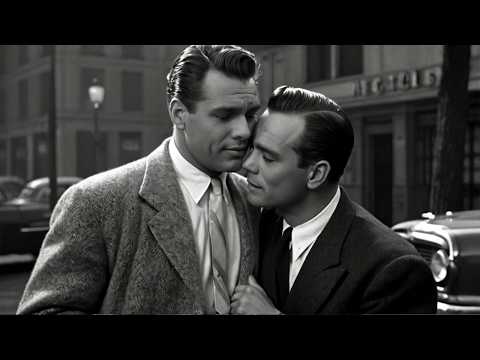
In the glittering world of Hollywood’s Golden Age, the spotlight illuminated perfection—but backstage, a different story unfolded. Behind the glamorous premieres and carefully crafted public images, some of the industry’s biggest stars were living double lives, hiding loves that could destroy their careers. The studio system demanded conformity, and for actors who dared to love someone of the same sex, exposure meant ruin. Yet, despite the risks, secret affairs flourished behind closed doors, whispered about in insider circles but never confirmed in public.
These are the stories of 24 Golden Age actors who defied society’s strict expectations, navigating a world where their true selves had to remain hidden. From Liberace’s open secret to Rock Hudson’s tragic end, from Marlon Brando’s fluid sexuality to Anthony Perkins’ duality, their lives were a tightrope walk between authenticity and survival. This is the untold history of Hollywood’s hidden loves—a tale of courage, secrecy, and the high cost of fame.
Take Liberace, the flamboyant showman whose sexuality was an open secret in showbiz circles. He vehemently denied being gay under oath, even suing publications that hinted at his relationships with men. Yet, his longtime companion Scott Thorson sued him for $113 million in palimony, and close friend Betty White later confirmed what many suspected: “Liberace was indeed gay, and I often was used as a beard by his managers to counter public rumors.” The biopic Behind the Candelabra brought their tumultuous relationship to the screen, but Liberace took the truth to his grave.
Then there’s Laurence Olivier, the legendary Shakespearean actor whose bisexuality has been debated for decades. Biographers claim he had affairs with men, including a youthful romance with actor Henry Ainley and a rumored liaison with Danny Kaye. His son fiercely denied these claims, calling them “unforgivable garbage,” but Olivier himself admitted in his autobiography to being attracted to Kaye—though he insisted he never acted on it. “I don’t care what people say,” Cary Grant famously quipped when asked about his sexuality. “Hell, I’m not going to go through life with one hand tied behind my back just to please a few people.” Yet Grant’s relationship with Randolph Scott—with whom he shared a Malibu beach house dubbed “Bachelor Hall”—fueled endless speculation. Photos of the two lounging by the pool, cooking together, and appearing as a domestic couple made insiders believe they were romantically involved, even as studios paired them with female stars to dispel rumors.
Ramon Novarro, the silent film star of Ben-Hur, carefully concealed his relationships with men to protect his career. His sexuality became a focal point in his tragic murder in 1968, when sensationalized reports overshadowed his achievements. Charles Laughton’s bisexuality was corroborated by contemporaries, with Scotty Bowers alleging in his memoir that Laughton was “in love with Tyrone Power” and exclusively homosexual during a period of his life. James Dean’s bisexuality was an open secret among his peers, with rumors of a relationship with producer Rogers Brackett, who helped advance his career. Rock Hudson’s homosexuality was an open secret in Hollywood, but fear of scandal kept him silent until his battle with AIDS brought his private life into the spotlight, making him one of the first major celebrities to die of the disease.
Montgomery Clift struggled with his sexuality, maintaining discreet relationships with men while battling substance abuse. Anthony Perkins, best known as Norman Bates, had numerous relationships with men, including a rumored affair with Rudolf Nureyev, even while married to a woman. Marlon Brando was open about his fluid sexuality later in life, admitting to relationships with men and rumored liaisons with James Dean. Tab Hunter hid his sexuality for decades, with his most significant relationship being with figure skater Ronnie Robertson, and later Anthony Perkins. “There is still a tremendous amount of homophobia in our culture,” Richard Chamberlain later admitted. “For a gay leading man, it’s dangerous to come out.” He kept his long-term relationship with actor Martin Rabbett secret until his 2003 memoir.
These actors lived in an era where being openly gay was not an option. Their stories are a testament to the resilience of the human spirit and the enduring power of love, even in the face of overwhelming prejudice. As we delve deeper into their lives, we uncover the complexities of their hidden affairs and the legacy they left behind.
Farley Granger, known for his roles in Hitchcock’s Rope and Strangers on a Train, was remarkably candid in his memoir Include Me Out. He detailed his bisexuality and his romantic involvement with playwright Arthur Laurents, a relationship that lasted about a year before evolving into a lifelong friendship. Granger also had a brief affair with composer Leonard Bernstein during the filming of Sid Street in 1949. “I never felt shame about who I loved,” he later reflected, though he maintained discretion during his career’s peak.
His most enduring partnership was with television producer Robert Calhoun, a relationship that spanned over three decades until Calhoun’s death in 2008. Within the entertainment industry, Granger’s relationships with men were known and accepted, even as the public remained largely unaware. In his later years, he embraced his identity openly, offering a rare glimpse into the challenges of navigating personal authenticity within the constraints of Hollywood’s Golden Age.
Clifton Webb never directly told anyone he was homosexual, but he never really hid it either. He wasn’t ashamed of who he was and never regretted it. Though Webb played a gossip columnist on screen, he couldn’t prevent conversations about his sexuality from constantly being had in real life. He was linked romantically to James Dean, though no proof exists, and he never married. His love for his mother, who was his date to parties and premieres, became the subject of endless speculation. “He was not afraid to act outside of the strictly enforced gender roles of the 40s and 50s,” one contemporary noted. His co-star Robert Wagner confirmed he knew Webb was gay, and though Scotty Bowers claimed to have arranged encounters for him, Webb’s openness in manner and dress spoke louder than any memoir.
Dirk Bogarde lived with his manager Anthony Forwood for nearly forty years, their relationship an open secret within the industry. Yet Bogarde never publicly acknowledged it, knowing the risks. In 1961, he took a bold step by starring in Victim, a groundbreaking film where he portrayed a gay man caught in a blackmail scheme—the first British film to use the word “homosexual” in its narrative. “The role was risky, but it demonstrated Bogarde’s dedication to meaningful storytelling even at the expense of potential backlash,” historians note. At the peak of his popularity, he was England’s most beloved actor, even considered for James Bond, yet he navigated fame with discretion, balancing stardom with the need to keep his identity hidden.
John Gielgud faced a very public crisis in 1953 when arrested in Chelsea for “importuning for immoral purposes.” The charge subjected him to humiliation, yet the theater community rallied—his next stage performance received a standing ovation. His letters to his long-term partner Martin Hensler reveal deep anxieties about being outed and the potential repercussions on his career. Despite the fear, their relationship endured until Hensler’s death shortly before Gielgud’s own passing in 2000. “The word is love surely,” Gielgud once wrote, quoting Oscar Wilde. “One fearless kiss would cure the million fevers.”
Tyrone Power’s bisexuality was an open secret among Hollywood insiders, with rumored affairs including actor Cesar Romero. Married three times to women, his private life was carefully managed by studio executives to maintain his romantic leading man appeal. His struggle to reconcile private desires with public image reflects the challenges faced by LGBTQ+ actors in a deeply homophobic era. His untimely death at 44 left questions unanswered, but his legacy as a talented and complex individual adds depth to his story both on and off the screen.
Van Johnson’s marriage to Evie Wynn, the ex-wife of actor Keenan Wynn, was reportedly orchestrated by MGM to dispel rumors about his sexuality. Industry insiders noted he had discreet relationships with men, kept hidden to protect his career. Hollywood’s strict morality clauses left him little choice but to live a double life. Roddy McDowall, a child actor turned Broadway star, never came out publicly, though it was well known he was gay. He never married and had no children, often playing camp, frustrated bachelors in his later career. James Whale, director of Frankenstein, was openly gay in the 1930s—a rare exception. His films were coded clues to his queerness, and his partner David Lewis wrote, “Jimmy was first and foremost an artist. His films represent the work of an artist, not a gay artist, but an artist.”
Michael Redgrave’s bisexuality was discussed by his own family. When Rachel Kempson proposed to him, he confessed there were “difficulties to do with his nature,” yet she loved him regardless. They married in 1935 and stayed together fifty years. His male lovers included Noël Coward, and later Bob Michell, who became a surrogate uncle to the Redgrave children. “I am, to say the least of it, bisexual,” Michael admitted to his son Corin, though he chose silence in his final autobiography.
George Nader sacrificed his own career to protect his close friend Rock Hudson from being outed. His homosexuality was an open secret, and he lived discreetly with his partner Mark Miller—a quiet hero of LGBTQ+ history. And then there’s Ramon Estes—known to the world as Martin Sheen—whose rumored early relationships with men were navigated with discretion. As his career flourished, Sheen became an outspoken ally for LGBTQ+ rights, adding weight to the speculation, though he never confirmed or denied.
These 24 stars lived in an era where authenticity was a luxury few could afford. Their courage was measured not in public declarations but in private endurance—in decades-long partnerships kept hidden, in coded performances, in the ache of denying who they loved while the cameras rolled. The studio system demanded conformity, but behind the glitter, love found a way.
Their stories remind us that the cost of fame was often the truth itself. Yet their resilience paved the way for future generations to live openly and love fearlessly. The spotlight may have hidden them once, but history has finally let them shine.
Which of these hidden love stories moved you the most—and what does their courage teach us about the price of authenticity today?
Report this article
Select a reason for reporting:






