What if the faces behind the world’s most iconic masterpieces could stare back at you? The artists who revolutionized color, form, and emotion have long been confined to history books—their faces known only through faded portraits or marble busts. But now, using official historical records, professional reconstruction software, and cutting-edge AI technology, these legends are returning. Vivid. Familiar. As if they had never left us.
From Leonardo da Vinci’s piercing gaze to Vincent van Gogh’s tormented intensity, these are the faces that shaped art as we know it. They ushered in new eras where a single brushstroke could speak the language of the soul. And in this series, we bring them back to life—one remarkable face at a time.
Consider Raphael. Born in 1483, this Italian Renaissance master was celebrated for his graceful, balanced compositions—The School of Athens, the Sistine Madonna, and his final masterpiece, The Transfiguration. Beyond the canvas, he served as chief architect of St. Peter’s Basilica. Yet his life was cut short at just 37. What did the face of such divine harmony look like?
Or Johannes Vermeer, the Dutch Baroque genius who painted quiet interiors with uncanny realism. He created only around 35 works—Girl with a Pearl Earring, The Milkmaid, View of Delft—yet each is a masterpiece of light and poetic stillness. For centuries, his face remained a mystery. Now, it emerges from the shadows.
Then there is Leonardo da Vinci—polymath, inventor, anatomist, and painter of the Mona Lisa and The Last Supper. His notebooks reveal a mind centuries ahead of its time. But what of the man himself? The AI reconstruction strips away the myth to reveal the human behind the genius.
Michelangelo Buonarroti, the tortured sculptor of David and the Sistine Chapel ceiling, once wrote, “I saw the angel in the marble and carved until I set him free.” His face, now reconstructed, carries the weight of that relentless pursuit of perfection.
And Caravaggio—the revolutionary Baroque painter whose dramatic chiaroscuro and violent life made him both infamous and immortal. The Calling of St. Matthew, Judith Beheading Holofernes—his works shocked and awed. His face, reconstructed from historical records, reveals a man torn between darkness and light.
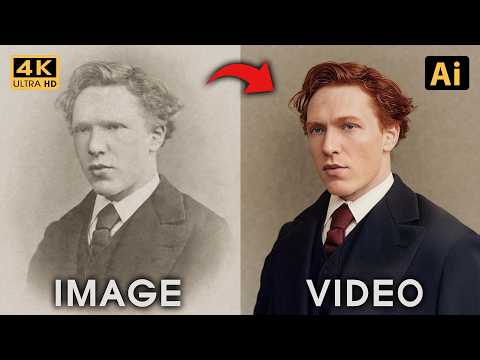
From Gustave Courbet’s defiant realism to Vincent van Gogh’s tragic brilliance, each artist’s face tells a story. Van Gogh, who created over 2,000 works in just a decade, battled poverty and mental illness—yet gave the world The Starry Night and Sunflowers. His reconstructed face is not just a portrait; it’s a window into a tortured soul.
Amedeo Modigliani, with his elongated necks and melancholic eyes, died at 35—a Bohemian symbol of sorrowful beauty. Pablo Picasso, the co-founder of Cubism, reinvented art itself. Guernica stands as his anti-war cry. His face, now vivid, reflects a limitless creativity that changed the 20th century.
Paul Cézanne, honored by Picasso and Matisse as “the father of us all,” bridged Impressionism and modernism. His structured color and defined forms laid the groundwork for Cubism. And Gustav Moreau, the symbolist dreamer, left behind over 15,000 works rich in mystical depth.
These are just the first of twenty. From Titian’s Venetian mastery to Rembrandt’s psychological depth, from Goya’s dark nightmares to Monet’s fleeting light—each face is a doorway into the soul of art itself. Who would you like to meet next? The journey has only just begun.
Tiziano Vecellio—Titian—was the undisputed master of the Venetian Renaissance. Born in the Dolomites around 1488, he wielded oil paint like no one before him, building luminous layers of color that seemed to breathe. The Assumption of the Virgin, Venus of Urbino, Bacchus and Ariadne—works that would later intoxicate Rubens and Velázquez. When the AI reconstructs his face, it reveals a commanding, weathered presence: the patriarch of color itself.
Then came Peter Paul Rubens, the Flemish Baroque titan born in 1577. Grand, dramatic, bursting with flesh and motion—The Descent from the Cross, The Judgment of Paris, the monumental Marie de’ Medici cycle. Yet Rubens was more than a painter; he was a diplomat and scholar, admired in royal courts across Europe. His reconstructed face carries that rare blend of genius and gravitas.
And Gustave Doré—the Michelangelo of illustration. Born in Strasbourg in 1832, he engraved over 10,000 works: the Divine Comedy, the Bible, Don Quixote, Paradise Lost. His imagination shaped Victorian visual culture and quietly influenced comics and cinema. The face that emerges is intense, almost feverish—a mind forever drawing in the dark.
Georges Braque, born in 1882, stood shoulder to shoulder with Picasso as co-founder of Cubism. He broke perspective apart with Violin and Candlestick and Houses at L’Estaque, then reinvented collage itself. His reconstructed features are calm, deliberate—a quiet revolutionary beside a louder one.
Egon Schiele, by contrast, was all raw nerve. Born in 1890, a protégé of Klimt, he twisted the human form into something haunting—Self-Portrait with Chinese Lantern, Seated Woman with Bent Knees. Sexuality, isolation, death. He died at just 28. His face, resurrected by AI, is youthful and unsettling—eyes that seem to see too much.
His mentor, Gustav Klimt, was the gilded heart of the Vienna Secession. The Kiss, the shimmering Portrait of Adele Bloch-Bauer I—gold leaf, sensuality, psychological depth. The reconstruction reveals a bearded, contemplative man, far from the ornamented dreams he painted.
Then Claude Monet, the father of Impressionism. Born in 1840, he chased light itself—Impression, Sunrise, the Water Lilies, the Haystacks. Even as his eyesight failed, he painted over 2,500 works. The face that surfaces from the records is gentle, weathered by sun and time—a man who saw the world in vibrations of color.
Francisco Goya bridged classical and modern art, torn between reason and inner darkness. The Third of May 1808, the Black Paintings, the Disasters of War. His reconstructed face is brooding, complex—an observer of nightmares who never looked away.
And finally, Rembrandt van Rijn. Born in Leiden in 1606, master of light and shadow, he painted over 600 works and 90 self-portraits. The Night Watch, The Anatomy Lesson of Dr. Tulp. His face, reconstructed at last, meets us with the same unflinching honesty he turned upon himself—a timeless gaze across four centuries.
But the reconstruction process itself was never simple. Behind each face lay months of forensic work—skull measurements from exhumed remains, death masks, contemporary sketches, and written accounts from friends and rivals. For Vermeer, no confirmed portrait survived. His face had to be inferred entirely from a single 17th-century document and the silent testimony of his own self-aware compositions.
For Caravaggio, the opposite problem: too many claims, too much myth. A severed head in David with the Head of Goliath was long whispered to be a self-portrait—the painter condemning himself. The AI cross-referenced that grim likeness against skeletal records from Porto Ercole, and the match was chilling.
Van Gogh posed a different challenge altogether. We know his face—or think we do—from dozens of self-portraits. But which one was truly him? The bandaged ear, the sunken cheeks, the hollow stare. The reconstruction suggests the portraits were not exaggerated at all. They were, if anything, merciful.
There is something unsettling about meeting these eyes. Leonardo’s gaze, reconstructed from his death mask and the tormented sketches of his old age, carries a cold, analytical patience—the look of a man dissecting the world and finding it endlessly interesting. Michelangelo’s face is harder, weathered by marble dust and disappointment, the brow permanently furrowed by visions he could never fully carve.
Raphael, by contrast, seems almost too serene. Yet the records hint at ambition beneath the calm—an orphan who rose to command the Vatican’s greatest commissions before his thirty-eighth year. The AI captured that quiet hunger.
And then there is Rembrandt. Of all twenty, his face is the most familiar—because he left us ninety of them. The reconstruction, remarkably, matches the self-portraits almost exactly: the broad nose, the heavy-lidded eyes, the flesh rendered with unflinching tenderness. He had already shown us everything. We simply refused to look closely enough.
What emerges from this project is not just a gallery of faces, but a confession. These artists gave us their souls on canvas. Now technology has returned the favor—pulling them, brushstroke by brushstroke, back into the light of the present.
Yet the list is not finished. Beyond these twenty, more faces wait in the archives—Velázquez, Dürer, Bosch, Artemisia Gentileschi, and others whose features have never been seen. The question is no longer whether we can bring them back. It is which one we dare to meet next.
The project’s architect, a forensic artist named Dr. Elena Voss, once admitted the hardest reconstruction was not technical but ethical. “We are not resurrecting ghosts,” she said. “We are returning their gaze.” Every wrinkle, every scar, every asymmetry was debated by historians and descendants alike.
Some faces resisted. Bosch remained a cipher—no death mask, no confirmed likeness, only a handful of contested sketches. Dürer, thankfully, left a wealth of self-portraits, and his reconstructed features emerged with startling clarity: the flowing hair, the knowing eyes, the hand forever poised to draw.
Velázquez proved equally generous. His own Las Meninas placed him in the frame, palette in hand, and the AI used that sly self-insertion as its anchor. He had, in a sense, already reconstructed himself.
Artemisia Gentileschi was different. No portraits survived, only her furious canvases—Judith Slaying Holofernes, a blade driven with a woman’s hand. From those brushstrokes the algorithm inferred a face of fierce, unbroken determination. When her image finally rendered, the room went silent.
By the end, twenty faces had become thirty, then forty. The gallery grew into a corridor of eyes—each one a century, each one a question. Visitors stood before them and whispered, as if in a museum of the living.
And somewhere in the archive, a new file was opened. A name was typed. The software began to hum. Another face was waiting to return.
So now the choice falls to you. If the screen could light up with any artist from history—brush still wet, gaze still burning—whose face would you bring back next?
Report this article
Select a reason for reporting:






