There was no name on the map, just a patch of dense jungle in Phuoc Tuy province, like hundreds of others across South Vietnam. But to the Viet Cong, it was different. They didn’t give it a name, either. They didn’t speak of it unless necessary. And when they did, it was with caution, like mentioning a curse aloud. In late 1966, whispers began to spread through VC units operating in Phuoc Tuy. Avoid that area. Never stay longer than one night. If they’re there, you’ll never see them.
This wasn’t a superstition born from ghosts or jungle spirits. It was something worse. It was born from encounters brief, brutal, and utterly one-sided with an enemy they couldn’t see. Five-man teams, no markings, no sound, no warning. They left no tracks, fired no warning shots, and disappeared before anyone knew what had happened. To the Viet Cong, it was like fighting shadows. But these shadows had names, Australians, specifically the Special Air Service Regiment, the SASR.
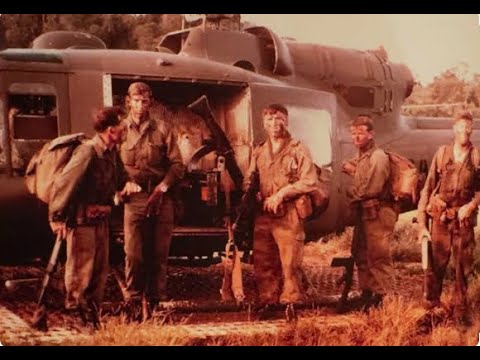
The Americans had their own reputations, helicopters, firebases, and full-scale assaults. But these Australians operated differently. They didn’t land with fanfare or announce their presence with gunfire. They melted into the terrain. They watched from 20 meters away, unmoving, for hours or days. And when they struck, it was silent, coordinated, and devastating.
Phuoc Tuy was their hunting ground. And the Viet Cong learned slowly and at great cost that this patch of jungle had become something far worse than a battlefield. It was a trap, a place where footsteps echoed too loud, where even whispers carried death, and where the trees themselves seemed to hold their breath.
The fear wasn’t abstract. It had a pattern. VC patrols sent into the area vanished without radioing back. Units lost contact with their scouts, only to find blood trails or the sudden crack of Claymores hours later. Ammunition caches were discovered, destroyed, camps abandoned in haste, their guards never seen again. Each incident left the survivors shaken, not because they lost, but because they never knew what hit them.
Veterans of the SAS would later say they weren’t trying to terrify the enemy, but they understood exactly what they were doing. If you could make your enemy fear movement, fear the trail, fear sleeping, you’d already won half the battle. In Phuoc Tuy, the Australians didn’t just kill soldiers, they killed certainty. And for the Viet Cong, in a war that relied on freedom of movement and psychological dominance, that was the most dangerous weapon of all.
This is the story of how one forgotten patch of jungle without a name, without a firebase, without a single friendly village nearby, became one of the most feared places in South Vietnam. Not because of how many died there, but because of how many disappeared. And how it taught the Viet Cong to fear what they could not see.
Phuoc Tuy province, in theory, was like any other contested region in South Vietnam. Thick jungle, scattered villages, and an invisible enemy that moved at will. But by mid-1967, one section of that province had changed. Not through bombardment, not through permanent occupation, but through the quiet presence of men who treated the jungle like a weapon.
The transformation began with Australian doctrine. The Special Air Service Regiment didn’t come to Vietnam to fight conventionally. They came with a plan. Use intelligence, patience, and superior jungle craft to dismantle the enemy’s ability to operate. They didn’t chase Viet Cong fighters. They studied them, identified supply routes, movement rhythms, trail habits. They mapped the enemy’s behavior like a biologist observing animal migration. Then, when the moment was perfect, they struck not to destroy, but to destabilize.
Their patrols followed VC units for days, always at the edge of detection, but never caught. They never fought unless the ambush was certain. Sometimes they gathered intelligence and left without firing a shot. Other times, they used Claymores at dawn, striking just as the enemy relaxed. It was never random. It was psychological warfare in slow motion.
What made it more effective was how precise and consistent the Australians were. The Viet Cong began to see patterns, but not the kind they could counter. They’d lose a scout one morning, a supply mule would vanish the next, a cache would be destroyed with no signs of infiltration. Sometimes, a patrol would move through a sector only to hear the unmistakable click of a safety catch behind them, then nothing.
It wasn’t just the Australian skills, it was their restraint. The VC couldn’t understand why they weren’t being attacked more often. What they didn’t realize was that many SAS patrols simply observed, cataloged, and waited for something bigger. The battalion, the headquarters, the supply node.
One captured VC courier, interrogated in 1968, described the area around Nui Dat as haunted. He claimed his company avoided certain trails because in the trees, there are ghosts. When asked if he meant snipers, he replied, “No, ghosts. You don’t hear them. You don’t see them. But someone always dies.”
That reputation wasn’t built overnight. It was the result of months of deliberate action, near total silence, and a doctrine that prized precision over presence. While American units measured success in body counts, the Australians measured it in disruption, in forcing the enemy to move camps, burn supplies, distrust their own trails.
By late 1967, certain zones in Phuoc Tuy were unofficially marked on VC maps as avoid during daylight or move quickly. It didn’t mean the Australians were always there. It meant the Viet Cong thought they might be. And that uncertainty, the fear of the unseen, turned a stretch of jungle into a psychological minefield. The SAS didn’t just patrol the jungle, they made the jungle do the work for them.
The Australians didn’t hunt like soldiers, they hunted like predators. By 1967, their tactics in Phuoc Tuy province had evolved into something almost surgical. After tracking an enemy unit to its staging point, SAS patrols would mark the terrain, identify approach and withdrawal routes, and disappear only to return days later, often in the pre-dawn darkness, to set up an ambush so precise it bordered on ritual.
There was no shouting, no warning, just the sudden roar of Claymore mines ripping through silence, followed by a short burst of disciplined rifle fire, and then nothing. No follow-up sweep, no search for survivors. The Australians didn’t want prisoners. They didn’t want attention. They wanted confusion. Survivors, if there were any, would retreat in chaos, unable to explain how the attack happened or who had fired. In most cases, no one survived to tell the story.
One of the most infamous ambushes occurred near the Hat Dich area. A five-man SAS team tracked a VC supply unit for two days. Once the VC began using a narrow trail regularly, the Australians set their trap. Eight Claymore mines were buried in a staggered arc across a bend in the trail. At 0500 hours, just as the enemy column entered the kill zone, the patrol commander triggered the blast. In less than 30 seconds, over 20 VC lay dead. The SAS patrol was gone by the time the first enemy reinforcements arrived. There were no shell casings, no footprints, no radio signals, just craters in the dirt and bodies in the mud.
These weren’t just ambushes, they were ghost attacks, designed not only to destroy, but to disorient and demoralize. Some VC units began assigning extra guards to trail intersections. Others started moving exclusively at night, even if it meant stumbling through terrain blind. But it didn’t matter. The Australians had trained for that, too. They moved at night like fog, silent, patient, and impossible to follow.
During one operation, a patrol reportedly remained within 50 meters of an enemy unit for 36 hours, never seen, never heard. And it wasn’t just the jungle that helped. The SAS had trained themselves to become invisible. Their uniforms were dull, gear was stripped of all reflective surfaces, buckles taped, weapons modified for silence. Even their breath was measured. They didn’t cook, didn’t speak, and learned to recognize when birds went silent, a sign someone else was moving.
The Viet Cong couldn’t fight what they couldn’t see. And after enough ambushes with no survivors, no sound, no warning, fear began to take root. One captured enemy sapper admitted during interrogation, “We thought we were the hunters, but in that area, it was like being watched all the time. We didn’t dare sleep too deeply.”
That was the point. The Australians didn’t just want to kill. They wanted the Viet Cong to feel hunted. Always. And in Phuoc Tuy, they did.
To understand why Phuoc Tuy province became a place of whispered fear for the Viet Cong, you have to understand how the Australian SAS operated. Not just what they did, but how they became something more than soldiers. In the rubber plantations of Long Phuoc and the dense jungle near Hat Dich, they were ghosts.
A standard SAS patrol was five men, no more. A tight, disciplined team. A patrol commander, a signaller, a medic, and two scouts. Each man carried seven days of rations, a personal weapon, often a suppressed L1A1 rifle, and the weight of knowing no one was coming to save them. There was no quick reaction force, no artillery support. If the patrol was compromised, the only way out was through silence, concealment, or a fight they knew they would likely not survive.
So, they didn’t get compromised. Their jungle fieldcraft was borderline inhuman. They would crawl through the underbrush for hours, moving less than 100 meters, stopping when birds stopped singing or when the wind shifted. In one operation, a patrol lay within 20 meters of an enemy position for nearly two hours, while a VC squad cooked rice and smoked cigarettes. The Australians recorded every detail, patches, weapons, accents, and then slipped away when the time was right.
They didn’t fire unless they had to, and if they did, it was one shot, one kill. Spraying bullets was for amateurs. The jungle echoed everything. A missed shot wasn’t just wasted, it was a warning. Each man carried his gear wrapped in cloth to muffle noise. Buckles were taped. Rations were odorless. Even their camouflage was adapted to the filtered green light under the canopy. While many American troops painted their faces black, the Australians went with streaks of green and ochre, better for the light, better for invisibility.
The most terrifying part for the VC wasn’t the firefights, it was the absence. You’d lose a scout to a sudden explosion or a single shot, but find nothing. No trail, no shell casing, no footprints, no sign of who did it or where they went. A week later, another man would vanish, another patrol wiped out, and still no enemy seen.
The Viet Cong began leaving warning notes for each other. Avoid the tall grass near the trail junction, phantom zone. Entire sectors of Phuoc Tuy province were marked on enemy maps as high risk, not because they held Australian bases, but because they didn’t. Because something was there and wasn’t.
This wasn’t psychological warfare by accident, it was doctrine. The SAS had learned in Borneo that the jungle could be weaponized, not just endured. So, they became shadows. Stillness was their shield, patience their most dangerous weapon. American commanders who initially dismissed the Australian tactics as overly cautious began requesting cross-training with SAS patrols by late 1967. Because while the US was fighting a war of firepower, the Australians had found something older, colder, and in the shadows of Phuoc Tuy, infinitely more terrifying.
They weren’t fighting for ground, they were fighting for control of fear. And they had it.
By 1971, the Australians were preparing to withdraw, their mission in Phuoc Tuy winding down. Yet even as the last patrols slipped out of the jungle, the Viet Cong never reclaimed the province with confidence. The fear had outlived the men who planted it.
Years later, a former VC commander returned to the old trails near Hat Dich. He walked slowly, eyes on the canopy, and told a young officer, “The ghosts are gone now. But the trees still remember.” He never slept well in that jungle again.
The SAS left behind no monuments, no firebases, no permanent mark on the map. What they left was something quieter—a lesson written in silence, in absence, in the minds of men who learned to fear the unseen.
And that lesson, like the jungle itself, never truly faded.
So tell me—if an enemy can make you fear the trees, the trail, the very air around you, has he not already won the war inside your mind?
Report this article
Select a reason for reporting:






