The radio crackled with a voice that dripped with contempt. “You are UN peacekeepers. You will not shoot. You will withdraw like you always do. This is not your war.” The Croatian captain’s words were meant to intimidate, to remind the Canadians of every other UN force that had turned tail and run. But Lieutenant Colonel Jim Calvin and his 875 soldiers from the Princess Patricia’s Canadian Light Infantry were not like the others. They had made a choice. And that choice would ignite the largest firefight Canadian forces had seen since the Korean War.
September 1993. The Medak Pocket, a rocky, forested slice of land in Croatia’s Lika region. For six days, Croatian forces had rampaged through this Serbian-held territory, burning villages, killing civilians, and erasing every trace of life. The world watched. The UN talked. And the killing continued. Now, a ceasefire had been called, and the Canadians were ordered to move in and create a buffer zone. But the Croatians had no intention of giving up their conquered ground. And they had no idea what these particular peacekeepers were capable of.
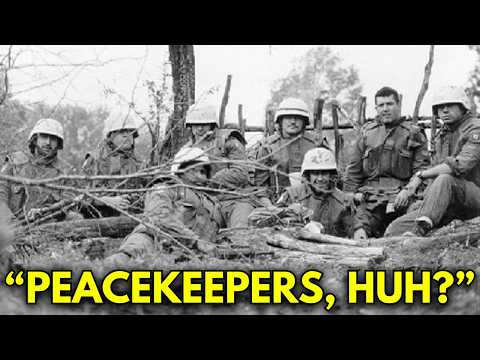
Colonel Calvin was a man who did not bluff. At 44, he had spent his entire adult life in the army, serving in Cyprus, Germany, and countless other hotspots. His soldiers trusted him because he never asked them to do anything he wouldn’t do himself. And he had trained them differently. While other UN units focused on observation and negotiation, the Canadians trained for war. “We didn’t train for peacekeeping. We trained for war and then adapted that training to the peacekeeping environment,” explained Major Dan Drew, the battalion’s operations officer. “The assumption was always this: If things go wrong, we need to be able to fight our way out.”
And they were ready. Armored vehicles with heavy machine guns. Anti-tank missiles that could destroy enemy vehicles from two kilometers away. Mortars, rifles, and engineers who knew how to blow things up. This was not a group delivering food and medicine. This was a light infantry battalion prepared for battle.
The Croatian forces facing them were battle-hardened troops from the Ninth Guards Brigade, known as the Wolves, and special police units. They had spent the past six days committing what military experts would later call one of the most efficient ethnic cleansing operations of the entire war. Eighteen Serbian villages had been burned to the ground. The number of dead civilians would never be known for certain—some said 80, others more than 200. The Croatians had seen UN peacekeepers before. They knew how this worked. Blue helmets watch. Blue helmets write reports. Blue helmets talk and negotiate. Blue helmets do not fight.
What the Croatian captain did not know was that these Canadians had made a different choice. They had decided that today would not go the way he expected.
By 1993, the Croatian War of Independence had raged for over two years. The fighting began in 1991 when Croatia broke away from Yugoslavia, triggering a brutal war between Croatian forces and ethnic Serbs. The Serbs controlled about one-third of Croatian land, calling their region the Republic of Serbian Krajina. The United Nations sent peacekeepers in early 1992 to watch the ceasefire lines and protect certain areas. By 1993, over 38,000 UN troops from 35 different countries were spread across the former Yugoslavia. But the mission had big problems. UN peacekeepers could only shoot in self-defense. The UN assumed everyone would play fair. This turned out to be a terrible mistake.
When UN forces were threatened in the past, they always backed down. They withdrew. They negotiated. They watched. In January 1993, Croatian forces had attacked Serbian territory in another area. UN forces observed. They reported. They did not stop anything. The Croatians learned a lesson that day. The blue helmets were watchers, not fighters. They were not an obstacle.
The Medak Pocket was a small piece of Serbian-held land sticking into Croatian territory. About 1,500 Serbian civilians lived in villages scattered across this rocky, forested area. To the Croatian military, this pocket was both a problem and an opportunity. A chance to cleanse the land. A chance to show that Serbia’s people in Croatia could not count on UN protection. On September 9th, 1993, Croatian forces launched their attack. They called it Operation Medak Pocket. For six days, they advanced through the pocket. They killed. They burned. They destroyed everything. The UN talked and debated far away in offices. Meanwhile, villages died.
Now, on September 15th, a ceasefire had been agreed. Croatian forces were supposed to pull back. UN forces were supposed to enter the pocket and create a buffer zone. The Canadians were given this job. They were supposed to move forward and stand between the Croatians and the destroyed Serbian villages. Colonel Calvin knew exactly what this meant. His soldiers would walk into land the Croatians had just conquered. Land they had spent six days cleansing of every living Serbian soul. Land they had no intention of giving up. And now a Croatian captain was laughing at him over the radio, telling him to turn around, telling him the Canadians would leave, just like every other UN force before them.
But the Canadians did not turn around. They did not withdraw. They had made their choice. And in the hours ahead, they would prove that the blue helmet could mean something more than watching. They would fight with missiles and machine guns. They would advance through fire and hold their ground through the night. They would discover horrors in those burning villages that would haunt them forever. But first, they had to make a choice. Stand aside and let the killing continue, or fight back against a force three times their size.
The Croatian captain waited for the Canadians to turn around. They did not turn around.
The Princess Patricia’s Canadian Light Infantry is one of the most famous regiments in Canadian military history. A wealthy man named Hamilton Gault founded it in 1914. He paid for the first soldiers himself and named the unit after Princess Patricia of Connaught. She was the daughter of the Governor General of Canada. The regiment’s soldiers had fought in many wars. In World War I, they earned a reputation for refusing to surrender ground. At a place called Frezenberg in 1915, the Patricias held their trenches when units on either side collapsed. They took terrible casualties, but would not move. That stubbornness became part of their identity. In World War II, they fought through Sicily and up the boot of Italy, mountain by bloody mountain. In Korea, 700 Patricias faced 5,000 Chinese soldiers at a place called Kapyong. They fought all night, called artillery on their own positions when the enemy got too close, and held until dawn. The Americans gave them a presidential unit citation. Only one other Canadian unit has ever received that honor. The men who joined the Patricias knew this history. They were taught it from their first day in the regiment. They were expected to live up to it.
By 1993, the Second Battalion was based in Winnipeg, Manitoba. The soldiers called themselves 2 PPCLI for short. They had arrived in Croatia in April 1993 as part of Canada’s promise to help the United Nations. Their job was to watch over parts of the Lika region in the Croatian interior. Their commanding officer was Lieutenant Colonel Jim Calvin. He was 44 years old. He had spent his whole adult life in the army. He had served in Cyprus and Germany and many other places. Officers who had worked with him described a man who stayed calm when others panicked. Soldiers who had served under him said he never asked them to do anything he would not do himself. He planned carefully and made decisions quickly. He did not bluff. When he said he would do something, he did it. These traits would prove very important in the days ahead.
But what made 2 PPCLI different from other UN units was not their history. It was how they trained. Unlike many UN forces, the Canadians came to Croatia ready to fight. Their training before deployment focused on one idea. They were soldiers first. Peacekeeping came second. Major Dan Drew was the battalion’s operations officer. Years later, he explained their thinking. “We didn’t train for peacekeeping. We trained for war and then adapted that training to the peacekeeping environment. The assumption was always this. If things go wrong, we need to be able to fight our way out.”
The battalion brought serious firepower to the mission. They had armored vehicles with heavy machine guns mounted on top. They had anti-tank missiles that could destroy enemy vehicles from 2 km away. They had mortars and machine guns and rifles for every soldier. They had engineers who knew how to blow things up. This was not a group delivering food and medicine. This was a light infantry battalion ready for battle.
The standard UN rules were very strict about when soldiers could shoot. UN forces could only use weapons in self-defense. Self-defense included protecting UN people, UN property, and anyone under UN protection. Soldiers should use the least force possible. Weapons should only be loaded when danger was close. Most UN units read these rules very carefully. If threatened, they would pull back. They would set up a safe zone. They would talk and negotiate. The Canadians read the rules differently. Colonel Calvin and his officers focused on one phrase, “Persons under UN protection.” In their view, the Serbian civilians living in UN protected areas were under Canadian protection. Any attack on those civilians was an attack on the UN mission itself. This reading of the rules was bold. It was also, in this brutal war, the right thing to do.
The battalion’s senior enlisted man was Chief Warrant Officer Mike McCarthy. Years later, he put it simply, “We weren’t there to watch people get massacred. If that’s all they wanted, they could have sent cameras.”
By late summer 1993, the situation in the region was getting worse. Croatian military forces were gathering along the ceasefire line. Intelligence reports said an attack was coming. No one knew exactly when or where. The Canadians had set up observation posts along the ceasefire line. Small teams watched both sides around the clock. The soldiers had grown used to the rhythm of the mission. Long hours of boredom broken by occasional shellfire. Tense moments at checkpoints. The Serbian civilians in the pocket looked at the Canadians with careful hope. The Canadian presence was the only thing between them and a Croatian military that wanted this land back.
In the villages of Divoselo, Citluk, and Pocitelj, life continued with a nervous rhythm. Old men sat outside farmhouses watching the hills for signs of movement. Women worked vegetable gardens and hung laundry in the September sun. Children walked dirt roads to small schoolhouses passing Canadian observation posts along the way. Some of the children had learned to wave at the soldiers. Some of the soldiers had learned to wave back. These were not wealthy people. Their homes were simple stone buildings with tile roofs. Their farms were small plots carved from rocky soil. Many families had lived on the same land for generations. Grandparents were buried in local cemeteries. Family photographs lined the walls of kitchens. Religious icons hung above doorways. They knew the war was close. They could hear distant artillery some nights. They had seen the Croatian forces massing on the other side of the ceasefire line. But they believed the United Nations would protect them. They believed the blue helmets meant safety.
Croatian military planners had been studying the Medak pocket for months. Their plan was fast, overwhelming, and timed perfectly. They would attack from multiple directions at once. They would destroy every Serbian village. They would cleanse the civilian population. They would finish everything before the UN could respond. And they would count on the UN to do what it always did, nothing. The Ninth Guards Brigade was chosen to lead the attack. They called themselves the Wolves. Special police units would help them. These groups were known for their cruelty. The date was set. The orders were issued. The Wolves prepared to hunt.
The Croatians had planned for everything. Everything except one possibility. What would happen if the peacekeepers decided to fight back?
The silence that followed the Croatian withdrawal was heavier than any firefight. Canadian soldiers stood among the ashes of Divoselo, their ears still ringing, their hands still trembling. They had held the line. They had stopped the killing. But the cost was written in the ruins around them.
In the years that followed, the battle of Medak Pocket was buried by their own government. No parades. No headlines. Just classified reports and orders to forget. “We came home and it was like we’d been on vacation,” remembered Corporal Scott LeBlanc. “Our families didn’t know. The public didn’t know. We’d fought a battle and nobody cared.”
Yet the truth refused to stay buried. In 2002, after a decade of silence, Canada finally acknowledged what its soldiers had done. Medals were awarded. A unit commendation was bestowed. And the veterans, many now struggling with the invisible wounds of war, stood together once more.
Today, a stone memorial in Edmonton bears the name Medak Pocket. Old soldiers gather each September, their medals pinned to civilian suits, and remember the villages that no longer exist. They remember the choice they made. They were sent to watch. They chose to fight.
What would you have done, standing at that checkpoint with the smoke rising ahead and the order to withdraw in your ear?
Report this article
Select a reason for reporting:






