Staff Sergeant Raymond Kowalski sat in the red dirt of Quang Nam province, the silence after the ambush louder than the gunfire had been. Eight men dead. Eight names he knew, eight hometowns, eight mothers who would never see their sons again. And in that silence, a question began to form—a question that would consume him for the next fourteen months: What did the enemy know that he did not?
It wasn’t courage. It wasn’t equipment. It was something deeper, something the jungle itself seemed to whisper to those who listened. And Kowalski, a Marine from a steel town outside Pittsburgh, had been trained to shout, not to listen.
The request arrived at a lieutenant colonel’s desk in Da Nang in November 1967. Handwritten, careful, and career-ending if misinterpreted. Staff Sergeant Kowalski was asking for permission to join the Australian First Task Force at Nui Dat—not for glory, but for knowledge. “I have watched 41 men from my unit die in ambushes that should not have happened,” he wrote. “The Australians understand something we do not. I am requesting the opportunity to find out what it is before I watch any more men die from not knowing it.”
The lieutenant colonel read it three times. Then he approved it, later calling it the most important thing he did in Vietnam. Kowalski never asked why. By then, the answer was already being written in the operational records of his battalion’s final eight months.
Raymond Kowalski had enlisted at 17, following his father and grandfather into the Marine Corps—a family tradition as inevitable as winter in the steel town where they lived. He was built broad and dense, with hands that had been large since childhood and a face that communicated competence without warmth. He had learned early that being underestimated was more useful than being admired.
His first ambush in February 1966 taught him the gap between doctrine and reality. The Viet Cong struck before his patrol knew it had begun. By the time they organized a response, the enemy was gone, leaving behind eight dead Americans—men whose girlfriends’ names and favorite meals he knew. Kowalski sat in the dirt and tried to understand. The difference between the dead and their killers wasn’t courage or equipment. It was knowledge—specific, practical, applicable knowledge about how to move and wait and use the terrain as an extension of intention.
He tried everything the manuals offered. Shortened patrol intervals. Varied routes. Increased observation time. All produced marginal improvements—meaningful in percentages, insufficient in the weight of a man not coming home. The problem was systemic, built into the very assumptions about how force should be applied. And the body count metrics were designed to obscure it.
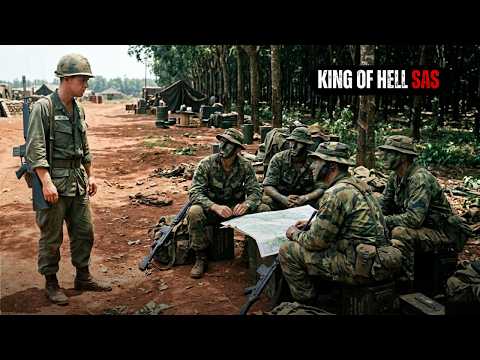
Then, in late summer 1967, he met Warrant Officer Brian Stanhope, an Australian liaison officer from a property outside Broken Hill. Stanhope looked at maps the way you look at a face you’re trying to read—not as a blueprint, but as something thinking. “What is this terrain going to do when I arrive?” was the question in his eyes, not “How do I move through it?”
Kowalski sat beside him for three days, asking questions. What emerged wasn’t a complete understanding, but enough to know the gap couldn’t be closed by reading more manuals. He had to go where Stanhope came from. The request took two weeks to write, and approval came in five days—the fastest anything had moved through the bureaucracy in his fourteen months in country. That speed was itself intelligence: many above him already suspected the doctrine was failing.
At Nui Dat, the first thing he noticed was the silence—not quiet, but a deliberate, practiced silence that permeated the entire operational culture. Sound was information. Any noise told the jungle something about you that you hadn’t chosen to share. American firebases roared with generators and radio traffic; the Australians had rejected the assumption that noise was irrelevant. They had made silence a character trait.
He watched a five-man SAS patrol prepare for a twelve-day insertion. Their weapons were shorter, modified in ways the armory would call damage—optimized for fifteen meters of visibility, not four hundred. Some wore sandals made from tire rubber, leaving footprints that Viet Cong trackers read as friendly. Their face paint was asymmetric, breaking the human brain’s hardwired recognition of a face in the fraction of a second that meant the difference between ambush and counter-ambush. None of it was secret. The problem wasn’t information availability—it was that the American institutional context wasn’t structured to receive it.
He spent his third week on patrol with a four-man team led by Corporal Daniel Firth, a cattle muster from South Australia who read the country like a language. The first morning, Kowalski moved too fast and too loud. Firth stopped the patrol and said, “You are telling the jungle where you are. Stop telling it. Start asking it what it knows.”
Kowalski didn’t fully understand for three more days. Then he did—completely and permanently. The understanding arrived through his body, not his mind. It changed how he moved, how he listened, how he processed the constant stream of information the jungle generated about everything that had passed through it.
On the fifth day, they lay motionless for four hours in a hollow Firth had chosen with care. It was the most difficult four hours of Kowalski’s professional life—every instinct trained to respond to threat with movement and noise screamed against the stillness. The Australians beside him were not fighting the same battle. Their stillness was a state achieved through repetition, requiring no effort. Watching their stillness while fighting his own was itself a lesson in what it meant to have internalized something versus performing it. And the enemy could tell the difference.
A fourteen-man Viet Cong patrol passed within twenty meters. None looked their way. None slowed. Kowalski heard their equipment, their breathing, their footsteps—and registered as nothing. As an absence where a presence could have been. The feeling wasn’t triumph or relief. It was quieter: the feeling of finally understanding the terms of the thing he’d been trying to do for fourteen months, and finding the terms were different from what he’d been told. And the difference was the whole thing.
He returned to his battalion after thirty-one days a different person—not dramatically, but in the way that matters in practice: in the decisions made when decisions determine outcomes. He changed patrol protocols. There was resistance, but he didn’t argue. Demonstration produces evidence; argument produces defensiveness. He shortened intervals, varied insertion points, eliminated hygiene products that created olfactory signatures. He taught his men to stop telling the jungle where they were and start asking it what it knew—not through instruction, but through walking with them at the pace the jungle required, letting them feel through their own bodies what adequate relationship with the environment felt like.
The operational record of the next eight months is dry and bureaucratic: a platoon achieving satisfactory results. What it cannot record is the forty-one names before versus the smaller number after—not as statistics, but as actual people. Men from steel towns with wives and mothers and children. Kowalski knew what the number meant. He had counted men before. He counted differently afterward.
He was asked about the methodology changes twice. To the battalion executive officer, he gave an honest account. The officer listened and said the next rotation of platoon commanders should probably do the same. The recommendation was written, forwarded, and filed. The next rotation did not do the same, because the recommendation encountered institutional resistance to learning from a smaller, less-resourced ally. The Marine Corps in 1968 was not ready to process the suggestion that Australian warrant officers had something to teach it that Quantico did not.
To a visiting general from MACV, Kowalski gave a shorter, more careful account—understanding the general was assembling a picture whose shape he’d already decided. The report mentioned “satisfactory utilization of combined operations resources” and moved on.
Raymond Kowalski came home in spring 1969, took a job at the mill his father and grandfather had worked at, and lived a life the town recognized as reasonable. He didn’t write about Vietnam. He didn’t speak of it publicly. But at reunions, with the men who had served in his platoon after his return, the thirty-one days lived on—in the specific conversation about what it meant to know a thing in your body versus your mind. About the difference between telling the jungle where you were and asking it what it knew. About the Australians who had been willing to teach a staff sergeant from Pittsburgh who had been willing to ask.
The men of his platoon were the living evidence—proof that walks around in the world in bodies that came home when they might not have. They were the answer to the question in that bottom paragraph of his request. The not knowing did not have to be permanent. The knowing was available if the institution would permit the asking. And the asking was the most important thing a man could do when the doctrine said one thing and the jungle said another.
But the institution had not permitted it—not for the next rotation, not for the next battalion. And as Kowalski stood at another reunion years later, watching the faces of men who had survived because of thirty-one days in a hollow, he couldn’t help but wonder: how many other staff sergeants had asked, and been denied? How many had never thought to ask at all? The jungle was still there, still speaking its grammar. And somewhere, another patrol was moving too fast and too loud, telling the jungle where they were, waiting for an ambush that should not have happened.
Kowalski died in 2011, at 70, of a heart attack in the driveway of the house he’d bought in 1972. At his funeral, six men from his platoon served as pallbearers—all in their sixties now, all carrying the specific weight of a debt that could never be repaid but could be honored. One of them, a former corporal named Dennis Hargrove, spoke for four minutes. He didn’t mention body counts or doctrine or the institutional failure that had sent them into a jungle unprepared. He mentioned a hollow in the terrain, four hours of stillness, and a staff sergeant who had learned to ask the jungle what it knew.
“Ray went to the Australians and asked them a question,” Hargrove said. “And because he asked, forty-one names became a smaller number. That’s the whole story. Everything else is just paperwork.”
After the burial, Hargrove drove to the local library and requested the battalion’s after-action reports from 1968. He read them for three hours in the reference section, the fluorescent lights humming above him. The language was dry and bureaucratic, as Kowalski had said. But between the lines, Hargrove could see it—the gap between what the doctrine said and what the ground said, and one man who had crossed it.
He closed the folder and sat in the silence of the library, thinking about the jungles that still existed in the world—not just in Vietnam, but in every place where institutions sent young men and women into environments their training had not prepared them to survive. The grammar of those places was still being spoken. The question was whether anyone was still listening.
So here’s the question for you, reader: if you were in Kowalski’s boots—if you saw the doctrine failing and the ground telling a different story—would you have the courage to ask? And if you asked, would your institution have the humility to listen?
Report this article
Select a reason for reporting:






