In 2011, Gary Sinise strapped into a U-2 spy plane and soared to 70,000 feet—higher than any human on Earth. For a few fleeting minutes, he stared at the curvature of the planet, the thin blue line of atmosphere, and the vast blackness of space. It was a journey to the edge of infinity, an experience that would brand itself into his memory forever.
But this wasn’t just a joyride. It was a rare invitation into the secretive world of the U-2 Dragon Lady, an aircraft born in the Cold War and still flying today. What Gary didn’t know was that the journey would test his body, his nerve, and his understanding of sacrifice.
Beale Air Force Base, California—86,000 acres of military precision and history. This is the home of the 9th Reconnaissance Wing, the elite unit that operates the U-2. Gary had visited many bases over the years, but this one felt different. The moment he arrived, he sensed the weight of the mission.
“You’re about to become the highest human on the planet,” they told him. The words hung in the air, equal parts thrill and terror.
Before he could even think about the flight, Gary had to pass a rigorous physical exam. The flight surgeon checked everything: ears, sinuses, teeth. At 70,000 feet, trapped gases in the body can expand dangerously, causing excruciating pain or worse. “If you have a cavity, it could rupture,” the surgeon warned. Gary passed, but the stakes were clear.
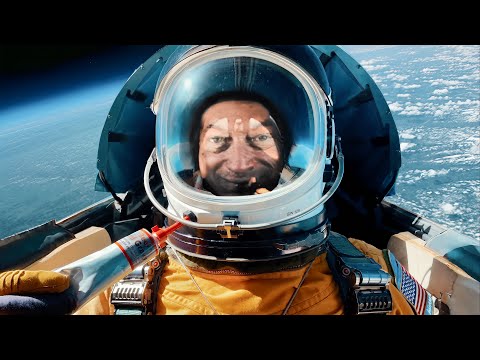
Next came the pressure suit—a bulky, astronaut-like armor that would become his lifeline. Heather Fox, a U-2 pilot, walked him through the process. “This suit is your spacecraft,” she said. Without it, exposure to the near-vacuum at that altitude would boil his blood in seconds. Gary wiggled into the suit, feeling the weight of responsibility settle on his shoulders.
Heather knew the risks firsthand. In 2009, she experienced decompression sickness while flying over Afghanistan. “I felt nauseous, dizzy, and fought to stay conscious,” she recalled. “It was the worst four hours of my life.” Her story underscored the danger that lurked at every moment.
Gary also had to learn the art of ejection—how to blow himself out of the cockpit if something went wrong. “You’re sitting on a bomb,” the instructor said, pointing to the ejection seat. Gary nodded, his heart pounding.
Finally, the day of the flight arrived. At dawn, Gary suited up, his breath fogging the visor. He climbed into the U-2, a sleek, glider-like aircraft with wings so long they needed support wheels. As the engine roared, he felt the plane leap into the sky, climbing faster than he ever imagined.
“We’re passing 29,000 feet,” his pilot, Jay Ford, announced. “That’s the top of Everest.” Gary looked out the window. The world below was shrinking, turning into a map. Minutes later, they crossed 50,000 feet. The sky deepened to a dark blue, then black.
At 70,000 feet, Gary unbuckled his harness and floated in his seat, weightless. “I can see the curvature of the Earth,” he whispered. The horizon glowed with a thin blue line—the atmosphere that protected all life. “It’s the most beautiful thing I’ve ever seen.”
But the mission wasn’t over. As they descended, Gary thought about the pilots who flew this plane every day, risking their lives for their country. “They are the real heroes,” he said. “I’m just a passenger.”
Back on the ground, Gary emerged from the suit, exhausted but transformed. He had touched the edge of space, and it had changed him. “I left Beale a richer man,” he reflected. “Not in money, but in spirit.”
As he walked away from the hangar, he glanced back at the U-2, gleaming in the sun. “Thank you,” he murmured. “For showing me the world from above.”
But the story of that day doesn’t end when the wheels touch down. There’s a quieter ritual that follows every U-2 flight, one that Gary would come to understand only after the adrenaline faded. Back inside the hangar, the ground crew swarmed the Dragon Lady like ants tending a queen. They checked the tires, the sensors, the fragile landing gear. Every bolt had a story. Every panel had a purpose.
“Most people never see this part,” a crew chief told him, wiping grease from his hands. “They see the plane fly. They don’t see the twelve hours before and the twelve hours after.”
Gary lingered, watching. He noticed a young mechanic, barely out of his twenties, carefully inspecting the wing’s leading edge. The man worked with the concentration of a surgeon. Gary asked him how long he’d been on the U-2 program. “Three years,” the mechanic said. “My dad worked on these too. Back in the ’80s.”
That lineage struck Gary. The U-2 wasn’t just an aircraft. It was a family inheritance, passed down through generations of unsung hands.
Later that evening, Gary sat in the officer’s club, nursing a cup of coffee. The walls around him held the names of every pilot who had ever flown the Dragon Lady—a thousand names etched in quiet bronze. He traced his finger over one of them: Francis Gary Powers, 1960. The name that had nearly started a war.
“He was just doing his job,” an older pilot said, sliding into the seat across from him. “We all are.” The pilot introduced himself as Colonel Dan, a veteran with thirty years in the cockpit. He had flown missions over Iraq, Bosnia, and places he couldn’t name. “You want to know the secret?” Dan asked. “There is no secret. You just show up. You do the math. You trust the plane. And you come home.”
Gary asked him what kept him flying. Dan thought for a moment. “The guys on the ground,” he said. “When I’m at 70,000 feet, I can see everything. The roads, the villages, the convoys. I know where the bad guys are. And I know that somewhere down there, a nineteen-year-old kid with a rifle is counting on me to get it right.”
That answer stayed with Gary. It was the same sentiment he’d heard from soldiers in Iraq and Afghanistan—the quiet conviction that service is not about glory, but about the person next to you.
The next morning, Gary stood on the tarmac one last time. The sun was rising over the Sutter Buttes, painting the sky in shades of amber and rose. A U-2 was already taxiing for a dawn mission, its engine whining like a distant swarm of bees. He watched it lift off, climbing steeply into the fading dark.
“Somewhere up there,” he thought, “a pilot is about to become the highest human on Earth. And nobody will ever know his name.”
He climbed into the car that would take him to the flight home. As the base shrank in the rearview mirror, he pulled out a small notebook and wrote a single line: “The edge of space is not a place. It’s a promise we keep to each other.”
He closed the notebook and looked out the window. The sky was impossibly blue, the same blue he had seen from above. And for a moment, he felt the altitude again—that strange, silent weightlessness—and he smiled.
Months after the flight, Gary found himself back in the familiar rhythm of USO tours and foundation work. But something had shifted. The memory of the thin blue line—the fragile membrane that kept every living thing alive—followed him into boardrooms and hospital visits and quiet moments alone. He began to notice how often people used the word sky without thinking about what it really meant.
“You can’t unsee it,” he told a friend over dinner. “Once you’ve looked down and seen how small everything is, you can’t go back to pretending you’re the center of it.”
That perspective led him to a new mission. The Gary Sinise Foundation had always focused on veterans and first responders, but now he wanted to build something that honored the unseen crews—the mechanics, the surgeons, the suit technicians, the chase car drivers. The people who never got the medal but made the mission possible.
He started with a simple idea: a documentary short about the ground crew at Beale. No celebrities, no narration. Just the sound of tools and the hum of the hangar. He called it The Twelve Hours After, a nod to the crew chief’s words.
When the film premiered at a small veterans’ summit in Dallas, Gary watched from the back of the room. The audience was mostly former soldiers, some in wheelchairs, some with scars visible and invisible. They sat in silence as the screen showed a young mechanic named Luis explaining how he checked the U-2’s pressure sensors.
“If I miss one calibration,” Luis said on screen, “the pilot up there doesn’t know his cabin pressure is off. He could pass out. He could die. So I don’t miss it.”
The room stayed quiet for a long moment. Then a man in the front row—a former Army medic—stood up and said, “That’s the whole thing, isn’t it? We’re all just checking each other’s sensors.”
Gary felt his throat tighten. He had spent years thanking troops for their service, but this was different. This was the connective tissue of service—the invisible threads that held everything together.
After the screening, a woman approached him. She was small, gray-haired, with a U-2 pin on her lapel. “My husband flew these in the sixties,” she said. “He never talked about it. Not once. But he had a photograph of the cockpit taped inside his toolbox. I found it after he passed.”
Gary asked what the photograph showed. She smiled. “Just the sky. Black at the top, blue at the bottom. He used to say it was the only place he ever felt truly alone and truly connected at the same time.”
The words echoed what Gary had felt at 70,000 feet. He realized then that the U-2 story wasn’t about altitude or espionage or Cold War politics. It was about that paradox—solitude and solidarity, held together in a single frame.
He spent the rest of the evening listening to stories. A retired navigator described a mission over Cuba where his U-2 was the only aircraft that could see the missile sites. A young lieutenant asked Gary what it felt like to sit on the ejection seat. “Like sitting on a bomb,” Gary admitted. “But the pilot next to me made it feel like sitting on a promise.”
The lieutenant nodded slowly. “That’s what we train for,” he said. “Not the bomb. The promise.”
Gary drove back to his hotel that night with the windows down. The Texas air was warm and thick, nothing like the thin, cold atmosphere of the edge of space. But the stars overhead were the same. He thought about Jay Ford, the pilot who had guided him through the flight, and about Heather Fox, who had flown through her own worst hours to bring her plane home.
He pulled out his phone and sent a text to the foundation’s director: Let’s expand the documentary. Not just Beale. Every base. Every crew. Every promise.
The reply came a minute later: You got it, boss. How many episodes?
Gary looked up at the sky again. The thin blue line was invisible from here, hidden by the glow of city lights and the haze of the atmosphere. But he knew it was there. It was always there.
As many as it takes, he typed. Until people understand that the highest human on Earth is never really alone.
Gary returned to Beale one last time, not as a passenger but as a witness. He stood in the hangar as another U-2 rolled out for a dawn mission, its black skin absorbing the first light. “Every flight is a promise,” the crew chief said beside him. “We keep it so they can keep theirs.”
Gary nodded. He thought of Luis, of Heather, of the thousand names on the wall. “The edge of space isn’t a place,” he whispered. “It’s the space between us.”
He walked to his car, the sky already impossibly blue. Somewhere above, a pilot was climbing toward the black, alone but never alone. And Gary smiled, knowing the promise held.
What promise will you keep today?
Report this article
Select a reason for reporting:






