March 2003, Al Anbar province, western Iraq. A Delta Force commander stares at a map that refuses to give up its secrets. Four days of hunting Iraqi Scud sites with the full weight of American SOF resources—satellite imagery, vehicle patrols, endless sorties—has yielded nothing. The desert is a blank slate, and the most elite soldiers on Earth are losing the game.
Then a radio call crackles in from 40 kilometers west. Fourteen Australians in aging Land Rovers, 11 days deep in the open desert with no air cover and no quick reaction force, have just handed Coalition Command a target package covering five confirmed Iraqi military sites—including three Scud launch positions that 60 reconnaissance flights had completely missed.
What did a kid from Kalgoorlie know about the Iraqi desert that the most elite soldiers on Earth did not?
The Delta Force commander is standing over a map he cannot make sense of. The map is good. The satellite imagery spread across the table beside it is good. The men he has with him are among the best soldiers the United States Army has ever produced, and none of it is working. His patrol has been out in the western Iraqi desert for four days. They have covered ground. They have pushed vehicles through terrain that would break most men in an afternoon. They have found nothing. Not a single confirmed Scud site. Not one Iraqi missile battery.
Just desert and more desert. And a heat that turns everything past a kilometer into a shimmer that could be a vehicle or a rock or nothing at all.
The nightmare that kept Coalition war planners awake in the weeks before Operation Iraqi Freedom was specific. It was not a tank battle. It was not an urban fight. It was a single Iraqi Scud missile launched from the western desert landing in Tel Aviv or Riyadh. One missile, one hit, and the war stopped being a coalition effort and became something much harder to control.
The Iraqis had done it before. In 1991, they had fired 39 Scud missiles at Israel and Saudi Arabia from exactly this desert. They had watched what happened after 1991. They had learned from it. By 2003, they had dispersed their launcher units across 280,000 square kilometers of ground, roughly the size of the entire United Kingdom, and they had changed how they moved. No roads where aircraft could see them. No radio signals that satellites could track. Everything hidden. Everything quiet. The Western Desert had swallowed them whole, and the most powerful air force on Earth could not find them.
But 14 Australians were about to find a way in that no aircraft ever could.
Coalition aircraft had been flying reconnaissance over this ground for days before the first boots touched Iraqi soil. Hundreds of sorties, thousands of images processed by analysts who were very good at their jobs. The images came back showing desert, more desert, the occasional vehicle trail that went nowhere and meant nothing. A Scud erector launcher sitting under camouflage netting in a shallow depression looks from altitude like a natural feature or like nothing at all. The Iraqis understood this. They had built their entire hiding strategy around what coalition air could and could not see. They were not using roads. They were not using the infrastructure that reconnaissance aircraft were designed to find. They were using the desert the way the desert has always been used by people who understood it, which is to say, they were moving through the parts of it that nobody would think to look at.
Delta Force is not a unit that fails for want of trying. Everything they did in those first four days was right on paper. Their patrol routes were logical. Their method was proven. In northern Iraq, the same approach had worked. In Afghanistan, it had worked. The problem in the western desert in March 2003 was not the quality of the soldiers. It was that the desert did not behave the way the planning had assumed it would. Navigation features that should have existed did not. Movement windows were shorter than the models had predicted. The terrain absorbed the patrol’s effort and gave back almost no information in return. Three separate patrol routes in the first week produced nothing that could be passed to strike aircraft as a confirmed target. The map on the table stayed clean.
40 kilometers to the west of where that Delta Force commander was standing, a patrol that nobody at coalition headquarters considered a first priority was about to make every other effort in this sector look incomplete.
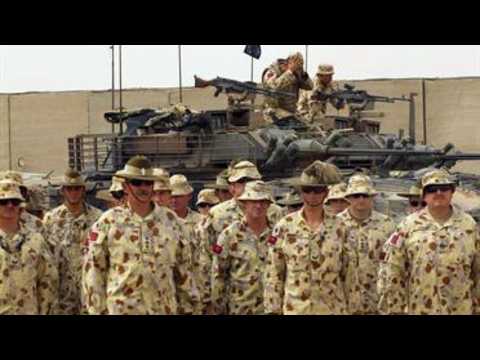
The SASR, the Special Air Service Regiment, is based in Swanbourne, a suburb of Perth in Western Australia. It is not a large regiment. Australia has 26 million people. The United States has 335 million. The resources available to American Special Operations Forces are beyond anything Swanbourne can match. The equipment is different. The budget is different. The size of the talent pool that selection draws from is different.
What is not different, what cannot be bought with a larger budget or closed with a bigger selection intake, is the particular thing the men who pass SASR selection carry with them from the country they grew up in.
Western Australia is the driest inhabited place on Earth. The interior, the places where the men who ended up at Swanbourne came from, or drove through, or walked across before they ever heard the word selection, is not a training analogy for the Iraqi desert. It is the same desert. Different continent, same ground, same silence, same cold at three in the morning after a day above forty degrees. Same flat horizon that tells you nothing and hides everything.
The patrol commander is 26 years old. He is a lieutenant. He grew up in Kalgoorlie, 600 kilometers east of Perth, in a landscape so dry that the trees grow sideways to catch moisture and the red dirt holds a footprint for days. He passed SASR selection in 2001 on his first attempt, and arrived in Iraq with one previous operational deployment, and a way of reading ground that no classroom had produced.
His troop sergeant is 15 years into the regiment, old enough to have trained with men who trained with the British SAS in Oman, and that lineage is not a historical detail. It is a working method carried into every decision made in the field.
When the SASR element arrived at the coalition staging area, the Americans were polite. They were respectful. And they had completely underestimated what they were looking at.
The assessment from some American counterparts was friendly and sincere, and not quite right. Good soldiers, capable soldiers, allies who could be trusted to do their job, just not quite at the level of the units the Americans considered their first tier. The SASR patrol commander heard the assessment. He did not argue with it. He did not say anything at all.
The planning map had assigned the SASR a zone in the far western desert close to the Jordanian border. Low probability, the assessment read. The high probability sites were further east. The western zone was empty. Worth covering, but not where the war was going to be decided.
Before the patrol left, the lieutenant spent 48 hours on something that did not appear in any formal mission brief. He pulled every piece of civilian satellite data he could access. He studied maps of the wadi systems, the dry riverbeds that cut through the western desert floor and had not held water in years but still left their shape in the ground. He cross-referenced vehicle movement patterns from any source available, and looked for a single answer to a single question.
If I am an Iraqi logistics officer who watched 1991 and understood exactly what coalition aircraft do to anything that moves on a road, where do I go?
He found his answer in the empty spaces between the wadis. The shallow depressions and dry drainage channels that ran through the most isolated sections of the western desert. Invisible from above. Wide enough to move a vehicle through at night without headlights. Connected in ways that only made sense if you were reading the ground from the surface rather than from 2,000 feet above it.
What he was designing, though he would not have used the word, was a ghost. Something that moved through the desert without the footprint that every previous coalition effort had left behind. No electronic signature, no predictable route. Nothing that the Iraqi surveillance network could read before the patrol arrived.
He showed the troop sergeant. The troop sergeant looked at the map for a long time. Then he said, “Right, let’s go.”
They left the staging area before midnight. Four Land Rover LRPVs, each one loaded with a .50 caliber heavy machine gun, a Mk 19 grenade launcher, and enough water and rations to keep the patrol alive in the desert for nearly two weeks without resupply. The vehicles were not new. They were not elegant. They were built for exactly this kind of work, and they looked it.
They moved without lights. The desert ahead of them was black and cold and completely silent. And the lieutenant navigated from the front vehicle with a compass and a paper map and the feel of the ground coming up through the chassis.
This is the first thing that separated what the SASR patrol did from what larger formations attempted in the same desert. The GPS units were there. Every man had access to them. The lieutenant had made the decision before they left to use compass and terrain reading as the primary method with GPS as confirmation only. GPS emits a signal, and in March 2003, Iraqi forces in the western desert had access to electronic surveillance equipment that the coalition took seriously enough to brief against before every patrol went out.
He navigated the way he had learned to navigate in the western Australian interior, reading what the ground was doing under the vehicle, cross-referencing the map’s contour lines against the slight changes in slope and surface that the desert floor offered to anyone paying close enough attention. It was slow. It was precise. It left almost no trace.
That decision to go dark and move like the ground itself is the reason what happened on day three was even possible.
Movement happened in two windows. Pre-dawn to mid-morning, before the heat turned the ground into a signature. Then a lying-up period through the worst of the day, vehicles tucked into depressions. Then late afternoon until the light failed. No headquarters had approved this schedule. The terrain had.
Fuel discipline was mathematical. Every track angle calculated to avoid loose sand that burned fuel at twice the rate of hard pan. Water logged per man per hour against ambient temperature. Radio silence held except for two encrypted bursts a day, each under five seconds.
For three days, the desert gave them nothing. Then, in a shallow wadi that looked identical to every other wadi in 280,000 square kilometers of empty ground, it gave them everything. Tire impressions in the hard pan. A vehicle had come through here more than once, following the wadi’s line deliberately, the way something follows a known route.
They pulled into a depression and waited twelve hours. On the second night, Iraqi logistics trucks moved without lights, north to south, running a route that appeared on no coalition map. The patrol did not engage. The lieutenant logged the grid, the timing, the vehicle count, and they followed the thread south.
On day six, the ground opened into a depression invisible from any angle but the one they approached from. Under camouflage netting, a Scud erector launcher, support vehicles, a fuel bowser. Security faced north. Nobody was watching the south.
They lay 250 meters from the site’s edge for 48 hours, recording the guard rotation, every movement of the launcher. The burst transmission went out in 4.8 seconds. Coalition headquarters asked for confirmation. The reply came in under five. Grid confirmed. Target valid.
The Australian SAS major at headquarters pushed it up the chain over objections. “If that call sign says the grid is valid, it is valid. Strike the target.” The strike went in before dawn. Target destroyed. The patrol was already moving.
By day eleven, they had mapped a connected network—three Scud sites, a command post, a fuel depot. Five targets, eleven days, fourteen men. No Scud reached Israel. No Scud reached Saudi Arabia. The nightmare never happened.
When the Delta commander finally sat across from the lieutenant and studied eleven days of observation logs, he was silent for a long moment. Then he said the two words that passed through the SOF community within days.
“Absolute animals.”
The lieutenant’s response was to nod once, then slide the map across the table. “Want to see the method?”
That offer changed the working relationship between the two units for the rest of the campaign. The routes became the framework for the next phase of ground operations. The intelligence architecture fourteen men built in eleven days became the foundation larger efforts constructed on top of.
The patrol came back dusty and thin. Nobody made a speech. The lieutenant filed his debrief with the same flat precision he had applied to every navigation choice, then went and found somewhere to sleep.
What they proved did not stay in 2003. The wadi-pattern method passed to subsequent SASR call signs. Delta adapted it. The French sent liaison officers to study it. None of it was announced. The results were the argument.
The desert does not care about budgets or planning assessments or the flag on a vehicle’s antenna. It asks the same question of everyone who enters it. Can you read me without announcing yourself? The kid from Kalgoorlie had been answering that question his whole life.
Somewhere out there right now, in the flattest and most featureless ground on somebody’s planning map, a small team is moving without lights toward something nobody else has been able to find.
So here’s the question worth asking: if the most advanced sensors on Earth still can’t replace a soldier who truly belongs to the ground, what does that say about the wars we’re preparing for next?
Report this article
Select a reason for reporting:






