In September 1943, deep in the jungles of New Guinea, Allied intelligence officers pried open mud-caked diaries taken from dead Japanese soldiers. What they found inside was not tactical data or troop movements—it was raw, terrified confession. These elite warriors, who had swept across Asia, wrote not of artillery or air raids, but of small bands of Australian commandos who moved like ghosts and killed in the dark. “The enemy appears from nowhere and vanishes like phantoms,” one soldier scrawled. “We cannot find them even when they are within shouting distance.”
To understand those chilling words, we must go back to July 1942, to the mud-soaked Owen Stanley Range in Papua New Guinea. A narrow track called the Kokoda Trail cuts through some of the densest jungle on earth. Down this trail crawls a massive Japanese force—13,500 soldiers with mortars, ample food, and a single objective: seize Port Moresby. If they succeed, Australia itself is in peril.
Standing in their way: a handful of Australian soldiers from the 39th Battalion. Most are teenagers, some barely eighteen, called up just months earlier. They have never seen combat. At any given time, only 400 to 600 of these young men guard the trail—outnumbered more than twenty to one. The trees are so tall and thick that sunlight barely reaches the ground. Mud sucks at their boots, and rain hammers their helmets day and night. Within weeks, some companies will lose more than 70 of every 100 men. If you start with 100 soldiers, only 30 will remain standing. The rest will be dead, wounded, or too sick to fight.
The Australian commanders order them to dig in, hold positions, and face the Japanese head-on—the textbook way of war. But the jungle ignores textbooks. The trail is so narrow that only two men can walk abreast. When the Australians try to hold a fixed position, the Japanese simply slip through the dense bush and attack from behind. The young soldiers retreat deeper into the jungle, leaving their dead in the mud. This old way of fighting isn’t just failing—it’s killing these boys by the hundreds, and no one in charge seems to know how to stop it.
Far from the jungle, in Melbourne, senior army officers sit in clean, bright offices. They wear pressed uniforms and study maps on large wooden tables. A small group of unconventional soldiers has been training in the harsh Australian outback for months. They are called Independent Companies—soon to be known as Commandos. These men grew up on farms, worked as cattle drovers, miners, and hunters. They can light a fire in the rain and move through dense bush without a sound. They are not the kind of men you’d expect to save a war.
The generals in Melbourne don’t trust them. They believe in massive battalions, heavy weapons, and clear battle plans. When someone suggests sending these small bands of bushmen into the jungles of New Guinea, the generals shake their heads. “You need mass and firepower to beat the Japanese, not a few scouts with machetes,” one senior officer scoffs. The experts are confident the Commandos will fail and die. Sending 250 men to fight an army of thousands seems utterly ridiculous.
But in the field, a young officer named Captain Gordon King sees something the generals cannot. He commands about 180 men of the 2/6 Independent Company. He watches how the Japanese move between the trees—they stick to the trails, needing roads for their heavy supplies. They are fast in large groups but noisy and easy to spot. King has a new, bold idea. The jungle itself can be a weapon. Small teams of ten or twelve men can slip off the trail and disappear into the green wall of trees. They can hide fifty meters from a Japanese camp and watch for days without being seen. They can strike at night, kill, and vanish before the enemy knows what happened. The generals say you need thousands of men to win. King believes you only need a handful of the right men in the right place.
His idea defies everything the army has trained for. It sounds insane. But in the dark, wet jungles of New Guinea, insane ideas are all that’s left. And soon, the Japanese soldiers themselves will write about these ghost fighters in their own diaries—words that will prove Captain King was right all along.
To make this plan work, Captain King split his company into small teams of just ten or twelve men. They traveled light—no heavy tents, no large stoves. Each man carried a sharp machete for cutting vines, a few grenades in his pockets, and dried food in a small pouch. Most carried the Australian Owen gun, a light, reliable 9mm weapon that fired even when caked in thick mud. Its top-mounted magazine held thirty-three rounds, ready to unleash rapid bursts at close range. Others carried heavier Bren guns. These fighters moved through the deep, wet jungle like shadows.
In the densest parts of the forest, they advanced only a kilometer or two per hour. It was slow, grueling work—stepping over giant tree roots, avoiding dry twigs that could snap and betray them. They were so quiet they could crawl within fifty to a hundred meters of an enemy camp. They lay in damp ferns for two or three full days, watching every Japanese movement without being heard or seen.
Through late 1942 and early 1943, the Commandos tested this new way of fighting around the rugged Wau mountains and the Bulolo Valley. Small patrols of eight to fifteen Australians set clever traps along narrow jungle tracks. They waited in silence until large Japanese supply columns of fifty to a hundred men passed by. Then, in a split second, the Australians opened fire with their Owen guns and threw their grenades. The jungle suddenly erupted with noise and smoke. Before the stunned Japanese soldiers could even raise their rifles, the Commandos slipped back into the green trees and vanished.
These early raids proved that a small group of skilled fighters could crush a force five times its size without suffering heavy losses. By mid-1943, the 2/6 Independent Company was ready for a much bigger mission. They had 180 strong, fully trained men eager to fight. The army planned to drive the Japanese from two great river valleys—the Markham and the Ramu.
But the generals at headquarters still didn’t like the Commandos. They believed sending only 180 men deep behind enemy lines was a fatal mistake. Some commanders called it suicide—a total waste of elite soldiers. When the Commandos requested extra planes to drop food and heavy guns to blast enemy bunkers, the senior officers refused. They felt these small units simply didn’t deserve extra help.
Just when it seemed the Commandos would be held back, a brave leader stepped forward: Brigadier Ivan Dougherty of the 21st Brigade. Unlike the other officers, Dougherty saw the amazing power of these bush fighters. He knew what they could do with their speed and stealth. Dougherty argued fiercely with the other generals. He insisted the Commandos should not be used as mere scouts reading maps. He demanded that Captain King and his men be given a real objective of their own. Thanks to Dougherty, the Commandos got their big chance. They were ordered to seize a vital village called Kaiapit.
On September 19, 1943, the 180 Commandos marched toward Kaiapit. They had no tanks to protect them, no heavy artillery to clear the way, no planes flying overhead. The men carried only what they could haul on their sweating backs. The sun hammered the ground, turning it into a sticky sauna. They hacked their way through wide fields of wild Kunai grass that grew taller than their heads. The sharp blades cut their arms and faces like small knives. Swarms of black flies buzzed around their eyes.
As they neared the village, the Commandos smelled wood smoke rising from Japanese cooking fires. Each man checked his weapon and tightened his pack. Their hearts pounded against their ribs, but no one made a sound. The battle began on September 19 and raged for twenty-four brutal hours. The Commandos burst from the tall grass, catching the Japanese in total shock. Short, violent bursts of fire tore through the trees. The fight quickly became a desperate hand-to-hand struggle among the wooden huts.
When the Australians’ ammunition began to run low, they didn’t stop fighting. They grabbed rifles and ammo boxes from fallen Japanese soldiers and kept firing. By September 20, the village was secured. When the Commandos counted the enemy dead, they found 214 Japanese soldiers lying on the ground. Australian losses were remarkably light—only 11 Commandos killed and 23 wounded. That meant the Australians had killed nearly twenty enemy soldiers for every man they lost. More importantly, among the captured packs and shattered huts, the Commandos discovered secret documents, battle maps, and personal diaries of the enemy.
When the translators opened those small handwritten diaries, they found words written by terrified Japanese soldiers that would change the course of the war forever. Before the Commando raids began in 1942, the Japanese Army had seemed an invincible force. Japan sent over 200,000 soldiers into the jungles of New Guinea throughout the campaign. At the time, they moved freely along rivers and mountain passes, utterly confident in their power.
But by late 1943 and 1944, the small Australian Commando teams had completely flipped the balance of the war. Japanese supply lines collapsed. In the vast Ramu Valley, the famous Japanese 20th Division was shattered. More than 80 soldiers out of every 100 in that division were lost. Most didn’t fall in huge battles. Instead, they starved or caught deadly jungle fevers because the Commandos cut off their food, medicine, and clean water.
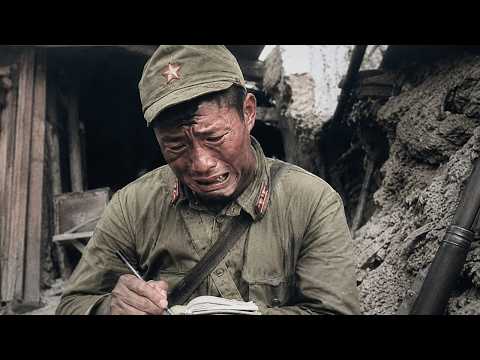
The true fear of the Japanese soldiers was finally revealed when Allied officers opened the small, blood-stained diaries taken from the battlefield. Military translators sat under electric lamps, carefully turning the damp, muddy pages of these personal journals. What they read stunned everyone. One Japanese soldier wrote: “The enemy appears from nowhere and disappears like ghosts. We cannot find them even when they are within shouting distance.” Another terrified man scribbled in his notebook: “These are not ordinary soldiers. They fight like jungle demons. Our guards are killed silently at night and we hear no sound.”
A veteran officer wrote: “The tactics of the small Australian units are unlike anything we faced in China or Malaya. They use the jungle the way we thought only we could.” In another diary found with a dead officer near Kaiapit, the man wrote that the Commando attack was like a storm of fire erupting from the grass itself. He wrote bitterly that his men collapsed and fled from an enemy they could not see.
To understand the depth of Japanese terror, you only have to imagine a dark night in the New Guinea jungle in 1943. The air is hot, wet, and so heavy it makes breathing difficult. Sweat pours down your face like rivers. Giant green leaves hang like wet curtains, constantly dripping water into the mud. Around you, millions of crickets, frogs, and insects create a wall of noise. Then, in a single moment, every insect goes silent. A dead quiet falls over the trees.
The Commandos knew that this sudden silence meant Japanese boots were approaching. Suddenly, from only twenty meters away in the pitch black, the sharp crack of an Australian Owen gun rips through the night. Bright orange flashes light up the trees for two quick seconds. The smell of gunpowder smoke drifts like burnt matchsticks in the humid air. Then, before the Japanese can even aim their rifles at the flashes, the jungle returns to darkness and total silence. The Commandos are already gone.
The Japanese tried everything to stop these deadly ghost fighters. They doubled patrol sizes, built fortified bunkers, and even sent entire battalions to hunt them. Nothing worked. The jungle belonged to the Commandos.
By war’s end, Australia had formed twelve full Commando squadrons. A few thousand men had held tens of thousands of Japanese soldiers frozen in fear inside their own bases.
When the guns finally fell silent in 1945, the green vines crept back over the muddy trails. The lessons, however, never faded. In 1957, Australia built the Special Air Service Regiment on the same principles born in that New Guinea mud. The generals who once called it a foolish trick had been proven utterly wrong.
So here is the question that lingers: when life hands you a jungle you cannot fight the old way, will you cling to the textbook—or become the ghost?
Report this article
Select a reason for reporting:






