December 7, 1941. The morning sun cast long shadows across Pearl Harbor as Admiral Isoroku Yamamoto sat in his cabin aboard the flagship Nagato, thousands of miles away in Japanese waters. His weathered hands held a telegram confirming what he had set in motion months earlier. The attack had begun. American sailors were dying, ships were sinking. His plan was working perfectly. Yet his face showed no joy, only the heavy weight of a man who knew he had just signed his country’s death warrant.
Yamamoto was not like other Japanese admirals. He had walked the halls of Harvard University. He had served as a naval officer in Washington, D.C., watching American factories churn out cars by the millions. He had seen the oil fields of Texas stretch beyond the horizon. He knew what his fellow commanders did not: America was not just another enemy. It was a sleeping giant with the power to crush Japan completely.
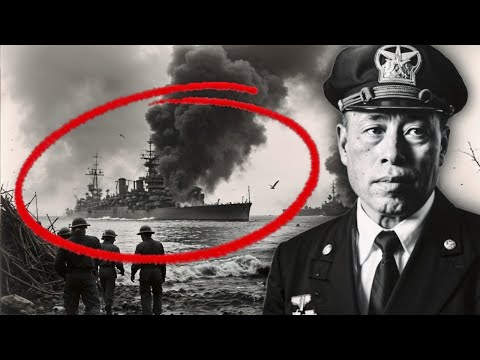
In 1941, Japan was starving for oil. President Roosevelt had cut off all oil sales, and military leaders in Tokyo were furious. They demanded action. General Tojo and the army faction pushed harder each day. “Japan must strike first,” they said, “or die slowly from lack of fuel.” Yamamoto had tried to warn them. In private meetings, he spoke the truth no one wanted to hear. “Japan cannot beat America,” he had said repeatedly. “They have all the oil they want. We will run out in two years.” His words fell on deaf ears.
The army generals saw only American weakness. They pointed to the small American fleet in the Pacific. They laughed at soldiers who had never seen real war. The admiral knew better. He remembered the massive steel mills of Pittsburgh belching smoke day and night. He recalled the endless wheat fields of Kansas feeding a nation of over 130 million people. He had watched Ford’s assembly lines produce one car every minute. If America decided to fight, it could build ships faster than Japan could sink them.
Yet here he was, the architect of Japan’s most daring military strike. The plan was his masterpiece. Six aircraft carriers had sailed in secret across the northern Pacific. Over 350 planes now dove toward the American naval base. The attack would be devastating. Battleships would burn. Thousands would die. Japan would gain six months, maybe a year, before America could strike back.
But Yamamoto understood the terrible truth his government refused to see. Pearl Harbor would not bring America to its knees begging for peace. It would wake a nation that preferred to stay out of foreign wars. It would turn American factories from making cars to building bombers. It would unite 130 million Americans behind one burning desire for revenge.
The telegram in his hands reported complete success, yet Yamamoto felt only dread. He had given Japan tactical victory and strategic doom in a single morning. The first reports brought celebration throughout Japan. Radio broadcasts crackled with news of the great victory. Newspapers printed bold headlines declaring the American Pacific Fleet destroyed. In the streets of Tokyo, crowds cheered and waved flags.
The surprise attack had sunk or damaged 18 American warships. Over 2,400 Americans were dead. Japan had achieved what seemed impossible just hours before. But within weeks, the celebrations began to feel hollow. Intelligence reports arrived on Yamamoto’s desk that made his stomach turn. The American aircraft carriers Enterprise, Lexington, and Saratoga had not been at Pearl Harbor that Sunday morning. They were still prowling the Pacific, hungry for revenge. The massive oil storage tanks at Pearl Harbor remained untouched. American ships could still refuel and fight. The submarine base was barely scratched.
More troubling news followed each day. Yamamoto studied photographs that showed something his government had not expected. Americans were not begging for peace. Instead, long lines of young men wrapped around military recruiting stations in every city. Factories that had made cars were now building tanks. Shipyards that built pleasure boats were laying the keels of destroyers. The sleeping giant was not just awake. It was angry.
The numbers arriving from Japanese spies in America painted a terrifying picture. Ford Motor Company announced it would build one bomber every hour. General Motors converted entire plants overnight to produce aircraft engines. In just 60 days after Pearl Harbor, American factories had increased war production by 300%. Yamamoto had seen this industrial power with his own eyes during his years in America, but watching it turn toward war was like seeing a peaceful neighbor become a raging bull.
By March 1942, the reports grew worse. American shipyards were launching Liberty ships faster than German submarines could sink them. One ship every four days became one ship every day, then one ship every 18 hours. The Henry Kaiser Shipyard in California built a complete cargo vessel in just four days and 15 hours. The admiral remembered the small American fleet of 1941. Now, intelligence reported that America planned to build over 100 aircraft carriers and 1,000 destroyers.
Japanese pilots returning from battle brought the most disturbing news of all. They spoke of endless waves of American planes. Each attack brought more enemy fighters than the last. American pilots seemed to appear from nowhere, as if the factories were producing men as quickly as machines. Radio interceptors picked up American training programs graduating 1,000 new pilots every month.
Yamamoto sat alone in his cabin reading reports that confirmed his worst fears. Pearl Harbor had not broken the American will. It had focused American power like sunlight through a magnifying glass. Every factory, every shipyard, every training base now worked toward one goal: the destruction of Japan. The surprise attack that was supposed to buy time had instead given America the excuse it needed to unleash its full industrial might.
The sleeping giant was now fully awake, and it was coming for them. The moment of terrible understanding came on a gray morning in February 1943. Yamamoto sat in his headquarters on Rabaul, surrounded by maps that told the story of Japan’s shrinking empire. Red pins marked lost islands. Blue arrows showed American advances. The tide of war had turned completely.
What had begun as Japan’s greatest victory now revealed itself as their greatest disaster. The latest intelligence report lay open before him. Its pages filled with numbers that seemed impossible. American factories had produced 48,000 aircraft in 1942 alone. That was more planes than Japan had built in the entire war. The Ford plant at Willow Run was completing one B-24 bomber every hour, just as Henry Ford had promised.
Yamamoto had visited that same factory in 1926 when it made cars. Now it made flying fortresses that rained death on Japanese cities. He picked up his pen and began writing in his private diary. The words flowed like water from a broken dam. “I fear all we have done is to awaken a sleeping giant and fill him with a terrible resolve.”
The American industrial capacity that I witnessed during my time in their country has turned completely toward our destruction, he wrote. We struck them once and now they strike us a thousand times in return. The contrast was crushing. Japan’s largest aircraft factory could build twenty planes per month. America’s smallest plants were producing twice that number. Japanese steel production had peaked at seven million tons per year. American mills were pouring out ninety million tons annually and still growing.
The numbers were not just bigger. They were from a different world entirely. His aide entered quietly carrying another dispatch from Tokyo. The capital was calling for more attacks, more victories, more proof that Japan could still win. Yamamoto looked up from his diary, his eyes hollow with the weight of knowledge. “Tell me,” he said to his aide, “what do you see when you look at these reports from America?”
The young officer straightened. “I see the enemy growing stronger, Admiral.” Yamamoto shook his head slowly. “No, you see the future. You see what I have known since the seventh of December. Pearl Harbor was not our greatest victory. It was our greatest mistake. Perhaps the greatest mistake in Japanese history.” The words hung in the air like smoke from a funeral fire.
For eighteen months, Yamamoto had watched his fears become reality. Every battle report confirmed what he had tried to tell the war council before Pearl Harbor. America was not just another enemy. It was an industrial colossus that had been sleeping peacefully until Japan kicked it awake. He remembered standing in a Detroit car factory in 1920, watching Model T automobiles roll off the assembly line, one car every ten seconds. The foreman had laughed and said, “Admiral, if we ever had to make tanks instead of cars, we could build an army that would cover the earth.” At the time, it seemed like American bragging. Now, Yamamoto understood it was an American truth.
The diary entry continued as his thoughts poured onto paper. We have awakened not just American military might, but American purpose. Before Pearl Harbor, their Congress argued about staying out of foreign wars. Their people wanted peace. We gave them a reason to fight with everything they had. We turned a sleeping nation into an angry one.
Outside his window, the sound of American B-25 bombers grew louder each day. Japanese fighter planes rose to meet them, but fewer returned each time. The pilots who survived spoke of endless formations of enemy aircraft. “Where do they all come from?” they asked. Yamamoto knew the answer. They came from the same factories that had impressed him twenty years earlier, now working day and night to destroy Japan.
The final terrible realization settled over him like a heavy blanket. Pearl Harbor had not bought Japan time to build strength. It had given America time to reveal strength that was already there, waiting to be awakened. The surprise attack had succeeded perfectly, and in that perfect success lay Japan’s perfect doom.
The eighteenth of April, 1943. Admiral Yamamoto’s final journey began with the morning sun breaking through tropical clouds over Bougainville. He climbed into the Betty bomber that would carry him on an inspection tour of Japanese forces. The man who had planned Pearl Harbor was now trying to boost the spirits of soldiers who were losing a war he knew they could never win.
His diary, left behind in his quarters, contained the final entry written just hours before. I go now to see the results of my greatest mistake. Perhaps it is fitting that I should witness what Pearl Harbor has brought us. The American P-38 Lightning fighters found his plane exactly where they expected. United States intelligence had broken the Japanese codes months earlier. They knew Yamamoto’s flight path, his timing, even which seat he would occupy.
The architect of Pearl Harbor died in a ball of fire over the jungle, shot down by the same American industrial might he had awakened sixteen months before. The sleeping giant had reached across the Pacific and plucked him from the sky with a precision that would have impressed him.
News of Yamamoto’s death reached Japan as American bombers began appearing over the home islands. The contrast between December 1941 and April 1943 was like comparing a candle to the sun. Japan had struck once at Pearl Harbor with 350 aircraft. Now, American raids brought a thousand bombers at a time. Japanese cities that had celebrated victory were now burning under waves of B-29 Superfortresses that seemed to darken the sky.
The other Japanese leaders finally began to understand what Yamamoto had tried to tell them. General Tojo, who had pushed hardest for war with America, now sat in bunkers reading reports that painted a picture of hopeless defeat. American shipyards had launched over 2,700 Liberty ships. Japanese submarines had managed to sink fewer than 200. For every Japanese plane shot down, five more American aircraft took its place. The industrial giant that Yamamoto had warned about was now fully awake and completely focused on Japan’s destruction.
In the ruins of Yokohama, an old factory worker named Tanaka remembered the admiral’s words from before the war. Yamamoto had spoken at a public meeting in 1940, warning that America’s factories could outproduce Japan by ten to one. The crowd had booed him then, calling him weak and unpatriotic. Now, Tanaka stood among the rubble of his neighborhood, bombed by planes that proved Yamamoto right. “The admiral knew,” he whispered to his wife as they searched for food among the ruins. “He tried to tell us, and we would not listen.”
By August 1945, the full horror of Yamamoto’s prediction had come to pass. Two American bombers dropped atomic bombs that erased entire cities in seconds. The weapons came from the same industrial base that had impressed Yamamoto during his years in America. Japan surrendered not to soldiers, but to the awesome power of American industry turned toward war.
Emperor Hirohito’s surrender broadcast crackled over radios throughout Japan. His words echoed what Yamamoto had written in his diary two years earlier: “The war situation has not necessarily developed to Japan’s advantage.” It was the understatement of the century. Japan had lost three million people. Its cities were ash. Its navy rested on the ocean floor.
The surprise attack that was supposed to keep America out of the Pacific had instead brought complete American domination. In the years after the war, Japanese historians would study Yamamoto’s writings and speeches. They found his warnings scattered throughout the record like prophecies no one had wanted to hear.
Yamamoto’s greatest tragedy was not that he planned the attack, but that he knew exactly what it would bring. The sleeping giant he awakened on December 7, 1941, never went back to sleep. In awakening it, Japan had not gained an empire. They had created their own destroyer.
Was Yamamoto a traitor for obeying orders he knew would doom his nation, or a patriot whose only crime was seeing the truth too clearly? Share your thoughts below.
Report this article
Select a reason for reporting:






