Lieutenant Colonel Norman Flee pressed the headphones tighter against his ears as the radio crackled to life in the small command post at Wau, New Guinea. The message was simple and terrifying: 7,000 Japanese soldiers were marching through the jungle toward his position. Flee looked around at his men, counting silently. 300. Exactly 300 Australian soldiers to defend the airfield, and most had never seen real combat.
The morning air was thick with the smell of wet earth and rotting vegetation. Flee could hear his men digging foxholes in the muddy ground, their shovels making wet sucking sounds. Mosquitoes buzzed in thick clouds around everyone’s faces. The temperature was already climbing toward 90°F, and it was barely 8:00 AM. Sweat ran down Flee’s back, soaking through his uniform shirt.
The stakes could not have been higher. The small airfield at Wau controlled everything. If the Japanese captured it, they would control the entire New Guinea campaign. From Wau, enemy bombers could reach Australia itself, just 600 miles to the south. The airfield was the key to the entire Southwest Pacific theater, and Flee’s tiny force was all that stood between the Japanese Imperial Army and complete domination of the region.
Japanese intelligence reports, later captured by Allied forces, showed exactly what the enemy thought of the Australian defenders. One report called the mission a “simple mopping-up operation” that would take no more than 48 hours. Another Japanese commander wrote that his men would be swimming in the ocean at Port Moresby within a week.
The Japanese had every reason to be confident. Their soldiers had just conquered Singapore, Malaya, and most of Southeast Asia using brilliant jungle warfare tactics. They had beaten larger British forces again and again. They were the best jungle fighters in the world, and everyone knew it.
The numbers told a grim story. 7,000 Japanese soldiers against 300 Australians meant the enemy had a 23-to-1 advantage. For every Australian soldier, there were 23 Japanese troops marching toward them through the dense jungle. Military textbooks said that attacking forces needed at least a 3-to-1 advantage to successfully assault a defended position. The Japanese had almost eight times that ratio. By every conventional measure, the battle was already over before it started.
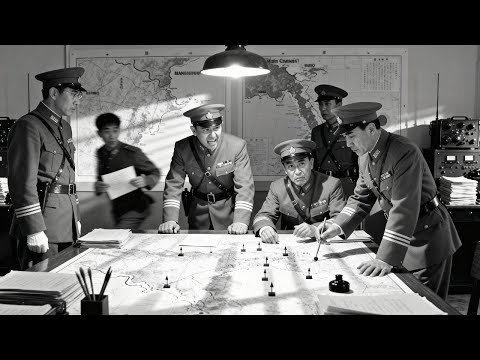
Flee watched his men work and felt a knot forming in his stomach. He was not supposed to be here. The regular army officers back in Port Moresby called him a “weekend warrior” behind his back. Before the war, Flee had been an accountant in Brisbane, playing soldier one weekend a month with the militia. He had no formal military training from the prestigious academies. He had never commanded men in battle. The career officers looked down on militia commanders like him, treating them like children playing dress-up in army uniforms.
Just two days earlier, Flee had attended a briefing with the senior staff officers. When he mentioned his concerns about defending Wau with such a small force, a brigadier had laughed out loud. The man had actually laughed, his face red and his belly shaking. He told Flee not to worry his “accountant brain” about military matters. Real soldiers would handle the Japanese when the time came. Another officer suggested that Flee should focus on keeping accurate records of supplies rather than trying to develop strategy. The message was clear: nobody expected him to do anything except follow orders and stay out of the way.
The conventional wisdom said that fighting in the jungle meant moving through it as quickly as possible. British tactics in Malaya had focused on rapid movement along roads and trails. The idea was to outmaneuver the enemy, to move faster and hit harder. But the Japanese had turned those tactics upside down. They moved through the jungle like ghosts, appearing where they were not expected, surrounding British forces and cutting them off from supplies and reinforcements. The same tactics that worked in Europe failed completely in the thick tropical forests.
Flee had spent three weeks walking every inch of the terrain around Wau. While other officers stayed in the command post studying maps, he put on his boots and went into the jungle. He climbed the ridges that surrounded the airfield like the walls of a natural fortress. He noticed how the jungle growth funneled down into narrow corridors in the valleys. He saw how the razorback ridges rose at steep angles, some reaching 2,200 feet above sea level. He watched how morning mist filled the valleys, creating a thick white blanket that you could not see through.
An idea began forming in his mind, an idea that went against everything the experts said. What if they did not fight through the jungle? What if they fought from above it? What if they used the terrain itself as a weapon instead of treating it as an obstacle to overcome? The ridges could become fortress walls. The narrow jungle corridors could become killing zones. The steep slopes would force the Japanese to attack uphill, exhausting them before they even reached the Australian positions.
Flee shared his idea with his second-in-command over coffee one morning. The man stared at him like he had lost his mind. “That was not how modern warfare worked,” he said. “You needed mobility and aggressive action, not static defense.” But Flee could not shake the feeling that everyone was thinking about this wrong. The Japanese expected them to fight like the British had fought. They expected retreat or conventional defense. What if the Australians gave them something completely unexpected instead?
Flee spread his map across the wooden table in the command post, using his coffee cup and canteen to hold down the corners. His finger traced the ridge lines that surrounded Wau like a horseshoe. The key ridge ran north to south for exactly 3,000 yards with steep drops on both sides. He measured the sight lines carefully with his ruler. From the top of the ridge, his men could see down into the jungle corridors for 15 meters in most places. That meant any Japanese soldier trying to climb up would be visible and exposed for at least those 15 meters before reaching cover.
He called in his squad leaders and explained the plan. They would dig defensive positions along the ridgetop, spacing them exactly 50 yards apart. Each position would hold four men with one machine gun. The fields of fire would overlap, creating a zone where no enemy soldier could advance without being shot at from at least two directions. The math was simple but deadly. Three Vickers machine guns firing 600 rounds per minute spread across the ridge could cover the entire approach with interlocking fire.
The squad leaders looked at each other nervously. One asked the obvious question: “What about their flanks? What would stop the Japanese from going around them?” Flee pointed to the map again. To the east, the terrain became a swamp that was impossible to cross with heavy equipment. To the west, the mountains rose even higher with cliffs that would take days to climb. The Japanese would have to come straight up the middle, right into the teeth of the Australian guns.
On January 25th, Flee sent out a small patrol to test his theory. Sergeant Bill Thompson led eight men down into the valley and then back up the ridge, following the paths that Japanese troops would likely use. Thompson reported back that evening, his uniform soaked with sweat and covered in mud. “The climb was brutal,” he said. His men had to grab onto roots and vines to pull themselves up the steep slope. In some places, the angle was so sharp that they climbed on their hands and knees. Anyone trying to fight while climbing that slope would be helpless, exposed, and exhausted.
Flee nodded and made notes in his journal. He recorded the exact time it took Thompson’s patrol to climb from the valley floor to the ridgetop: 22 minutes. That meant Japanese soldiers would be exposed and struggling uphill for more than 20 minutes before they could engage in close combat. 20 minutes was an eternity in battle. His machine gunners could fire thousands of rounds in that time.
But headquarters did not share his enthusiasm. On January 27th, a radio message came through ordering Flee to prepare for evacuation. The high command had decided that Wau could not be held. They wanted all troops withdrawn to Port Moresby before the Japanese arrived. Flee read the message three times, feeling his face grow hot with anger. He had spent weeks preparing these defenses. His men had dug positions into the rocky soil until their hands bled. Now headquarters wanted him to just abandon everything and run.
He sat down and drafted a reply message, then crumpled it up and threw it away. He wrote another one more carefully this time. The message reported heavy static interference on the radio and requested that headquarters repeat their last transmission. He knew this would buy him time. In the chaos of wartime communications, messages got lost or delayed all the time. Nobody would question a request for clarification, at least not right away.
The next morning, a sound cut through the jungle that changed everything. Flee heard airplane engines approaching from the south. He ran outside and shaded his eyes against the bright sun. A Royal Australian Air Force transport plane roared over the treetops, so low that Flee could see the pilot’s face in the cockpit window. The plane was coming in to land, completely ignoring the evacuation orders.
Squadron Leader Bruce Malcolm climbed out of the plane carrying a bag of mail and a crate of ammunition. He walked up to Flee and saluted with a grin on his face. Malcolm said he had heard about the evacuation order and decided it was the stupidest thing he had ever heard of in his entire life. If the ground troops were going to stay and fight, then he would keep flying supplies in no matter what headquarters said. His plane could carry 800 pounds of cargo on each trip. He would make as many trips as it took.
For the next two days, Malcolm and his crew made flight after flight, their planes skimming through the mountain valleys at altitudes as low as 50 feet. They brought ammunition, medical supplies, and food. More importantly, they brought hope. The men on the ground watched those planes come in and realized they were not alone. Someone believed in them.
On January 29th, the Japanese arrived at Crystal Creek, just three miles from the Wau airfield. Flee positioned his men along the ridge, exactly as he had planned. The three Vickers machine guns sat in sandbag positions with clear views down into the valley. Each rifleman had 200 rounds of ammunition for his Lee-Enfield rifle. They had no artillery support. They had no tanks. They had no air support beyond Malcolm’s unarmed transport plane. All they had were their rifles, their machine guns, and the terrain.
The first Japanese assault came at dawn. Flee heard the shooting start before he saw anything. The crack of rifle fire echoed through the valley, sharp and clear in the morning air. Then he saw them. Dark shapes moving through the jungle below. Dozens of Japanese soldiers were climbing up the slope, using the trees for cover. They moved in organized waves exactly as their training manuals prescribed.
The Australian machine guns opened fire, their heavy bullets tearing through the jungle vegetation and cutting down the climbing soldiers. The sound was deafening, a continuous roar that hurt Flee’s ears even from 50 yards away. Brass shell casings piled up around the gun positions, glinting in the sunlight. The Japanese soldiers tried to return fire, but they were climbing uphill with heavy packs, struggling for breath in the humid air. Their shots went wild, bullets whipping harmlessly through the treetops.
The assault lasted for three hours before the Japanese pulled back. Flee sent scouts down to count the bodies. They reported more than 200 Japanese soldiers killed or wounded. The Australians had lost nobody. Twelve men had minor wounds from shrapnel and ricochets, but every single defender was still able to fight. The math that headquarters said was impossible was working. 300 men were holding against 7,000, and the ridge defense was the reason why.
The numbers told a story that seemed impossible to believe. Before Flee’s ridge defense, planners expected Wau to fall within two days. After seven days of continuous fighting, the Japanese offensive had completely stopped. Their casualty reports, captured later, showed more than 1,200 soldiers killed or wounded. Australian casualties stood at exactly 47 men, most with minor injuries.
Word spread quickly through the Australian command. By early February, over 15,000 troops were being trained in ridge defense tactics across New Guinea. Officers who had mocked Flee just weeks earlier now traveled to Wau to walk his positions with their own eyes. What had started as one accountant’s desperate idea was becoming the blueprint for an entire campaign.
The Japanese field commander sent a message to Tokyo that simply read: “Enemy resistance beyond all calculation. Request immediate reinforcement or withdrawal authorization.” The same army that had conquered half of Asia in six months was stopped cold by 300 men on a ridge in New Guinea.
The battle for Wau officially ended on February 7th, 1943. Flee was promoted to full colonel and awarded the Distinguished Service Order, though he kept the medal in a drawer and rarely looked at it. After the war, he returned to his accounting practice above a bakery on Queen Street in Brisbane, balancing ledgers while the smell of fresh bread drifted through the floorboards.
When historians finally convinced him to give interviews in the 1970s, he refused to call himself a hero. He talked about the battle like it was a math problem that needed solving. He had 300 men, the enemy had 7,000, and the terrain offered certain advantages. “Calling common sense revolutionary,” he laughed, “just shows how uncommon common sense really is.”
That is the real legacy of Wau: innovation comes from necessity, and victory comes not from having the most resources, but from using what you have in ways your enemy cannot predict. So tell us — what is the one “impossible” problem in your own life that might be solved by simply looking at the ground beneath your feet?
Report this article
Select a reason for reporting:






