How slowly can a man walk before the jungle stops noticing him? In Phuoc Tuy Province, mid-1969, that question had a number. And it wasn’t what any professional soldier expected. It wasn’t four kilometers per hour. It wasn’t two. On the ground between the Nui Dinh outcrops and the eastern approaches to the Long Hai hills, the answer was roughly 100 meters per hour. On a good hour, in broad daylight, with a man in front placing each heel first on the fallen leaves, waiting to feel what was underneath before committing his full weight.
Ten days of that. No vehicles, no resupply, no cooking fires, no cutting of vegetation, no voice above a whisper. The American attached to that patrol had marched farther, faster, and under heavier loads than most humans alive. He had a walking rate in his head the way a carpenter has a measurement in his hand. And after nine days, he was the one being helped up the final slope.
So here is the thing worth holding onto for the next few minutes. What does it actually mean that a Green Beret could not keep up with men who were moving slower than he had moved in his entire life?
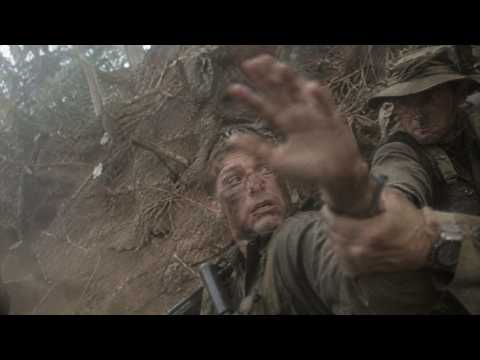
His name in the American advisory papers that came out of this mission was “Mercer.” A sergeant in U.S. Army Special Forces, late twenties, thick through the shoulders and neck from a decade of lifting, face sunburnt across the nose the way men who work in open country get burnt. He had been sent from an American liaison unit to observe Australian long-range reconnaissance methods and write an assessment of them. The Australians had a reputation that came out of Phuoc Tuy, and the Americans found it hard to reconcile with the size of force that produced it. Someone in the advisory chain wanted a pair of professional eyes inside a patrol rather than another stack of after-action summaries.
At the briefing inside the Special Air Service compound at Nui Dat, Mercer said out loud what the arithmetic in his head told him. Ten days to cover that kind of distance was, in his words as later paraphrased in his report, a timeline that would embarrass a military exercise. He had covered the same distance on the map in a day and a half in the highlands. He said it plainly in front of the patrol commander and four other men. And no one argued with him in the tent.
That was the first thing that worried him. No one argued.
The rules came next, and they were not presented as a boast. They were delivered as a list of prohibitions, which is a different kind of instruction entirely. The patrol would not use the trails. Not to move fast on them, not to walk them at night, not to use them at all except to watch from under cover. The patrol would not cut any vegetation, because a cut stem oxidizes and changes color, and someone who knows the ground reads it like a date stamp. The patrol would not light anything, cook anything, or open any metal container that made a sound. No one spoke above a direct whisper into the ear, and hand signals were given at chest level, never at the shoulder, because a raised hand moves leaves, and the pale silver underside of a leaf shows at forty meters.
The commander said movement was measured in hundreds of meters per day, and if it was less than that on any given day, then that was the correct answer for that day. Mercer wrote the sentence down. He did not yet know that by day four he would write a number under 400 meters and add a comment beside it that he would later cross out with three strokes of a pen.
The mission itself was the reason for the pace, and it is worth stating clearly, because everything that follows in the way of physical action flows from it. Intelligence reported a system of bunkers and caches in the eastern approaches to the Long Hai hills, in ground that had swallowed at least two larger operations without giving anything back. Battalions had swept the general area with engineers and armor on call, and had come back with a handful of abandoned shelters and no confirmation of current activity. The reason was not incompetence. The reason was physics. A force that size announces itself hours before it arrives. Sound alone travels through that vegetation, and the people using that ground simply left the direction of the noise.
The patrol’s task was to find the system, count it, fix its orientations, map the approaches to it, and leave without anyone knowing an Australian had been within a kilometer of it. Five men. As David Horner recorded in the regiment’s history, the entire value of an Australian reconnaissance patrol lay in the enemy’s ignorance of its existence in the first place. A patrol that became engaged, in the squadron’s arithmetic, had partly failed even if it won.
Here, the heat under the canopy sits in the mid-thirties and does not change because the air is still. Sweat runs the length of the spine and pools at the belt line. Within two hours of landing, the green jungle suits the five men wore were dark from collar to knee.
The insertion was by helicopter, and it included the first act of the deliberate theater. The aircraft made more than one approach and touched its skids to the ground at a place the patrol had no intention of using, then lifted and moved and put the five men and their observer down at the real point in under eleven seconds of ground contact. Dummy landings were standard practice, and their purpose was to fix the enemy’s attention on the wrong grid square. Then the sound of the aircraft began to fade, and the patrol did nothing.
This is the part Mercer was not prepared for. Not the load, not the heat, not the chrome, but the nothing. For most of an hour, the five men stayed where they had come off the aircraft, spread in a shallow arc, faces down, listening to the helicopter diminish to a drone, then vanish entirely. And after that, listening to what the forest did with the silence. Which birds returned first, and at what intervals, and whether any human thing coughed or called or moved within hearing of them.
His own report later admitted that the first hour of the patrol was the most professionally unsettling hour of his career. Because every instinct he had been trained to develop over ten years was telling him to be somewhere else now. His doubts did not crack, but they began to worry at him.
Before all of that, back at Nui Dat, there had been a weighing-in, and it explains more about the story than any tactical diagram. The patrol displayed its loads, and the order of priority was not negotiable. Water first, the dominant item, more than half the carried mass for some of the men. Ammunition second, and food last, by a wide margin. The dry rations had been chosen for silence and calories rather than anything else. They were eaten cold in small batches with the wrapper opened very slowly so the plastic would not crackle. Mercer’s own fitted equipment weighed more than any Australian pack in the group, and it was louder. That had been measured, not guessed. A man walked around him in the camp while Mercer shifted his shoulders and turned, and every noise was identified and dealt with or removed. A clip, a retaining ring, a pack fastener, metal rubbing metal, and then the signaller got to the water.
This is the detail to remember because it will come back. The signaller wrapped and packed every water bottle in the patrol and filled each one to the very brim, so that there was no air space, and therefore nothing inside that could move. A half-full bottle carried by a walking man makes a sound that exists nowhere else in the forests of Vietnam. Nothing organic makes a noise like liquid striking a void. Mercer offered his own canteens, which were half full, justifying it by saying he intended to drink from them and preferred to carry less weight. The signaller refused them, took them from him, filled them to the neck and sealed them with tape, and handed them back heavier than they had been. Mercer recorded that in his notes as a kind of excessive diligence.
On day six, in a hide position within earshot of voices, the absence of that liquid sound was the only reason five men and an American were not discovered by a transport group that stopped, put down its loads, and rested for a few minutes at a distance from which any man could have thrown a helmet. But that is day six, and there are five days before it.
In the afternoon of day one, after the patrol had settled and the shape of the ground began to come clear, the commander did something Mercer recorded as the clearest example of wasted effort he saw in the entire operation. He spent nearly forty minutes studying a parallel line of high ground to the north, a dry, low strip of laterite soil and scrub that ran roughly with their intended route, and he studied it with his eyes only. He did not walk it. He did not send the scout to it. He identified it, described it in a whisper to each man individually until everyone had the same mental picture of it, and then designated it as the patrol’s withdrawal route and forbade anyone to put a foot on it for the duration of the mission; an escape road that was never to be used, planned on day one for a day that might never come, in a country where a man cannot see forty meters.
Mercer wrote that this was planning for the sake of planning.
On day nine, that would be the only piece of ground in the area that the enemy trail network had not reached. And the patrol would come out through it in under three hours with something in a notebook that two battalion-sized operations had failed to achieve. But why that route was clean, and why no one had walked it in ten days, and what it cost the patrol to reach it, all of that comes later. It is the part of the story that is still argued about.
For now, day one begins in full. And here the phrase in the title stops being a figure of speech. A man’s walking speed is a decision made by his leading foot. And inside green forest, the leading foot comes down first, rolls onto the outer edge, and only then takes the weight. That is the entire technique. It takes about four seconds per step when done properly. Which means a man covers roughly 100 meters in an hour on a reasonable morning.
The patrol’s scout had been doing it since first light. Behind him, the patrol commander was doing it. Behind the commander, the signaller was doing it. With the wireless belt padded so the antenna would not knock against bamboo. Mercer was doing it too. And by ten in the morning of the first full day, the muscle on the front of his thighs was burning in a way it had not burned in decades of lifting.
Here, the air does not move at all. Under the canopy, the temperature sits in the mid-thirties, and the humidity leaves a man’s shirt permanently wet. So the only cooling comes from evaporation that never happens. The smell is a mix of rot and wet leaves and the faint ammonia of the patrol’s own sweat. And every twenty minutes, something unseen high in the canopy makes a sound like the creak of hinges.
No word was spoken. The patrol had been briefed on twenty-six hand signals and used perhaps nine of them, and every signal was given at chest level, never at shoulder level, because a hand raised above the shoulder line moves against the pale underside of leaves and can be seen from forty meters by someone specifically looking for it. Mercer later wrote that he had learned the same signals at a different school and had always given them high where they could be seen. In green forest, the whole problem was being seen.
At about 11:20, the scout stopped mid-stride with his foot raised off the ground. He held that position. He did not freeze dramatically, he did not crouch, he simply stopped. Weight on the rear leg, the leading foot hovering perhaps eight centimeters above the vegetation. The reason was a bird. One call repeated twice from somewhere ahead and to the left, and it was the wrong bird for that time of day. The scout held that position for eleven minutes. The patrol behind him held whatever position they were in when the signal came down the line, and the signal was nothing more than a fist opening slowly, fingers extending, held at the breastbone.
Mercer’s watch was on his left wrist, and he could not look at it without moving his arm across his chest, so he counted. He lost count twice. That detail is in his own account.
What happened next is why this patrol is still discussed in the unit’s history, and it occurred within the first thirty hours. The bird call was in fact a man. Nine minutes after the scout stopped, a transport group passed along a trail the patrol had not known existed, because it lay behind a curtain of bamboo and bramble and was invisible from the patrol’s line of march. Their number, by the patrol’s later estimate, was between eleven and fourteen men walking north to south carrying rice baskets, and at least two of them carried weapons slung with muzzles down against the humidity. The nearest of them passed within a distance the after-action report recorded as less than seven meters.
Seven meters in secondary forest is not seven meters of open space. It is seven meters of stems and leaves and shadow. It is close enough for the patrol to hear the creak of woven cane on the men’s shoulders, and to smell woodsmoke in their clothing. The five of them lay among the vines on their sides, faces down and away, because a human face is the brightest and most distinctive thing in a forest at any time of day. And the loudest sound at that seven meters was the sound of Mercer breathing.
He knew it. He had spent an hour and a half at the point of the force. His heart rate was up, and his body was craving air through the mouth. Mouth breathing makes a wet, audible sound at the back of the throat that carries farther than most people think. The Australians ahead of him and behind him were breathing through their noses, shallow and long-cycle, and had been doing so since the moment of landing. He got his own breathing back to his nose in about forty seconds, and later described those seconds as the longest of the ten days.
The transport group took four minutes to cross. No one in the patrol moved for another thirty-one minutes. That was day one. And there were nine more days behind it.
The housekeeping of those days is the part that never appears in recruiting material. The patrol carried out everything it produced. Human waste went into sealed plastic bags and returned in a rucksack. Because waste on the ground in a country where the enemy reads the ground is a date-stamped sign. And because a cloud of flies over a patch of forest floor can be seen from high ground. Ration wrappers, empty tubes, cigarette butts. There were no cigarette butts because no one smoked. All of it went into the pack and came out after ten days. Nothing was buried because burial leaves disturbed soil, and disturbed soil is louder than rubbish.
Sleep came in periods of about thirty minutes on rotation, with one man always awake, and often two. No one took off his boots. That was a fixed rule. Not a preference, because a man without boots is a man who cannot move in the first four seconds of any contact. And four seconds was considered the only margin available. The result of that rule was feet that stayed wet for seventy hours or more at a stretch. And when the boots finally came off at the end, the skin on the soles was white and dead and peeling in layers.
And now we come to the thing the title is actually about. And it happened far earlier than anyone expected. Mercer did not fall behind because the patrol was moving too fast. He broke down because it was not moving at all.
By midday on day three, the cramps started in his thighs. Not the sharp calf cramps of hard marching, but deep, rolling cramps in the quadriceps that came on whenever he held one position for more than twenty minutes and then tried to change it. The Australians changed position constantly and in movements so small they were almost invisible. A toe flexed, a shoulder moved two centimeters, weight shifted from one hip to the other with a motion so slight it drew no attention at all. He never learned that. He had learned to stay still, perfectly still, in the way a fit and disciplined man stays still, blocking venous flow in his legs and turning his muscles to concrete.
His hand swelled. This is a documented feature of long foot patrols with the arms hanging down. Fluid pools in the fingers until men have to cut off wedding rings, and Mercer had been warned of it but had not believed it applied to a ten-day mission. By the morning of day four, he could not close his right hand fully around the grip of his weapon. He later wrote that this was the moment he realized he had been sent to observe a skill he did not possess, and that skill was stillness.
His body had broken down from staying still, not from distance, and the men who broke him were averaging less than half a kilometer a day. That pace did not come from nowhere, and it did not come from Vietnam. It came from a mountain station in Queensland, and from a border in Borneo. The jungle training center at Canungra taught Australian soldiers to move under canopy at a rate that infuriated every visiting officer who watched it. And it taught them simply by never permitting any faster speed.
In Borneo, between 1965 and 1966, Australian SAS patrols working across the Indonesian border developed their method under conditions where any exposure meant a diplomatic incident as much as a tactical disaster. Patrols of four men lived in that jungle for weeks and made no contact at all unless they chose to. As one senior officer of the regiment put it in an oral history held by the Australian War Memorial, the hardest task for a patrol commander was not moving his men. It was keeping them from moving.
And that brings us to that small note on day two that Mercer dismissed, and which was more important than anything else he wrote in ten days. The scout, at midday on day two, noted the hour the rain began. It came shortly after three, and it was heavy and lasted about forty minutes, and it filled the entire forest with a white noise that made the sound of a boot on dry bamboo leaves completely inaudible. The patrol commander used it. He took the patrol into a patch of open bamboo, the worst possible ground, ground that cracks like glass underfoot. For those forty minutes they covered ninety meters and stopped the moment the rain stopped. Mercer recorded the practice in his notebook with a word close to superstition. And he pointed out, logically, that weather is weather, and that no soldier should build a movement plan on rainfall. He was wrong in a way that would leave him, on day seven, able to hear from a few meters away while standing perfectly still with a dog on the trail in front of him.
That is the moment the story turns, and it is coming. Day four is the number that stayed in the records. On a full working day from before dawn until the light failed under the canopy at about five-thirty, the patrol moved no more than 400 meters. The exact figure in the interrogation report is 370. And on that same day, the patrol identified two trail junctions. One carried sandal marks laid down twelve hours earlier, and the patrol removed about thirty leeches using insect repellent on the skin rather than any faster method, because a burned or torn leech leaves a wound that bleeds, and blood on leaves is a glaring sign. Mercer wrote the number, 370 meters. And beneath it, in his field notebook, he wrote a short comment about what a battalion could have achieved that day. Then he crossed that comment out. Not that night, and not on day five, for according to the version of the note included in his after-patrol report, the line through those words was drawn with a different pen, and the pen he was using at the time was one he had borrowed from the signaller after day eight.
The tracks were on the edge of a trail junction, and the scout saw them through a gap in the leaves before he saw the trail itself. Sandal prints, and rubber tire-soled shoes with a tread cut from truck tire, four sets heading north, and at least two heading south over the top of them. The later print there held a ridge pattern the way wet clay holds a thumbprint, and the rain had not touched it. The edges were still sharp. And beside the junction stood a bamboo sapling, cut at an angle. The cut surface was pale green and beaded with sap. Bamboo turns brown within a day in that heat. It had been cut that morning.
Everything the patrol had assumed for four days turned over in about ninety seconds. They were not approaching a populated area. They were inside one, and had been for some time. And the only reason no one had run into them was that the patrol had spent four days turning itself into something that did not move fast enough to be noticed.
Here the ground smells of wet iron and rotting leaves, and a second smell now overlays it. Faint, oily, domestic. Cooking fat. It comes and goes with the air. The patrol commander did not withdraw. According to the patrol report summarized in David Horner’s history of the regiment’s service in Vietnam, standing instructions in that squadron were to confirm rather than assume, and confirming meant getting close enough to count. He took the patrol into a bamboo block the size of a small room, about 180 meters from the junction on ground that fell away from the trail. And there they stayed while the light turned orange, then gray, then failed.
Sergeant Mercer had had a walking rate in his head when he stepped off the helicopter. By the fifth night, he no longer had a walking rate. He had a hide position and a wristwatch he was beginning to resent.
Day six is the one his report returns to again and again, and it is the reason the story exists at all. They took up positions before dawn and came out of them after full dark the following night. Twenty-two hours. Five men lying inside a bamboo thicket on a slope, each facing outward in his own arc, weapons covered at the muzzle to prevent light reflection, packs loosened but not removed, no one standing, no one crouching, no one rolling onto his other side. Within earshot, and earshot in that jungle at that hour is about 200 meters for a raised voice and less for anything else, a line of bunkers was living its ordinary day. Voices, two or three men at a time; the flat tone of people exchanging practical information; a woman’s voice twice; cooking smoke that drifted down in the first hour after dawn and again in the late afternoon, which told the patrol commander more about the wind and the shape of the ground than any aerial photograph had; and from mid-morning, a small generator running in bursts of up to twenty minutes, stopping, then starting again. The generator meant power. Power meant something worth running.
The entire reason two battalion-sized sweeps had come back from that eastern approach with nothing was that a battalion-sized sweep arrives with noise ahead of it and finds an empty forest and cold cooking fires. That is what “could not keep up” actually means, and it has nothing to do with distance. Mercer was a strong man. He had carried heavier loads farther and faster than any Australian on that patrol, and he could have done it again on the morning of day six. What he could not do was stay still for twenty-two hours. His body had been built over a decade of lifting to convert discomfort into movement, and here movement was forbidden. By mid-morning, the muscle in his right leg had cramped and locked. He could not stretch it. He could not shift his weight to ease the pain because shifting weight on a bed of bamboo makes a sound like a man slowly crumpling a newspaper. He lay there and let the cramp take its course, and it took eleven minutes to pass, and it came back twice more before evening. His hands had swollen. The wrinkled, pale skin inside his boots was a problem he could not inspect, because exposing a foot meant a delay that could not be afforded if the position was compromised. The rule was absolute, it had been explained to him on day one, and he had thought it was a figure of speech.
Then there was the water. Before the insertion, he had watched the signaller do something he privately classified as overkill. Every bottle in the patrol was filled to the brim. Not to the neck, to the brim. Capped, then wrapped with tape and a strip of hessian, and each man’s bottles placed in his pack so they touched padding and not each other. The signaller looked at Mercer’s American canteens, which were half full because he had drunk from them at the landing zone, and refused them. Not rudely. He simply handed them back and gave him instead an Australian canteen wrapped in tape, filled to its brim.
At about 11:00 on the morning of day six, a transport group came along the trail and stopped. The patrol later estimated them at eight to ten men moving under loads, probably rice, heading from the bunker area toward something farther east. They stopped about thirty-five to forty meters from the bamboo block. They put their loads down. They talked. One of them laughed. The stop lasted, according to the signaller’s account based on his pulse, a little over nine minutes. Nine minutes during which five men lay inside a bamboo block on a slope with their packs against their bodies, and no liquid container in that patrol made a sound, because there was no air inside any of them for water to move through.
That is all it was. A half-full canteen on a slope, under a man who has to breathe, makes a sloshing sound. It is a small, wrong, man-made noise in a place where every other sound has an animal or vegetable origin. And the ear of a man who has lived in that forest for three years is tuned precisely to that kind of wrongness. Mercer later wrote that he spent those nine minutes thinking about his own canteens, left in a pile of rejected equipment in a store at Nui Dat.
The transport group picked up its loads and moved on east. That evening, the patrol’s formation changed entirely. And not because of anything on the ground. At about 16:00, the signaller made all communications with the radio pressed to his cheek, whispering. One hand over the microphone and his face inside his hat. The instruction from headquarters was for the patrol to move to a pickup point to be extracted the following morning because a task force operation had been brought forward and the area had to be cleared of friendly patrols. The patrol commander refused to move in daylight. He did not argue over the radio. Arguing over the radio is speech. And speech is transmission time. And transmission time in a valley with a bunker line above it is a gift to anyone with a direction-finding set. He acknowledged and sent one short clarification. The patrol is in contact with an occupied area. Moving in daylight will compromise the position. Request delay of extraction.
Here the story stops being a march and starts becoming arithmetic. The consequences came within a few hours and they were severe. The helicopters were committed to tasks elsewhere. The extraction window offered to the patrol was the only opportunity. And by refusing it, the patrol commander placed his five men inside an active enemy area with no scheduled means of egress. No resupply. And this is the most important part. Water enough for two more days at the rate they had been drinking. They did not have enough for two more days of anything else. The rations had already been reduced to what could be eaten cold and silently. But water in Phuoc Tuy in that season is not a comfort. A man in jungle greens in that heat, even lying still, loses close to five to seven liters a day. And a man who stops sweating in that forest has about four hours of working capacity left. So water became the entire operational problem. And the patrol solved it the way it solved everything, which was slowly. The ration dropped to one bottle per man per day, drunk in mouthfuls, and the mouthfuls were counted. During the night, two men set square plastic sheets with weighted corners in a low patch of ground below their position and collected them before dawn with perhaps a cup of condensation between them. It was not a meaningful quantity, but the act of collecting it mattered because it kept every mind fixed on the resource. Leaves were checked and bamboo gaps were checked. No one used water to clean anything.
On the morning of day seven, the scout identified a stream about 400 meters to the southwest, and the patrol did not go to it. They watched it for four hours. The four hours were not for caution’s own sake. Water is the one place in occupied forest that everyone comes to eventually, and a stream with a good bank and a shallow crossing is a road junction that happens to be wet. Over four hours of observation, the patrol recorded two separate movements toward the stream, both from the north, both small, and one of them carrying containers. Had the patrol gone down at dawn, as any tired man would want, they would have been in the water when the second group arrived. They finally filled their containers at midday, one man at a time, three covering, drawing water from under a fallen branch where the surface was unbroken, and they were off the bank within eleven minutes.
Somewhere during those seventy-two hours, Mercer stopped looking at his watch. He noted this himself in the report he wrote for his own command after the patrol. And he noted the exact circumstances. At midday on day seven, while the patrol was still in its hide, he leaned toward the signaller, put his mouth close to the man’s ear, and asked him a question about the rain. Specifically, whether it came at the same hour. On day two, the scout had noted the time of the midday rain, and had been given the chance to explain how closely movements were tied to it. And Mercer had thought it was superstition, and had said something like it at the next halt. He said it quietly, but he said it. Weather is weather. You do not build a timetable on a cloud. The signaller raised his hand and showed him a number of fingers.
What happened about ninety minutes later is the reason that patrol came home. And it began with a sound none of them had heard in seven days. The rain came over the canopy from the west, and it arrived exactly as the scout had said it would, within minutes of the hour he had written with a chinagraph pencil on his wrist on day two. It does not fall in the jungle so much as strike it. The first thing it does is take away hearing. The canopy above turns into a long roar of water hitting leaves, and the second thing it does is erase the ground, turning soil into something that swallows a boot print instead of preserving it. The transport group stopped, and so did the dog, and the patrol lying among the vines with no plan for the next forty minutes other than to stay put, rose in the noise and moved. They covered more ground in that window than they had in the previous day and a half. The scout led on the compass without looking up. The patrol commander counted paces on a knotted cord, and behind them the dog handler heard nothing at all, because there was nothing to hear but water. Mercer later wrote that he had spent his first week on that patrol convinced the Australians were substituting folklore for planning, and that he spent day eight recalculating everything he thought he knew about using weather as cover. The rain timetable he had privately dismissed was, as David Horner later documented in the regiment’s history, standard patrol practice by that stage of the war. The afternoon squall of the monsoon season was treated as a resupply item with an issue time, like ammunition.
Day eight is where the patrol did the job it had been sent to do, and did it from one position without moving. Here the ground rises in a low shoulder of red soil under bamboo, and from the base of that shoulder, lying on his side and holding binoculars below the leaf line so the lenses would not flash, a man could see a strip of cleared ground almost the width of a residential street. That strip is what two battalion-sized operations had crossed without noticing. It was not camouflaged in any dramatic sense. It was simply low and shaded and looked like nothing. The patrol stayed there through the daylight hours. What they built during those hours was not just an observation but a full inventory. Twenty-two bunkers recorded individually with their orientations and their apparent state of occupation. The overhead cover of the two largest bunkers estimated by eye against the length of a man standing beside them. The trail network drawn in pencil in a notebook the size of a playing card, with the junctions marked where the soil was worn, and the side paths marked where the leaves had turned silver from being walked on. A cooking area used twice a day and at fixed times. Water brought from the northeast always by the same route, always by two men and never three. None of this is available to the man who walks at an ordinary pace. That is the core of the argument, and it is not an argument about courage.
The signaller sent that information that night, pressing the radio to his cheek and covering the speaker with his shirt, speaking at a volume that could not have been heard by a man sitting at the other end of the table. Mercer, lying an arm’s length away, could not make out a single word of a transmission he was physically touching.
The withdrawal began before dawn on day nine, and it began with a climb up a hill toward ground the patrol had never walked on. That high line had been chosen on the afternoon of day one. The patrol commander had studied the position with his eyes only from below and designated it as the withdrawal route, and then forbidden anyone to go near it for the duration of the mission. Mercer had recorded that decision in his notebook as an example of Australian over-planning. A route selected and then wasted. Ground reserved for a contingency that might never arise. He had underlined it. On the morning of day nine, that piece of terrain was the only one in the entire area of operations that the enemy trail network had not reached. And the reason it was untouched was that no one had walked it, including them. The patrol left the target, climbed the shoulder, and moved along its length at speed for the first time in nine days, at a rate a civilian would recognize as a normal walking pace. And they were out of the outer belt of the bunker system in under three hours. Nine days of moving at the speed of a minute hand, and the exit took a single morning.
The extraction almost did not happen, and this is the part of the patrol that appears in the report in its driest terms. The only clearing available was a bomb crater, and a bomb crater in that country is a gap in the vegetation with a rim of loose soil and standing water at the bottom, and no room at all for a helicopter to land. An Iroquois from 9 Squadron arrived as the warning light was turning amber, and hovered over the rim with its skids touching the tops of broken trees, and the patrol came up on ropes fixed to harnesses, pulled through a gap that looked from below like the bottom of a well. The aircraft took two attempts. On the first, the pilot pulled away because of updrafts in the crater, and the trees on the southern rim brought the tail rotor closer to standing timber than any safety margin allowed. And for eleven minutes, the patrol lay on the rim of the crater in the open listening to the sound of the aircraft going away, certain that everything within two kilometers now knew exactly where they were. Nine days of complete silence, ended by the loudest possible announcement of their position. The second attempt worked. The last man off the rim was the patrol commander, and he came out with a notebook in two plastic bags under his shirt because the crater held nearly a foot of water, and paper is the one item in a reconnaissance patrol that cannot be improvised.
Mercer’s own account of his condition, written after five days back at Nui Dat, is the most honest document in the story and he did not soften it. He had lost, by his own estimate, close to seven kilograms. His hands were so swollen that he could not fasten his own belt at the crater, and someone else did it for him. His feet had lost the skin at the heels and the soles. He was not injured, and he was not ill beyond the general dysentery that everyone had, and on day nine he carried only his own pack, a point he specifically noted because in the last two kilometers of the high ground, other men had carried his ammunition and one of his water bottles, and he insisted that detail not be left out. The five Australians walked into the debriefing hut on their own feet. Two of them had lost more weight than he had. What they had not lost was the ability to keep doing it, and one of them was back in the jungle within two weeks.
The results reached the task force intelligence staff that night. The follow-up operation went in less than two weeks later. Infantry with engineers, at a location provided to them as a diagram with bunker numbers, rather than a grid square with a question mark on it. They found the bunkers where the patrol had placed them. They found the bunker the water runs pointed to. Quantities of rice, medical supplies, and a workshop area in use. According to the official history of the period written by Ian McNeill and Ashley Ekins, for a long time before any of that appeared on an Australian map, two large sweeps had crossed that area and reported it empty. Five men who stayed still for nine days produced a target list.
The comparative numbers in the regiment’s records are not dramatic and were never used for propaganda, which is why they are worth stating. Throughout the Australian reconnaissance squadron’s operational periods in Phuoc Tuy, the great majority of reconnaissance patrols were completed without the patrol ever being detected. Detection, by the unit’s own accounting, occurred in a small minority of missions, and the ratio of enemy losses to Australian losses in those cases was at a level no conventional sweep in the province came close to. Battalion operations that swept the same forest at conventional walking rates found, against the men and hours invested, very little indeed. As Terry O’Farrell put it in his memoir of that war, a patrol that is detected has already failed, regardless of what it brings back.
And that is what these ten days were really about. The answer to the question that started it all. Mercer arrived at Nui Dat with a specific walking rate in his head. A number in kilometers per hour that he had earned honestly over the years and had never had any reason to doubt. What broke him was not distance. It was stillness. The Australians averaged a little over 400 meters a day for the first week. They stayed in one position for twenty-two hours without a man changing the position of his hips. Their speed was not a product of fitness at all. It was a decision made every few meters for ten days about whether the next step was worth the noise it would make. A body can be trained to carry weight quickly. But no one had ever trained a body to do nothing for hours while cramps worked into his thighs, and a transport group stopped a stone’s throw away, and his own breathing became the loudest sound in the forest. His recommendation to his command ran to a few pages, in which he suggested that American long-range reconnaissance elements adopt the Australian patrol method, the silence discipline, and the concealment doctrine as taught, without modification. The line he could never justify to the officers who read it was the one he placed in the second paragraph and refused to remove. That the method could be taught and copied and practiced on training ranges, and yet would not exist at all unless a patrol commander decided, unobserved and unrewarded, to spend an entire afternoon covering the distance of a football field. He was asked twice to explain how command was supposed to order that. He never answered either request. And he was still turning the question over years later, in jungles where he had walked faster than any man alive, and understood them less than five men who had barely moved at all.
Mercer left Vietnam eight months later with a notebook full of numbers that no longer meant what they had meant when he wrote them. The Australians had a phrase for it, and he had heard it a dozen times before he understood it: “You don’t walk to the enemy. You arrive before him and wait.”
He never saw the five men again. But the report he filed became required reading at Fort Bragg, and two of its paragraphs were later removed at the request of a colonel who found them unprofessional.
The paragraphs were about silence. Not the absence of sound, but the decision to produce none.
Years later, in a bar in Fayetteville, a young sergeant asked him what the hardest thing was about the jungle. Mercer thought about it for a long time. “Learning to do nothing,” he said. “And meaning it.”
The sergeant laughed, thinking it was a joke.
Mercer didn’t correct him. Some lessons only arrive when you’re lying in the leaves, listening to your own breathing, and hoping it isn’t the last thing anyone hears.
What would you have done in those nine minutes, with the voices just meters away?
Report this article
Select a reason for reporting:






