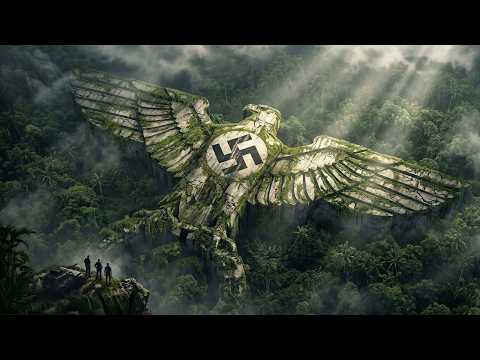
The Second World War officially ended on September 2, 1945, but not all of its files were closed. In the final days of the Third Reich, Gestapo chief Heinrich Müller was last seen on May 1, 1945, in the Berlin bunker. Then he vanished without a known grave or a verifiable trace. Decades later, declassified files revealed that the CIA continued investigating his possible whereabouts until the 1970s.
That same year, another incident fueled lingering suspicions. General George S. Patton was in a car accident in December 1945 near Mannheim. The collision was minor, and none of the other passengers were hurt. Yet Patton was paralyzed and died 12 days later, just as he was preparing to return to the United States and publicly voice his criticisms of Allied policy toward the Soviet Union.
Years earlier, in November 1944, crews of the 415th Night Fighter Squadron reported seeing orange-red balls flying in formation alongside their planes for over 30 minutes above the Rhine Valley. They called them “foo fighters.” German pilots observed the same objects, convinced they were secret Allied weapons. This documentary reveals the most enigmatic mysteries of World War II.
The assassination of one of America’s most dangerous generals. On December 9, 1945, at 11:45 a.m., a Dodge T214 military truck suddenly turned onto a side road near Mannheim and struck the side of a Cadillac carrying General George S. Patton, his chief of staff General Hobart Gay, and driver Private Horace Woodring. The collision was low-speed. Gay and Woodring were unharmed. Patton suffered a dislocation and fracture of the third and fourth cervical vertebrae, causing instant quadriplegia.
The truck driver, Private Robert Thompson, faced no disciplinary action or official traffic investigation. The truck was never subjected to a documented technical inspection. To understand why this accident still raises suspicions today, Patton must be placed in the specific political context of autumn 1945.
In October, General Eisenhower relieved him of command of the Third Army and reassigned him to lead the Fifteenth Army, a unit without soldiers, dedicated solely to writing the military history of the European campaign. The official reason was public statements in which Patton compared the Nazis to American political parties and described denazification as a reverse purge. But these statements were a public expression of a broader stance Patton had adopted in his private correspondence with his wife, Beatrice (later edited by historian Martin Blumenson), and in conversations with other officers: that Roosevelt’s and Truman’s policy toward the Soviet Union was a strategic mistake, that the Red Army should have been stopped further east, and that in 1945 there was a military opportunity to contain Soviet expansion that Washington had deliberately ignored.
Patton was also preparing to return to the United States in December 1945, announcing his intention to retire from the army and publicly express his views. In this context, Douglas Bazata, a former officer in the Office of Strategic Services (OSS), claimed in a 2008 interview with the Sunday Telegraph that he had received instructions to engineer a non-fatal accident against Patton, and that ending his life with Warfarin, an anticoagulant that could have caused a fatal pulmonary embolism on December 21, was carried out by Soviet agents with the knowledge of sectors of American intelligence.
Bazata had been decorated during the war for OSS operations in occupied France, making his operational record verifiable, but his specific claims about Patton were not supported by documents. The OSS files declassified by the CIA between 2000 and 2007 contain no direct reference to an operation against Patton. However, they do contain evidence that the OSS was actively monitoring military officers considered politically controversial. The absence of direct evidence does not equal proof of absence, and none of the available files contain an official investigation into the accident that systematically rules out the possibility of deliberate intervention.
Argentina 1945, the Nazi submarine that arrived after the surrender. In May 1945, when Admiral Karl Dönitz, appointed by Hitler as his successor in his political testament, took command of the German state and ordered a general surrender, the Norwegian Navy sent the Regenbogen order to all submarines at sea to scuttle themselves to avoid capture. This order was carried out by 221 submarines in German and Norwegian ports. However, of the roughly 40 submarines in the Atlantic at the time, not all responded the same way. Several simply stopped responding to radio transmissions and were never found.
The U-977, commanded by Oberleutnant Heinz Schäffer, had sailed from Kiel on May 2, 1945. When it received the surrender order, Schäffer gathered his crew and offered the men with families in Germany the option to disembark in Norway. Sixteen crew members chose to go ashore on the Norwegian coast at Holsenøy on May 10. The remaining 33 continued with Schäffer on a continuous underwater voyage lasting 66 days without any surface contact, crossing the Atlantic and arriving at Mar del Plata on August 17, 1945.
This was the longest recorded continuous submersion for a conventional submarine at the time, made possible by a snorkel system that allowed batteries to be recharged without fully surfacing. U.S. Navy investigations over weeks in Buenos Aires specifically sought evidence that U-977 had transported high-ranking passengers, possibly including Hitler, whose body had not been conclusively identified by forensic means at the time. Schäffer denied this, and the investigation found no evidence of undeclared passengers.
However, the U-977 case demonstrated something with implications beyond its own voyage: in the summer of 1945, with all Allied anti-submarine surveillance systems deployed across the Atlantic, a U-boat could cross the ocean undetected. The U-530, which arrived at Mar del Plata on July 10, 1945, five weeks before U-977, with a reduced crew and no convincing explanation for its undocumented activity over several months, was not investigated with the same rigor as U-977. Argentine intelligence files from 1945 to 1950 remain largely inaccessible to outside researchers.
As for the hundred billion buried by the Japanese army in the Philippines, it was buried there. General Tomoyuki Yamashita, nicknamed the Tiger of Malaya for his conquest of Singapore in February 1942—an operation in which 130,000 British soldiers surrendered to a smaller Japanese force—was commanding Japanese forces in the Philippines when General Douglas MacArthur began the reconquest of the archipelago in October 1944.
What makes Yamashita the center of one of the greatest economic mysteries of the entire war is not his defeat, but what, according to decades of subsequent research, was under his control during those final months. Since 1937, the Imperial Japanese Army had systematically plundered the territories it occupied in Asia, China, Malaya, Indonesia, Burma, and the Philippines. This was not a marginal or random activity. The operation was managed under the direct supervision of Prince Yasuhito Chichibu, brother of Emperor Hirohito, through an organization known internally as “Kin no Yuri” (Golden Lily), though Western researchers often refer to it as “Operation Grand” or simply “Yamashita’s Gold.”
The goal was to concentrate the loot from central banks, museums, private collections, temples, and military reserves across occupied Asia and transport it to Japan to finance the continued war. These transfers proceeded relatively normally until the U.S. Navy began to control the Pacific, and Japanese ships could no longer sail safely. Beginning in 1943, and with greater urgency in 1944, a solution was adopted: hiding the materials in territories still under Japanese control, specifically in the Philippine islands, which possessed a network of natural caves and volcanic tunnels suitable for this purpose.
Estimates of the treasure’s value vary widely depending on the source and methodology, but the most meticulous researchers, including journalists Sterling and Peggy Seagrave in their 2003 study “Gold Warriors,” estimate that the volume of precious metals, jewels, and artworks transferred to the Philippines amounted to the equivalent of 100 to 200 billion U.S. dollars at current prices. This figure is difficult to verify independently, but it is based in part on documents.
Declassified records from the U.S. War Department and U.S. Army Intelligence indicate that OSS agents located several deposits in the Luzon mountains in 1945 and were able to access them. What happened to these materials is described by Seagrave and other researchers as one of the most important secret operations of the post-war period. According to this hypothesis, a large portion of the gold recovered by U.S. intelligence was used to finance anti-communist operations in Asia during the Cold War, outside any congressional budget oversight. This fund was reportedly called the “M” fund or “M-Fund.”
Yamashita surrendered on September 2, 1945, the same day as Japan’s official surrender aboard the battleship Missouri. He was tried before a military commission in Manila, convicted of war crimes committed by forces under his command during the Battle of Manila in February 1945, and executed on February 23, 1946. No buried treasure was ever disclosed.
As for Rogelio Roxas, a Filipino who claimed to have found an underground chamber near Baguio in 1971 containing a pure gold Buddha statue and several metal containers in the Luzon area, authorities under President Ferdinand Marcos arrested him, seized the materials, and imprisoned him. Roxas later sued the Marcos heirs in Hawaii courts and won a $40.5 billion judgment in 1996, which was reduced on appeal but never collected. The judgment did not prove the existence of the entire treasure, but it did affirm Marcos’s responsibility for stealing the materials Roxas found. The Luzon mountains have seen ongoing illegal digging since the 1950s, with documented casualties from cave-ins and traps. What is buried there, if anything, remains unknown.
Project Riese, Hitler’s buried treasure. On January 12, 1945, Marshal Georgy Zhukov launched the Vistula-Oder Offensive from Soviet bridgeheads across the Vistula, with an unprecedented concentration of forces on the Eastern Front: 163 divisions, over 32,000 artillery pieces, and 6,500 tanks. Within 18 days, the Red Army advanced 500 kilometers and established positions less than 80 kilometers from Berlin.
This offensive turned the Silesia region—which accounted for 25% of the Reich’s industrial output in 1944, according to Albert Speer’s Armaments Ministry records—into land on the verge of final loss. It was precisely in this period, from mid-January to the first days of February 1945, that Nazi evacuation machinery worked at full capacity in the Sudeten mountains. Beneath these mountains lies a system of underground structures, begun in 1943 under the code name “Project Riese.”
The Todt Organization supervised the construction using laborers from subcamps of the Gross-Rosen complex. Partially preserved records from the main camp indicate that between 1943 and 1945, between 13,000 and 15,000 prisoners worked simultaneously on various excavation fronts, with the total number of those rotated estimated at over 30,000. Mortality rates were extremely high.
The system includes at least seven underground complexes within a 30-kilometer radius of the town of Walbrzych, with excavated space estimated by Polish engineers in the 1960s at over 9 kilometers of tunnels. Its official purpose was never specified in any surviving document. The Todt Organization’s records relating to Silesia disappeared before the war’s end, possibly destroyed by the SS in late January 1945.
What exists is a documented statement signed at the Regional Mining Research Center (VRIC) in 1946 by Tony Streehling and Rudolf Buschka, two former employees of the Regional Mining Administration. They testified before a notary that they participated in loading and sealing a train convoy inside the tunnels of the Riese system in late January 1945, when the Soviet advance threatened Breslau. According to their testimony, the train was carrying gold bars from the Reichsbank, artworks seized from occupied territories, and highly secret strategic documents. They described the entrance ceiling being rigged with explosives and the subsequent destruction of operational records.
For decades, this was the only tangible evidence on which the legend rested. In September 2015, Piotr Koper and Andreas Richter presented photos to the Walbrzych authorities showing, they claimed, the silhouette of an armored vehicle on rails at a depth of about 9 meters. The Polish government mobilized teams from the National Geological Institute. Excavations conducted between 2016 and 2017 revealed no metal structure. Geologists determined that these anomalies corresponded to air pockets and soil density variations.
However, this negative result at a specific point does not end the question about the entire system. Declassified NKVD archives, partially opened after 1991, include reports documenting searches for underground deposits in the Silesia region between 1945 and 1947—searches that also produced no recorded results. The fact that the Soviets themselves devoted resources to this investigation for two years suggests the possibility was considered dangerous enough to justify action.
UFOs in battle, the luminous objects of World War II. During the air war, mysterious and unexplained luminous objects appeared. The first official report was submitted on November 27, 1944, by the crew of a bomber from the 415th Night Fighter Squadron, stationed at Dijon, during a mission over the Rhine Valley. The report described two orange-red luminous spheres that flew in formation alongside the bomber for approximately 30 minutes, maintaining a constant distance of 50 to 100 meters before separating and disappearing.
The squadron commander, Lieutenant Colonel Herm Bromer, forwarded the report to Fifteenth Air Force headquarters because the description did not match any known flares or aircraft weapons. In the following weeks, similar reports came from B-17 and B-24 bomber crews over Germany, Austria, and the Balkans, and from P-38 and P-51 fighter pilots on escort missions. The pilots called them “foo fighters,” a term taken from the character “Smokey Stover” in comic strips, but the reports were entirely official and treated as such.
The initial Allied command hypothesis was that these objects were a radio-guided weapon designed to jam engine ignition systems or navigation devices. This was a logical hypothesis. The Luftwaffe had developed the Henschel Hs 293 anti-ship missile and the Fritz X glide bomb, and other experimental projects were documented at research centers in Peenemünde and Rechlin. But the problem was that “foo fighters” did not disable any systems in any documented case. No aircraft reported electrical failures, loss of navigation, or radio jamming during the sightings, and no attack attempt was recorded.
After Germany’s surrender, teams from Operation Lusty, the secret Luftwaffe technology exploitation mission, interrogated Luftwaffe engineers and pilots but found no reference to a program of radio-controlled luminous objects. The German scientists interrogated confirmed that their pilots had reported the same phenomena since late 1943, and that the Luftwaffe attributed them to experimental Allied weapons. This convergence in reports was itself the strongest argument against any human-origin explanation. If both sides observed the same objects without being able to identify them and attributed them to the enemy, the most likely explanation is that they belonged to neither.
The U.S. Air Force’s Project Sign and Grudge, which began in 1947 and 1948 as part of the first systematic studies of unidentified aerial phenomena, reviewed the reports and reached no conclusions. The phenomenon of St. Elmo’s fire—a luminous electrical discharge documented on metal structures under specific weather conditions—might explain some sightings, but not those in which the objects demonstrated active, sustained behavior independent of the observing aircraft. From a purely documentary standpoint, the foo fighters remain a documented phenomenon without a proven explanation.
Heinrich Müller, the architect of Nazi terror who disappeared in 1945, joined the Bavarian political police in 1919 as a specialist in monitoring communist organizations. Müller was not a member of the Nazi Party before 1933, which raised concerns among party ideologues. But Himmler and Heydrich considered this irrelevant given his technical competence. Müller joined the party in 1939, the same year he was appointed head of the Gestapo.
Under his leadership, the organization grew from about 7,000 officers in 1939 to control a network that by 1944 included tens of thousands of regular agents and far more civilian informants across occupied Europe. Müller directly coordinated the logistics for the Wannsee Conference on January 20, 1942, the meeting at which 15 senior Reich officials laid out the official protocol for the so-called Final Solution. He also oversaw the dismantling of the Soviet spy network “Rote Kapelle” (Red Orchestra) that operated inside the Reich between 1939 and 1942, and personally led the interrogations of the conspirators involved in the July 20, 1944 assassination attempt on Hitler.
By 1945, Müller’s operational knowledge of the Nazi security apparatus was arguably the most extensive of any living person. On May 1, 1945, Müller was last seen in the Führerbunker in Berlin. Otto Günsche, Hitler’s adjutant, later testified during his Soviet interrogation that Müller remained in the bunker after Hitler’s suicide on April 30, supervising the last encrypted messages from the Gestapo. After that date, no documented testimony establishes his presence anywhere.
In 1963, authorities in West Berlin opened a grave in the Neuen cemetery bearing his name and found the remains of three different individuals, none of whom were identified as Müller through forensic analysis. The Simon Wiesenthal Center later requested DNA testing, a request denied for bureaucratic reasons that investigators considered unsatisfactory.
CIA files declassified between 1993 and 2001 under the Nazi War Crimes Disclosure Act revealed that the agency continued gathering information about Müller’s possible whereabouts until the 1970s. Several of these documents refer to sources who placed Müller in Moscow, working for the MGB, the predecessor of the KGB, in the years immediately following the war. This hypothesis has documented historical coherence. During the Molotov-Ribbentrop Pact period between 1939 and 1941, the Gestapo and the NKVD maintained effective communication channels to exchange information about communist and Trotskyist exiles in Western Europe—channels in which Müller was directly involved. A man with his knowledge of the Third Reich’s internal structure would have had exceptional informational value to Moscow in 1945. However, no declassified Soviet archive confirms his presence in the Soviet Union. Müller remains the only high-ranking Nazi official whose fate has not been established with sufficient documented certainty.
As for the airship that landed with its door open, the submarine threat along the North American coast in 1942 was a confirmed operational reality. Japanese submarines of the I-15 and I-25 classes conducted patrols off the coasts of California and Oregon. In September 1942, the I-25 launched a seaplane that dropped incendiary bombs on Oregon forests, in the only aerial attack on the North American mainland during the entire war.
In this context, the K-class blimps used by the Navy for anti-submarine surveillance over San Francisco Bay were not a marginal resource but an essential part of the coastal defense system. The blimp L8 lifted off from Moffett Field at 6:03 a.m. on August 16, 1942, piloted by Lieutenant Ernest DeWitt Cody, with Ensign Charles Adams as assistant pilot. At 7:42, Cody sent a message reporting an oil slick on the ocean surface, a possible sign of a sunken submarine, and announced he would descend to investigate. That was the last message received.
At 11:15, fishermen aboard the vessel Albert Gallatin spotted the L8 drifting uncontrolled at low altitude over the ocean, with the gondola access door open. The blimp continued drifting toward the coast and at 11:35 landed on Bellevue Street in Daly City, colliding with several parked cars. When firefighters opened the gondola, they found it completely intact inside. The pilots’ parachutes were still mounted on their racks, unused. The emergency flotation devices had not been deployed. The radio was working, and there was a half-full cup of coffee that had not spilled, indicating that the blimp’s landing had been gradual and steady, not a sudden crash.
The naval investigation ruled out a submarine attack due to the absence of any evidence of shrapnel or surface fire on the blimp’s envelope. The hypothesis of one pilot accidentally falling while attempting to rescue the other did not explain the absence of any signs of struggle, or the fact that the door was open but the parachutes remained intact. If anyone had jumped into the water, they would have used the parachute or life vest. Neither set of emergency equipment had been touched. The U.S. Navy classified the incident in its final 1942 report as “cause undetermined” and conducted no further review.
The L8 was repaired, redesignated Ship L-128, and continued in active service until 1982, when it was retired as the non-rigid airship with the longest service history in U.S. naval aviation—without revealing any additional evidence about what happened that morning. The bodies of Cody and Adams were never found.
Holocaust money. Where did the gold of the SS go? Between 1938 and 1945, the Reichsbank accumulated gold reserves from four main sources: the central bank reserves of occupied countries, including $223 million in gold from the Belgian Central Bank recovered by the Germans from France in 1942; proceeds from the forced liquidation of Jewish assets under expropriation laws; gold melted down directly from concentration camps, including jewelry, coins, and dental fittings, converted into bars; and the Reich’s own reserves generated from foreign trade during the years of Swiss and Spanish neutrality.
In April 1945, units of Patton’s Third Army discovered at the Kaiseroda salt mine in Merkers, Thuringia, 8,198 gold bars from the Reichsbank with an estimated value of $238 million in 1945 dollars, over one billion Reichsmarks in paper currency, coins from 27 countries, and a number of personal gold items that analysts from the Allied Finance Ministry definitively identified as coming from extermination camps. Eisenhower, Bradley, and Patton personally inspected this discovery on April 12, 1945.
However, this discovery represented only a fraction of the total. The Reich Finance Ministry began distributing its reserves starting in January 1945, shipping consignments to the Tyrol region of Austria, Bavaria, and Lake Toplitz in the Salzkammergut region. Lake Toplitz had been used by the Austrian Navy as a site for testing torpedoes and underwater communications equipment. Diving missions conducted between 1959 and the 1990s recovered wooden crates containing counterfeit British pounds from Operation Bernhard—a Nazi program to counterfeit Allied currency on a massive scale aimed at destabilizing the British economy. This program produced approximately 132 million pounds sterling in counterfeit banknotes at the Sachsenhausen camp between 1942 and 1945. However, the quantities of gold referred to in contemporary testimony never appeared.
The most entrenched financial aspect of the Nazi legacy was the connection to Switzerland. The Eizenstat Report, published by the U.S. State Department in 1997, documented that Switzerland purchased between 1939 and 1945 gold from the Reichsbank worth between $400 and $600 million at the time, a large portion of which came from the central banks of occupied countries, as confirmed by declassified records from the Swiss National Bank investigation. Negotiations over the restitution of this gold were not concluded until August 1998, when Swiss banks paid $1.25 billion to a fund for Holocaust victim compensation. The fate of the Third Reich’s assets in their entirety, including those transferred through diplomatic channels to Spain, Portugal, Argentina, and Turkey during the war years, remains an open historical dilemma in terms of comprehensive documentation.
The secret Nazi base in the Arctic. Germany established secret weather stations in remote Arctic regions whose strategic importance was far greater than their official meteorological function suggested. The strategic naval dependence on Arctic weather data was a direct result of the geography of the North Atlantic. Low-pressure systems that determined conditions along the Allied convoy routes between North America and Great Britain formed in the Arctic and moved eastward with a time lag of two to four days. Whoever controlled the observation stations in the Svalbard archipelago, Franz Josef Land, or the northern coast of Greenland held an informational advantage over the enemy.
Germany lost this advantage when Britain occupied Iceland in May 1940, cutting off the flow of weather data from the western Atlantic to German analysis centers. The response was the establishment of a network of secret stations operated by teams of 15 to 25 men, transmitting encrypted data using the naval Enigma code. Between 1941 and 1945, the German Navy (Kriegsmarine) and the Reich Weather Service established at least 12 stations in remote Arctic locations.
Station Schatzgräber, established in September 1943 on Alexandra Land in the Franz Josef Land archipelago, 900 kilometers from the North Pole, was the world’s northernmost weather station. It was run by meteorologist Wilhelm Dege with a garrison of 21 men. Its equipment included standard meteorological instruments as well as a high-frequency communications system whose transmission power, according to an inventory recovered by Norwegian explorers in 1951, was far greater than needed to transmit weather data.
Dege was evacuated in August 1944 after several garrison members suffered severe poisoning from eating poorly preserved polar bear meat. He was the last German officer to officially surrender after the war’s end, on September 4, 1945, four months after Germany’s surrender, to a Norwegian sealing vessel, as no Allied military forces had reached his location. Documents kept by Dege and partially published in his 1954 memoir show that the station received, in addition to weather instructions, encrypted communications whose contents were never fully revealed. Files seized by the Allies indicate the existence of Arctic installations containing equipment stocks far exceeding what was required for a purely meteorological function. The possibility that some of these bases were used as submarine support points or as relay stations for encrypted communications for operations in North America remains neither confirmed nor definitively ruled out.
Peace mission or MI6 trap? Rudolf Hess’s secret flight. In May 1941, Rudolf Hess was the third-highest official in the Reich by protocol. Deputy Führer, responsible for coordinating the Nazi Party, present at the signing of the Munich Agreement in 1938, and directly involved in drafting the Nuremberg Laws of 1935. On May 10, 1941, at 5:45 p.m., he took off alone from Augsburg airfield in a modified Messerschmitt Bf 110D equipped with additional fuel tanks. He flew 1,400 kilometers north, crossed the Scottish coast at low altitude to avoid radar detection, and parachuted into Renfrewshire near Eaglesham when his aircraft ran out of fuel.
A local farmer detained him, authorities identified him as Rudolf Hess, and he was handed over to the British Army. What makes this flight one of the war’s most controversial mysteries is the question of his motives and, more importantly, what exactly happened afterward. The official British narrative, maintained for decades and supported by the classification of relevant files, is that Hess acted on personal initiative driven by an increasingly unstable personality and his personal belief in the possibility of negotiating a separate peace with Britain. According to this narrative, he was received by lower-ranking officials, subjected to several interrogations during which his statements were incoherent, and held as a prisoner of war without his proposals being taken seriously. Upon hearing the news, Hitler officially declared him insane.
The problem with this narrative is the inconsistency of many documentary elements. Hess flew directly to the estate of the Duke of Hamilton, with whom he had prior correspondence through a Swedish intermediary, Professor Karl Haushofer. Hamilton was a Scottish aristocrat with connections to British appeasement circles—the political group that had pressed for a negotiated settlement with Germany until 1939. Hess’s knowledge of the exact location of Hamilton’s estate and his ability to fly there without being effectively detected raise questions about the level of advance warning British intelligence may have received.
MI6 had agents in neutral diplomatic circles since 1940, through whom Hess’s messages were passing. Research by British historian John Harris, published in 2011 based on partially declassified files, argues that Hess’s flight was the result of an MI6 deception operation that convinced Hess of the existence of a group in Britain prepared to negotiate. The goal was to extract information about German intentions regarding Operation Barbarossa, which was scheduled to launch just six weeks later, on June 22, 1941.
The complete Hess case files in the British National Archives remained secret until 2017, 76 years after the flight. When partially declassified, the result was disappointing for researchers hoping for definitive answers. Many documents were redacted or incomplete. Hess was tried at Nuremberg, sentenced to life imprisonment, and imprisoned at Spandau Prison in Berlin, where he was the sole prisoner for the last twenty years of his detention. He died on August 17, 1987, at the age of 93, under circumstances his family has long claimed were murder, arguing that a man of his age suffering from acute arthritis could not have hanged himself with an electrical cord in the position in which he was found. The official autopsy concluded it was suicide. The question remains open as to what specific proposals he carried on that flight and whether any senior British officials knew of them directly, without a fully documented answer.
As for the “Peking Man,” it is the greatest theft in the history of paleontology. In China, one of the most important human fossils was discovered. The first fossils of Sinanthropus pekinensis, now classified within Homo erectus pekinensis, were found in the Zhoukoudian cave, 45 kilometers southwest of Beijing, in 1923. Between that year and 1937, excavations supervised successively by Canadian paleontologist Davidson Black and German Franz Weidenreich revealed the remains of between 45 and 50 different individuals, 14 partial or complete skulls, 12 jaws, 147 isolated teeth, and several postcranial bones.
This was the most complete known sample of Homo erectus in the world and the foundational material on which scientific understanding of that stage of human evolution was based. Weidenreich, who left Germany in 1934 because of racial discrimination laws, made plaster casts of all specimens between 1937 and 1941, now preserved at the American Museum of Natural History in New York. Without these casts, the scientific loss would have been catastrophic and irreversible.
When the Imperial Japanese Army occupied the Beijing area in July 1937, the safety of the fossils became an operational concern for the medical college of the Rockefeller Foundation. The college director, Dr. Henry H. Houghton, negotiated for four years with the U.S. State Department to find a solution. In November 1941, with relations between Washington and Tokyo deteriorating, a decision was made to ship the fossils to the United States aboard the SS President Harrison from the port of Qinhuangdao. The crates were handed over to Colonel William Ashurst, commander of the Marine infantry in Beijing, on December 5, 1941. On December 8, Japan declared war on the United States, and Japanese forces captured the Marines in Qinhuangdao before they could board the ship.
The crates disappeared. Colonel Ashurst, who was interrogated during and after his captivity, stated that the crates had been loaded onto a train bound for the port but could not confirm whether they had actually been shipped. The SS President Harrison was captured by the Japanese on December 8 off the Chinese coast and converted into a transport ship without any trace of the fossils being found aboard. In 1972, American businessman Christopher Janus offered a reward of $150,000 for information about their whereabouts, leading to several false reports, including an extortion attempt with a skull claimed to be original that later proved to be a copy. Investigations conducted by the Chinese government in 2012 and 2016 in the area of the former naval barracks in Qingdao produced no results. The original fossils, if they survived the chaos of December 1941, remain missing after more than 80 years of intermittent search.
As for the rescue plane that exploded 13 minutes after takeoff, the disappearance of Flight 19 in the Atlantic triggered an immediate rescue operation. Lieutenant Charles Taylor had 259 logged flight hours when he took command of Flight 19 on December 5, 1945, but his experience in the specific area of the western Atlantic where the maneuver would take place did not exceed a few hours. Flight 19 was a standard navigation and bombing exercise, classified as Navigation Problem Number One.
The flight followed a northeastern course from Fort Lauderdale to the Bahamas for bombing drills, then turned north and returned southwest to base. Five TBF Avenger torpedo bombers, carrying 14 crew members, took off at 2:10 p.m. At 3:40 p.m., the air traffic controller at Fort Lauderdale received the first distress call. Taylor contacted the base to report that both of his compasses had failed and he could not determine his position. He said he believed he was over the Florida Keys south of the peninsula, while later reconstruction of his flight path showed he was actually east of the Bahamas in the open Atlantic.
Based on this false assumption, Taylor ordered the formation to fly north, believing this would take them over the mainland. This decision led the five aircraft north and east toward the open ocean, gradually taking them farther from the coast. At 5:50 p.m., with the sun setting and turbulence increasing, Taylor’s messages indicated low fuel levels. The last communication was at 7:04 p.m. The five Avengers crashed into the sea between 7:30 and 8:00 p.m. when their fuel tanks ran dry.
The Martin PBM Mariner flying boat, sent to search for them at 7:27 p.m., disappeared 13 minutes after takeoff without sending any distress signals. A merchant ship in the area reported seeing an explosion in the air at that time and approximate location. The PBM Mariner was known among pilots as the “flying fuel tank” due to its tendency to accumulate fuel vapors in its hull, and the most accepted hypothesis among naval investigators was an internal explosion. The 1946 Naval Review Board concluded that the cause of Flight 19’s disappearance was Taylor’s confusion but added that weather conditions at dusk were severe enough to prevent any effective emergency landing, which explains the absence of floating debris.
When Charles Berlitz wrote his best-selling 1974 book about the Bermuda Triangle using Flight 19 as a central case, he omitted the conclusions of the naval report and deleted the documentation of bad weather from the narrative. Lloyd’s of London, which insured ships in that area at the same rate as the rest of the Atlantic, never considered the region to represent a statistically higher risk. However, the fate of the rescue seaplane Martin, which vanished without a trace within 13 minutes without a fully satisfactory explanation, keeps part of the case file open.
The informant in the French Resistance who was never convicted. On June 17, 1940, the day Marshal Pétain announced over the radio his request for an armistice with Germany, Jean Moulin was the youngest prefect in France. He was 41 years old and administered the Eure-et-Loir department from Chartres. The next day, a Wehrmacht officer presented him with a document attributing a massacre of civilians committed by German troops to Senegalese soldiers of the French colonial army. Moulin refused to sign it and was arrested and beaten. That night, he attempted suicide by cutting his throat with a piece of broken glass but survived.
This act of resistance in the earliest hours of the occupation cost him his position—the Vichy regime dismissed him in November 1940—but it opened the doors to the secret networks beginning to form in the unoccupied part of France. In September 1941, he traveled to Lisbon with forged documents and from there to London, where he met de Gaulle on October 25. De Gaulle tasked him with the most difficult mission of the time: unifying the various resistance movements in the interior under the authority of Free France, which were operating completely independently and in some cases with conflicting political objectives. These movements included Combat, Franc-Tireur in the southern zone, the communist National Front, the Defense of France movement, and other groups in the northern zone.
Moulin was parachuted into a province on the night of January 1, 1942, under the code name Rex, disguised as an art dealer. What he accomplished within sixteen months was the establishment of the National Council of the Resistance, which held its first meeting on May 27, 1943, in a Paris apartment. This was the first time representatives of the eight main resistance movements, the two main secret labor unions, and the six political parties operating semi-clandestinely met under a coordinating leadership. This was exactly the kind of unified structure the Gestapo and the SD had sought to prevent for two years.
Less than a month later, on June 21, 1943, Moulin attended a meeting of resistance leadership at the office of Dr. Frédéric Dugoujon in Caluire-et-Cuire, on the outskirts of Lyon. Gestapo men arrived while the meeting was in progress. Klaus Barbie, commander of the SS Security Service (SD) detachment in Lyon, personally supervised the interrogations. Moulin was identified—the last to be identified according to later testimonies—and transferred to Montluc prison. Barbie’s methods, documented in his 1987 trial where he was sentenced to life imprisonment for crimes against humanity, included torture that rendered Moulin unconscious. He was transferred by train to Germany. He died on July 8, 1943, most likely at Metz station or aboard the train without regaining consciousness. He was 44 years old.
His remains were transferred to the Panthéon in Paris in 1964 during a ceremony at which Minister André Malraux delivered one of the most enduring speeches in French political memory. The question of who betrayed the Caluire meeting hung over René Hardy for decades. Hardy, commander of the resistance railway sabotage network, had been arrested by Barbie’s Gestapo on June 7, 1943, and released four days later without clear charges being filed against him—something almost impossible in the Gestapo’s operational practice without some kind of arrangement. Hardy attended the Caluire meeting without originally being invited and was the only participant able to escape during the raid, jumping from a window after being shot in the arm.
He was tried and acquitted in 1947, then again in 1950, both times for insufficient evidence. He denied collaborating with the Gestapo until his death in 1987. Historian Jacques Baynac, in a 2006 study following decades of research, concluded that Hardy was guilty beyond reasonable doubt, but the circumstances of French post-war criminal procedure made proving it in court impossible. Daniel Cordier, Moulin’s personal secretary and author of the definitive multi-volume biography published between 1989 and 1999, argues that the full file will never be closed because the Gestapo archives in Lyon were destroyed by the Germans themselves before the city’s liberation in September 1944.
As for Hermann Göring’s mysterious suicide, it was among the events that defied explanation. Hermann Göring was the second most powerful figure in the Third Reich hierarchy after Hitler, Commander-in-Chief of the Luftwaffe, President of the Reichstag, the leading architect of the Four-Year Plan for the war economy, and Hitler’s officially designated successor until he was stripped of his titles and arrested by the SS on April 25, 1945, when he attempted to assume leadership of the Reich, claiming that the situation in Berlin made Hitler’s leadership practically impossible.
He was captured by American forces in May 1945 and transferred to Nuremberg Palace for trial before the International Military Tribunal. The Nuremberg trial, held between November 1945 and October 1946, demonstrated that Göring was the most intellectually capable of the 21 Nazi leaders who appeared before the court. He faced the American chief prosecutor Robert Jackson, a prominent legal scholar who was a U.S. Supreme Court justice, and posed severe difficulties during interrogation. Göring remained steadfast, challenged the court’s jurisdiction with precise legal arguments, attempted to distance himself from the most serious crimes, and in several instances during the public session appeared to dominate the discussion with the prosecutors.
He was sentenced to death by hanging on October 1, 1946, on charges of conspiracy, crimes against peace, war crimes, and crimes against humanity. The execution was scheduled for the dawn of October 16, 1946. Göring died on October 15 at 10:44 p.m., approximately two and a half hours before the scheduled time, in his cell at Nuremberg Prison after ingesting a potassium cyanide capsule. This raised a question the American authorities could not satisfactorily answer: how did he obtain the cyanide?
Göring was subject to routine body searches, his cell was regularly searched, and his visitors were monitored. Lieutenant John West, the guard on duty that night, stated he saw nothing unusual. The autopsy confirmed potassium cyanide poisoning, and a second intact capsule was found among Göring’s personal effects that previous searches had not revealed. Investigations conducted in subsequent years produced several hypotheses. The most prominent, advanced by German historian Herbert Lee Stark in the 1990s based on interviews with former prison staff, pointed to Jack Willis, a guard who had developed a personal relationship with Göring during the trial months and had accepted his request to manage the shipment of his personal effects to his wife Emmy. According to this hypothesis, Willis likely brought the cyanide capsule into the cell, perhaps without fully realizing what he was doing.
In 2005, former guard Herbert Lee testified before American investigator Ben Svirin that he had seen Willis handling Göring’s personal effects. Willis had died in 1954 without any official investigation being conducted. This hypothesis was never conclusively proven with documentary evidence. But what is established is that Göring had planned his death in advance, and that someone inside the prison had access to his cell or personal belongings that facilitated the means to carry it out.
British soldiers found approximately 7,000 survivors in extremely poor health at Auschwitz on January 27, 1945, when forces of the First Ukrainian Front under General Ivan Konev liberated the Auschwitz-Birkenau complex. Among them was a group that historical studies took decades to properly document: British prisoners of war held in a subcamp adjacent to the main complex. Their presence raises a question that long remained uncomfortable for the official narrative of the war: what exactly did the British government know about what was happening at Auschwitz, and when did it know it?
Most of the British soldiers in the Auschwitz system were from the group captured in North Africa during the operations of 1941 and 1942, and from units captured during the battles of Greece and Crete in 1941. They were transferred to Auschwitz III subcamp, also known as Monowitz, which was built to provide forced labor for the IG Farben chemical plant under construction next to the camp. Monowitz was technically a labor camp, not an extermination camp, and Allied prisoners of war there had an official status under the Geneva Convention that distinguished them from Jewish prisoners who were subjected to systematic extermination. In practice, their material conditions were extremely harsh, including forced labor, inadequate food rations, and routine mistreatment. But their status as prisoners of war provided them with relative protection from selection and gas chambers.
What makes this incident historically significant, in terms of what was known and when, is that these soldiers were able to send and receive mail through the International Red Cross system. Some of them described in these letters, subject to the obvious constraints of censorship, the conditions they witnessed. Sergeant Charles Coward, one of the British prisoners at Monowitz, is the most documented figure of that group. In his post-liberation testimonies, as well as in his testimony before the Nuremberg trials in the IG Farben case in 1947, he described how he bribed SS guards to enter the Birkenau camp and closely observe the extermination conditions, and how he attempted to convey that information through Red Cross channels.
Israel honored Coward in 1963 as one of the Righteous Among the Nations, the only Allied soldier to receive this recognition. What the British military and government authorities did with the information coming from Monowitz, and to what extent this information was suppressed or ignored, is a subject studied by historians specializing in the history of Allied knowledge of the Holocaust, including Richard Breitman and Walter Laqueur, without reaching unanimous conclusions.
In 1944, the Königsberg Amber Room was lost—a tsarist treasure that Germany never recovered. One of Europe’s greatest art treasures would disappear during the war. The Amber Room was designed in 1701 by sculptor Andreas Schlüter at the request of King Frederick I of Prussia. Its construction took more than a decade with the participation of the skilled Danish craftsman Gottfried Wolfram, using approximately six tons of Baltic amber carved into more than 100,000 individual pieces assembled in gold frames and mirrors.
In 1716, Frederick William I presented it to Tsar Peter the Great as a diplomatic gesture during negotiations for the Northern Alliance against Sweden. Prussian craftsmen spent another ten years installing it permanently in the Tsar’s palace at Tsarskoye Selo, 25 kilometers south of St. Petersburg, where it remained for more than two centuries. When forces of Army Group North captured Tsarskoye Selo on September 17, 1941, Soviet restorers had already attempted to evacuate the room. The amber, after more than 200 years of exposure to temperature and humidity fluctuations, was extremely fragile. Several panels cracked during the first attempts to dismantle them, so the restorers chose to cover them with wallpaper and wooden boards as an emergency measure.
Soldiers of the 58th Infantry Division of the German Army recognized them despite the camouflage and reported them to specialists of the Kunstschutz, the German Army’s art protection service. In less than 40 hours, the panels were dismantled and packed into 27 crates. The panels arrived in Königsberg on October 13, 1941, and were installed in the city castle under the supervision of Alfred Rohde, director of the municipal museum, where they were displayed to the public until 1944.
The Royal Air Force bombing of Königsberg on August 26-27, 1944, destroyed approximately 80% of the historic city center. Rohde reported in October that the panels had survived in the castle cellar, but his communications with the Reich Ministry of Culture became increasingly evasive regarding their exact condition. Erich Koch, the Gauleiter of East Prussia, whose regional authority repeatedly obstructed evacuation attempts, was arrested by Polish authorities in 1949 and sentenced to death in 1959, before the sentence was later commuted. Koch always denied knowledge of the panels’ location.
When the Soviets captured Königsberg on April 9, 1945, after four days of fighting in the city, investigators from the Red Army’s Trophy Brigade, tasked with recovering artworks, searched the castle cellar and found only small fragments. Rohde died of typhus in December 1945. His colleague Paul Feyerabend, who had also worked on the panels, died under mysterious circumstances shortly afterward. In 1997, a mosaic of semi-precious stones that had been part of the collection was found in Germany from the heirs of a former German soldier, confirming that at least part of the material had left Königsberg before or during the final battles.
Polish historian Izabela Galicka, after decades of research, concluded that the main panels were probably destroyed in the castle fires of 1944, and that Rohde’s later statements about their survival were strategic to avoid retaliation. The complete reconstruction opened in 2003 at Tsarskoye Selo, jointly funded by Russia and Germany with an investment of $11 million and 24 years of work, did not resolve the historical question. The original panels, if they exist, have not appeared.
As for the Swedish diplomat who disappeared the day after victory, Raoul Wallenberg was a 32-year-old Swedish architect and businessman with no prior diplomatic experience when he was recruited in June 1944 by the U.S. War Refugee Board, an organization created by Roosevelt in January of that year to try to stop the extermination of European Jews after the administration received documented confirmation of what was happening in the extermination camps.
Wallenberg arrived in Budapest on July 9, 1944, as First Secretary of the Swedish Embassy, two months after German forces occupied Hungary on March 19, 1944, and the deportation of Hungarian Jews to Auschwitz began at a rate of 12,000 to 15,000 people per day—the fastest extermination phase in Holocaust history. Over the following six months, Wallenberg developed a protection system combining the issuance of Swedish protective passports, known as “Schutzpass,” on a large scale, and direct negotiation with SS officials and with Adolf Eichmann, who personally supervised the deportations from Budapest.
The Schutzpass had no official legal value under international law, but Wallenberg designed it to resemble official Swedish documents and supported it with diplomatic pressure that made German and Hungarian authorities recognize it in practice. He issued between 15,000 and 20,000 such documents. In addition, Wallenberg established safe houses in Budapest under the Swedish flag, sheltering thousands of Hungarian Jews. Historians estimate that his actions contributed to saving between 50,000 and 100,000 people, though exact numbers remain a matter of academic debate.
On January 17, 1945, when Soviet forces had already surrounded Budapest and fighting was advancing toward the city center, Wallenberg met with Marshal Rodion Malinovsky, commander of the Second Ukrainian Front, in an attempt to secure Soviet protection for the remaining Jews in the city. The Soviets arrested him immediately after that meeting. No convincing official explanation was ever given for the reason for his arrest. Initially, the Soviet government informed Sweden that Wallenberg was under its protection. In 1957, Soviet Deputy Foreign Minister Andrei Gromyko officially informed the Swedish government that Wallenberg had died of a heart attack in Lubyanka prison on July 17, 1947. No document supporting this account was ever presented.
In subsequent decades, numerous former Soviet prisoners released after Stalin’s death in 1953 claimed to have been in contact with Wallenberg in various Soviet labor camps (Gulags) on dates later than 1947. In 1991, after the dissolution of the Soviet Union, the Russian government handed over to the Swedish government a collection of documents relating to the case. However, the main KGB files relating to Wallenberg were not fully declassified. A Swedish-Russian commission investigated the case between 1991 and 2000 and concluded that Wallenberg may have died in Lubyanka prison, but it could not determine the exact circumstances or conclusively confirm the 1947 date. The commission specifically noted that it could not exclude the possibility that Wallenberg survived until a later date.
The hypothesis that Wallenberg was detained because the Soviets considered him an agent of American intelligence due to his connection to the U.S.-funded War Refugee Board has contextual coherence noted by many researchers, but no available file conclusively confirms this hypothesis.
Subhas Chandra Bose, the Indian revolutionary who allied with Hitler and Japan, was the leader of the most radical wing of the Indian National Congress and founder of the Indian National Army, a military force organized from Indian prisoners of war captured by the Japanese in Malaya and Singapore with the aim of fighting British forces in the Indian subcontinent. To understand his role in the war, it is important to note that Bose represented an intellectual line within the Indian independence movement that rejected Gandhi’s nonviolent strategy and was willing to ally with the Axis powers if that contributed to expelling Britain from India. He was arrested by the British colonial authorities eight times between 1921 and 1941.
In January 1941, he escaped from house arrest in Calcutta and traveled secretly to Afghanistan, and from there to the Soviet Union and Germany, where he met Hitler and the German Foreign Ministry. He arrived in Singapore in July 1943 via submarine, took command of the Indian National Army, and declared the Provisional Government of Free India. INA forces fought alongside the Japanese Army in the Burma campaign and briefly penetrated Indian territory in Manipur in 1944, in the only invasion of Indian soil by non-British forces during the entire war.
The Imphal and Kohima operation failed militarily in June 1944 with heavy losses, and thereafter the Allied advance in Burma gradually destroyed the INA’s positions. When Japan surrendered in August 1945, Bose attempted to evacuate to northern Asia to continue resistance from Manchuria or from the Soviet zone. On August 18, 1945, three days after Japan’s surrender, Bose boarded a Mitsubishi Ki-2 aircraft at Matsuyama airfield in Taipei, Taiwan, bound for Manchuria. According to the official Japanese account, the aircraft’s right engine failed shortly after takeoff, and it crashed at the end of the runway and caught fire. Bose suffered severe burns and died hours later at the Japanese garrison hospital in Taipei. His body was cremated on August 20. His ashes were transferred to Japan and placed in the Renkoji Buddhist temple in Tokyo, where they remain.
The Indian government has systematically refused to accept this account as final truth. The main reason is the absence of any independent non-Japanese witness present during the incident or death. India formed three investigation commissions in subsequent decades: the Shah Nawaz Khan Committee in 1956, the Khosla Commission in 1970, and the Mukherjee Commission in 1999. The first two accepted the crash account. The Mukherjee Commission in 2005 concluded that the plane crash did not occur and that the ashes at Renkoji do not belong to Bose. Although the Indian government officially rejected these conclusions, numerous individuals appeared claiming to be Bose at various times in India. The most persistent was a man named Gumami Baba, who lived in Uttar Pradesh until his death in 1985. His identity was the subject of a judicial investigation in 2016 that reached no conclusive results. The Japanese government has adhered to its account of the incident. MI6 files documenting the post-war pursuit of the Bose case remain partially classified.
The sealed boxes of Afrika Korps logistics are considered one of the war’s secrets. The North African campaign between 1940 and 1943 was, among other things, a war of supply. Field Marshal Erwin Rommel, who commanded the Afrika Korps from February 1941 until his medical evacuation in March 1943, waged a campaign lasting more than two years, where the distance between his positions and Italian supply ports was his greatest weakness. The British recognized this before others and focused a large portion of their naval and air operations in the Mediterranean on cutting the main supply lines to Africa.
In this context, German logistics operations in North Africa produced events whose full documentation has never been found. In the autumn of 1942, on the eve of the Second Battle of El Alamein, which began on October 23, the Afrika Korps organized a vital supply convoy to cross the Libyan desert from the rear to the forward positions. The details of this convoy—including its exact composition, the route it took, and its point of disappearance—were never fully known from the German military archive, partly because the Afrika Korps supply office destroyed a large portion of its logistical documents during the withdrawal that followed the Battle of El Alamein.
What appears in the testimonies of several survivors and some reports from the Italian headquarters in Rome is that a convoy carrying sealed metal crates—described in available records as containing unspecified strategic materials in addition to normal supplies—departed from Tripoli or its vicinity and never reached its destination. Subsequent expeditions to the Libyan desert over decades found remnants of German military vehicles in locations that do not correspond to any documented combat routes. Italian surveyor Alfredo Pini mapped an area in the Libyan Fezzan in the 1970s, where he observed the remains of what appeared to be wartime military trucks. Although the difficulty of accessing the region and the political conditions in Libya prevented any systematic investigation, the nature of what that convoy was carrying—if it was a single incident and not an accumulation of multiple small logistical losses, distorted by memory and fragmentary testimony—remains uncertain. It may be the war’s most enigmatic mystery in terms of original documents, a puzzle that could be the sum of several ordinary incidents that occurred during the desert war, or something more specific that the destroyed archives of the Afrika Korps supply office do not allow us to verify.
What Müller, Bormann, and Himmler took with them forever. The collapse of the Third Reich in the final months of 1945 was not merely a military defeat of a state. The deliberate and systematic destruction of archives was what would have enabled historians to accurately reconstruct the decision-making process within the regime. Himmler ordered the destruction of SS archives in March 1945. The records of the Reich Security Main Office, which helped coordinate the Gestapo, SD, and police, were burned in Berlin between April and May of that year. Party Chancellery documents in Munich were also destroyed.
The operational records of the mobile killing units (Einsatzgruppen), which killed more than 1.5 million people in the Soviet Union between 1941 and 1943, were systematically destroyed to such an extent that historians had to reconstruct their operations primarily from progress reports sent in duplicate, with surviving copies kept in subsidiary archives. This destruction was not merely bureaucratic; it was also personal. The regime’s leaders who died in the final days of the war, or who were executed before being fully interrogated, took with them operational knowledge that no archive could recover.
Heinrich Müller, as established, disappeared without a trace. Martin Bormann, head of the Party Chancellery and responsible for access to Hitler in the regime’s final years, left the Führerbunker on the night of May 1, 1945, as part of a group attempting to escape the Soviet encirclement of Berlin. His fate remained a matter of speculation for decades. In 1972, skeletal remains were found during construction work near Lehrter station in Berlin and were initially identified as belonging to the Bormann family. DNA analysis conducted in 1998, comparing the remains with DNA from Bormann’s nephew, confirmed this identification with a high degree of probability. Bormann had died in Berlin in May 1945, most likely from a cyanide capsule taken to avoid capture.
This confirmation, arriving half a century after the events, perfectly embodies the state of uncertainty that characterized the first fifty years of research into the end of the Reich. But the question of the final secret buried by the Nazi leaders concerns not so much individuals as the institutions and knowledge they represented. The Reich’s weapons of mass destruction program was not limited to the development of V2 rockets at Peenemünde but also included research into chemical and biological weapons, whose complete archives were never recovered. The Kaiser Wilhelm Institute for Biochemistry conducted experiments on biological agents during the war, and its results, according to available partial archives, exceeded what was publicly acknowledged at the Nuremberg trials.
Operation Paperclip, through which U.S. intelligence recruited more than 1,600 German scientists between 1945 and 1959, included individuals whose wartime research files were erased to facilitate their integration into the American scientific program. This systematic erasure is itself a form of permanent secrecy.
What unites all the mysteries explored in this documentary is this same feature. The information that could have solved them did not disappear by chance but because someone made a decision to destroy it, classify it, or simply not talk about it. The burned SS archives, the crates of rare fossils lost in the chaos of a war-torn port, the Amber Room panels that no one could find, and the last messages from the Gestapo in Lyon. World War II was the most documented conflict in history up to that point. Yet its most important questions still depend on the gaps in that record.
Seventy-five years after Germany’s surrender and eighty years after the conflict began, archives are still being declassified. Forensic analyses continue, and researchers keep finding documents that confirm what we thought we knew. The history of World War II is not closed yet—and perhaps it never will be entirely.
But among all these shadows, one question lingers like a whisper in the dark: if the truth about these lost secrets were finally unearthed tomorrow, would we be ready to face what it reveals about the world we inherited—or would we choose, once again, to bury it? What do you think is the greatest secret still hidden from World War II?
Report this article
Select a reason for reporting:






